Peter Harmsen - Böcker
Visar alla böcker från författaren Peter Harmsen. Handla med fri frakt och snabb leverans.
10 produkter
10 produkter
369 kr
Skickas
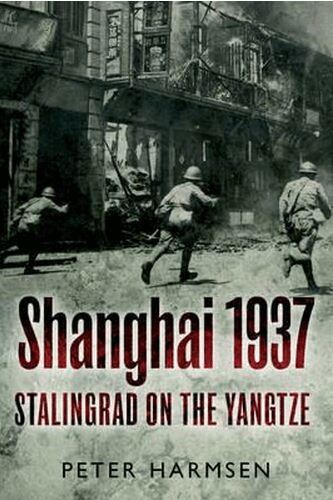
This deeply researched book describes one of the great forgotten battles of the 20th century. At its height it involved nearly a million Chinese and Japanese soldiers, while sucking in three million civilians as unwilling spectators and, often, victims. It turned what had been a Japanese adventure in China into a general war between the two oldest and proudest civilizations of the Far East. Ultimately, it led to Pearl Harbor and to seven decades of tumultuous history in Asia. The Battle of Shanghai was a pivotal event that helped define and shape the modern world.In its sheer scale, the struggle for China’s largest city was a sinister forewarning of what was in store for the rest of mankind only a few years hence, in theaters around the world. It demonstrated how technology had given rise to new forms of warfare, or had made old forms even more lethal. Amphibious landings, tank assaults, aerial dogfights and most importantly, urban combat, all happened in Shanghai in 1937\. It was a dress rehearsal for World War II—or perhaps more correctly it was the inaugural act in the war—the first major battle in the global conflict.Actors from a variety of nations were present in Shanghai during the three fateful autumn months when the battle raged. The rich cast included China's ascetic Generalissimo Chiang Kai-shek and his Japanese adversary, General Matsui Iwane, who wanted Asia to rise from disunity, but ultimately pushed the continent toward its deadliest conflict ever. Claire Chennault, later of “Flying Tiger” fame, was among the figures emerging in the course of the campaign, as was First Lady Eleanor Roosevelt. In an ironic twist, Alexander von Falkenhausen, a stern German veteran of the Great War, abandoned his role as a mere advisor to the Chinese army and led it into battle against the Japanese invaders.Written by Peter Harmsen, a foreign correspondent in East Asia for two decades, and currently bureau chief in Taiwan for the French news agency AFP, Shanghai 1937 fills a gaping chasm in our understanding of the Second World War.
266 kr
Skickas
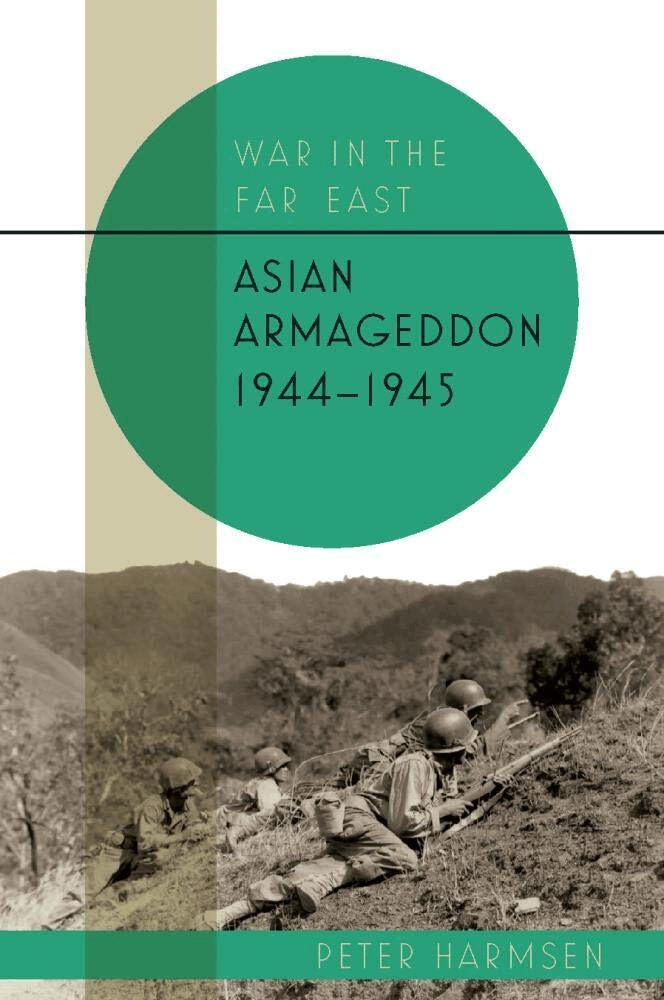
The last instalment of the War in the Far East trilogy, Asian Armageddon 1944-1945, continues and completes the narrative of the first two volumes, describing how a US-led coalition of nations battled Japan into submission through a series of cataclysmic encounters. Leyte Gulf, the biggest naval battle ever, was testimony to the paramount importance of controlling the ocean, as was the fact that the US Navy carried out the only successful submarine campaign in history, reducing Japan's military and merchant navies to shadows of the former selves. Meanwhile, fighting continued in disparate geographic conditions on land, with the chaos of Imphal, the inferno of Manila, and the carnage of Iwo Jima forming some of milestones on the bloody road to peace, sealed in Tokyo Bay in September 1945. The nuclear blasts at the end of the war made one observer feel as if he was ‘present at the creation’. Indeed, the participants in the events in the Asia Pacific in the mid-1940s were present at the creation of a new and dangerous world. It was a world where the stage was set for the Cold War and for international rivalries that last to this day, and a new constellation of powers emerged, with the outlines, just over the horizon, of a rising China. War in the Far East is a trilogy of books comprising a general history of World War II in the Asia Pacific. Unlike other histories on the conflict it goes into its deep origins, beginning long before Pearl Harbor, and encompasses a far wider group of actors to produce the most complete account yet written on the subject and the first truly international treatment of this epic conflict. Author Peter Harmsen weaves together complex events into a revealing and entertaining narrative, including facets of the war that may be unknown even to avid readers of World War II history, from the mass starvations that cost the lives of millions across China, Indochina and India to the war in subarctic conditions in the Aleutians. Harmsen pieces together the full range of perspectives, reflecting what war was like both at the top and on the ground.
204 kr
Skickas
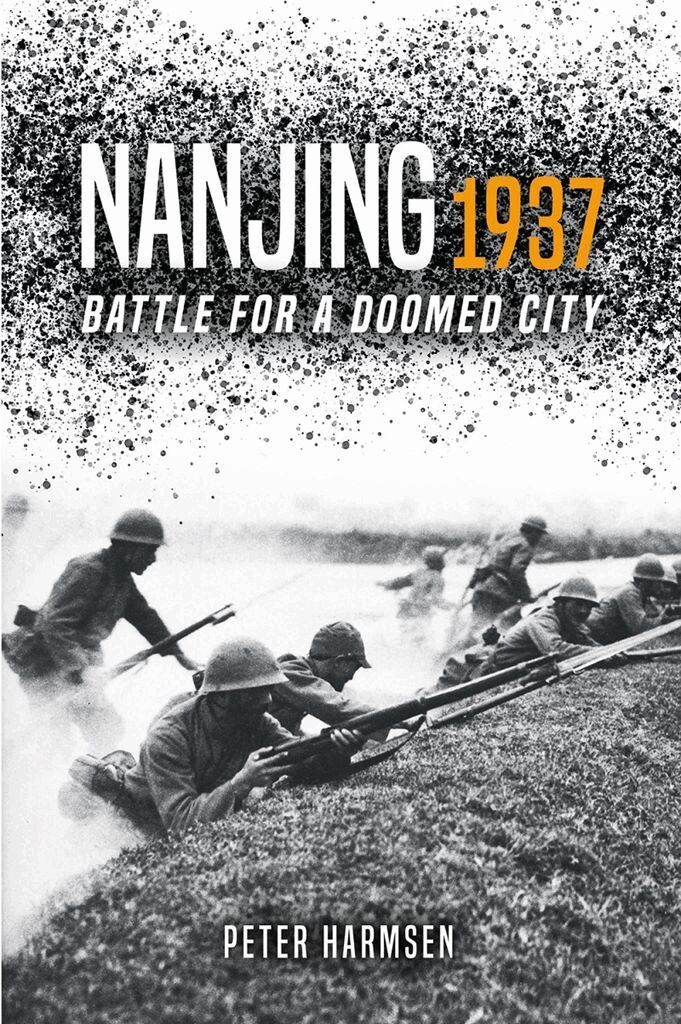
The infamous Rape of Nanjing looms like a dark shadow over the history of Asia in the 20th century, and is among the most widely recognized chapters of World War II in China. By contrast, the story of the month-long campaign before this notorious massacre has never been told in its entirety. Nanjing 1937 by Peter Harmsen fills this gap. This is the follow-up to Harmsen's best-selling Shanghai 1937: Stalingrad on the Yangtze, and begins where that book left off. In stirring prose, it describes how the Japanese Army, having invaded the mainland and emerging victorious from the Battle of Shanghai, pushed on toward the capital Nanjing in a crushing advance that confirmed its reputation for bravery and savagery in equal measure. While much of the struggle over Shanghai had carried echoes of the grueling war in the trenches two decades earlier, the Nanjing campaign was a fast-paced mobile operation in which armor and air power played mayor roles. It was blitzkrieg two years before Hitler's invasion of Poland. Facing the full might of modern, mechanized warfare, China's resistance was heroic, but ultimately futile. As in Shanghai, the battle for Nanjing was more than a clash between Chinese and Japanese. Soldiers and citizens of a variety of nations witnessed or took part in the hostilities. German advisors, American journalists and British diplomats all played important parts in this vast drama. And a new power appeared on the scene: Soviet pilots dispatched by Stalin to challenge Japan's control of the skies. This epic tale is told with verve and attention to detail by Harmsen, a veteran East Asia correspondent who consolidates his status as the foremost chronicler of World War II in China with this path-breaking work of narrative history.
276 kr
Skickas
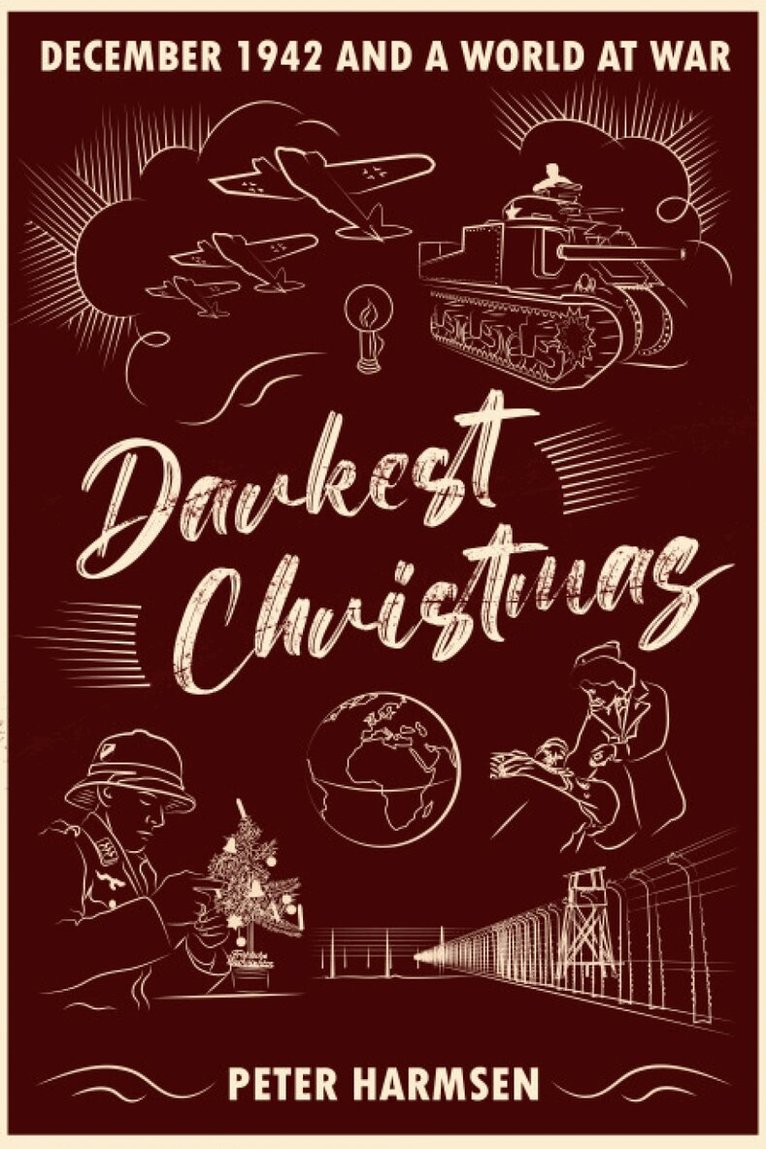
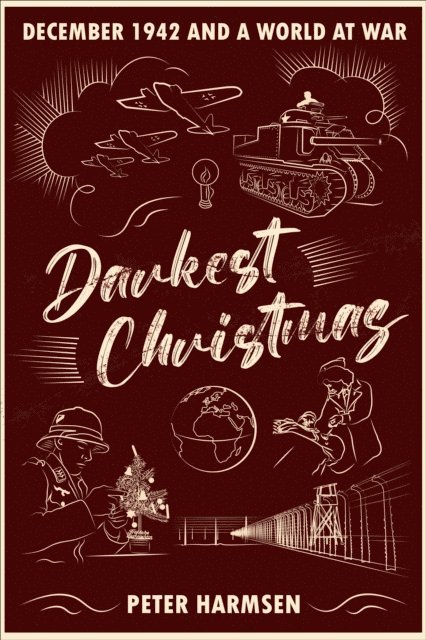
December 1942 saw the bloodiest Christmas in the history of mankind. From the islands in the Pacific to the China front, from the trenches in Russia to the battle lines in North Africa, in the skies over Europe and in the depths of the Atlantic, men were killing each other in greater numbers than ever before. The Holocaust continued, and innocent civilians were murdered by the thousands throughout the evil Nazi empire, even as the perpetrators celebrated the birth of Christ. Millions stationed in far-off lands amid the greatest conflict in human history feared this was their last Christmas in freedom, or their last Christmas alive. At the same time as the slaughter continued unabated, throughout the world there were random acts of kindness, born out of an instinctive feeling of the essential brotherhood of man. These gestures also straddled religious barriers and sometimes included those of non-Christian faiths. Even some Japanese, otherwise embarked on a self-declared crusade against the West, relented for a few precious hours in acknowledgment of the holiday. At the same time, Christmas 1942 saw the injunction of ‘good will to man’ distorted in ugly and callous ways. At Auschwitz, SS guards played cruel games with their prisoners. In Berlin, the German heart of darkness, Propaganda Minister Joseph Goebbels spent time with his family while still buried in feverish fantasies about the Jewish world conspiracy. Christmas 1942 saw the entire range of man’s conduct towards his fellow man, reflecting the extremes of behaviour, good and bad, that World War II gave rise to. The way the holiday was marked around the world tells a deeper and more universal story of the human condition in extraordinary times.
214 kr
Skickas
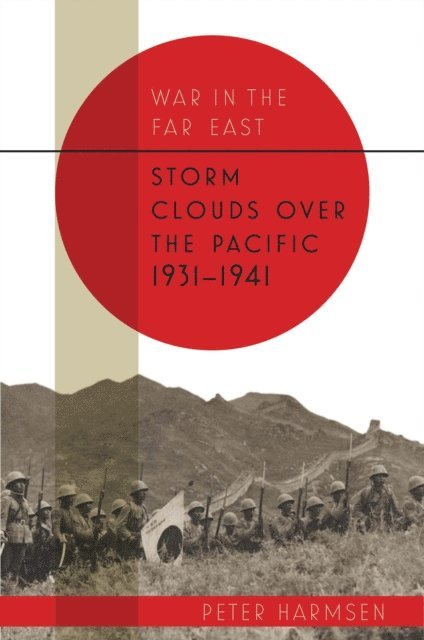
Storm Clouds over the Pacific begins the story long before Pearl Harbor, showing how the war can only be understood if ancient hatreds and long-standing geopolitics are taken into account. Peter Harmsen demonstrates how Japan and China’s ancient enmity grew in the late 19th and early 20th centuries leading to increased tensions in the 1930s which exploded into conflict in 1937. The battles of Shanghai and Nanjing were followed by the battle of Taierzhuang in 1938, China’s only major victory. A war of attrition continued up to 1941, the year when Japan made the momentous decision for all-out war; the infamous attack on Pearl Harbor catapulted the United States into the war, and the Japanese also overran British and Dutch territories throughout the western Pacific. It is the first volume in the War in the Asia Pacific series, a trilogy of books comprising a general history of the war against Japan. Unlike other histories, it expands the narrative beginning long before Pearl Harbor and encompasses a much wider group of actors to produce the most complete narrative yet written and the first truly international treatment of the epic conflict. Peter Harmsen uses his renowned ability to weave together complex events into an entertaining and revealing narrative, including facets of the war that may be unknown to many readers of WWII history, such as the war in Subarctic conditions on the Aleutians, or the mass starvations that cost the lives of millions in China, Indochina, and India, and offering a range of perspectives to reflect what war was like both at the top and at the bottom, from the Oval Office to the blistering sands of Peleliu.
274 kr
Skickas
In December 1937, the Chinese capital, Nanjing, falls and the Japanese army unleash an orgy of torture, murder, and rape. Over the course of six weeks, hundreds of thousands of civilians and prisoners of war are killed. At the very onset of the atrocities, the Danish supervisor at a cement plant just outside the city, 26-year-old Bernhard Arp Sindberg, opens the factory gates and welcomes in 10,000 Chinese civilians to safety, beyond the reach of the blood-thirsty Japanese. He becomes an Asian equivalent of Oskar Schindler, the savior of Jews in the European Holocaust.This biography follows Sindberg from his childhood in the old Viking city of Aarhus and on his first adventures as a sailor and a Foreign Legionnaire to the dramatic 104 days as a rescuer of thousands of helpless men, women, and children in the darkest hour of the Sino-Japanese War. It describes how after his remarkable achievement, he receded back into obscurity, spending decades more at sea and becoming a naturalized American citizen, before dying of old age in Los Angeles in 1983, completely unrecognized. In this respect, too, there is an obvious parallel with Schindler, who only attained posthumous fame.The book sets the record straight by providing the first complete account of Sindberg’s life in English, based on archival sources hitherto unutilized by any historian as well as interviews with surviving relatives. What emerges is the surprising tale of a person who was average in every respect but rose to the occasion when faced with unimaginable brutality, discovering an inner strength and courage that transformed him into one of the great humanitarian figures of the 20th century and an inspiration for our modern age, demonstrating that the determined actions of one person—any person—can make a huge difference.
348 kr
Skickas
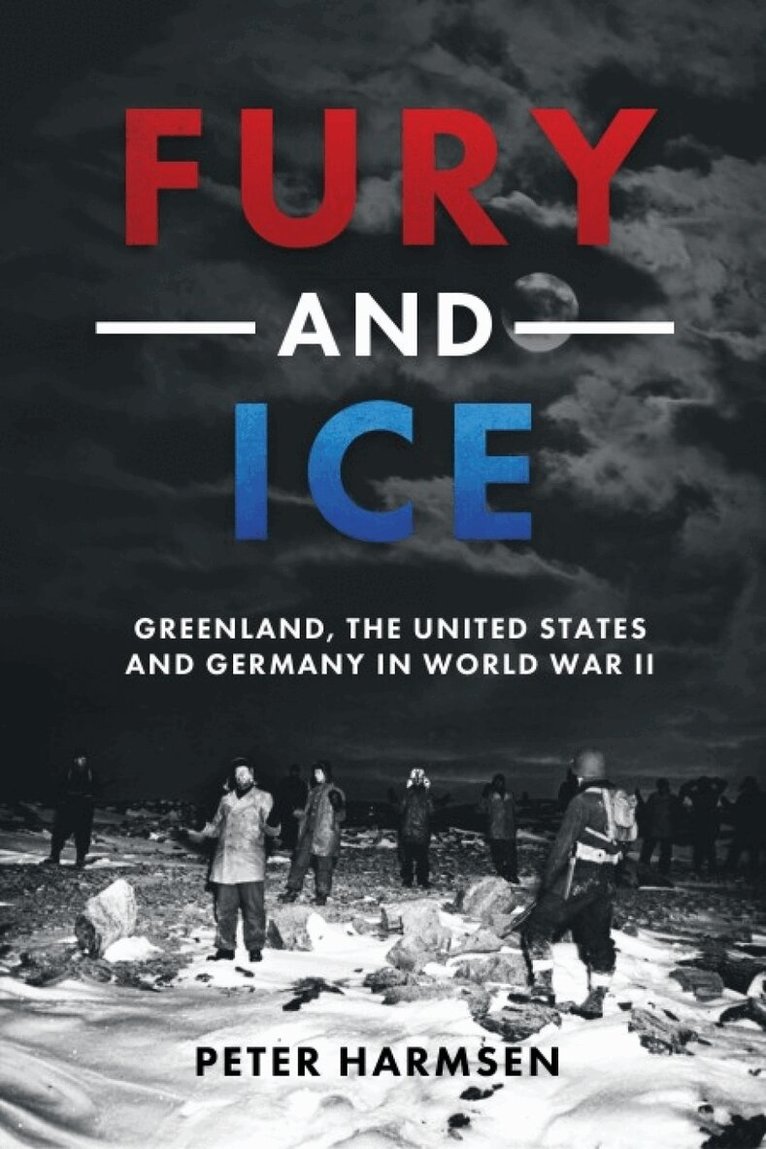
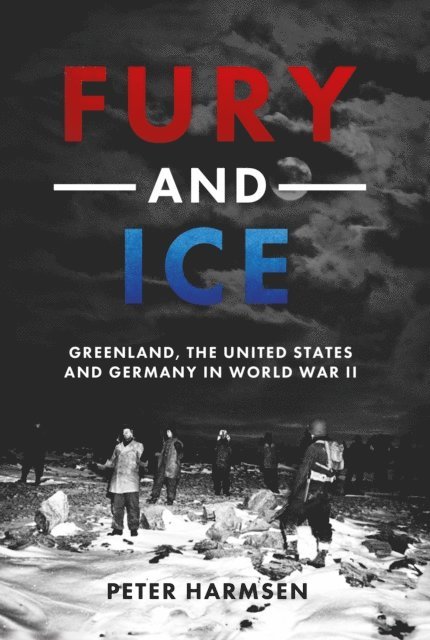
The wartime interest in Greenland was a direct result of its vital strategic position—if you wanted to predict the weather in Europe, you had to have men in place on the vast, frozen island. The most celebrated example of Greenland’s crucial contribution to Allied meteorological services is the correct weather forecast in June 1944 leading to the decision to launch the invasion of Normandy. In addition, both before and after D-Day a stream of weather reports from Greenland was essential for the Allied ability to carry out the bombing offensive against Germany.The Germans were aware of the value of Greenland from a meteorological point of view, and they repeatedly attempted to establish semi-permanent weather stations along the sparsely populated east coast of the island. This resulted in an epic cat-and-mouse game, in which US Coast Guard personnel assisted by a celebrated sledge patrol manned by Scandinavian adventurers struggled to locate and eliminate German bases before they could make any difference. It's a story seldom told, but the fact remains that Greenland was the only part of the North American continent in which German troops maintained a presence throughout almost the entirety of the war.At the same time, the US entry into the war triggered an enormous American effort to hastily establish the necessary infrastructure in the form of harbors and air bases that enabled Greenland to form a vital link in the effort to send men and supplies across the North Atlantic in the face of stern opposition from the German Navy. While Allied ships were passing through Greenland waters in massive numbers, planes were plying the so-called Snowball Route from Greenland over Iceland to the British Isles.This gave rise to number of tragic incidents, such as the sinking of the transport ship SS Dorchester off Greenland in February 1942, leading to the deaths of 674 out of 904 men on board, including the “Four Chaplains”—representing the Methodists, the Reformed Church, the Catholic Church, and Judaism—who gave up their life jackets to save others. In July the same year, in one of the most massive, forced landings in history, “the lost squadron,” six P-38 Lightning fighter aircraft and two Flying Fortresses, crash-landed on a Greenland glacier.
240 kr
Skickas
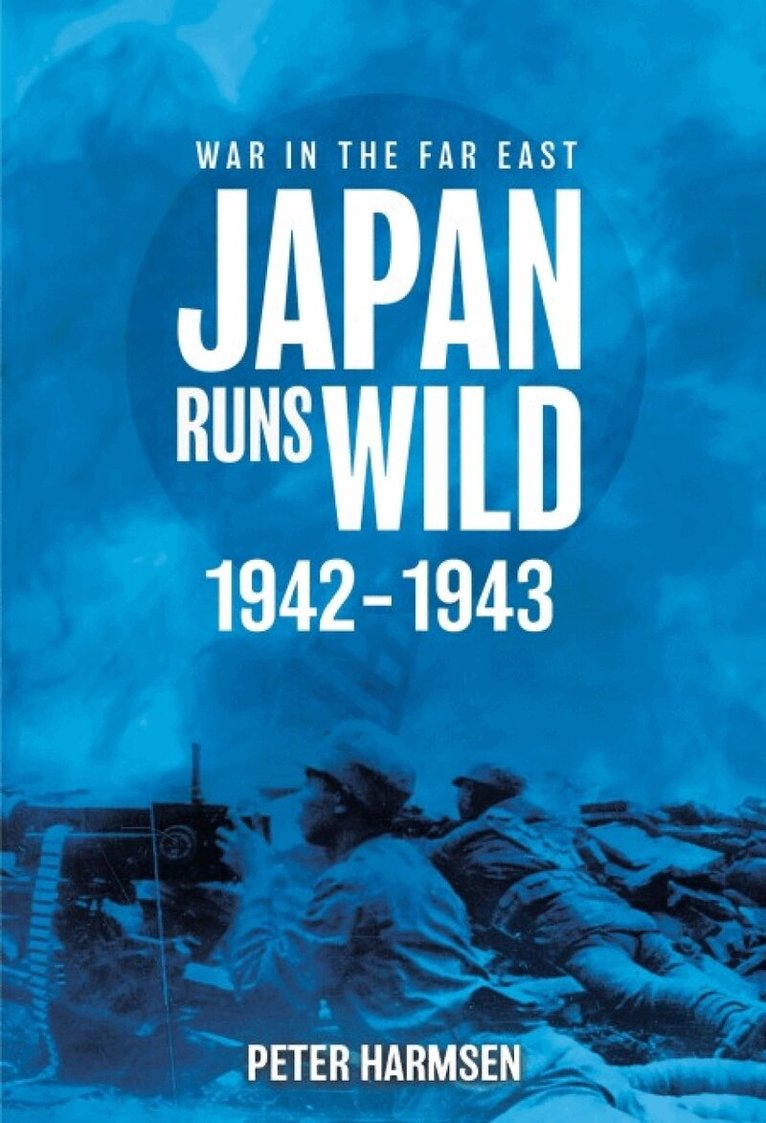
A comprehensive view of World War Two in the Asia Pacific.In early 1942, the Japanese Army and Navy were advancing on all fronts, humiliating their US, British and Dutch foes throughout the Asia Pacific. In a matter of just months, the soldiers and sailors of the Rising Sun conquered an area even bigger than Hitler’s empire at its largest extent. They seemed invincible. Hawaiians and Australians were fearing a future under Hirohito. For half of mankind, fate was hanging in the balance.Fast forward to the end of 1943, and the tables had been turned entirely. A reinvigorated American-led military machine had kicked into gear, and the Japanese were fighting a defensive battle along a frontline that crossed thousands of miles of land and ocean. Japan Runs Wild, 1942-1943 by acclaimed author Peter Harmsen details the astonishing transformation that took place in that period, setting the Allies on a path to final victory against Japan.The middle installment in the trilogy, Japan Runs Wild, 1942–1943 picks up the story where its predecessor volume Storm Clouds over the Pacific, 1931-1941 left off. The common theme of the series is a comprehensive view of World War Two in the Asia Pacific, giving due emphasis to the central Japanese-American struggle, but also encompassing the other nations that were engulfed in the vast showdown: British, Australians, Soviets, Filipinos, Indians and Koreans. Above all, the central importance of China is highlighted in a way that no previous general history of the war against Japan has achieved.
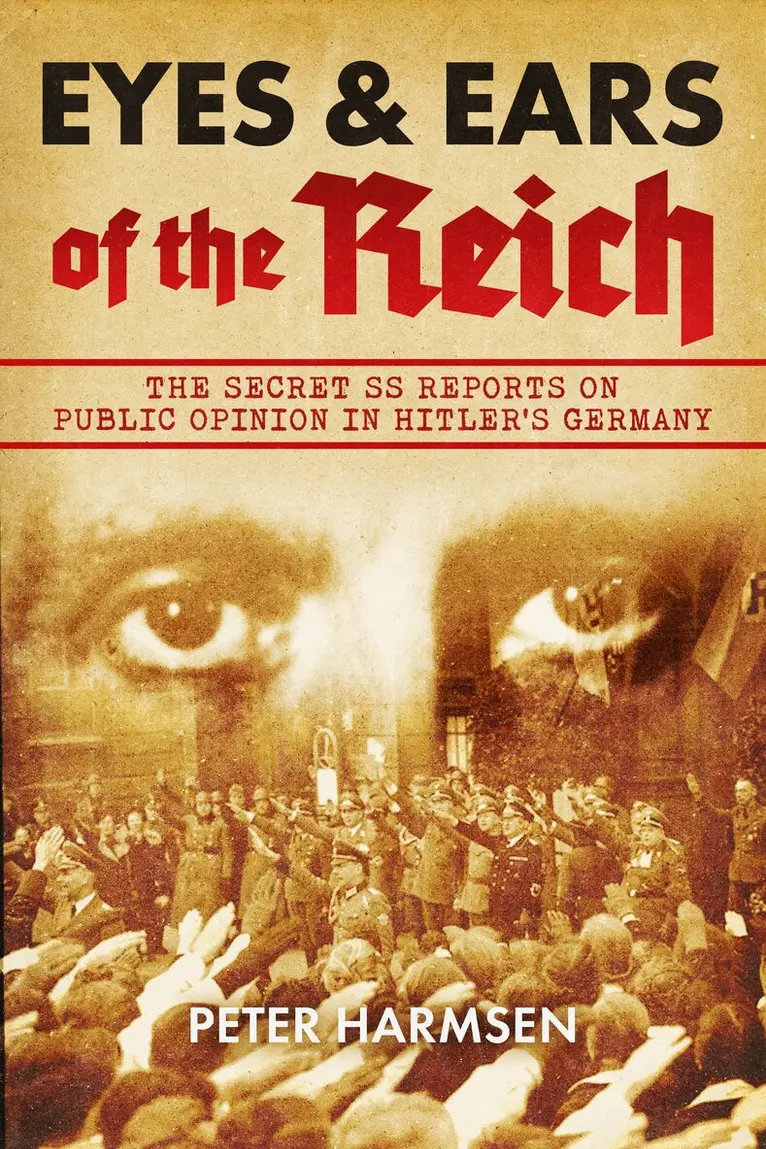
Eyes and Ears of the Reich
The Secret SS Reports on Public Opinion in Hitler’s Germany
Inbunden, Engelska, 2026
400 kr
Kommande
What was it like to be a citizen in the Third Reich? What were the concerns and hopes of Germans who lived through the insanity of the years under Hitler? How much of their time was spent thinking about the war, and how much on more trivial worries? What was their perception of the mind-boggling violence that was one of the primary tools of the regime? What were their views on propaganda, another important tool? What were their aspirations for the future after victory or, as became increasingly likely, defeat?These questions have been difficult if not impossible to answer ever since the collapse of the Reich in 1945. Though some Germans wrote memoirs after the war, and others delivered testimony as part of oral history projects, these sources are of somewhat dubious value as they necessarily were distorted by a great deal of rationalization and justification given the opprobrium associated with having been part of probably the most notorious regime in the history of mankind.There is a unique and copious source that offers direct insights into the minds of the Germans under Hitler: hundreds of top-secret reports—running to 6,700 pages—prepared by the SS intelligence service between 1939 and 1945, gauging the public mood on a range of issues—everything from the merits of the Nazi leadership to the price of vegetables—in meticulous detail.This information in these reports came from dispatches prepared by a dense network of informers throughout the Reich. The informers represented all social classes, all professions and all walks of life. As the SS made clear that it wanted not an embellished version of reality but information as close to actual conditions as possible in order to gain an accurate picture of the public mood, the result is a goldmine of information about all aspects of life in the Third Reich. They cover a broad range of topics: one single report covers from the relief shown by citizens to a rumor of peace with the Soviet Union; elderly citizens complaining of the rudeness of young Germans, in contrast to the official notion of highly regimented cohorts raised during Nazi rule; citizens complaining that they had to share doctors’ waiting rooms with foreign workers, reflecting a great deal of grassroots racism; and skepticism at newspaper reports on alleged British postwar plans for a vanquished Germany, suggesting that the German citizenry knew they were not being given the whole truth in the official media.Drawing in detail on the original reports, Peter Harmsen offers insight into the thoughts and feelings of ordinary citizens who lived through the Third Reich.
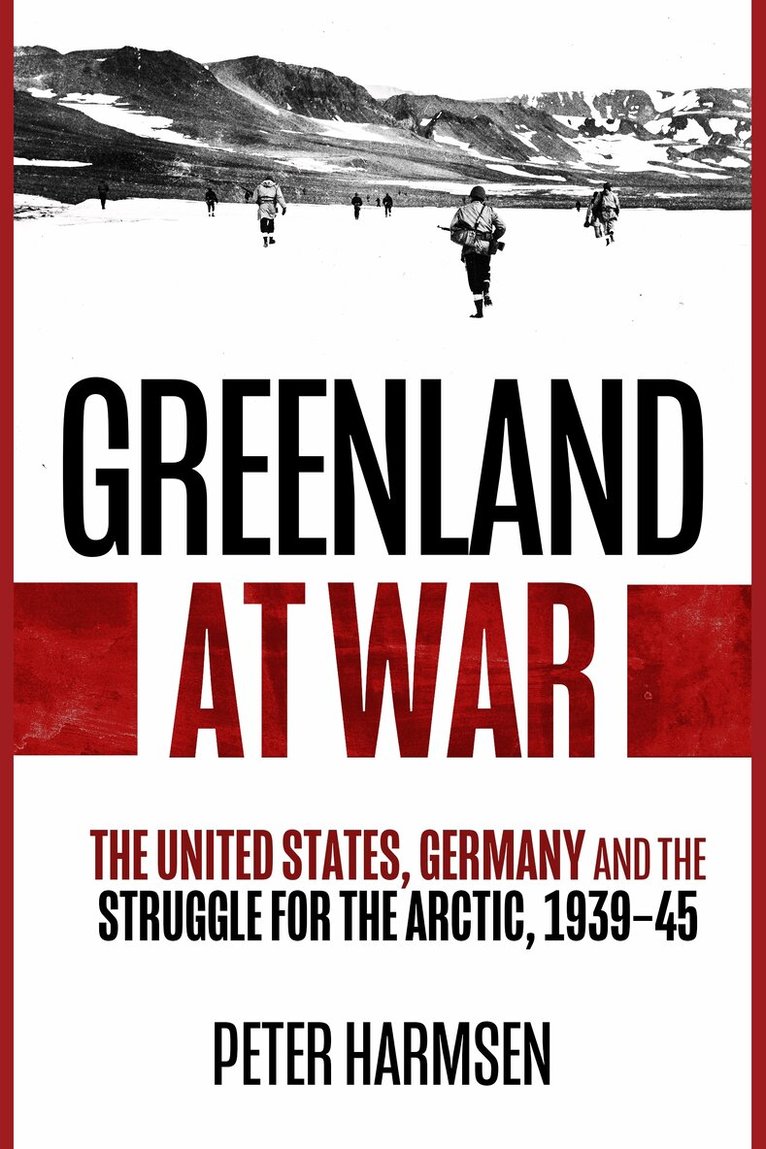
Greenland at War
The United States, Germany and the Struggle for the Arctic, 1939–45
Häftad, Engelska, 2025
257 kr
Skickas inom 3-6 vardagar
“Harmsen makes a convincing argument that the occupation of Greenland fits within the broader narrative of the war, and is just as important to remember and understand as ‘bigger’ events that overshadow it… recommended for readers of all levels, scholarly or casual.” - The Journal of America's Military Past_x000D__x000D_The wartime interest in Greenland was a direct result of its vital strategic position—if you wanted to predict the weather in Europe, you had to have men in place on the vast, frozen island. The most celebrated example of Greenland’s crucial contribution to Allied meteorological services is the correct weather forecast in June 1944 leading to the decision to launch the invasion of Normandy. In addition, both before and after D-Day a stream of weather reports from Greenland was essential for the Allied ability to carry out the bombing offensive against Germany.The Germans were aware of the value of Greenland from a meteorological point of view, and they repeatedly attempted to establish semi-permanent weather stations along the sparsely populated east coast of the island. This resulted in an epic cat-and-mouse game, in which US Coast Guard personnel assisted by a celebrated sledge patrol manned by Scandinavian adventurers struggled to locate and eliminate German bases before they could make any difference. It's a story seldom told, but the fact remains that Greenland was the only part of the North American continent in which German troops maintained a presence throughout almost the entirety of the war.At the same time, the US entry into the war triggered an enormous American effort to hastily establish the necessary infrastructure in the form of harbors and air bases that enabled Greenland to form a vital link in the effort to send men and supplies across the North Atlantic in the face of stern opposition from the German Navy. While Allied ships were passing through Greenland waters in massive numbers, planes were plying the so-called Snowball Route from Greenland over Iceland to the British Isles.This gave rise to number of tragic incidents, such as the sinking of the transport ship SS Dorchester off Greenland in February 1942, leading to the deaths of 674 out of 904 men on board, including the “Four Chaplains”—representing the Methodists, the Reformed Church, the Catholic Church, and Judaism—who gave up their life jackets to save others. In July the same year, in one of the most massive, forced landings in history, “the lost squadron,” six P-38 Lightning fighter aircraft and two Flying Fortresses, crash-landed on a Greenland glacier.