Peter Harries-Jones - Böcker
Visar alla böcker från författaren Peter Harries-Jones. Handla med fri frakt och snabb leverans.
3 produkter
3 produkter
351 kr
Skickas inom 7-10 vardagar
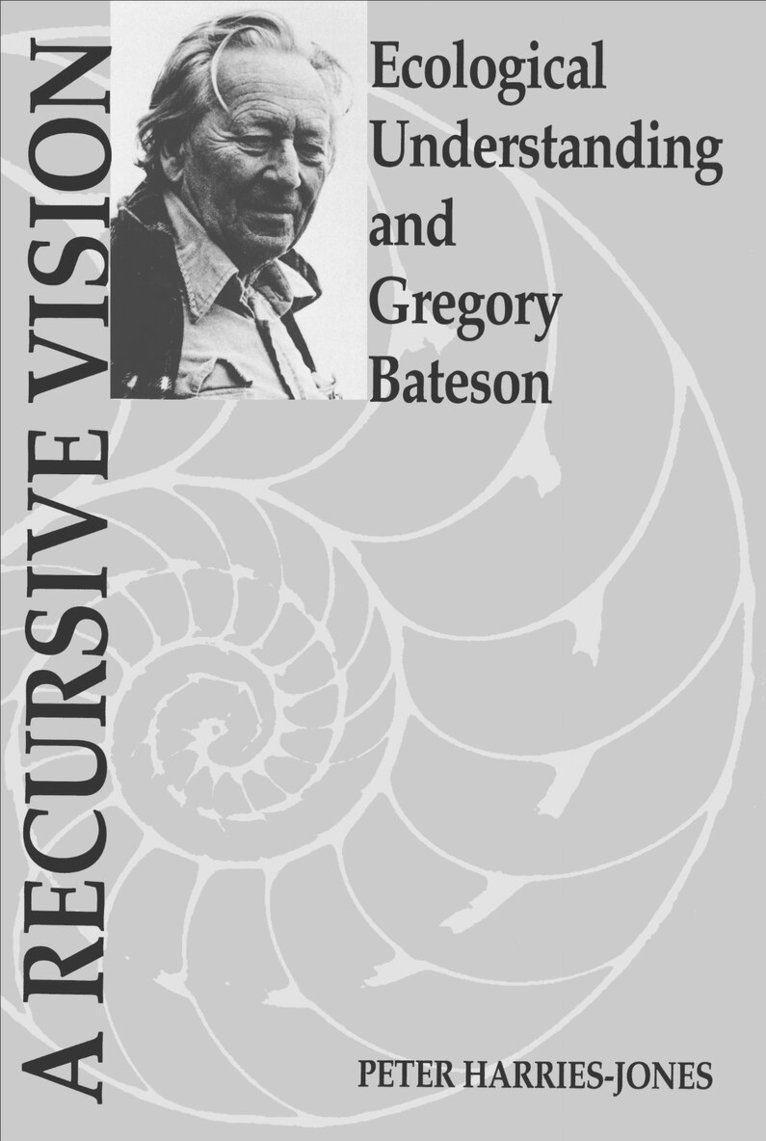
Gregory Bateson was one of the most original social scientists of this century. He is widely known as author of key ideas used in family therapy - including the well-known condition called 'double bind' . He was also one of the most influential figures in cultural anthropology. In the decade before his death in 1980 Bateson turned toward a consideration of ecology. Standard ecology concentrates on an ecosystem's biomass and on energy budgets supporting life. Bateson came to the conclusion that understanding ecological organization requires a complete switch in scientific perspective. He reasoned that ecological phenomena must be explained primarily through patterns of information and that only through perceiving these informational patterns will we uncover the elusive unity, or integration, of ecosystems.Bateson believed that relying upon the materialist framework of knowledge dominant in ecological science will deepen errors of interpretation and, in the end, promote eco-crisis. He saw recursive patterns of communication as the basis of order in both natural and human domains. He conducted his investigation first in small-scale social settings; then among octopus, otters, and dolphins. Later he took these investigations to the broader setting of evolutionary analysis and developed a framework of thinking he called 'an ecology of mind.' Finally, his inquiry included an ecology of mind in ecological settings - a recursive epistemology.This is the first study of the whole range of Bateson's ecological thought - a comprehensive presentaionof Bateson's matrix of ideas. Drawing on unpublished letters and papers, Harries-Jones clarifies themes scattered throughout Bateson's own writings, revealing the conceptual consistency inherent in Bateson's position, and elaborating ways in which he pioneered aspects of late twentieth-century thought.
1 446 kr
Skickas inom 11-20 vardagar
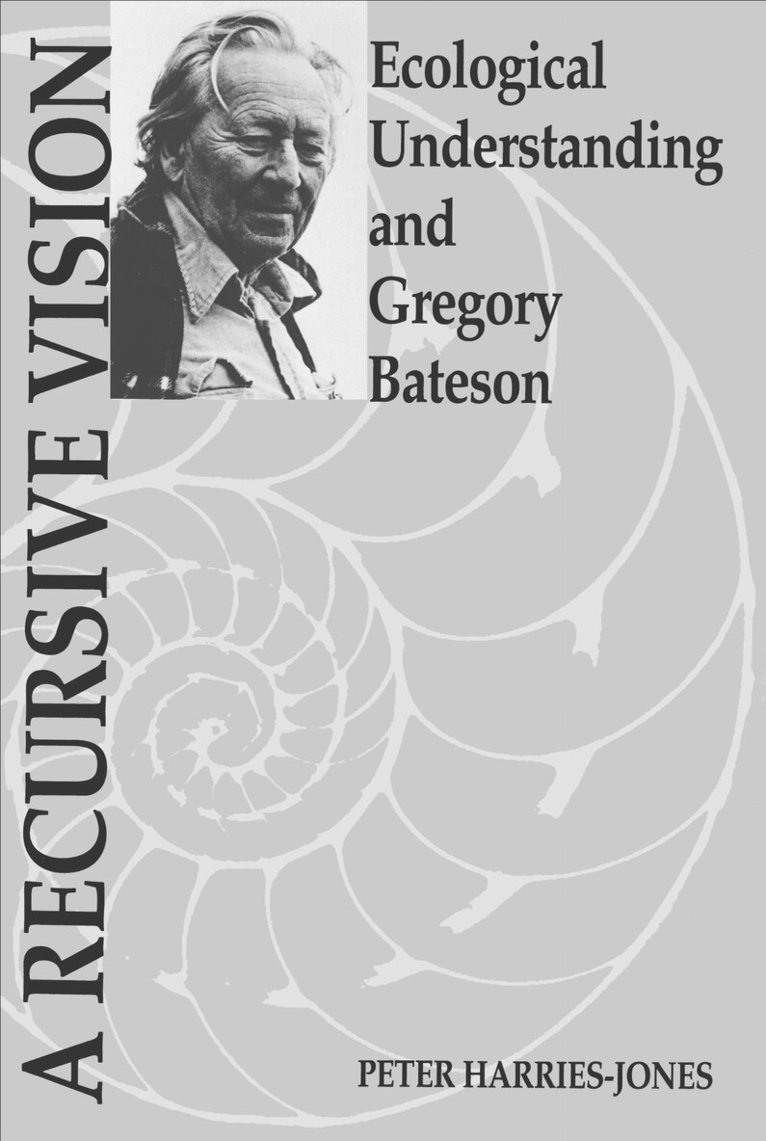
This intellectual biography covers the trajectory of Bateson's career, from his anthropological work in Bali alongside his wife, Margaret Mead, to his contributions to family therapy in the United States, and to studies of recursion as a feature of communication patterns in both the human and in the animal world. Layers of feedback with their many differing contexts, highlight the presence of meaning in social relations in contrast to that absence of meaning, purposefully proposed, within information theory. Throughout the human and in the animal world, recursion of feedback accounts for grasp of patterns, their difference, and with ability to communicate, enable transduction of perceptions of difference.Bateson's insistence on feedback and communication re-frames many aspects of culture, psychology, biology, and evolution. His legacy is recognized as an important precursor to the formation of a new science called Biosemiotics.Harries-Jones argues that Bateson turns conventional causality upside down through showing how humanity's perceptions, as with perceptions of all sentient beings, are anticipative. All sentient beings abduct from recursive patterns, rather than relying on linear evidence gathered about time/space movements of objects. Thus circular pattering provides clearer perceptions of the difference between sustainable creativity and current biocide, between our appreciation of nature's aesthetics and time/space 'games of power' which underlie so many social and biological theories.
435 kr
Skickas inom 10-15 vardagar
This intellectual biography covers the trajectory of Bateson's career, from his anthropological work in Bali alongside his wife, Margaret Mead, to his contributions to family therapy in the United States, and to studies of recursion as a feature of communication patterns in both the human and in the animal world. Layers of feedback with their many differing contexts, highlight the presence of meaning in social relations in contrast to that absence of meaning, purposefully proposed, within information theory. Throughout the human and in the animal world, recursion of feedback accounts for grasp of patterns, their difference, and with ability to communicate, enable transduction of perceptions of difference.Bateson's insistence on feedback and communication re-frames many aspects of culture, psychology, biology, and evolution. His legacy is recognized as an important precursor to the formation of a new science called Biosemiotics.Harries-Jones argues that Bateson turns conventional causality upside down through showing how humanity's perceptions, as with perceptions of all sentient beings, are anticipative. All sentient beings abduct from recursive patterns, rather than relying on linear evidence gathered about time/space movements of objects. Thus circular pattering provides clearer perceptions of the difference between sustainable creativity and current biocide, between our appreciation of nature's aesthetics and time/space 'games of power' which underlie so many social and biological theories.