Peter Hounsell - Böcker
Visar alla böcker från författaren Peter Hounsell. Handla med fri frakt och snabb leverans.
2 produkter
2 produkter
146 kr
Tillfälligt slut
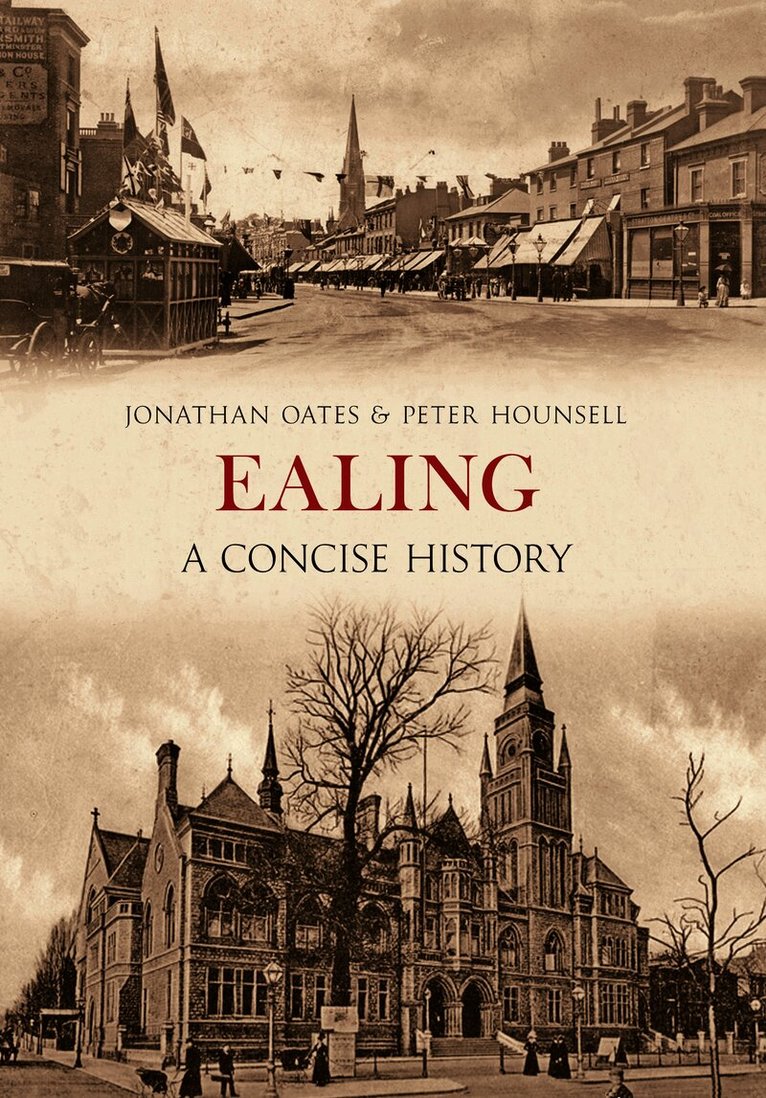
Ealing, once known as the ‘Queen of the Suburbs’, has had a long and varied history. Once a country town in Middlesex, the area became part of the City of London in 1965 and celebrates its fiftieth anniversary as a London borough in 2015.This is the first book to chart the history of Ealing from earliest times to the dawn of the twenty-first century. It draws on many sources, including contemporary diaries, newspapers, parish and borough archives. The reader will learn about the many changes in Ealing as it moved from being part of a manor belonging to the Bishop of London to being an independent entity, going on to absorb neighbouring parishes and boroughs in the twentieth century.In Ealing: A Concise History, authors Jonathan Oates and Peter Hounsell discuss both the built environment of open spaces, churches, shops and pubs as well as the district’s residents, from little-known diarists, criminals and politicians to key local personalities who played their part in shaping its history. The impact of outside events, such as civil war, plague and the world wars, are also explored in this fascinating insight into the history of the west London borough.
272 kr
Skickas
Many of London’s Victorian buildings are built of coarse-textured yellow bricks. These are ‘London stocks’, produced in very large quantities all through the nineteenth century and notable for their ability to withstand the airborne pollutants of the Victorian city. Whether visible or, as is sometimes the case, hidden behind stonework or underground, they form a major part of the fabric of the capital. Until now, little has been written about how and where they were made and the people who made them. Peter Hounsell has written a detailed history of the industry which supplied these bricks to the London market, offering a fresh perspective on the social and economic history of the city. In it he reveals the workings of a complex network of finance and labour. From landowners who saw an opportunity to profit from the clay on their land, to entrepreneurs who sought to build a business as brick manufacturers, to those who actually made the bricks, the book considers the process in detail, placing it in the context of the supply-and-demand factors that affected the numbers of bricks produced and the costs involved in equipping and running a brickworks. Transport from the brickfields to the market was crucial and Dr Hounsell conducts a full survey of the different routes by which bricks were delivered to building sites - by road, by Thames barge or canal boat, and in the second half of the century by the new railways. The companies that made the bricks employed many thousands of men, women and children and their working lives, homes and culture are looked at here, as well as the journey towards better working conditions and wages. The decline of the handmade yellow stock was eventually brought about by the arrival of the machine-made Fletton brick that competed directly with it on price. Brickmaking in the vicinity of London finally disappeared after the Second World War. Although its demise has left little evidence in the landscape, this industry influenced the development of many parts of London and the home counties, and this book provides a valuable record of it in its heyday.