Peter J. Aschenbrenner - Böcker
Visar alla böcker från författaren Peter J. Aschenbrenner. Handla med fri frakt och snabb leverans.
6 produkter
6 produkter
630 kr
Skickas inom 10-15 vardagar
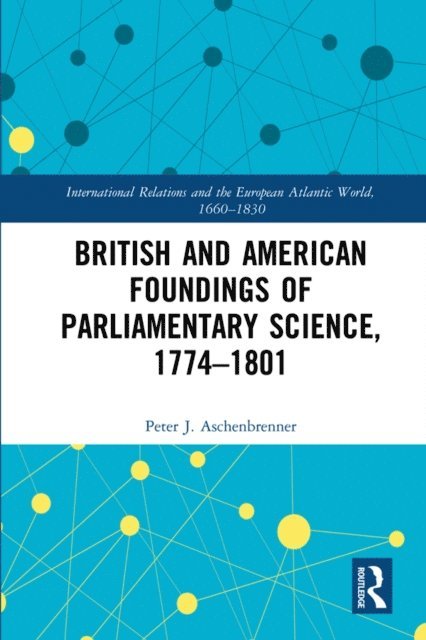
Upon declaring independence from Britain in July 1776, the United States Congress urgently needed to establish its credentials as a legitimate government that could credibly challenge the claims of the British Crown. In large measure this legitimacy rested upon setting in place the procedural and legal structures upon which all claims of governmental authority rest. In this book, Aschenbrenner explores the ways in which the nascent United States rapidly built up a system of parliamentary procedure that borrowed heavily from the British government it sought to replace. In particular, he looks at how, over the course of twenty-five years, Thomas Jefferson drew upon the writings of the Chief Clerk of the British Parliament, John Hatsell, to frame and codify American parliamentary procedures. Published in 1801, Jefferson’s Manual of Parliamentary Practice for the Use of the Senate of the United States presents rules, instances, citations and commentary as modern readers would expect them to appear, quoting Hatsell and other British authorities numerous times. If the two nations suffered any unpleasant relations in the First War for American Independence - Aschenbrenner concludes - one would be hard pressed to detect it from Jefferson’s Manual. Indeed, direct comparison of the House of Commons and the Continental Congress shows remarkable similarities between the ambitions of the two institutions as they both struggled to adapt their political processes to meet the changing national and international circumstances of the late-eighteenth century.
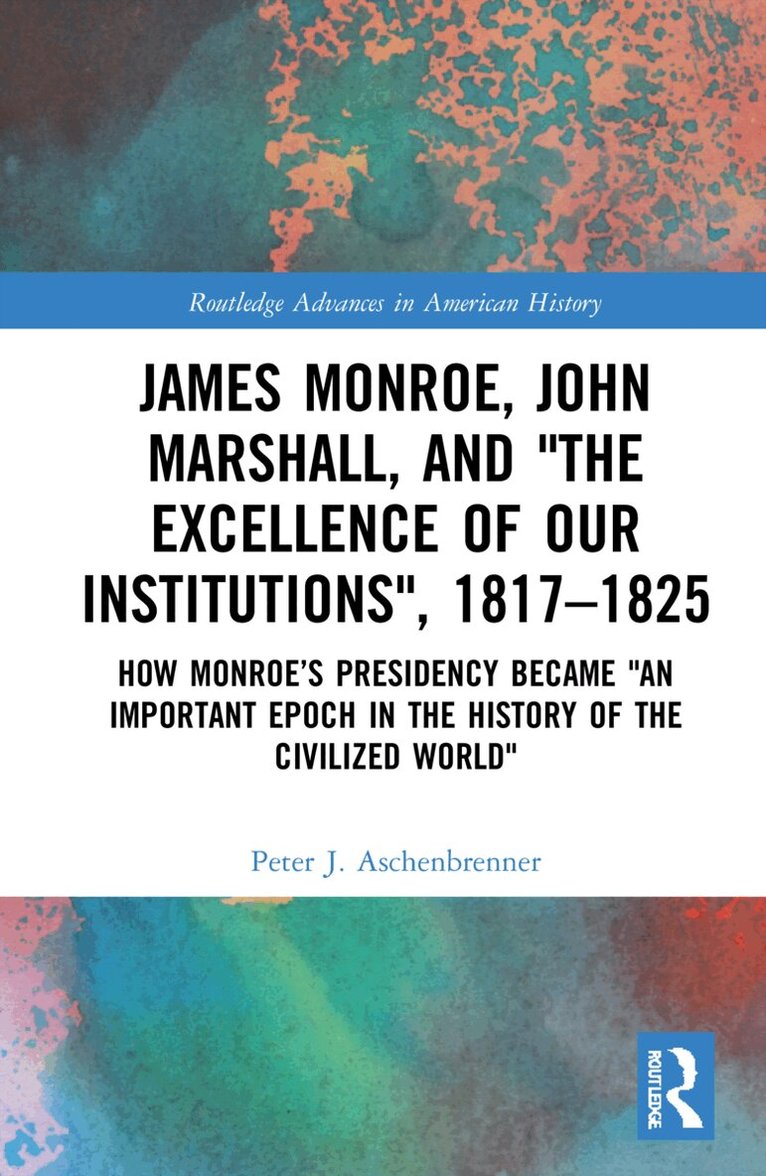
James Monroe, John Marshall and ‘The Excellence of Our Institutions’, 1817–1825
How Monroe’s Presidency Became 'An Important Epoch in the History of the Civilized World'
Inbunden, Engelska, 2022
2 150 kr
Skickas inom 10-15 vardagar
When James Monroe became president in 1817, the United States urgently needed a national transportation system to connect new states and territories in the west with older states facing the Atlantic Ocean. In 1824, the Supreme Court declared that Congress had the power to regulate traffic on all navigable rivers and lakes in the United States. Congress began clearing obstructions from rivers, and these projects enabled steamboats to transform cross-country travel in the United States. This book explains how building a nationwide economic market was essential to secure the loyalty of geographically remote regions to the new republic. Aschenbrenner defends the activist role of President James Monroe (1817-1825) and Chief Justice John Marshall (1801-1835). Under their leadership, the federal government made national prosperity its 'Job One'. The market revolution transformed the daily lives of households and businesses in the United States and proved to Americans that they shared a common social and economic destiny. As Monroe declared at the conclusion of his Presidency: 'We find abundant cause to felicitate ourselves in the excellence of our institutions'.
James Monroe, John Marshall and ‘The Excellence of Our Institutions’, 1817–1825
How Monroe’s Presidency Became 'An Important Epoch in the History of the Civilized World'
Häftad, Engelska, 2024
579 kr
Skickas inom 10-15 vardagar
When James Monroe became president in 1817, the United States urgently needed a national transportation system to connect new states and territories in the west with older states facing the Atlantic Ocean. In 1824, the Supreme Court declared that Congress had the power to regulate traffic on all navigable rivers and lakes in the United States. Congress began clearing obstructions from rivers, and these projects enabled steamboats to transform cross-country travel in the United States. This book explains how building a nationwide economic market was essential to secure the loyalty of geographically remote regions to the new republic. Aschenbrenner defends the activist role of President James Monroe (1817-1825) and Chief Justice John Marshall (1801-1835). Under their leadership, the federal government made national prosperity its 'Job One'. The market revolution transformed the daily lives of households and businesses in the United States and proved to Americans that they shared a common social and economic destiny. As Monroe declared at the conclusion of his Presidency: 'We find abundant cause to felicitate ourselves in the excellence of our institutions'.
Del 59 - Camden Fifth Series
The Papers of John Hatsell, Clerk of the House of Commons: Volume 59
Inbunden, Engelska, 2020
645 kr
Skickas inom 7-10 vardagar
John Hatsell (1733-1820) held the office of Clerk of the House of Commons from 1768 to 1820. In his letters and Memorabilia entries - published here for the first time - Hatsell brought to bear his intimate familiarity with high politics during the reign of George III. Hatsell's expertise in financial policy inspired him to offer counsel to Pitt the Younger during Pitt's first premiership (1783-1801). Hatsell's other correspondents include Henry Addington (speaker 1789-1801 and prime minister 1801-1804), Charles Abbot (speaker 1802-1817), and William Eden (diplomat and President of the Board of Trade in the Ministry of All the Talents, 1806-1807). Hatsell centres his attention on the enduring constitutional significance of the changes he experienced in his public and private life. Hatsell's wry humour is often on display as he reveals the lighter side of social and political life in Great Britain.
2 088 kr
Skickas inom 10-15 vardagar
Upon declaring independence from Britain in July 1776, the United States Congress urgently needed to establish its credentials as a legitimate government that could credibly challenge the claims of the British Crown. In large measure this legitimacy rested upon setting in place the procedural and legal structures upon which all claims of governmental authority rest. In this book, Aschenbrenner explores the ways in which the nascent United States rapidly built up a system of parliamentary procedure that borrowed heavily from the British government it sought to replace. In particular, he looks at how, over the course of twenty-five years, Thomas Jefferson drew upon the writings of the Chief Clerk of the British Parliament, John Hatsell, to frame and codify American parliamentary procedures. Published in 1801, Jefferson’s Manual of Parliamentary Practice for the Use of the Senate of the United States presents rules, instances, citations and commentary as modern readers would expect them to appear, quoting Hatsell and other British authorities numerous times. If the two nations suffered any unpleasant relations in the First War for American Independence - Aschenbrenner concludes - one would be hard pressed to detect it from Jefferson’s Manual. Indeed, direct comparison of the House of Commons and the Continental Congress shows remarkable similarities between the ambitions of the two institutions as they both struggled to adapt their political processes to meet the changing national and international circumstances of the late-eighteenth century.
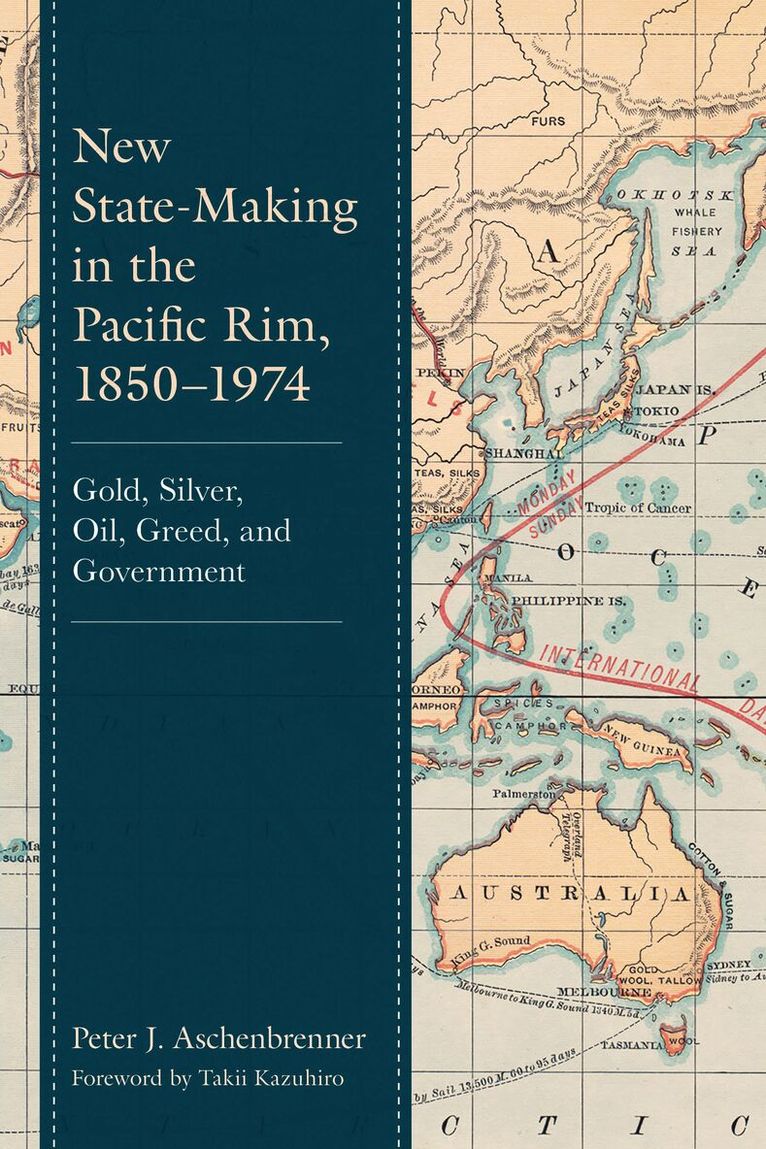
New State-Making in the Pacific Rim, 1850–1974
Gold, Silver, Oil, Greed, and Government
Inbunden, Engelska, 2024
1 177 kr
Skickas inom 10-15 vardagar
European colonial empires were built on private wealth-seeking (gold, silver and oil). These extractive activities required massive public subsidies. Drawing on the experience of three Pacific Rim nations — Australia, Japan and Canada and two territories in the US (Hawaii and Alaska) — New State-Making in the Pacific Rim, 1850-1974: Gold, Silver, Oil, Greed and Government demonstrates how 19th century colonialism contained the seeds of its own destruction. Peter J. Aschenbrenner identifies three factors that marked the turning point in the history of colonialism. First, governments demanded a greater return to the public treasury from private extractive activities and a reduced footprint (measured in environmental devastation and obliteration of local cultures. Second, first residents acquired considerable skill in ‘adaptation for survival,’ that is, fighting back against oppression (manifested in programs of extermination, forced population movement and hostility to language, religion and traditional subsistence practices). Third, colonial nations’ participation in World War I required their armed forces to fill manpower needs by calling on minorities to perform military service. This gave minorities significant leverage in their struggle to achieve equal political rights and access to their fair share of government benefits. Rethinking colonial practices became a realistic option, once national survival was at risk.