Peter J. T. Morris - Böcker
Visar alla böcker från författaren Peter J. T. Morris. Handla med fri frakt och snabb leverans.
7 produkter
7 produkter
1 015 kr
Skickas inom 10-15 vardagar
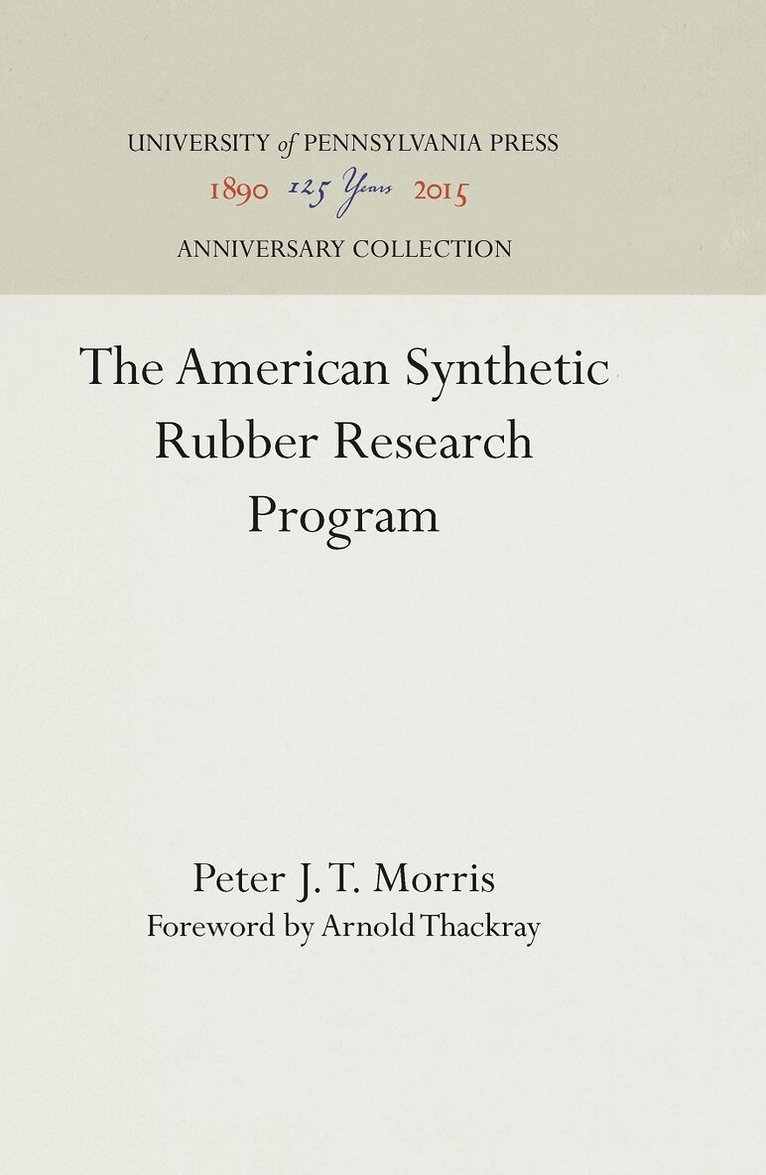
This history of the government-funded synthetic rubber research program (1942-1956) offers a rare analysis of a cooperative research program geared to the improvement of existing products and the creation of new ones. The founders of the program believed the best way to further research in the new field was through collaboration among corporations, universities, and the federal government. Morris concludes that, in fact, the effort was ultimately a failure and that vigorous competition proves the best way to stimulate innovation. Government programs, like the rubber research program, are far better at improving existing products, the author contends, than creating wholly new ones.
1 391 kr
Skickas inom 5-8 vardagar
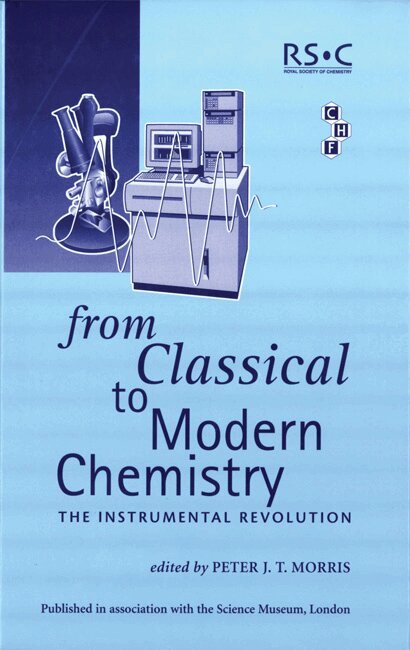
Most chemists today have either taken part in, or been affected by, the chemical revolution that has taken place over the course of the last century. Developments in instrumentation have changed not just what chemists do, but also how they think about chemistry. New and exciting areas of previously inaccessible research have been opened up as a direct result of this revolution. This is the first book to examine this instrumental revolution and goes on to assess the impact on chemical practice in areas ranging from organic chemistry and biochemistry to environmental analysis and process control, thus demonstrating how fundamental and extensive are the changes that have occurred. With contributions from internationally recognised specialists, this lavishly illustrated book provides a focal point for any historian of chemistry or chemist with an interest in this fascinating topic. This book is published in association with the Science Museum, London, UK and the Chemical Heritage Foundation, Philadelphia.
357 kr
Skickas inom 7-10 vardagar
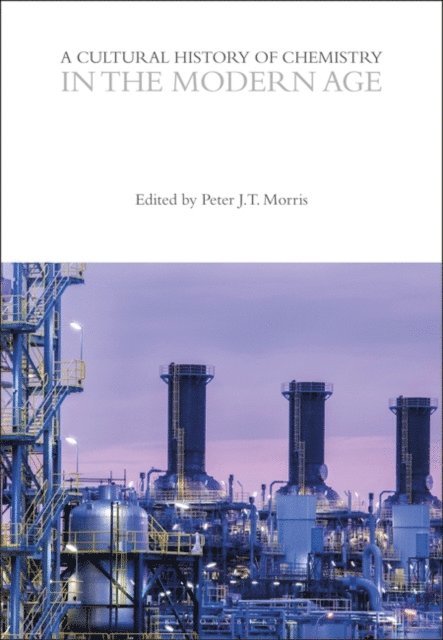
** A Cultural History of Chemistry: Volumes 1-6 is a 2023 CHOICE Outstanding Academic Title ** A Cultural History of Chemistry in the Modern Age covers the period from 1914 to the present. The impact of chemistry and the chemical industry on science, war, society, and the economy has made this era the “Chemical Age”. Having prospered in the West, chemical science spread across the globe and slowly became more diversified in terms of its ethnic and gendered mix. After flourishing for sixty years, the chemical industry was impacted by the Oil Crisis of the 1970s and became almost invisible in the West. While the industry has clearly delivered many benefits to society—such as new materials and better drugs—it has been excoriated by critics for its impact on the environment.The six-volume set of the Cultural History of Chemistry presents the first comprehensive history from the Bronze Age to today, covering all forms and aspects of chemistry and its ever-changing social context. The themes covered in each volume are theory and concepts; practice and experiment; laboratories and technology; culture and science; society and environment; trade and industry; learning and institutions; art and representation.Peter J. T. Morris is Honorary Research Associate at the Science Museum, London, and at University College London, UKA Cultural History of Chemistry in the Modern Age is the sixth volume in the six-volume set, A Cultural History of Chemistry, also available online as part of Bloomsbury Cultural History, a fully-searchable digital library (see www.bloomsburyculturalhistory.com).General Editors: Peter J. T. Morris, University College London, UK, and Alan Rocke, Case Western Reserve University, USA.
2 073 kr
Skickas inom 7-10 vardagar
Selected as a CHOICE Outstanding Academic Title 2023From prehistoric metal extraction to medieval alchemy to modern industry, chemistry has been central to our understanding and use of the physical world as well as to trade, warfare and medicine. In its turn, chemistry has been shaped by changing technologies, institutions and cultural beliefs. A Cultural History of Chemistry presents the first detailed and authoritative survey from antiquity to today, focusing on the West but integrating key developments in Egypt, Mesopotamia, and the Arabic-Islamic and Byzantine empires.Chapter titles are identical across each of the volumes. This gives the choice of reading about a specific period in one of the volumes, or following a theme across history by reading the relevant chapter in each of the six. The themes (and chapter titles) are: Theory and Concepts; Practice and Experiment; Sites and Technology; Culture and Knowledge; Society and Environment; Trade and Industry; Learning and Institutions; Art and Representation.The six volumes cover: 1 – Antiquity (3,000 BCE to 600 CE); 2 – Medieval Age (600 to 1500); 3 – Early Modern (1500 to 1700); 4 – Eighteenth Century (1700 to 1815); 5 – Nineteenth Century (1815 to 1914); 6 – Modern Age (1914 to the Present).Volume 1 is available open access under a Creative Commons Attribution-NonCommercial-NoDerivatives v4.0 International (CC BY-NC-ND 4.0) license. Open access is funded by the European Research Council.The page extent for the pack is 1728pp. Each volume opens with an Introduction and concludes with Notes, Bibliography, and an Index.The Cultural Histories SeriesA Cultural History of Chemistry is part of The Cultural Histories Series. Titles are available both as printed hardcover sets for libraries needing just one subject or preferring a one-off purchase and tangible reference for their shelves, or as part of a fully-searchable digital library available to institutions by annual subscription or on perpetual access (see www.bloomsburyculturalhistory.com). A Cultural History of Chemistry is part of The Cultural Histories Series. Titles are available as hardcover sets for libraries needing just one subject or preferring a tangible reference for their shelves or as part of a fully-searchable digital library. The digital product is available to institutions by annual subscription or on perpetual access via www.bloomsburyculturalhistory.com . Individual volumes for academics and researchers interested in specific historical periods are also available in print or digitally via www.bloomsburycollections.com .
1 085 kr
Skickas inom 7-10 vardagar
** A Cultural History of Chemistry: Volumes 1-6 is a 2023 CHOICE Outstanding Academic Title **A Cultural History of Chemistry in the Modern Age covers the period from 1914 to the present. The impact of chemistry and the chemical industry on science, war, society, and the economy has made this era the “Chemical Age”. Having prospered in the West, chemical science spread across the globe and slowly became more diversified in terms of its ethnic and gendered mix. After flourishing for sixty years, the chemical industry was impacted by the Oil Crisis of the 1970s and became almost invisible in the West. While the industry has clearly delivered many benefits to society—such as new materials and better drugs—it has been excoriated by critics for its impact on the environment.The six-volume set of the Cultural History of Chemistry presents the first comprehensive history from the Bronze Age to today, covering all forms and aspects of chemistry and its ever-changing social context. The themes covered in each volume are theory and concepts; practice and experiment; laboratories and technology; culture and science; society and environment; trade and industry; learning and institutions; art and representation.Peter J. T. Morris is Honorary Research Associate at the Science Museum, London, and at University College London, UKA Cultural History of Chemistry in the Modern Age is the sixth volume in the six-volume set, A Cultural History of Chemistry, also available online as part of Bloomsbury Cultural History, a fully-searchable digital library (see www.bloomsburyculturalhistory.com).General Editors: Peter J. T. Morris, University College London, UK, and Alan Rocke, Case Western Reserve University, USA.
7 332 kr
Skickas inom 7-10 vardagar
Selected as a CHOICE Outstanding Academic Title 2023From prehistoric metal extraction to medieval alchemy to modern industry, chemistry has been central to our understanding and use of the physical world as well as to trade, warfare and medicine. In its turn, chemistry has been shaped by changing technologies, institutions and cultural beliefs. A Cultural History of Chemistry presents the first detailed and authoritative survey from antiquity to today, focusing on the West but integrating key developments in Egypt, Mesopotamia, and the Arabic-Islamic and Byzantine empires. Chapter titles are identical across each of the volumes. This gives the choice of reading about a specific period in one of the volumes, or following a theme across history by reading the relevant chapter in each of the six. The themes (and chapter titles) are: Theory and Concepts; Practice and Experiment; Sites and Technology; Culture and Knowledge; Society and Environment; Trade and Industry; Learning and Institutions; Art and Representation.The six volumes cover: 1 – Antiquity (3,000 BCE to 600 CE); 2 – Medieval Age (600 to 1500); 3 – Early Modern (1500 to 1700); 4 – Eighteenth Century (1700 to 1815); 5 – Nineteenth Century (1815 to 1914); 6 – Modern Age (1914 to the Present).Volume 1 is available open access under a Creative Commons Attribution-NonCommercial-NoDerivatives v4.0 International (CC BY-NC-ND 4.0) license. Open access is funded by the European Research Council. The page extent for the pack is 1728pp. Each volume opens with an Introduction and concludes with Notes, Bibliography, and an Index.The Cultural Histories SeriesA Cultural History of Chemistry is part of The Cultural Histories Series. Titles are available both as printed hardcover sets for libraries needing just one subject or preferring a one-off purchase and tangible reference for their shelves, or as part of a fully-searchable digital library available to institutions by annual subscription or on perpetual access (see www.bloomsburyculturalhistory.com).A Cultural History of Chemistry is part of The Cultural Histories Series. Titles are available as hardcover sets for libraries needing just one subject or preferring a tangible reference for their shelves or as part of a fully-searchable digital library. The digital product is available to institutions by annual subscription or on perpetual access via www.bloomsburyculturalhistory.com . Individual volumes for academics and researchers interested in specific historical periods are also available in print or digitally via www.bloomsburycollections.com .
497 kr
Skickas inom 5-8 vardagar
How were the polymers which have transformed our world created? How has our understanding of polymers changed since the Swedish chemist Jöns Jacob Berzelius coined the word ‘polymer’ in 1832? Who were the people who wrought the polymer revolution? This book answers these questions by presenting a compelling narrative that weaves together the history of polymer science, the development of new plastics and rubbers and biographies of the leading actors in this revolution.A key feature of the polymer revolution was the involvement of industry. The author shows how industry supported research in factories and universities and how academic research assisted the development of new polymers. As a result, empirical trial and error, which laid the foundations of a new industry, was replaced by systematic scientific research based on our improved understanding of the structure and behaviour of polymers. Containing an unparalleled collection of short biographies of over eighty people including both famous scientists such as Thomas Graham, Hermann Staudinger and Stephanie Kwolek and obscure figures like William Caspari, Hans Fikentscher, Ray McIntire and Wilfred Swinney, this history lists the part of human endeavour in the polymer revolution.This book is aimed at anyone who wishes to find out more about the history of this economically important interdisciplinary subject, which straddles chemistry, biology, physics and engineering. With illuminating and entertaining prose, the reader will discover a fascinating story of the development of polymer science and technology. Written in an accessible style, it appeals to school pupils studying chemistry and university students, historians of science, technology and the economy as well as polymer scientists.