
Peter Karl Koritansky - Böcker
Visar alla böcker från författaren Peter Karl Koritansky. Handla med fri frakt och snabb leverans.
2 produkter
2 produkter
257 kr
Skickas inom 7-10 vardagar
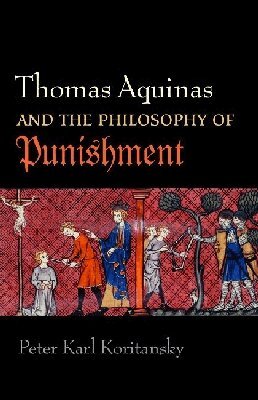
Thomas Aquinas and the Philosophy of Punishment explores how Aquinas’s understandings of natural law and the common good apply to the contemporary philosophical discussion of punitive justice. It is the first book-length study to consider this question in decades, and the only book that confronts modern views of the topic.Peter Karl Koritansky presents Thomas Aquinas’s theory of punishment as an alternative to the leading schools of thought that have dominated the philosophical landscape in recent times, namely, utilitarianism and retributivism. After carefully examining each one and tracing its roots back to Immanuel Kant and Jeremy Bentham, Koritansky concludes that neither approach to punitive justice is able to provide a philosophically compelling justification for the institution of punishment. He explains how St. Thomas approaches the same philosophical questions from a markedly different set of assumptions rooted in his theory of natural law and his understanding of the common good.Not without its own difficulties, Aquinas’s approach offers a rationale and justification of punishment that is, Koritansky argues, much more humane, realistic, and compelling than either contemporary school is able to provide. Koritansky distinguishes his reading of the Angelic Doctor from that of other interpreters who tend to conflate Aquinas’s teaching with various aspects of recent thought. A final chapter considers the death penalty in John Paul II’s Gospel of Life and debates whether current Catholic teaching about the death penalty conflicts with Aquinas’s arguments in favour of the death penalty.
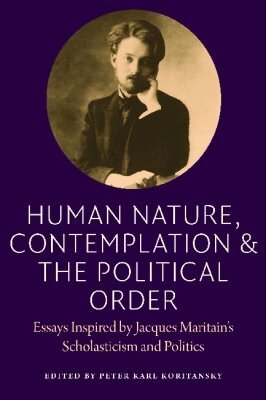
Human Nature, Contemplation, and the Political Order
Essays Inspired by Jacques Maritain's Scholasticism and Politics
Häftad, Engelska, 2014
416 kr
Skickas inom 7-10 vardagar
In his 1940 publication, Scholasticism and Politics, Jacques Maritain asserts that ""the modern world has sought good things in bad ways; it has thus compromised the search for authentic human values, which men must save now by an intellectual grasp of a profounder truth, by a substantial recasting of humanism."" In the essays that follow, Maritain explores the cultural and philosophical dimensions of this claim and sketches an outline for addressing what he famously calls the ""crisis of modern times."" The answer is a new humanism that appropriates the important insights of modern thought, but which is also grounded in the classical tradition that reaches its full philosophical development in the thought of Thomas Aquinas. It is a humanism that acknowledges the dignity of both man’s body and his soul, and which does not close his soul off to the transcendent.The authors of Human Nature, Contemplation, and the Political Order: Essays Inspired by Jacques Maritain’s Scholasticism and Politics carry Maritain’s philosophical and cultural insights into the twenty-first century. They do so by exploring Maritain’s understanding of the human soul with particular emphasis upon Maritain’s extremely thoughtful critique of Freud. Others investigate the moral and political dimension of Maritain’s thought by bringing him into dialogue with modern figures as diverse as Niccolò Machiavelli, Elizabeth Anscombe, and Pope Benedict XVI. Still others develop the modern significance of and connection between Maritain’s humanism and the Thomistic identification of human happiness with contemplation.