Peter Knaack - Böcker
Visar alla böcker från författaren Peter Knaack. Handla med fri frakt och snabb leverans.
4 produkter
4 produkter
475 kr
Skickas
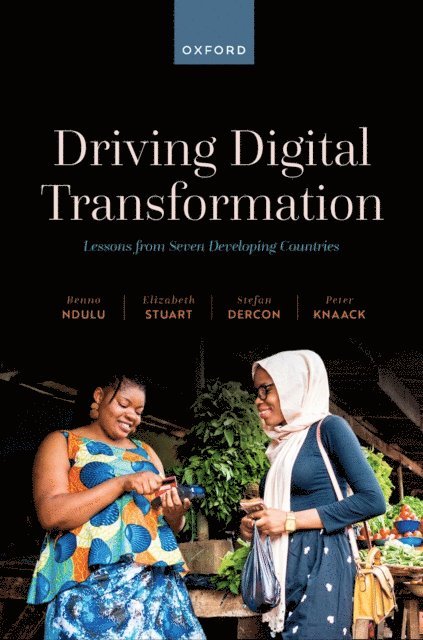
This is an open access title available under the terms of a CC BY-NC-ND 4.0 International licence. It is free to read at Oxford Scholarship Online and offered as a free PDF download from OUP and selected open access locations.In one country, the prime minister pushes for the liberalization of digital finance as a central pillar of the country's national strategy, while the central bank almost makes it a criminal offence. In another, the digital minister tries to scupper the very process to support digital transformation that the president has asked them to co-lead. This book gives a ringside seat on seven developing countries' tumultuous early steps on the path to a reform of the economy and the government using technology. Written by a group of academics and practitioners from Oxford at the heart of the process, but foregrounding the voices of the policymakers and participants, this book documents and critically assesses efforts to assist a set of governments to kick-start digital transformation. In doing so, it offers lessons for policymakers in other countries who want to pursue similar efforts. Beyond that, however, it is also an exposition of the process of policymaking more generally in the 2020s, and offers broader insight into how outsiders can play a sensible role in other reform processes in developing and emerging countries.
223 kr
Skickas inom 5-8 vardagar
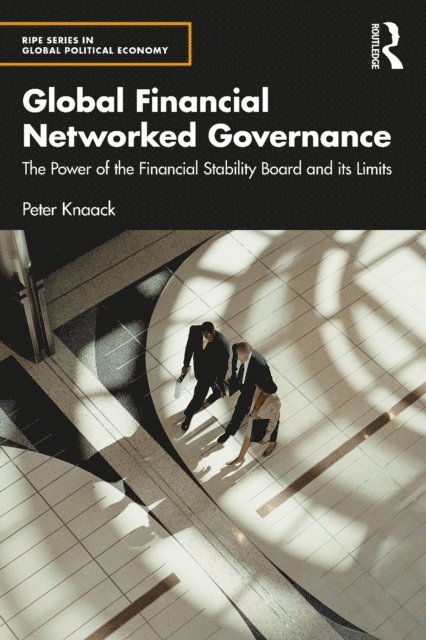
Global Financial Networked Governance
The Power of the Financial Stability Board and its Limits
Inbunden, Engelska, 2022
1 735 kr
Skickas inom 10-15 vardagar
Global Financial Networked Governance provides a careful analysis of the Financial Stability Board (FSB) and the standard-setters under its umbrella to show how such government networks harness the power of public reputation to herd their members into compliance. The FSB’s track record in coordinating global financial regulatory reform is uneven. Some items on its agenda have seen the rapid evolution of globally coordinated regulatory standards and their implementation by all member states, sometimes even ahead of the stipulated timelines. In contrast, other initiatives have stalled at different stages of the policymaking process, global coordination is lacking, deadlines have been missed, and it is currently unclear when the post-crisis financial reform project will come to completion, if ever. In this book, the author asks the question: why has the FSB succeeded in some areas of its global financial regulatory coordination work and not in others? The book traces the global policymaking process in three major issue areas: banking regulation (Basel III), over-the-counter (OTC) derivatives, and ending too-big-to-fail. Through a combination of careful process tracing and rigorous testing against alternative explanations, it challenges the existing literature by revealing that the institutional pathway of policymaking is the main predictor of FSB progress. It shows that government networks on their own have succeeded in implementing globally coherent safety standards. In contrast, legislation and legislators in key G20 countries have limited the power and effectiveness of the FSB. The author analyzes the causes and effects of this phenomenon and suggests a novel institutional solution to the effectiveness-legitimacy dilemma that global governance forums face, combining the advantages of functional specialization and electoral accountability.This book will be of great interest to graduate students; academics working at the intersection of economics, political science, and international law; students of the FSB in particular; and policymakers in global economic governance.
Global Financial Networked Governance
The Power of the Financial Stability Board and its Limits
Häftad, Engelska, 2022
434 kr
Skickas
Global Financial Networked Governance provides a careful analysis of the Financial Stability Board (FSB) and the standard-setters under its umbrella to show how such government networks harness the power of public reputation to herd their members into compliance. The FSB’s track record in coordinating global financial regulatory reform is uneven. Some items on its agenda have seen the rapid evolution of globally coordinated regulatory standards and their implementation by all member states, sometimes even ahead of the stipulated timelines. In contrast, other initiatives have stalled at different stages of the policymaking process, global coordination is lacking, deadlines have been missed, and it is currently unclear when the post-crisis financial reform project will come to completion, if ever. In this book, the author asks the question: why has the FSB succeeded in some areas of its global financial regulatory coordination work and not in others? The book traces the global policymaking process in three major issue areas: banking regulation (Basel III), over-the-counter (OTC) derivatives, and ending too-big-to-fail. Through a combination of careful process tracing and rigorous testing against alternative explanations, it challenges the existing literature by revealing that the institutional pathway of policymaking is the main predictor of FSB progress. It shows that government networks on their own have succeeded in implementing globally coherent safety standards. In contrast, legislation and legislators in key G20 countries have limited the power and effectiveness of the FSB. The author analyzes the causes and effects of this phenomenon and suggests a novel institutional solution to the effectiveness-legitimacy dilemma that global governance forums face, combining the advantages of functional specialization and electoral accountability.This book will be of great interest to graduate students; academics working at the intersection of economics, political science, and international law; students of the FSB in particular; and policymakers in global economic governance.