Peter ohrstrom – författare
Visar alla böcker från författaren Peter ohrstrom. Handla med fri frakt och snabb leverans.
8 produkter
Past, Present and Future
Av Arthur N. Prior, Max Cresswell m. fl.
E-bok, 2026
592 kr
Lägg i varukorg
Past, Present and Future , first published in 1967, is the magnum opus of Arthur Norman Prior (1914-1969). Prior was the founding father of tense-logic: Past, Present, and Future presents his tense-logic as a powerful and precise formalism for the systematic study of the temporal aspects of …
Papers on Time and Tense
Häftad, 2003
1170 kr
Lägg i varukorg
This is a new edition, revised and expanded, of a seminal work in the logic and philosophy of time, originally published in 1968. Arthur N. Prior (1914-1969) was the founding father of temporal logic. His work has attracted increased attention in the decades since his death: its influence stretches …
Temporal Logic
From Ancient Ideas to Artificial Intelligence
E-bok, 2007
2111 kr
Lägg i varukorg
Temporal Logic: From Ancient Ideas to Artificial Intelligence deals with the history of temporal logic as well as the crucial systematic questions within the field. The book studies the rich contributions from ancient and medieval philosophy up to the downfall of temporal logic in the Renaissance. …
Philosophy and Psychology of Time
Av Peter ohrstrom, Valtteri Arstila m. fl.
E-bok, 2015
734 kr
Lägg i varukorg
This book is an edited collection of papers from international experts in philosophy and psychology concerned with time. The collection aims to bridge the gap between these disciplines by focussing on five key themes and providing philosophical and psychological perspectives on each theme. The …
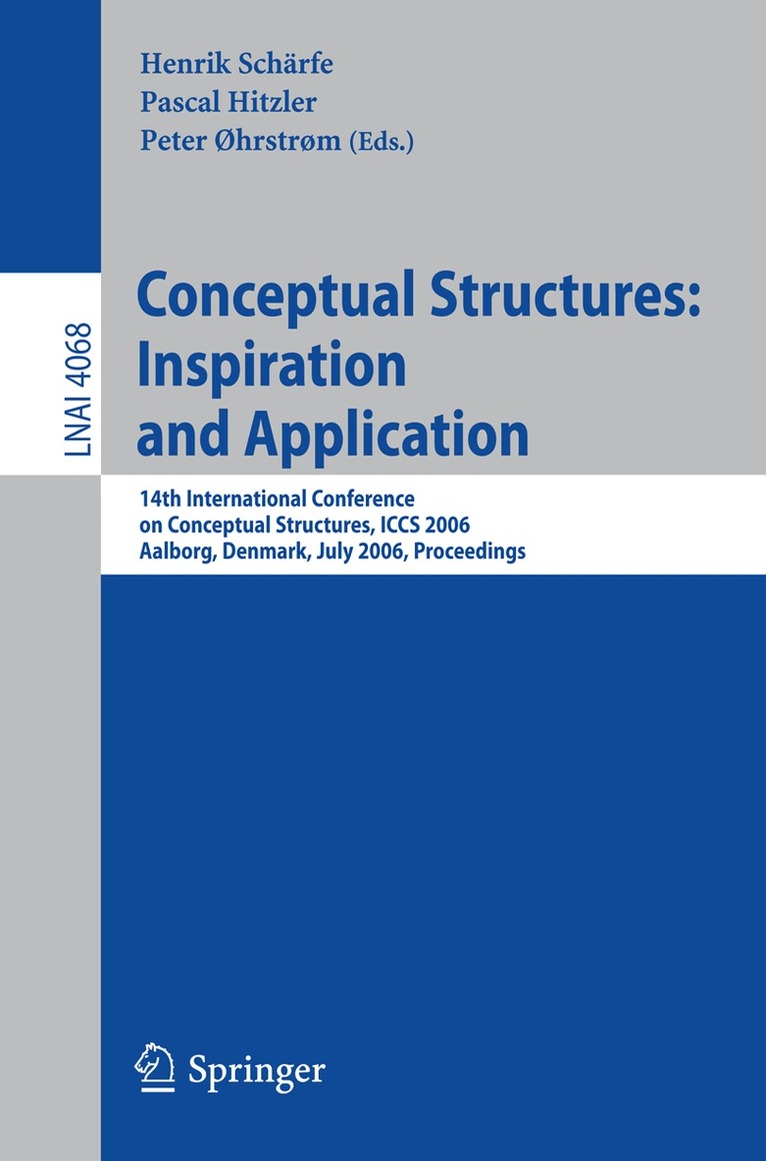
Conceptual Structures: Inspiration and Application
14th International Conference on Conceptual Structures, ICCS 2006, Aalborg, Denmark, July 16-21, 2006, Proceedings
Av Henrik Schärfe, Pascal Hitzler m. fl.
Häftad, 2006
568 kr
Lägg i varukorg
th The 14 International Conference on Conceptual Structures (ICCS 2006) was held in Aalborg, Denmark during July 16 – 21, 2006. Responding to the Call for Papers, we received 62 papers from 20 different countries, representing six different continents. This clearly indicates the international …
Conceptual Structures: Inspiration and Application
14th International Conference on Conceptual Structures, ICCS 2006, Aalborg, Denmark, July 16-21, 2006, Proceedings
Av Peter Ohrstrom, Pascal Hitzler m. fl.
E-bok, 2006
734 kr
Lägg i varukorg
th The 14 International Conference on Conceptual Structures (ICCS 2006) was held in Aalborg, Denmark during July 16 – 21, 2006. Responding to the Call for Papers, we received 62 papers from 20 different countries, representing six different continents. This clearly indicates the international …
Persuasive Technology
Third International Conference, PERSUASIVE 2008, Oulu, Finland, June 4-6, 2008, Proceedings
Av Peter ohrstrom, Katarina Segerstahl m. fl.
E-bok, 2008
734 kr
Lägg i varukorg
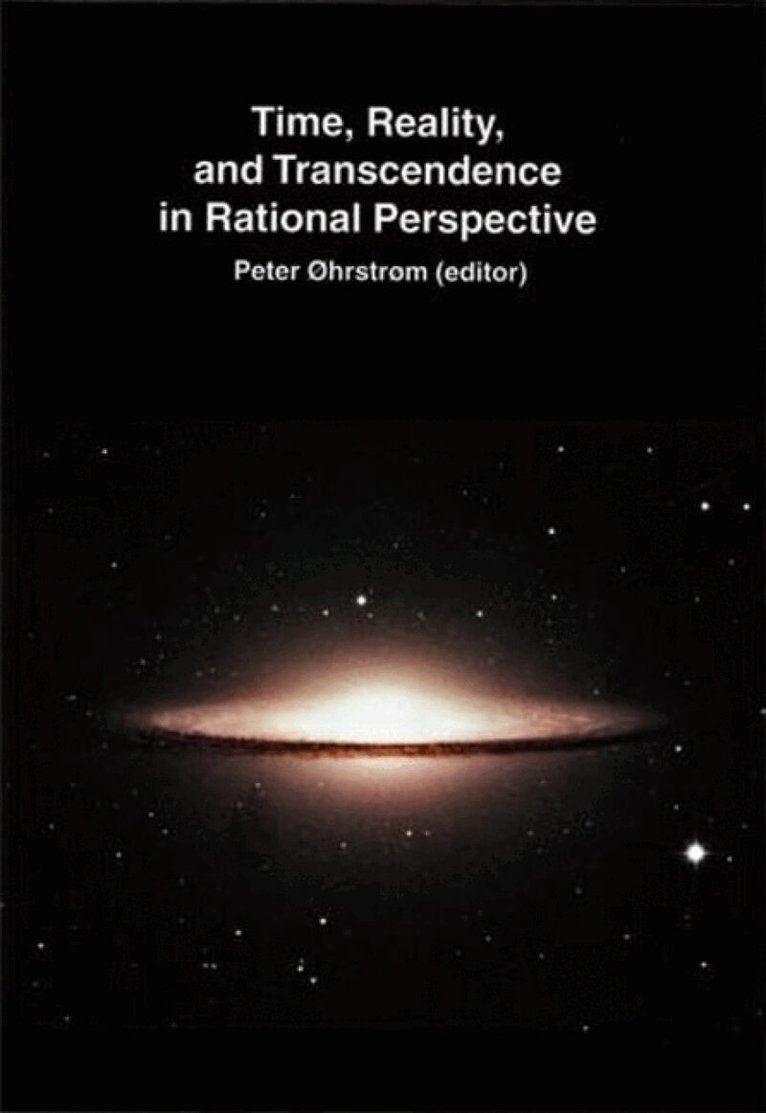
Time, Reality & Transcendence in Rational Perspective
Häftad, 2003
182 kr
Lägg i varukorg
Rationality is widely regarded as being at odds with the very concepts of metaphysics and transcendence. Yet it is easy to forget that the thinkers who pioneered rationality and the scientific method did not subscribe to this view. For instance, Aristotle described God as the source of reason in …