Peter S. Goodman – författare
Visar alla böcker från författaren Peter S. Goodman. Handla med fri frakt och snabb leverans.
4 produkter
4 produkter
180 kr
Skickas inom 5-8 vardagar
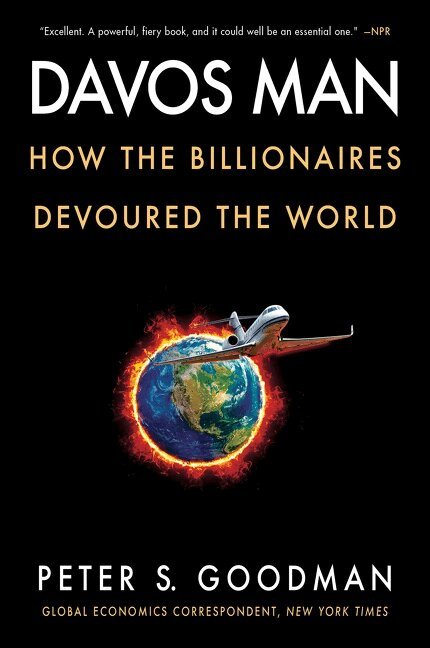
A San Francisco Chronicle Bestseller • An NPR Best Book of the YearThe New York Times’s Global Economics Correspondent masterfully reveals how billionaires’ systematic plunder of the world—brazenly accelerated during the pandemic—has transformed 21st-century life and dangerously destabilized democracy.“Davos Man will be read a hundred years from now as a warning.” —Evan Osnos“Excellent. A powerful, fiery book, and it could well be an essential one.” —NPR.orgThe history of the last half century in America, Europe, and other major economies is in large part the story of wealth flowing upward. The most affluent people emerged from capitalism’s triumph in the Cold War to loot the peace, depriving governments of the resources needed to serve their people, and leaving them tragically unprepared for the worst pandemic in a century.Drawing on decades of experience covering the global economy, award-winning journalist Peter S. Goodman profiles five representative “Davos Men”—members of the billionaire class—chronicling how their shocking exploitation of the global pandemic has hastened a fifty-year trend of wealth centralization. Alongside this reporting, Goodman delivers textured portraits of those caught in Davos Man’s wake, including a former steelworker in the American Midwest, a Bangladeshi migrant in Qatar, a Seattle doctor on the front lines of the fight against COVID, blue-collar workers in the tenements of Buenos Aires, an African immigrant in Sweden, a textile manufacturer in Italy, an Amazon warehouse employee in New York City, and more.Goodman’s revelatory exposé of the global billionaire class reveals their hidden impact on nearly every aspect of modern society: widening wealth inequality, the rise of anti-democratic nationalism, the shrinking opportunity to earn a livable wage, the vulnerabilities of our health-care systems, access to affordable housing, unequal taxation, and even the quality of the shirt on your back. Meticulously reported yet compulsively readable, Davos Man is an essential read for anyone concerned about economic justice, the capacity of societies to grapple with their greatest challenges, and the sanctity of representative government.
280 kr
Skickas inom 3-6 vardagar
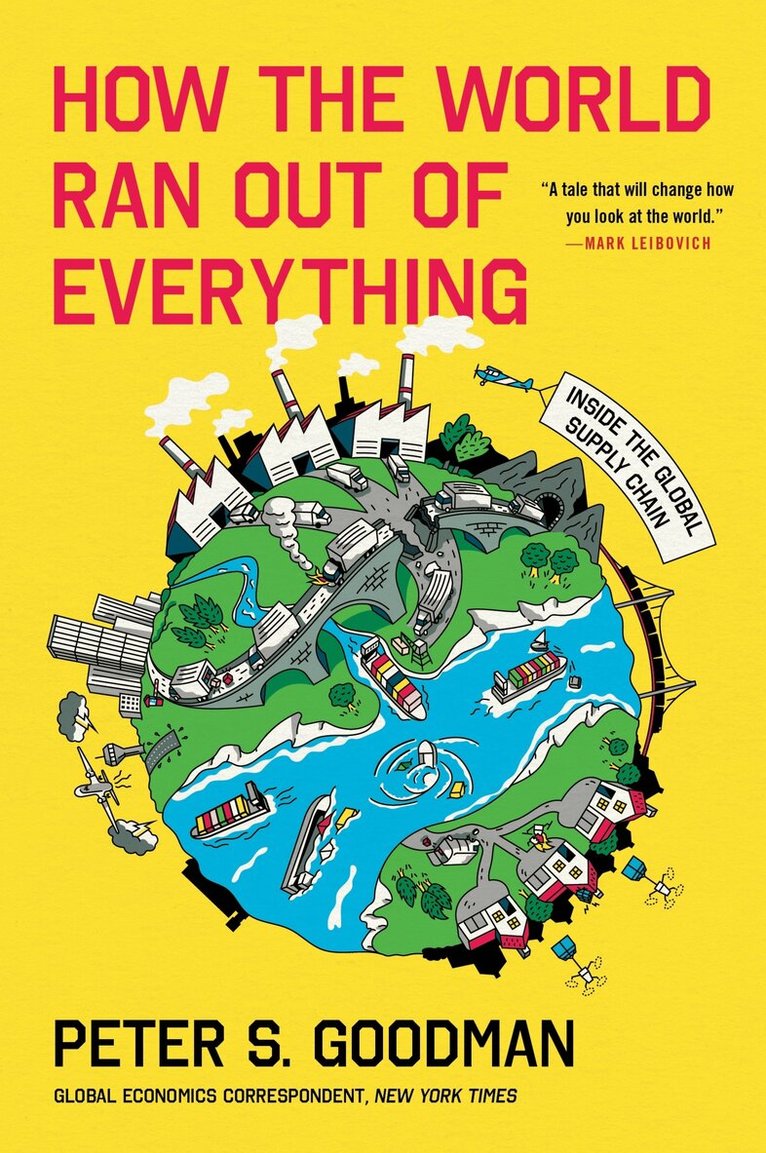
By the New York Times’s Global Economics Correspondent, an extraordinary journey to understand the worldwide supply chain—exposing both the fascinating pathways of manufacturing and transportation that bring products to your doorstep, and the ruthless business logic that has left local communities at the mercy of a complex and fragile network for their basic necessities."A tale that will change how you look at the world." —Mark LeibovichNamed a Best Book of the Year by Foreign Policy and The Aspen Institute * Longlisted for the Porchlight Business Book AwardHow does the wealthiest country on earth run out of protective gear in the middle of a public health catastrophe? How do its parents find themselves unable to locate crucially needed infant formula? How do its largest companies spend billions of dollars making cars that no one can drive for a lack of chips?The last few years have radically highlighted the intricacy and fragility of the global supply chain. Enormous ships were stuck at sea, warehouses overflowed, and delivery trucks stalled. The result was a scarcity of everything from breakfast cereal to medical devices, from frivolous goods to lifesaving necessities. And while the scale of the pandemic shock was unprecedented, it underscored the troubling reality that this system built on Just in Time principles was fundamentally at risk of descending into chaos all along. And it still is. Sabotaged by financial interests, a loss of transparency in markets, and worsening working conditions for the people tasked with keeping the gears turning, our global supply chain has become perpetually on the brink of collapse.In How the World Ran Out of Everything, award-winning journalist Peter S. Goodman reveals the fascinating innerworkings of our supply chain and the factors that have led to its constant, dangerous vulnerability. His reporting takes readers deep into the elaborate system, showcasing the triumphs and struggles of the human players who operate it—from factories in Asia and an almond grower in Northern California, to a group of striking railroad workers in Texas, to a truck driver who Goodman accompanies across hundreds of miles of the Great Plains. Through their stories, Goodman weaves a powerful argument for reforming a supply chain to become truly reliable and resilient, demanding a radical redrawing of the bargain between labor and shareholder interests, and deeper attention paid to how we get the things we need.From one of the most respected voices in economic journalism working today, How the World Ran Out of Everything is a fiercely smart, deeply informative look at how our supply chain operates, and why its reform is crucial—not only to avoid dysfunction in our day to day lives, but to protect the fate of our global fortunes. This riveting work of economic journalism breaks down the complexities of modern globalization and reveals: The Just in Time Fallacy: Discover how a sensible manufacturing philosophy was twisted to prioritize shareholder interests over resilience, setting the stage for global shortages and widespread inflation.Human Cost of Efficiency: Journey from factories in Asia to the highways of the Great Plains and meet the human players—from truck drivers to railroad workers—exploited to keep the gears of commerce turning.Monopoly Power and Price Hikes: Investigate how decades of deregulation allowed a few monopolistic companies to dominate key industries, engineering scarcity to boost profits during a worldwide catastrophe.The Future of the Supply Chain: Explore the urgent arguments for reforming the system through reshoring and nearshoring to build a more reliable and resilient network for the things we need.
163 kr
Kommande
By the New York Times’s Global Economics Correspondent, an extraordinary journey to understand the worldwide supply chain—exposing both the fascinating pathways of manufacturing and transportation that bring products to your doorstep, and the ruthless business logic that has left local communities at the mercy of a complex and fragile network for their basic necessities."A tale that will change how you look at the world." —Mark LeibovichNamed a Best Book of the Year by Foreign Policy and The Aspen Institute * Longlisted for the Porchlight Business Book AwardHow does the wealthiest country on earth run out of protective gear in the middle of a public health catastrophe? How do its parents find themselves unable to locate crucially needed infant formula? How do its largest companies spend billions of dollars making cars that no one can drive for a lack of chips?The last few years have radically highlighted the intricacy and fragility of the global supply chain. Enormous ships were stuck at sea, warehouses overflowed, and delivery trucks stalled. The result was a scarcity of everything from breakfast cereal to medical devices, from frivolous goods to lifesaving necessities. And while the scale of the pandemic shock was unprecedented, it underscored the troubling reality that this system built on Just in Time principles was fundamentally at risk of descending into chaos all along. And it still is. Sabotaged by financial interests, a loss of transparency in markets, and worsening working conditions for the people tasked with keeping the gears turning, our global supply chain has become perpetually on the brink of collapse.In How the World Ran Out of Everything, award-winning journalist Peter S. Goodman reveals the fascinating innerworkings of our supply chain and the factors that have led to its constant, dangerous vulnerability. His reporting takes readers deep into the elaborate system, showcasing the triumphs and struggles of the human players who operate it—from factories in Asia and an almond grower in Northern California, to a group of striking railroad workers in Texas, to a truck driver who Goodman accompanies across hundreds of miles of the Great Plains. Through their stories, Goodman weaves a powerful argument for reforming a supply chain to become truly reliable and resilient, demanding a radical redrawing of the bargain between labor and shareholder interests, and deeper attention paid to how we get the things we need.From one of the most respected voices in economic journalism working today, How the World Ran Out of Everything is a fiercely smart, deeply informative look at how our supply chain operates, and why its reform is crucial—not only to avoid dysfunction in our day to day lives, but to protect the fate of our global fortunes. This riveting work of economic journalism breaks down the complexities of modern globalization and reveals: The Just in Time Fallacy: Discover how a sensible manufacturing philosophy was twisted to prioritize shareholder interests over resilience, setting the stage for global shortages and widespread inflation.Human Cost of Efficiency: Journey from factories in Asia to the highways of the Great Plains and meet the human players—from truck drivers to railroad workers—exploited to keep the gears of commerce turning.Monopoly Power and Price Hikes: Investigate how decades of deregulation allowed a few monopolistic companies to dominate key industries, engineering scarcity to boost profits during a worldwide catastrophe.The Future of the Supply Chain: Explore the urgent arguments for reforming the system through reshoring and nearshoring to build a more reliable and resilient network for the things we need.
331 kr
Skickas inom 3-6 vardagar