Peter Sikora – författare
Visar alla böcker från författaren Peter Sikora. Handla med fri frakt och snabb leverans.
6 produkter
6 produkter
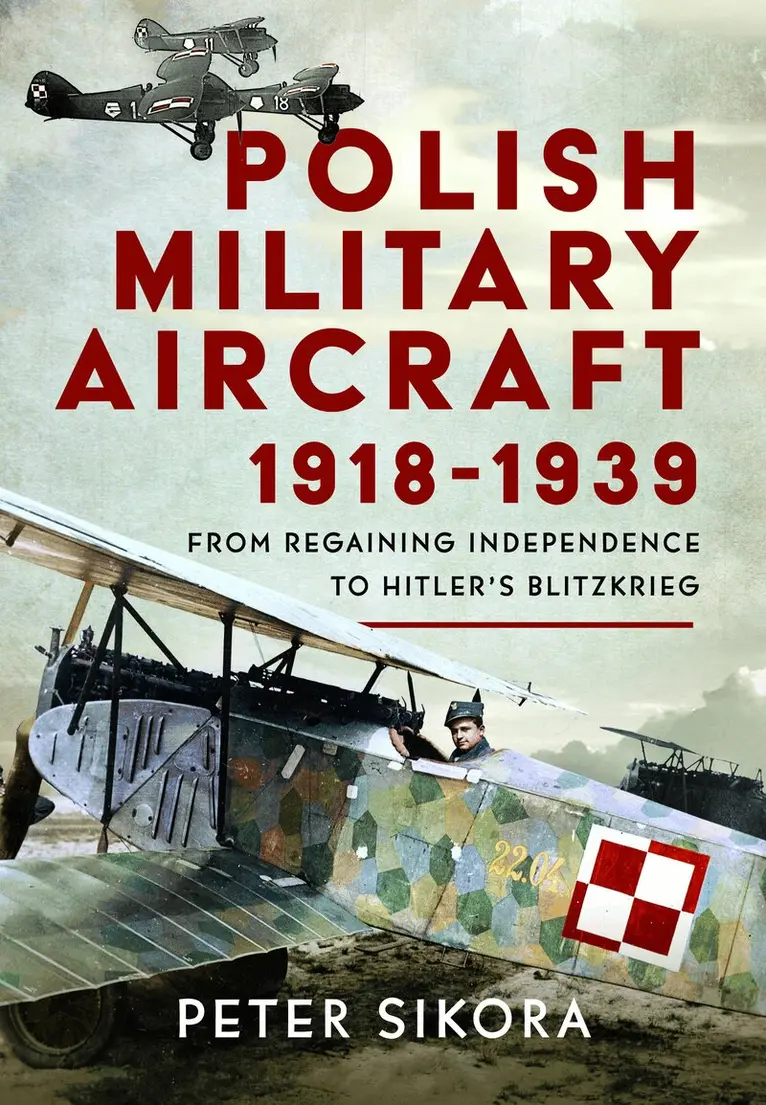
Polish Military Aircraft 1918-1939
From Regaining Independence to Hitler’s Blitzkrieg
Inbunden, Engelska, 2026
309 kr
Skickas
Despite not existing as a free country for 123 years until the end of the First World War, the roots of Polish aviation, including military aviation, reach as far back as the days of pioneers such as Otto Lilienthal or the Wright Brothers.The Polish Military Aviation can trace its origins to the second half of 1917, and was officially established when Poland regained her independence on 11 November 1918. The country was then able to build its own air force with men being proud to call themselves Poles again.Despite its difficult rebirth, in the 1930s Poland developed a wide range of its own aircraft. These included the PZL P.6 fighter which gained fame for being the most advanced of its day and the first fighter aircraft made of metal in the world, or PZL P.24 fighter considered by the RAF as a purchase option. Towards the end of the decade, however, foreign aircraft design had overtaken them.In 1939, Poland fought its lonely war against overwhelming might of the German Third Reich, the fascist state of Slovakia and the Soviet Russia. Though surrounded, massively outnumbered and flying mostly inferior aircraft, Polish fliers caused the attacking forces considerable losses, including 500 aircraft, destroyed and damaged.As well as telling the story of the valiant Polish flyers, Polish Military Aircraft 1918-1939 includes a wonderful collection of photographs, the majority of which have never been seen in the West. Together, these take the reader on a journey throughout the early years of Polish military aviation, showing amazing pictures of German, Austro-Hungarian or Russian aeroplanes, in many cases scavenged by the Poles. Also included is selection of British aircraft which were used in Poland, as well as a host of photographs of Polish-designed and built machines, including these that had to face Luftwaffe in September of 1939.
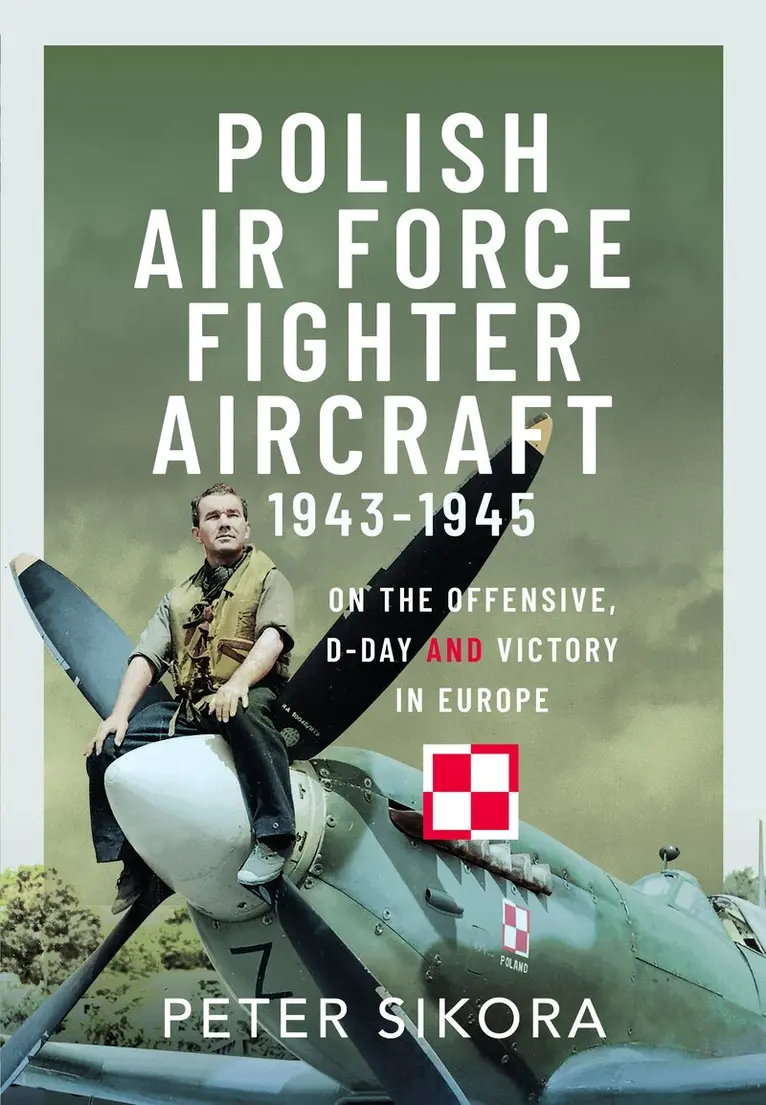
Polish Air Force Fighter Aircraft, 1943-1945
On the Offensive, D-Day and Victory in Europe
Inbunden, Engelska, 2024
297 kr
Skickas
From the first combat over Poland in 1939, until Bomber Command’s assault on Hitler’s alpine retreat at Berchtesgaden in April 1945, when the red and white marked Mustangs escorted the bombers on their way to the target, there was no major RAF aerial operation undertaken in Europe without the involvement of Polish fighter squadrons and pilots.As well as mounting offensive sorties from the UK, Polish fighter squadrons fought in North Africa in 1943, where they added to their already formidable reputation. Some Polish airmen were even posted to the US Air Force, again proving themselves in battle.Polish fighter pilots operated over the Normandy beaches in support of the D-Day landings in June 1944\. Some of the Polish squadrons were then deployed across the Channel to France, from where they undertook dangerous dive-bombing missions, while their colleagues in Britain chased the much-feared V1 flying bombs.The last Polish claims were made in April 1945, when a number of the Luftwaffe’s technically-advanced Messerschmitt Me 262 jets were destroyed in a dog fight by Nos. 306 and 309 Polish squadrons. These victories marked the end of the journey that started almost six years earlier.After claiming a total of 748 enemy aircraft destroyed under British and American command, Polish fighter pilots gained a reputation for being loyal and fearsome warriors, who sacrificed nearly 550 of their own men, killed in action, wounded, missing, or captured, while fighting for the freedom that their countrymen would not enjoy for many decades.Polish fighter pilots fought in the skies from the very first day of the war until its last. As well as seeing action in Western Europe, they fought in Italy, North Africa and in Asia. The last PAF airman was killed in action on 4 May 1945\. He was a fighter pilot of No. 317 (City of Wilno) Squadron. While his Spitfire was going down, not only Wilno, but the rest of Poland, was being absorbed into the Soviet Union. He died for a cause that was already lost. Nevertheless, the achievements of the Polish squadrons, man for man, rank amongst the highest of the Allied nations.
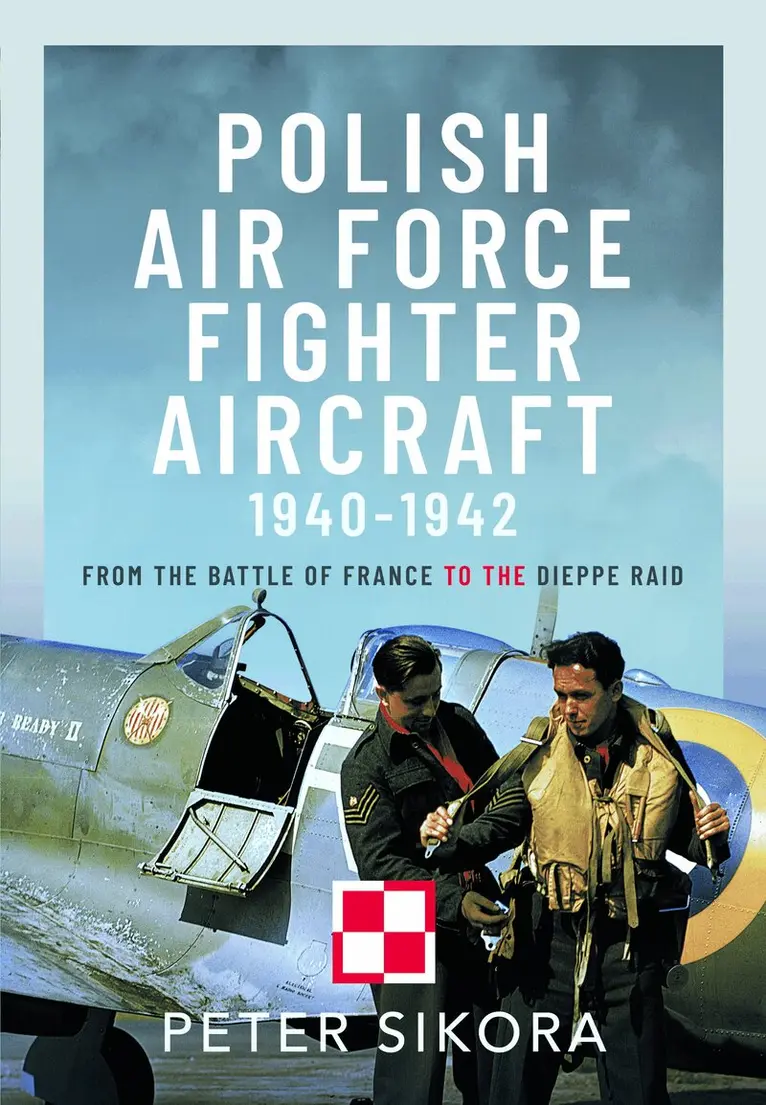
Polish Air Force Fighter Aircraft, 1940-1942
From the Battle of France to the Dieppe Raid
Inbunden, Engelska, 2023
257 kr
Skickas
Polish fighter pilots received their baptism of fire over their own country in September 1939, when they were overwhelmed by the aerial might of Germany and the Soviet Union. Despite this, they claimed over 120 enemy aircraft destroyed. When the Polish Air Force was reborn in France, the same men fought against the same enemy, yet with more experience and with better understanding of their opponents’ tactics – though, as the author reveals, the aircraft they flew were, in most cases, quite different.Polish airmen also proved themselves during the Battle of Britain, when 145 men from Poland, the biggest non-British contingent in Fighter Command, fought for the survival one of the last bastions of democracy. With an impressive tally of 126 enemy aircraft destroyed over Poland, and a further fifty-one in France, these men, including combat pilots, flying instructors and test pilots, had to be trained to serve under the command of the RAF. They had to learn a new language that was crucial for them to be part of the Fighter Command organisation, and when they finally did, for every 100 men involved in fighting Göring’s Luftwaffe in the air, up to twenty of them were Polish. During the Battle of Britain fighter pilots from Poland destroyed over 202 enemy aircraft with 303 Squadron becoming the most successful unit in the whole of Fighter Command.Ten Polish fighter squadrons were eventually formed and went on to fight alongside their British, Canadian, Australian, Belgian, or Dutch brothers in arms in the RAF’s offensive over northern Europe that began in earnest in 1941. In so doing, the Polish fighter pilots achieved many successes against the enemy in the sky as well as on the ground, though, inevitably, at a cost.Polish Air Force Fighter Aircraft, 1940-1942 tells the story that the men and machines of the Polish squadrons underwent from the Battle of France to the Dieppe Raid. The latter was almost as disastrous in the air as it was on the ground – though, from the Polish perspective, it confirmed the long-developed skills of their pilots. This book, however, is not just about the aircraft the Polish aircrew flew, it also reveals how these men lived and fought in the early years of the Second World War.
309 kr
Skickas
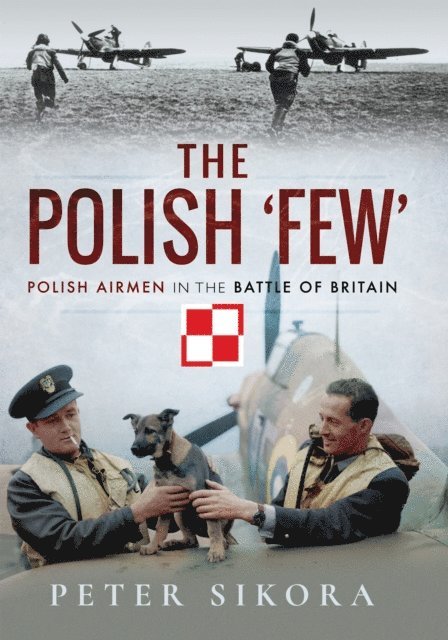
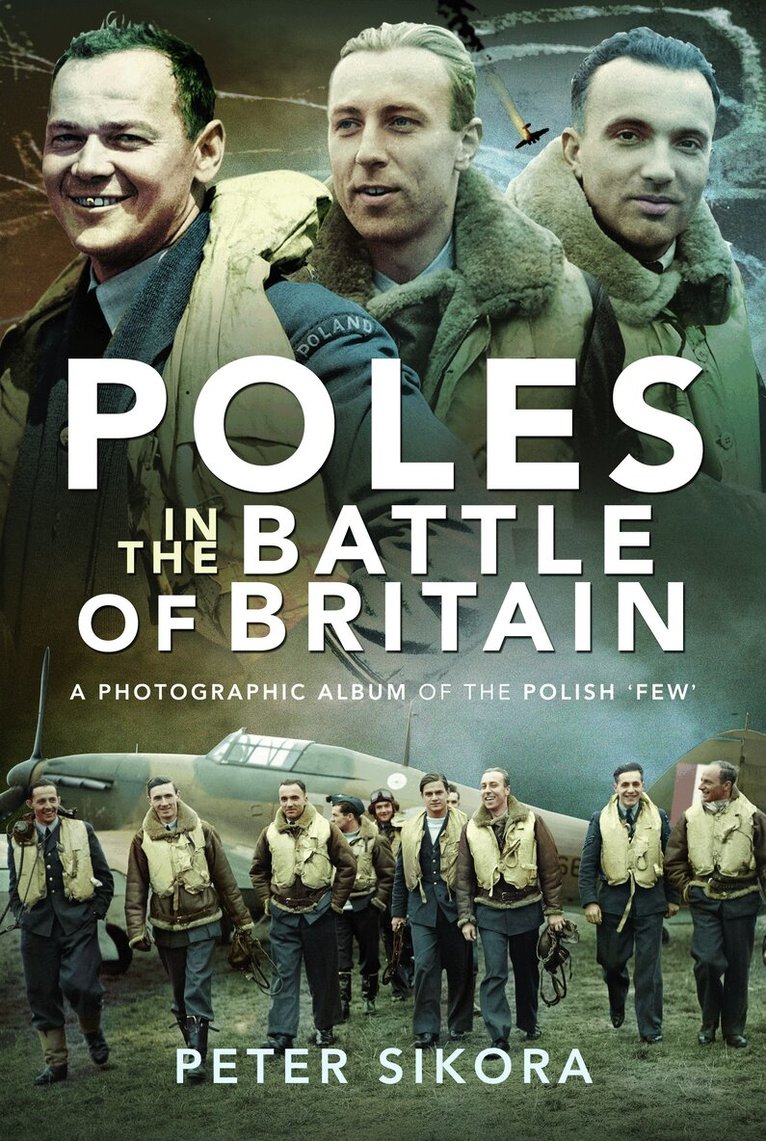
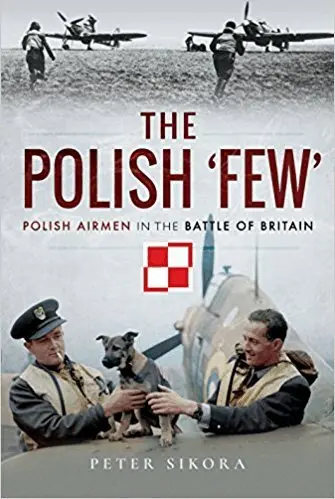
They came to fight for freedom and their country. They came to fight Germans. They were men of the Polish Air Force who had escaped first to France and then to Britain to fly alongside the Royal Air Force just as Fighter Command faced its greatest challenge – the Battle of Britain.Many of the Polish airmen joined existing RAF squadrons. The Poles also formed their own squadrons, but only four were operational during the Battle of Britain. Two, Nos. 300 and 301, were bomber squadrons, with the remaining pair, Nos. 302 and 303, were fighter squadrons. Flying Hawker Hurricanes, both 302 and 303 squadrons were active by the middle of August 1940, just when they were needed most with Fighter Command stretched to its limit at the height of the Battle of Britain.The Polish squadrons, many of the pilots battle-hardened from their encounters with the Luftwaffe during the invasion of Poland and Battle of France, soon made their mark. In particular, 303 Squadron become the highest-scoring unit of Fighter Command.In total, 145 Polish pilots, the largest non-British contingent in Fighter Command at the time, fought in the Battle of Britain. While Winston Churchill praised the contribution of the ‘Few’, the pilots of many nationalities who had defended Britain, Air Chief Marshal Sir Hugh Dowding was more specific: ‘Had it not been for the magnificent material contributed by the Polish squadrons and their unsurpassed gallantry, I hesitate to say that the outcome of the Battle would have been the same.’
307 kr
Tillfälligt slut
They came to fight for freedom and their country, they came to fight Germans. Men of the Polish Air Force, who had escaped first to France and then to Britain, to fly alongside the Royal Air Force just as Fighter Command faced its greatest challenge-the Battle of Britain.Many of the Polish airmen joined existing RAF squadrons. The Poles also formed their own squadrons, but only four became operational during the Battle of Britain: Nos. 300 and 301, were bomber squadrons, with another two, Nos. 302 and 303, being fighter squadrons. Flying Hawker Hurricanes, both 302 and 303 squadrons were active by the middle of August 1940, just when they were most needed, at the height of the Battle of Britain, with Fighter Command stretched to its limit.The Polish squadrons, battle-hardened from their encounters with the Luftwaffe during the invasion of Poland and Battle of France, soon made their mark. In particular, 303 Squadron become the highest-scoring unit of Fighter Command.In total, 145 Polish pilots, the largest non-British contingent in Fighter Command at the time, fought in the Battle of Britain. While Winston Churchill praised the contribution of the 'Few', the pilots of many nationalities who had defended Britain, Air Chief Marshal Sir Hugh Dowding was more specific: 'Had it not been for the magnificent material contributed by the Polish squadrons and their unsurpassed gallantry, I hesitate to say that the outcome of the Battle would have been the same.'
266 kr
Skickas
The Polish Air Force, which was created in Britain in the summer of 1940 from flying and ground personnel evacuated from Poland and then from France, proved to be one of the most successful formations to fight the Luftwaffe during the Battle of Britain. Overcoming the obstacles of language and operating in a foreign country, the Polish Air Force gained independent status, flying alongside the RAF rather than being a part of the RAF - and for the first time the Polish Air Force became a separate air arm of the Polish Armed Forces.It is stated that 145 Polish pilots fought in the Battle of Britain, many of them experienced and battle-hardened. These men fought not only for freedom of their own homeland but also for British people, of whom they often knew very little. The Poles were able to form four squadrons, two bomber and two fighter, that went into operations during the Battle of Britain. Many other Polish fliers were dispersed across the Fighter Command, joining various RAF squadrons. They all made a decisive impact, when they were needed the most, gaining the respect their British colleagues and the British public.In this superb collection of photographs, the story of the Polish Few is told from their hazardous journey from Poland to the UK and in the great struggle for control of the skies above Britain during that memorable summer of 1940.