Peter T. Manicas - Böcker
Visar alla böcker från författaren Peter T. Manicas. Handla med fri frakt och snabb leverans.
5 produkter
5 produkter
385 kr
Skickas inom 7-10 vardagar
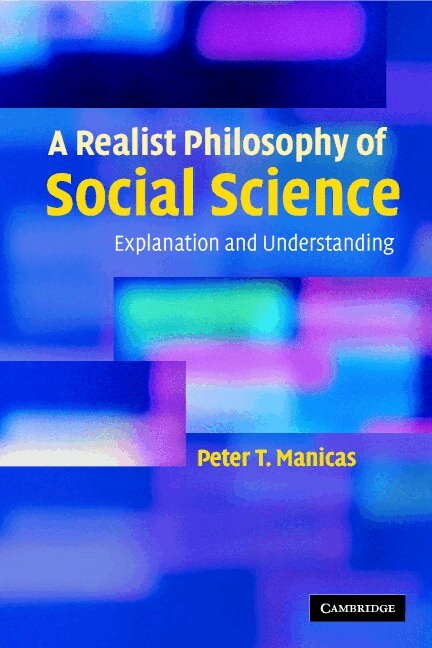
This introduction to the philosophy of social science provides an original conception of the task and nature of social inquiry. Peter Manicas discusses the role of causality seen in the physical sciences and offers a reassessment of the problem of explanation from a realist perspective. He argues that the fundamental goal of theory in both the natural and social sciences is not, contrary to widespread opinion, prediction and control, or the explanation of events (including behaviour). Instead, theory aims to provide an understanding of the processes which, together, produce the contingent outcomes of experience. Offering a host of concrete illustrations and examples of critical ideas and issues, this accessible book will be of interest to students of the philosophy of social science, and social scientists from a range of disciplines.
784 kr
Skickas inom 7-10 vardagar
This introduction to the philosophy of social science provides an original conception of the task and nature of social inquiry. Peter Manicas discusses the role of causality seen in the physical sciences and offers a reassessment of the problem of explanation from a realist perspective. He argues that the fundamental goal of theory in both the natural and social sciences is not, contrary to widespread opinion, prediction and control, or the explanation of events (including behaviour). Instead, theory aims to provide an understanding of the processes which, together, produce the contingent outcomes of experience. Offering a host of concrete illustrations and examples of critical ideas and issues, this accessible book will be of interest to students of the philosophy of social science, and social scientists from a range of disciplines.
539 kr
Skickas inom 7-10 vardagar
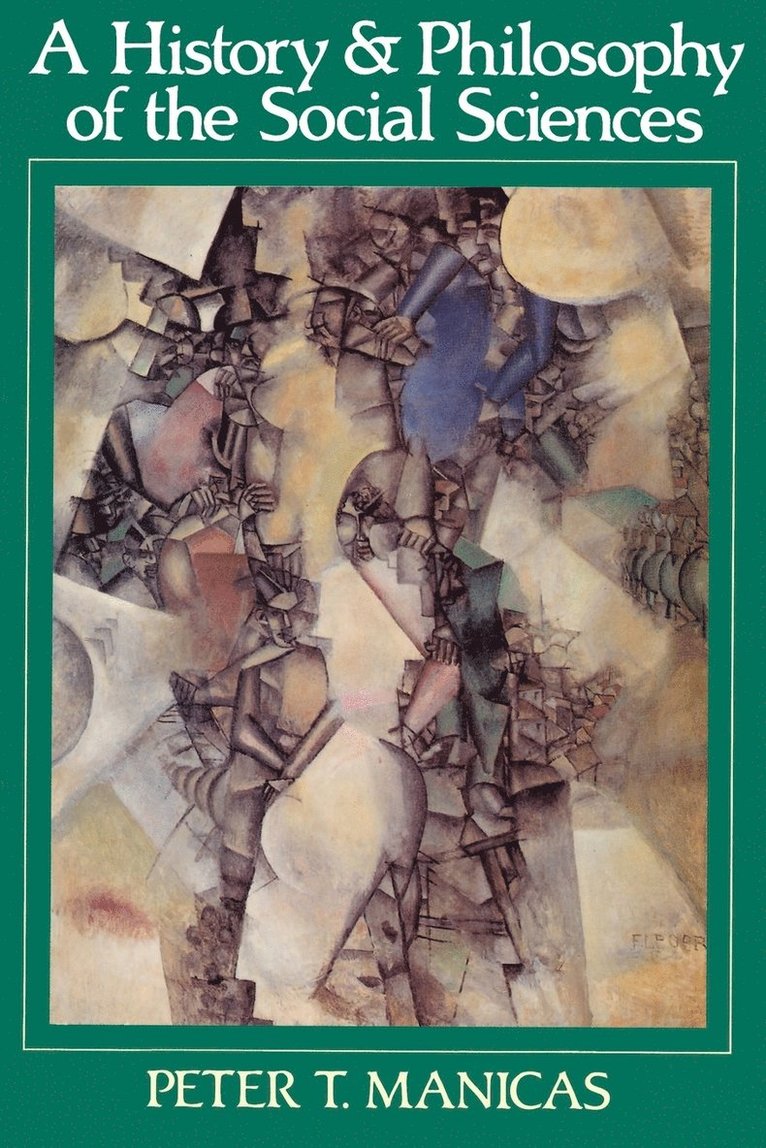
This ambitious critical history of the variety of disciplines we group together as the social sciences argues that the defining characteristic of social science, both historically and in the present, is ideology. Based originally on a flawed ideal of science, the 'social sciences' have incorporated and refined a set of assumptions about the nature of state and society, assumptions which have been institutionalized with the growth of modern universities. The book is in three main parts. It deals firstly with the history of certain key ides from the early modern period (assessing thinkers from Hobbes and Marx to Hegel, Weber, and Kuhn), before exploring the institutional and social features which have shaped the emergence of modern social science. Manicas goes on to reveal the ideological component of mainstream social science, concluding by suggesting and alternative realist philosophy for the future. Rigorous in scholarship and engaging in presentation, the book offers a brilliant combination of wide-ranging historical scholarship and a firm location in the current theoretical dilemmas of the social sciences.
1 572 kr
Skickas inom 10-15 vardagar
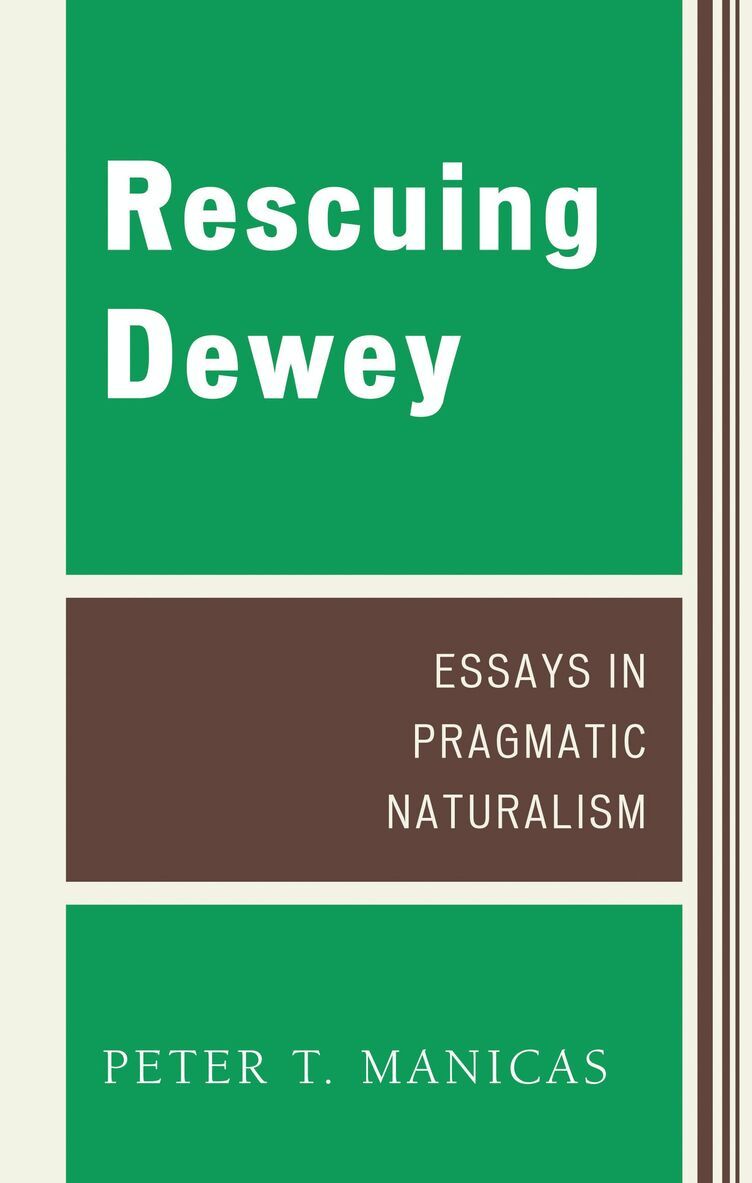
This book rescues an often misunderstood, underappreciated, and radical John Dewey. It centers on his rejection of traditional epistemology for his original and powerful view of "logic"—with serious implications for general philosophy, the philosophy of the human sciences, including psychology, and the philosophy of democracy. The goal of this work is not to try to rescue Dewey from his critics, but to rescue Dewey from his friends—from those who ignore the implications of Dewey's naturalism to those influenced by Richard Rorty who take Dewey's rejection of insurrectionary politics too far.While it is true that Dewey rejected insurrectionary politics and was no "fire-eating leftist," his analysis of the present was radical in the sense that it went straight to the roots. Peter T. Manicas examines how this made Dewey's politics similar to those of Marx in many crucial ways and the positive effort of these essays places Dewey's naturalism at the forefront, resolving some of the tensions and misunderstandings stemming from his body of work. Doing so requires serious reconsideration of some of his most characteristic views on philosophy—especially of logic and epistemology—science, and democracy.
287 kr
Skickas inom 7-10 vardagar
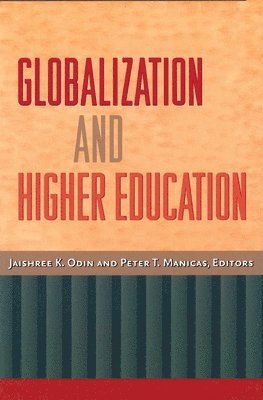
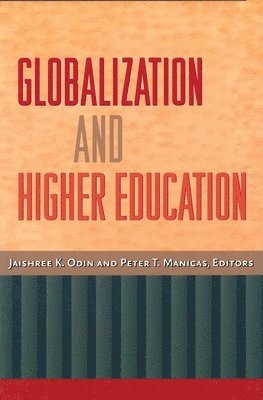
Post-secondary education is a massive globalizing industry with a potential for growth that cannot be overestimated. By 2010 there will be 100 million people in the world, all fully qualified to proceed from secondary to tertiary education, but there will be no room left on any campus. A distinguished panel of scholars and educational administrators from the Americas, Asia, Europe, and the Pacific was asked to speak on the complexities of globalized higher education from their positions of concern and expertise and then engage in a dialogue. The result is this timely and important work. Throughout, contributors address a number of difficult questions: Do the processes of global capitalism fundamentally challenge the inherited forms of the University? How should the use and nature of markets be conceived and how are they related? What is the appropriate pedagogy for the new technologies and what are its limits? If growing participation in higher education is an overriding good, should this be conceived in terms of fulfilling human capacities, realizing national goals, or attaining employment skills?