Peter Tame - Böcker
Visar alla böcker från författaren Peter Tame. Handla med fri frakt och snabb leverans.
5 produkter
5 produkter
2 150 kr
Skickas inom 10-15 vardagar
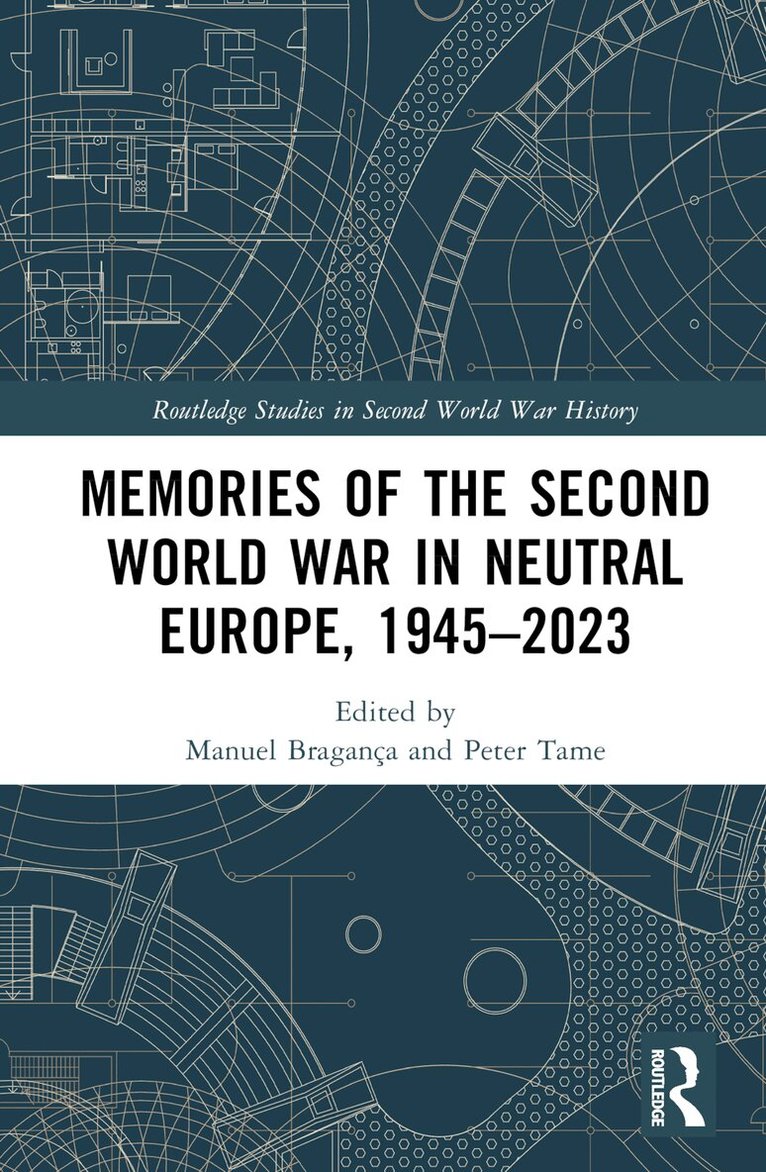
This edited volume is a sequel to, and a development of, The Long Aftermath: Cultural Legacies of Europe at War, 1936–2016 (2016). It focuses on the six major European countries and states that remained officially neutral throughout the Second World War, namely Ireland, Portugal, Spain, Sweden, Switzerland, and the Vatican.Its transnational, comparative, and interdisciplinary approach addresses complex questions pertaining to collective remembrance, national policies and politics, and intellectual as well as cultural responses to neutrality during and after the conflict. The contributions are from a broad range of scholars working across the disciplines of history, literature, film, media, and cultural studies. Their thought-provoking chapters challenge many assumptions about neutrality in the post-war European and global context, thereby filling a gap in the existing scholarship.Common themes that run through the volume include the intertwined and dynamic links between neutrality and moral responsibility during and after the Second World War, the importance of memory politics and popular culture in shaping collective memories, and the impact of the Holocaust in shifting traditional perspectives on neutrality since the 1990s. This volume will be of interest to undergraduates, postgraduates, scholars interested in the field of memory studies, as well as non-specialist readers.
649 kr
Skickas inom 10-15 vardagar
This edited volume is a sequel to, and a development of, The Long Aftermath: Cultural Legacies of Europe at War, 1936–2016 (2016). It focuses on the six major European countries and states that remained officially neutral throughout the Second World War, namely Ireland, Portugal, Spain, Sweden, Switzerland, and the Vatican.Its transnational, comparative, and interdisciplinary approach addresses complex questions pertaining to collective remembrance, national policies and politics, and intellectual as well as cultural responses to neutrality during and after the conflict. The contributions are from a broad range of scholars working across the disciplines of history, literature, film, media, and cultural studies. Their thought-provoking chapters challenge many assumptions about neutrality in the post-war European and global context, thereby filling a gap in the existing scholarship.Common themes that run through the volume include the intertwined and dynamic links between neutrality and moral responsibility during and after the Second World War, the importance of memory politics and popular culture in shaping collective memories, and the impact of the Holocaust in shifting traditional perspectives on neutrality since the 1990s. This volume will be of interest to undergraduates, postgraduates, scholars interested in the field of memory studies, as well as non-specialist readers.
2 229 kr
Skickas inom 3-6 vardagar
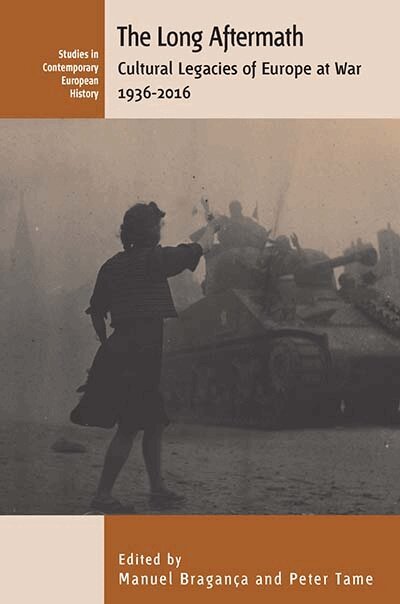
In its totality, the “Long Second World War”—extending from the beginning of the Spanish Civil War to the end of hostilities in 1945—has exerted enormous influence over European culture. Bringing together leading historians, sociologists, and literary and film scholars, this broadly interdisciplinary volume investigates Europeans’ individual and collective memories and the ways in which they have shaped the continent’s cultural heritage. Focusing on the major combatant nations—Spain, Britain, France, Italy, Germany, Poland, and Russia—it offers thoroughly contextualized explorations of novels, memoirs, films, and a host of other cultural forms to illuminate European public memory.
558 kr
Skickas inom 3-6 vardagar
In its totality, the “Long Second World War”—extending from the beginning of the Spanish Civil War to the end of hostilities in 1945—has exerted enormous influence over European culture. Bringing together leading historians, sociologists, and literary and film scholars, this broadly interdisciplinary volume investigates Europeans’ individual and collective memories and the ways in which they have shaped the continent’s cultural heritage. Focusing on the major combatant nations—Spain, Britain, France, Italy, Germany, Poland, and Russia—it offers thoroughly contextualized explorations of novels, memoirs, films, and a host of other cultural forms to illuminate European public memory.
Del 119 - Modern French Identities
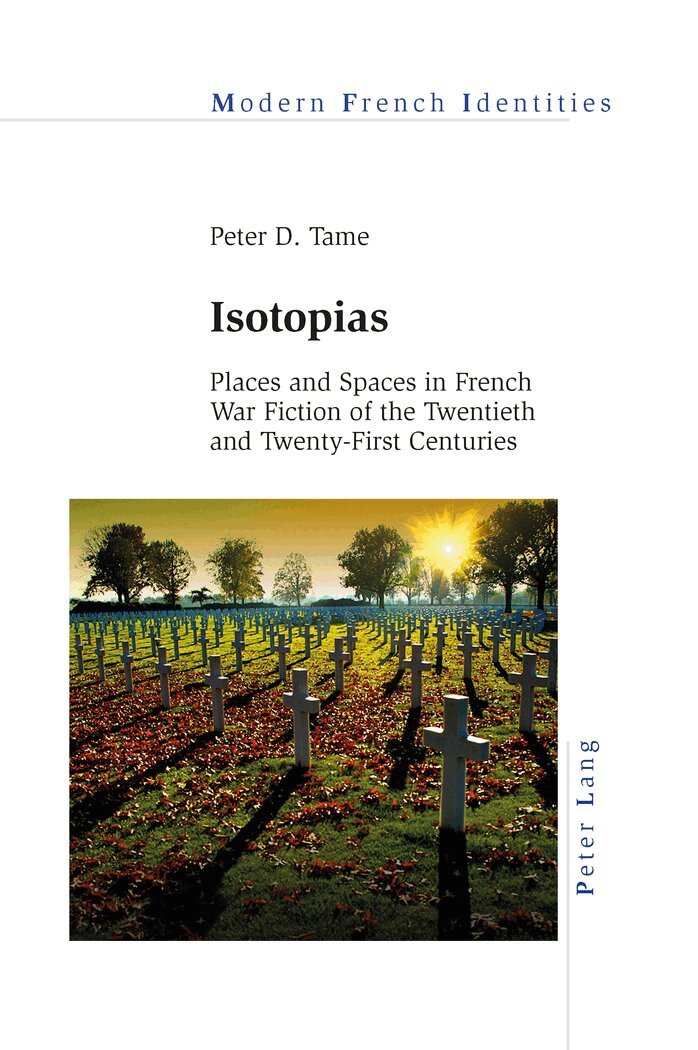
Isotopias
Places and Spaces in French War Fiction of the Twentieth and Twenty-First Centuries
Häftad, Engelska, 2015
825 kr
Skickas inom 5-8 vardagar
This monograph is the first book to examine places and spaces in French war fiction of the twentieth and twenty-first centuries. These places and spaces are presented as literary isotopias, or fictional «worlds», and analysed in a selective corpus of thirty-three novelists and forty-two examples of war fiction. The book identifies and classifies the various types of isotopia that appear in fiction in the form of scenes, images or literary microcosms. The author establishes four isotopic modes – possession, dispossession or loss, alienation, and repossession – by which means the isotopias are expressed. The spaces considered include territorial demands, gains, possessions, losses and national spaces, as well as internal mental spaces. The corpus of novels selected for this project covers a wide variety of examples of fictional worlds: the spiritual, the marginal, the regional, the ideological, the psychological, the erotic, the ecological and the political. The methods of analysis identify these worlds, demonstrate both how they function in relation to the characters in the novels and how they affect the reader, and provide further illumination on the intentions, achievements and ideologies of the characters and of the novelists concerned. One of the findings of the study is that the greater the stress of war and conflict the more authors and characters tend to seek refuge in their imaginary (isotopic) worlds.