Peter Unger – författare
Visar alla böcker från författaren Peter Unger. Handla med fri frakt och snabb leverans.
29 produkter
Philosophical Papers
Av Peter Unger
E-bok, 2006
1247 kr
Lägg i varukorg
While well-known for his book-length work, philosopher Peter Unger''s articles have been less widely accessible. These two volumes of Unger''s Philosophical Papers include articles spanning more than 35 years of Unger''s long and fruitful career. Dividing the articles thematically, this first …
Philosophical Papers
Av Peter Unger
E-bok, 2006
1302 kr
Lägg i varukorg
While well-known for his book-length work, philosopher Peter Unger''s articles have been less widely accessible. These two volumes of Unger''s Philosophical Papers include articles spanning more than 35 years of Unger''s long and fruitful career. Dividing the articles thematically, this first …
All the Power in the World
Av Peter Unger
E-bok, 2007
587 kr
Lägg i varukorg
This bold and original work of philosophy presents an exciting new picture of concrete reality. Peter Unger provocatively breaks with what he terms the conservatism of present-day philosophy, and returns to central themes from Descartes, Locke, Berkeley, Hume and Russell. Wiping the slate clean, …
Empty Ideas
A Critique of Analytic Philosophy
Av Peter Unger
Häftad, 2018
748 kr
Lägg i varukorg
Peter Unger's provocative new book poses a serious challenge to contemporary analytic philosophy, arguing that to its detriment it focuses the predominance of its energy on "empty ideas." In the mid-twentieth century, philosophers generally agreed that, by contrast with science, philosophy should …
Ignorance
A Case for Scepticism
Av Peter Unger
E-bok, 1978
404 kr
Lägg i varukorg
In this controversial volume (originally published in 1975) Peter Unger suggests that, not only can nothing ever be known, but no one can ever have a reason at all for anything. A consequence of this is that we cannot have any realistic emotional ties: it can never be conclusively said that someone …
Ignorance
A Case for Scepticism
Av Peter Unger
E-bok, 1975
404 kr
Lägg i varukorg
In this controversial volume (originally published in 1975) Peter Unger suggests that, not only can nothing ever be known, but no one can ever have a reason at all for anything. A consequence of this is that we cannot have any realistic emotional ties: it can never be conclusively said that someone …
Living High and Letting Die
Our Illusion of Innocence
Av Peter Unger
Inbunden, 1996
3131 kr
Lägg i varukorg
Unger contends that our institutions about ethical cases are generated not by basic moral values, but by certain distracting moral mechanisms that encourage deceptive reactions.In the first part of the book, he argues that, appearances to the contrary, our basic moral values are quite close to what …
Living High and Letting Die
Our Illusion of Innocence
Av Peter Unger
Häftad, 1996
605 kr
Lägg i varukorg
By contributing a few hundred dollars to a charity like UNICEF, a prosperous person can ensure that fewer poor children die, and that more will live reasonably long, worthwhile lives. Even when knowing this, however, most people send nothing, and almost all of the rest send little. What is the …
Philosophical Papers: Volume One
Av Peter Unger
Inbunden, 2006
1940 kr
Lägg i varukorg
While well-known for his book-length work, philosopher Peter Unger's articles have been less widely accessible. These two volumes of Unger's Philosophical Papers include articles spanning more than 35 years of Unger's long and fruitful career. Dividing the articles thematically, this first volume …
Philosophical Relativity
Av Peter Unger
Häftad, 2002
1172 kr
Lägg i varukorg
In this short volume (first published in 1984), Peter Unger questions the objective answers that have have been given to traditional problems in philosopy. He casts doubt on the generally unquestioned view that fundamental questionspertaining to meaning and existence have direct solutions, arguing …
All the Power in the World
Av Peter Unger
Inbunden, 2006
1481 kr
Lägg i varukorg
This bold and original work of philosophy presents an exciting new picture of concrete reality. Peter Unger provocatively breaks with what he terms the conservatism of present-day philosophy, and returns to central themes from Descartes, Locke, Berkeley, Hume and Russell. Wiping the slate clean, …
Philosophical Papers: Volume Two
Av Peter Unger
Inbunden, 2006
2031 kr
Lägg i varukorg
While well-known for his book-length work, philosopher Peter Unger's articles have been less widely accessible. These two volumes of Unger's Philosophical Papers include articles spanning more than 35 years of Unger's long and fruitful career. Dividing the articles thematically, the first volume …
All the Power in the World
Av Peter Unger
Häftad, 2007
931 kr
Lägg i varukorg
This bold and original work of philosophy presents an exciting new picture of concrete reality. Peter Unger provocatively breaks with what he terms the conservatism of present-day philosophy, and returns to central themes from Descartes, Locke, Berkeley, Hume and Russell. Wiping the slate clean, …
Living High and Letting Die
Our Illusion of Innocence
Av Peter Unger
E-bok, 1996
424 kr
Lägg i varukorg
By contributing a few hundred dollars to a charity like UNICEF, a prosperous person can ensure that fewer poor children die, and that more will live reasonably long, worthwhile lives. Even when knowing this, however, most people send nothing, and almost all of the rest send little. What is the …
Philosophical Relativity
Av Peter Unger
E-bok, 2002
717 kr
Lägg i varukorg
In this short but meaty book, Peter Unger questions the objective answers that have been given to central problems in philosophy. As Unger hypothesizes, many of these problems are unanswerable, including the problems of knowledge and scepticism, the problems of free will, and problems of causation …
Ignorance
A Case for Scepticism
Av Peter Unger
Häftad, 1978
652 kr
Lägg i varukorg
In this controversial volume (originally published in 1975) Peter Unger suggests that, not only can nothing ever be known, but no one can ever have a reason at all for anything. A consequence of this is that we cannot have any realistic emotional ties: it can never be conclusively said that someone …
Empty Ideas
A Critique of Analytic Philosophy
Av Peter Unger
Inbunden, 2014
1591 kr
Lägg i varukorg
Peter Unger's provocative new book poses a serious challenge to contemporary analytic philosophy, arguing that to its detriment it focuses the predominance of its energy on "empty ideas. " In the mid-twentieth century, philosophers generally agreed that, by contrast with science, philosophy should …
Empty Ideas
A Critique of Analytic Philosophy
Av Peter Unger
E-bok, 2014
514 kr
Lägg i varukorg
Peter Unger''s provocative new book poses a serious challenge to contemporary analytic philosophy, arguing that to its detriment it focuses the predominance of its energy on "empty ideas." In the mid-twentieth century, philosophers generally agreed that, by contrast with science, philosophy should …
Empty Ideas
A Critique of Analytic Philosophy
Av Peter Unger
E-bok, 2014
514 kr
Lägg i varukorg
Peter Unger''s provocative new book poses a serious challenge to contemporary analytic philosophy, arguing that to its detriment it focuses the predominance of its energy on "empty ideas." In the mid-twentieth century, philosophers generally agreed that, by contrast with science, philosophy should …
Philosophical Papers
Av Peter Unger
E-bok, 2006
1247 kr
Lägg i varukorg
While well-known for his book-length work, philosopher Peter Unger''s articles have been less widely accessible. These two volumes of Unger''s Philosophical Papers include articles spanning more than 35 years of Unger''s long and fruitful career. Dividing the articles thematically, this first …
Philosophical Papers
Av Peter Unger
E-bok, 2006
1302 kr
Lägg i varukorg
While well-known for his book-length work, philosopher Peter Unger''s articles have been less widely accessible. These two volumes of Unger''s Philosophical Papers include articles spanning more than 35 years of Unger''s long and fruitful career. Dividing the articles thematically, this first …
All the Power in the World
Av Peter Unger
E-bok, 2005
522 kr
Lägg i varukorg
This bold and original work of philosophy presents an exciting new picture of concrete reality. Peter Unger provocatively breaks with what he terms the conservatism of present-day philosophy, and returns to central themes from Descartes, Locke, Berkeley, Hume and Russell. Wiping the slate clean, …
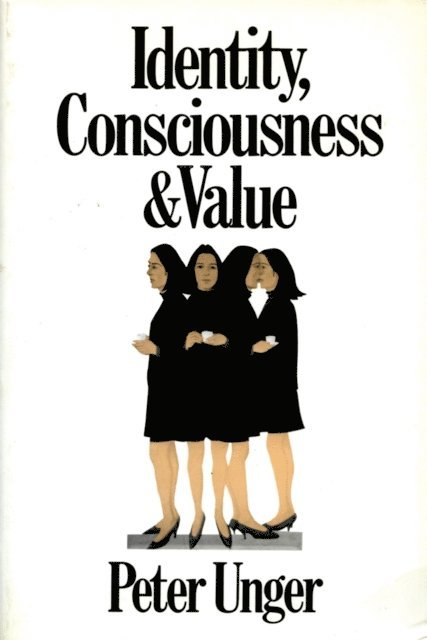
Identity, Consciousness and Value
Av Peter Unger
E-bok, 1990
1174 kr
Lägg i varukorg
The topic of personal identity has prompted some of the liveliest and most interesting debates in recent philosophy. In a fascinating new contribution to the discussion, Peter Unger presents a psychologically aimed, but physically based, account of our identity over time. While supporting the …
Living High and Letting Die
Our Illusion of Innocence
Av Peter Unger
E-bok, 1996
424 kr
Lägg i varukorg
By contributing a few hundred dollars to a charity like UNICEF, a prosperous person can ensure that fewer poor children die, and that more will live reasonably long, worthwhile lives. Even when knowing this, however, most people send nothing, and almost all of the rest send little. What is the …
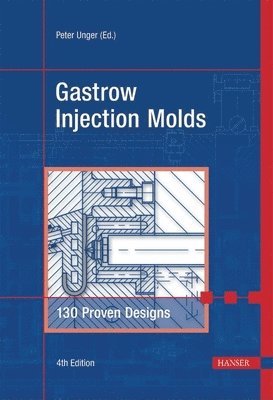
Gastrow Injection Molds
130 Proven Designs
Av Peter Unger
Inbunden, 2006
2252 kr
Lägg i varukorg
Mold design is one of the most challenging tasks in injection molding and it is crucial for successful profitable operations. The book compiles the experience of many seasoned designers and presents tried and tested molds that run successfully in production. For this fourth edition, changes and …
Laser Systems, Part 3
Av Bernd Eppich, Bernd Sumpf m. fl.
Inbunden, 2011
7347 kr
Lägg i varukorg
The three volumes VIII/1A, B, C document the state of the art of “Laser Physics and Applications”. Scientific trends and related technological aspects are considered by compiling results and conclusions from phenomenology, observation and experiments. Reliable data, physical fundamentals and …