Peter W. Price - Böcker
Visar alla böcker från författaren Peter W. Price. Handla med fri frakt och snabb leverans.
8 produkter
8 produkter
3 882 kr
Skickas inom 11-20 vardagar
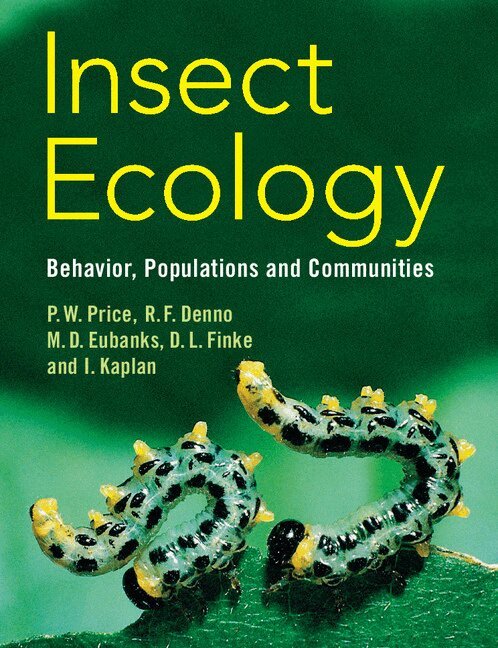
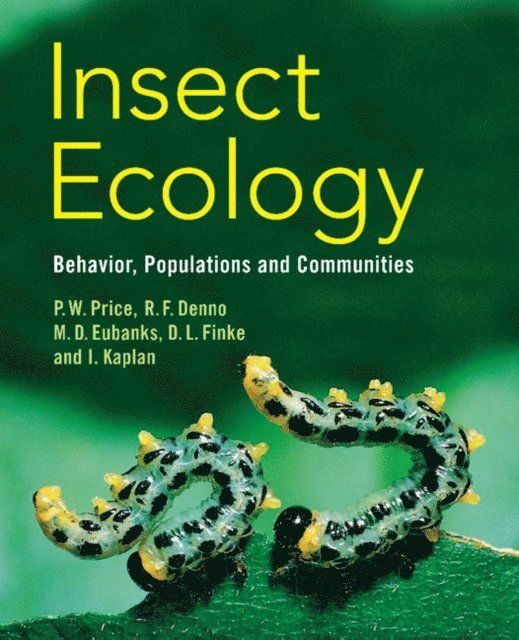
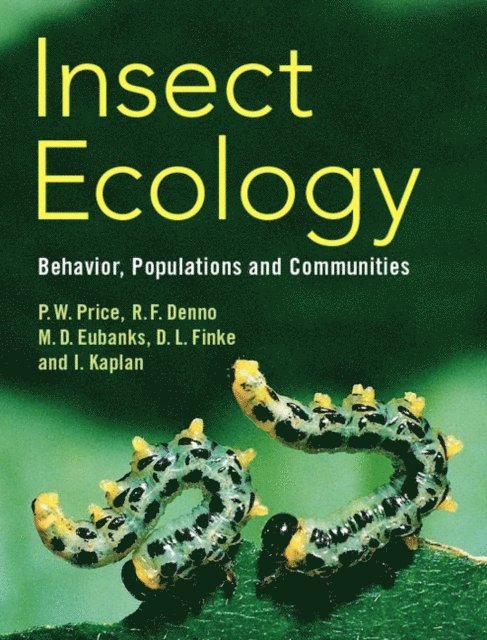
Insect Ecology is the world's foremost reference to the never-ending and crucial interactions of the richest taxon of organisms on this earth, with perhaps some 8 million extant species. Now in its Third Edition and twentieth year of publication, Insect Ecology has endured as an unparalleled classic. Taking the reader from an explanation of the science to its significance as a discipline, Insect Ecology is a meticulous, systematic examination of the underlying dynamics of plant-insect interactions, predation, parasites and hosts, and mutualistic relationships, including pollination ecology, that are central to understanding the insects' role in nature. Viewing the largely invisible drama of natural protagonists and antagonists, hidden in the lush foliage of a tropical rain forest or temperate woody vegetation, Peter Price details the unique traits, behaviors, and functions of insects, while placing them in the broader contexts of their places in food webs, ecosystem function, population dynamics, and community interactions. The author also describes the various levels of insect interaction, from trophic relationships (Part II), populations (Part III), and communities (Part IV), while unfolding the infinite variety of insect species and their visible legacy in the fossil record. Full of fascinating details ("Ants are everywhere, but only occasionally noticed. They run much of the terrestrial world as the premier soil turners." "[Insect] galls provide tanning acids and the basis for inks."), Insect Ecology offers detail and breadth, while providing timely discussion on the conservation of biodiversity, the existence and study of vacant ecological niches, latitudinal gradients in species richness, and evolutionary perspectives on population dynamics. The book also examines the development of theory in insect ecology and how it is advanced. Novel features in the Third Edition include four new chapters, covering the importance of insect ecology, the development of theory in the science, hypotheses on plant and herbivore interactions, and a synthesis chapter on population dynamics. Subheadings within chapters provide easier subject access, and many new figures contribute to the book's aesthetic appeal. Clearly organized and with a bibliography of 2,000 references to up-to-date and classic literature, the Third Edition of Insect Ecology is a practical, well-formatted resource. Also copiously illustrated with over 350 figures, many new to this edition, Insect Ecology is a lush graphic tour of the minute, often startling universe of insects in their native habitat. With a history in geologic time much older than the terrestrial vertebrates, insects speak to us-the scarab beetle encased in amber, or New Zealand's endangered large Wellington speargrass weevil-of a resilience and ingenuity oddly reflective of our own. Insect Ecology has let generations of agriculturalists, ecologists, entomologists, environmental scientists, foresters, professionals, and students understand the insects' world, and ours. With unerring detail and breadth, Insect Ecology has described for generations of professionals the interactions and dynamics of the world's richest group of species-the insects-whose wildly various 8 million forms have been the source of endless fascination and study. From caterpillars to the goliath beetle, from the adult copper butterfly to the agromyzid fly, the insect universe is at once ordinary and exotic, capturing, in microcosm, nature's complexity and beauty.
850 kr
Skickas inom 7-10 vardagar
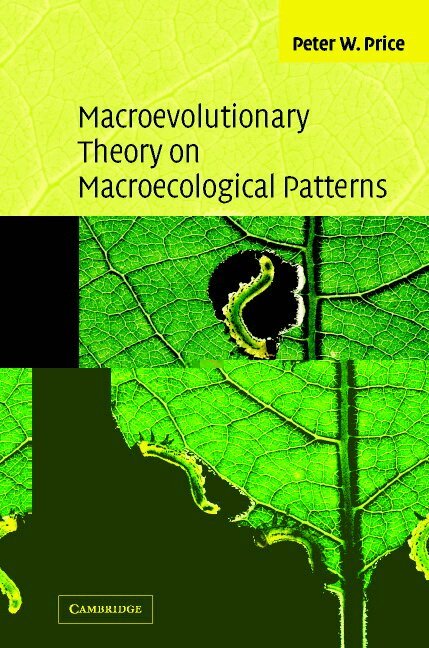
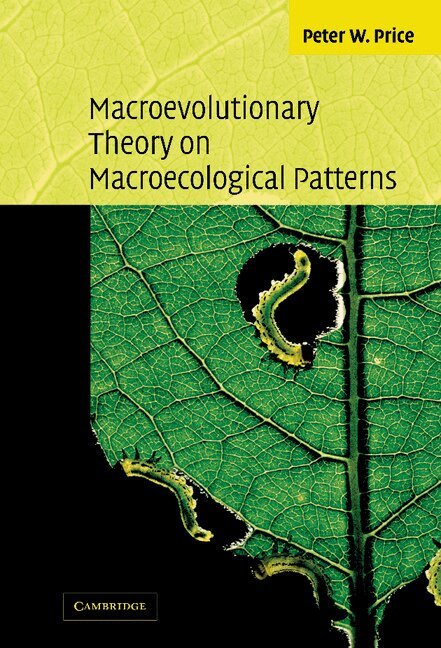
In Macroevolutionary Theory on Macroecological Patterns, Peter Price establishes a completely new vision of the central themes in ecology. For the first time in book form, the study of distribution, abundance, and population size variation in animals is cast in an evolutionary framework. The book argues that evolved characters of organisms such as morphology, behavior, and life history influence strongly their ecological relationships, including the way that populations fluctuate through time and space. The central ideas in the book are supported by data gathered from over twenty years of research, primarily into plant and herbivore interactions, concentrating on insects. The huge diversity of insect herbivores provides the immense comparative power necessary for a strong evolutionary study of ecological principles. The book is intended as essential reading for all researchers and students of ecology, evolutionary biology, and behavior, and for entomologists working in agriculture, horticulture, and forestry.
863 kr
Skickas inom 7-10 vardagar
Combining breadth of coverage with detail, this logical and cohesive introduction to insect ecology couples concepts with a broad range of examples and practical applications. It explores cutting-edge topics in the field, drawing on and highlighting the links between theory and the latest empirical studies. The sections are structured around a series of key topics, including behavioral ecology; species interactions; population ecology; food webs, communities and ecosystems; and broad patterns in nature. Chapters progress logically from the small scale to the large; from individual species through to species interactions, populations and communities. Application sections at the end of each chapter outline the practicality of ecological concepts and show how ecological information and concepts can be useful in agriculture, horticulture and forestry. Each chapter ends with a summary, providing a brief recap, followed by a set of questions and discussion topics designed to encourage independent and creative thinking.
1 745 kr
Skickas inom 7-10 vardagar
In Macroevolutionary Theory on Macroecological Patterns, Peter Price establishes a completely new vision of the central themes in ecology. For the first time in book form, the study of distribution, abundance, and population size variation in animals is cast in an evolutionary framework. The book argues that evolved characters of organisms such as morphology, behavior, and life history influence strongly their ecological relationships, including the way that populations fluctuate through time and space. The central ideas in the book are supported by data gathered from over twenty years of research, primarily into plant and herbivore interactions, concentrating on insects. The huge diversity of insect herbivores provides the immense comparative power necessary for a strong evolutionary study of ecological principles. The book is intended as essential reading for all researchers and students of ecology, evolutionary biology, and behavior, and for entomologists working in agriculture, horticulture, and forestry.
1 693 kr
Skickas inom 7-10 vardagar
Combining breadth of coverage with detail, this logical and cohesive introduction to insect ecology couples concepts with a broad range of examples and practical applications. It explores cutting-edge topics in the field, drawing on and highlighting the links between theory and the latest empirical studies. The sections are structured around a series of key topics, including behavioral ecology; species interactions; population ecology; food webs, communities and ecosystems; and broad patterns in nature. Chapters progress logically from the small scale to the large; from individual species through to species interactions, populations and communities. Application sections at the end of each chapter outline the practicality of ecological concepts and show how ecological information and concepts can be useful in agriculture, horticulture and forestry. Each chapter ends with a summary, providing a brief recap, followed by a set of questions and discussion topics designed to encourage independent and creative thinking.
1 850 kr
Skickas inom 7-10 vardagar
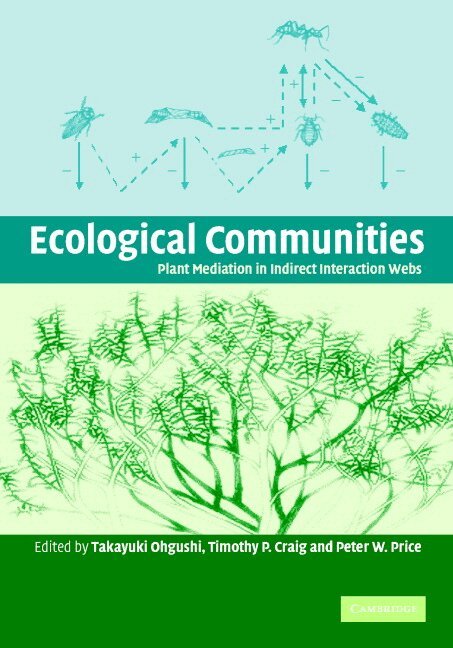
To gain a more complete understanding of plant-based ecological community structure requires knowledge of the integration of direct and indirect effects in plant herbivore systems. Trait modification of plants as a result of herbivory is very common and widespread in terrestrial plants, and this initiates indirect interactions between organisms that utilise the same host plant. This book argues that food webs by themselves are inadequate models for understanding ecological communities, because they ignore important indirect, nontrophic links. This subject is of great importance in understanding not only community organisation but also in identifying the underlying mechanisms of maintenance of biodiversity in nature. This book will be an invaluable resource for researchers and graduate students interested in community and population ecology, evolutionary biology, biodiversity, botany and entomology.
1 289 kr
Skickas inom 3-6 vardagar
In spite of the fact that parasites represent more than half of all living species of plants and animals, their role in the evolution of life on earth has been substantially underestimated. Here, for the first time within an evolutionary and ecological framework, Peter Price integrates the biological attributes that characterize parasites ranging from such diverse groups as viruses, bacteria, protozoa, and fungi, to helminths, mites, insects, and parasitic flowering plants. Synthesizing systematics, ecology, behavioral biology, genetics, and biogeography, the author outlines the success of parasitism as a mode of life, the common features of the wide range of organisms that adopt such a way of life, the reasons for parasites' extraordinary potential for continued adaptive radiation, and their role in molding community structure by means of their impact on the evolution of host species. In demonstrating the importance of parasitic interactions for determining population patterns and geographical distributions, Dr. Price generates further discussion and suggests new areas for research.
744 kr
Skickas inom 7-10 vardagar
To gain a more complete understanding of plant-based ecological community structure requires knowledge of the integration of direct and indirect effects in plant herbivore systems. Trait modification of plants as a result of herbivory is very common and widespread in terrestrial plants, and this initiates indirect interactions between organisms that utilise the same host plant. This book argues that food webs by themselves are inadequate models for understanding ecological communities, because they ignore important indirect, nontrophic links. This subject is of great importance in understanding not only community organisation but also in identifying the underlying mechanisms of maintenance of biodiversity in nature. This book will be an invaluable resource for researchers and graduate students interested in community and population ecology, evolutionary biology, biodiversity, botany and entomology.