Peter Wakelin – författare
Visar alla böcker från författaren Peter Wakelin. Handla med fri frakt och snabb leverans.
3 produkter
3 produkter
213 kr
Skickas
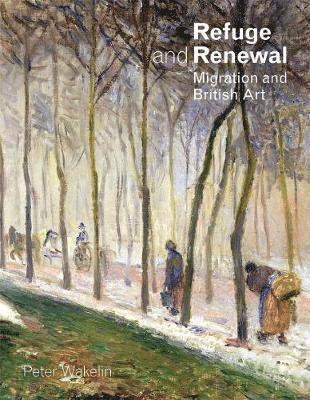
Innumerable artists have found refuge in Britain during the past hundred and fifty years, escaping dispossession, torture, intellectual oppression or war. Their arrival frequently enriched art in Britain. Following the isolation of most émigrés in the First World War, artists who escaped Nazism in the 1930s became part of art communities in places as far apart as Hampstead, Glasgow, Merthyr Tydfil, the Swansea valley and St Ives. Gabo and Mondrian influenced Nicholson, Hepworth and Lanyon, while younger artists were inspired by radical ideas of Kurt Schwitters and John Heartfield and by the Expressionists Bloch, Herman, Kokoshcka and Koppel. Lotte Reiniger brought innovations in animation and Bill Brandt and Felix Man showed the potential of documentary photography. Refugees have come since from China, Eastern Europe, Latin America, Africa and the Middle East. The experiences of artist refugees have followed many patterns. Some stayed a short time and moved on, some made their lives in Britain, teaching, exhibiting and inspiring. In the 1940s, refugees contributed to the war effort and the defeat of fascism. The stories of later refugees’ contributions to British art are still unfolding.
434 kr
Skickas
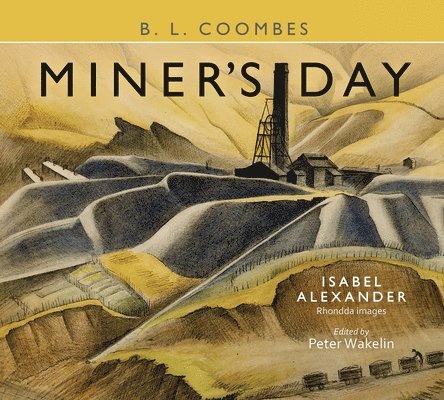
Edited with an introduction by Peter Wakelin. Part of the Modern Wales series. Originally published in 1945, Miner's Day tells of the coalmining life of the thirties in south Wales.
213 kr
Kommande
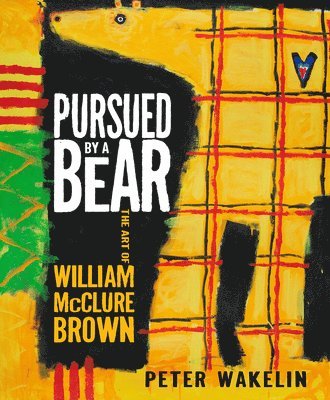
Polar bears and Arctic explorers, the lore of the loup-garou, the mischief of the Mari Lwyd, fighter-jets in desert skies: William McClure Brown's mind travelled many paths to celebrate story-making and the power of the unexpected in vivid imagery.Born to Scottish parents in Canada in 1953, as a teenager he knew painters in the Toronto scene and began to evolve his own creative language. From 1977 he was based in London and south-west England before settling in Wales in 1990. While he exhibited internationally he was admired most in his close community of fellow artists. He found inspiration in Devon, northern France, Galicia, North Africa, the South Wales valleys and the Inuit communities of Hudson Bay. He collaborated with painters and poets, learned Welsh, made public art, held residencies in schools, and created images for Gorky's Zygotic Mynci. William Brown died in 2008, age 54. This is the first book to explore the full range of his startling, audacious work.