Peter Watt – författare
Visar alla böcker från författaren Peter Watt. Handla med fri frakt och snabb leverans.
14 produkter
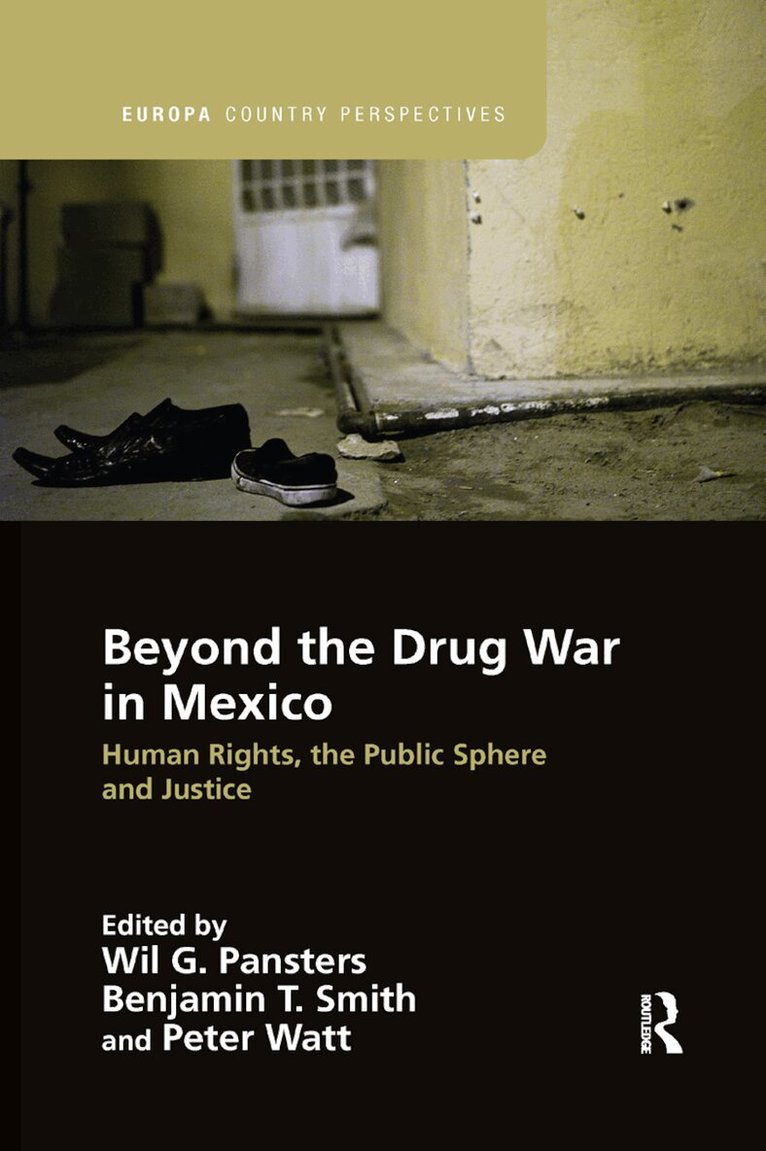
Beyond the Drug War in Mexico
Human rights, the public sphere and justice
Av Wil G. Pansters, Benjamin T. Smith m. fl.
Häftad, 2019
619 kr
Lägg i varukorg
This volume aims to go beyond the study of developments within Mexico’s criminal world and their relationship with the state and law enforcement. It focuses instead on the nature and consequences of what we call the ‘totalization of the drug war’, and its projection on other domains which are key …
Theory and Practice of Joint-stock Banking
Showing the Advantages Which Will Arise
Av Peter Watt
Inbunden, 2022
345 kr
Lägg i varukorg
Theory and Practice of Joint-stock Banking
Showing the Advantages Which Will Arise
Av Peter Watt
Häftad, 2022
176 kr
Lägg i varukorg
Beyond the Drug War in Mexico
Human rights, the public sphere and justice
Av Peter Watt, Benjamin T. Smith m. fl.
E-bok, 2017
727 kr
Lägg i varukorg
This volume aims to go beyond the study of developments within Mexico’s criminal world and their relationship with the state and law enforcement. It focuses instead on the nature and consequences of what we call the ‘totalization of the drug war’, and its projection on other domains which are key …
Beyond the Drug War in Mexico
Human rights, the public sphere and justice
Av Peter Watt, Benjamin T. Smith m. fl.
E-bok, 2017
727 kr
Lägg i varukorg
This volume aims to go beyond the study of developments within Mexico’s criminal world and their relationship with the state and law enforcement. It focuses instead on the nature and consequences of what we call the ‘totalization of the drug war’, and its projection on other domains which are key …
Drug War Mexico
Politics, Neoliberalism and Violence in the New Narcoeconomy
Häftad, 2012
333 kr
Lägg i varukorg
Mexico is a country in crisis. Capitalizing on weakened public institutions, widespread unemployment, a state of lawlessness and the strengthening of links between Mexican and Colombian drug cartels, narcotrafficking in the country has flourished during the post-1982 neoliberal era. In fact, it has …
Drug War Mexico
Politics, Neoliberalism and Violence in the New Narcoeconomy
Inbunden, 2012
1283 kr
Lägg i varukorg
Mexico is a country in crisis. Capitalizing on weakened public institutions, widespread unemployment, a state of lawlessness and the strengthening of links between Mexican and Colombian drug cartels, narcotrafficking in the country has flourished during the post-1982 neoliberal era. In fact, it has …
Drug War Mexico
Politics, Neoliberalism and Violence in the New Narcoeconomy
E-bok, 2012
359 kr
Lägg i varukorg
Mexico is a country in crisis. Capitalizing on weakened public institutions, widespread unemployment, a state of lawlessness and the strengthening of links between Mexican and Colombian drug cartels, narcotrafficking in the country has flourished during the post-1982 neoliberal era. In fact, it has …
Drug War Mexico
Politics, Neoliberalism and Violence in the New Narcoeconomy
E-bok, 2012
351 kr
Lägg i varukorg
Mexico is a country in crisis. Capitalizing on weakened public institutions, widespread unemployment, a state of lawlessness and the strengthening of links between Mexican and Colombian drug cartels, narcotrafficking in the country has flourished during the post-1982 neoliberal era. In fact, it has …
Beyond the Drug War in Mexico
Human rights, the public sphere and justice
Av Wil G. Pansters, Benjamin T. Smith m. fl.
Inbunden, 2017
2264 kr
Lägg i varukorg
This volume aims to go beyond the study of developments within Mexico’s criminal world and their relationship with the state and law enforcement. It focuses instead on the nature and consequences of what we call the ‘totalization of the drug war’, and its projection on other domains which are key …
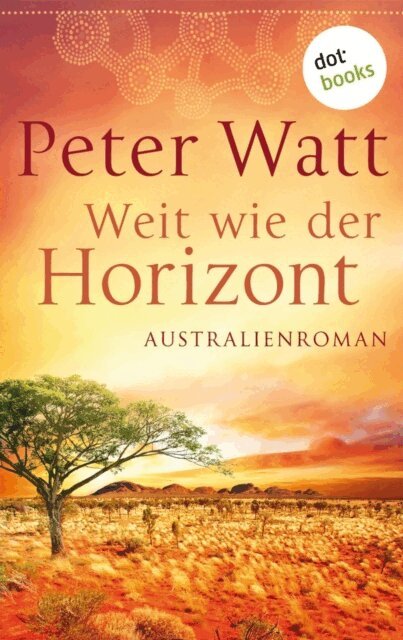
Weit wie der Horizont: Die große Australien-Saga - Band 1
Roman
Av Peter Watt
E-bok, 2019
59 kr
Lägg i varukorg
Leidenschaft, Intrigen und Hoffnung: »Weit wie der Horizont« ist der Auftakt der großen Australien-Saga von Peter Watt – jetzt als eBook bei dotbooks.Werden sie gemeinsam ihr Glück finden oder wird eine alte Feindschaft sie für immer voneinander trennen? Australien im 19. Jahrhundert: Zwischen zwei …
Wer dem Wind folgt
Die große Australien-Saga - Band 2
Av Peter Watt
E-bok, 2019
59 kr
Lägg i varukorg
Ein unerwartetes Wiedersehen … Das ergreifende Australienepos »Wer dem Wind folgt« von Peter Watt – jetzt als eBook bei dotbooks.Australien im 19. Jahrhundert: Hals über Kopf musste Michael Duffy aus Sydney fliehen und seine große Liebe Fiona Macintosh zurücklassen. Als er ihr fernab der Heimat …
Wenn der Sturm naht: Die große Australien-Saga - Band 3
Roman
Av Peter Watt
E-bok, 2019
60 kr
Lägg i varukorg
Das epische Finale der Australien-Saga: »Wenn der Sturm naht« von Peter Watt – jetzt als eBook bei dotbooks.Australien im 19. Jahrhundert: Seit Jahrzehnten liegen zwei irische Auswandererfamilien in unerbittlicher, blutiger Fehde. Die Hoffnung auf Frieden ruht nun in den Händen der jüngsten …
Blauer Himmel, rotes Land: Die große Australien-Saga
Drei Romane in einem eBook: "Weit wie der Horizont", "Wer dem Wind folgt" und "Wenn der Sturm naht"
Av Peter Watt
E-bok, 2020
157 kr
Lägg i varukorg
Das Land der unberührten, rauen Schönheit: Die große Australien-Saga »Blauer Himmel, rotes Land« von Peter Watt als eBook-Sammelband bei dotbooks.Australien im 19. Jahrhundert. Das Leben zweier Einwandererfamilien ist geprägt von einer erbitterten Fehde: Nichts scheint den gegenseitigen Hass der …