Petter Törnberg - Böcker
Visar alla böcker från författaren Petter Törnberg. Handla med fri frakt och snabb leverans.
4 produkter
4 produkter
331 kr
Skickas inom 10-15 vardagar
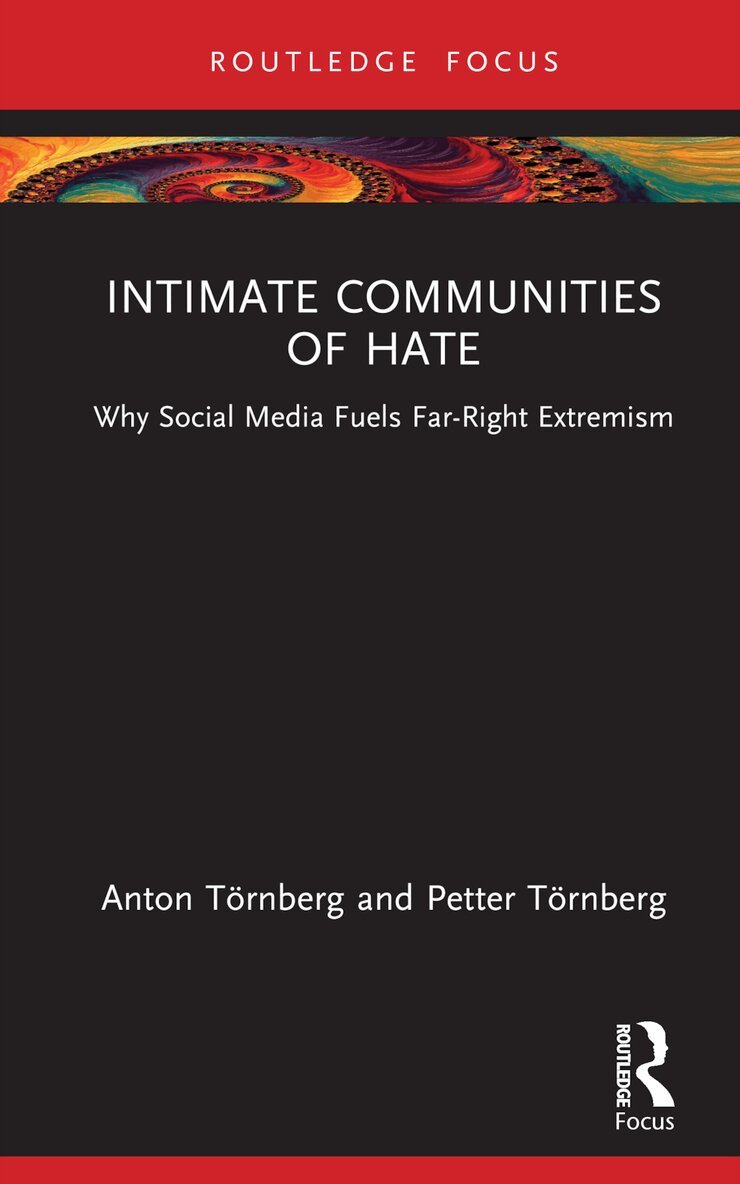
Social media has fundamentally transformed political life, driving a surge in far-right extremism. In recent years, radical anti-democratic ideologies have entered into the political mainstream, fueled by energy from extreme online environments. But why do far-right extremist movements seem to thrive so well on social media platforms? What takes place within the fringe online spaces that seem to function as incubators for violent extremists? To answer these questions, this book goes inside the “murder capital of the racist Internet”, examining 20 years of conversations on Stormfront.org. Using a combination of computational text analysis and close reading, we seek a deeper understanding of the emotional and social effects of being part of an extremist community. We lay the foundation of a new way of understanding online extremism, building on the tradition of Émile Durkheim and Randall Collins. We find that online radicalization is not merely an effect of repeated one-sided arguments, as suggested by metaphors such as “echo chambers”. Instead, social media politics can be better understood through Durkheim’s concept of rituals: moments of shared attention and emotion that create emotional energy and a sense of intersubjectivity, weaving from participants a political tribe – united, energized, and poised to act.
790 kr
Skickas inom 10-15 vardagar
Social media has fundamentally transformed political life, driving a surge in far-right extremism. In recent years, radical anti-democratic ideologies have entered into the political mainstream, fueled by energy from extreme online environments. But why do far-right extremist movements seem to thrive so well on social media platforms? What takes place within the fringe online spaces that seem to function as incubators for violent extremists? To answer these questions, this book goes inside the “murder capital of the racist Internet”, examining 20 years of conversations on Stormfront.org. Using a combination of computational text analysis and close reading, we seek a deeper understanding of the emotional and social effects of being part of an extremist community. We lay the foundation of a new way of understanding online extremism, building on the tradition of Émile Durkheim and Randall Collins. We find that online radicalization is not merely an effect of repeated one-sided arguments, as suggested by metaphors such as “echo chambers”. Instead, social media politics can be better understood through Durkheim’s concept of rituals: moments of shared attention and emotion that create emotional energy and a sense of intersubjectivity, weaving from participants a political tribe – united, energized, and poised to act.
574 kr
Skickas inom 10-15 vardagar
Power needs abstraction, to make the unwieldy complexity of the social world legible and manageable. The proposition at the heart of Seeing Like a Platform is that digital technology brings new metaphors through which power operates. While industrial modernity saw society as a machinery to be designed according to detailed blueprints, digital modernity views society as organic and alive, to be herded and nudged through digital infrastructures, AI, and algorithms.Seeing Like a Platform explores the history, meaning, and far-reaching consequences of this epistemological shift. From social movements to Wikipedia, from digital platforms to city planning, from social science to media, society is being redefined by ideas from complexity science. While complexity offers a vision of a self-organized society freed from hierarchies and overbearing bureaucracies, it simultaneously enables new forms of domination and control.Through theoretical reflections and case studies, Seeing Like a Platform offers an inquiry into digital modernity. Accessibly written and broad ranging, it is an essential reading for scholars, students, and practitioners in fields such as sociology, political science, urban studies, and technology studies. It will also interest anyone keen to understand the profound impact of digital technologies on governance, social organization, and everyday life.The Open Access version of this book, available at http://www.taylorfrancis.com, has been made available under a Creative Commons Attribution (CC-BY) 4.0 license.
2 100 kr
Skickas inom 10-15 vardagar
Power needs abstraction, to make the unwieldy complexity of the social world legible and manageable. The proposition at the heart of Seeing Like a Platform is that digital technology brings new metaphors through which power operates. While industrial modernity saw society as a machinery to be designed according to detailed blueprints, digital modernity views society as organic and alive, to be herded and nudged through digital infrastructures, AI, and algorithms.Seeing Like a Platform explores the history, meaning, and far-reaching consequences of this epistemological shift. From social movements to Wikipedia, from digital platforms to city planning, from social science to media, society is being redefined by ideas from complexity science. While complexity offers a vision of a self-organized society freed from hierarchies and overbearing bureaucracies, it simultaneously enables new forms of domination and control.Through theoretical reflections and case studies, Seeing Like a Platform offers an inquiry into digital modernity. Accessibly written and broad ranging, it is an essential reading for scholars, students, and practitioners in fields such as sociology, political science, urban studies, and technology studies. It will also interest anyone keen to understand the profound impact of digital technologies on governance, social organization, and everyday life.The Open Access version of this book, available at http://www.taylorfrancis.com, has been made available under a Creative Commons Attribution (CC-BY) 4.0 license.