Phil Orchard - Böcker
Visar alla böcker från författaren Phil Orchard. Handla med fri frakt och snabb leverans.
10 produkter
10 produkter
1 472 kr
Skickas inom 7-10 vardagar
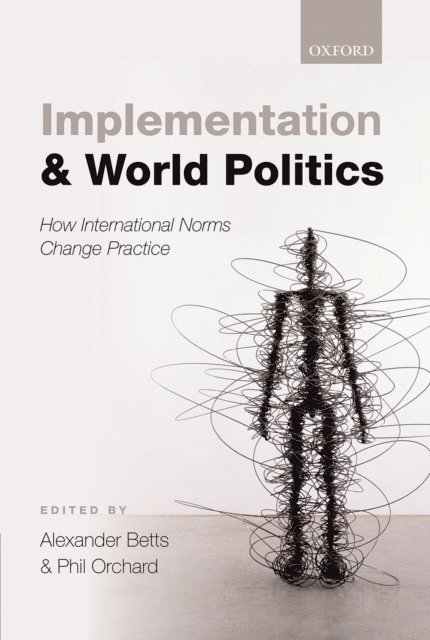
A significant amount of International Relations scholarship examines the role of international norms in world politics. Existing work, though, focuses mainly on how these norms emerge and the process by which governments sign and ratify them. In conventional accounts, the story ends there. Yet, this tells us very little about the conditions under which these norms actually make any difference in practice. When do these norms actually change what happens on the ground? In order to address this analytical gap, the book develops an original conceptual framework for understanding the role of implementation in world politics. It applies this framework to explain variation in the impact of a range of people-centred norms relating to humanitarianism, human rights, and development. The book explores how the same international norms can have radically different effects in different national and local contexts, or within particular organizations, and in turn how this variation can have profound effects on people's lives. How do international norms change and adapt at implementation? Which actors and structures matter for shaping whether implementation actually takes place, and on whose terms? And what lessons can we derive from this for both International Relations theory and for international public policy-makers? Collectively, the chapters explore these themes by looking at three different types of norms - treaty norms, principle norms, and policy norms - across policy fields that include refugees, internal displacement, crimes against humanity, the use of mercenaries, humanitarian assistance, aid transparency, civilian protection, and the responsibility to protect.
2 222 kr
Skickas inom 5-8 vardagar
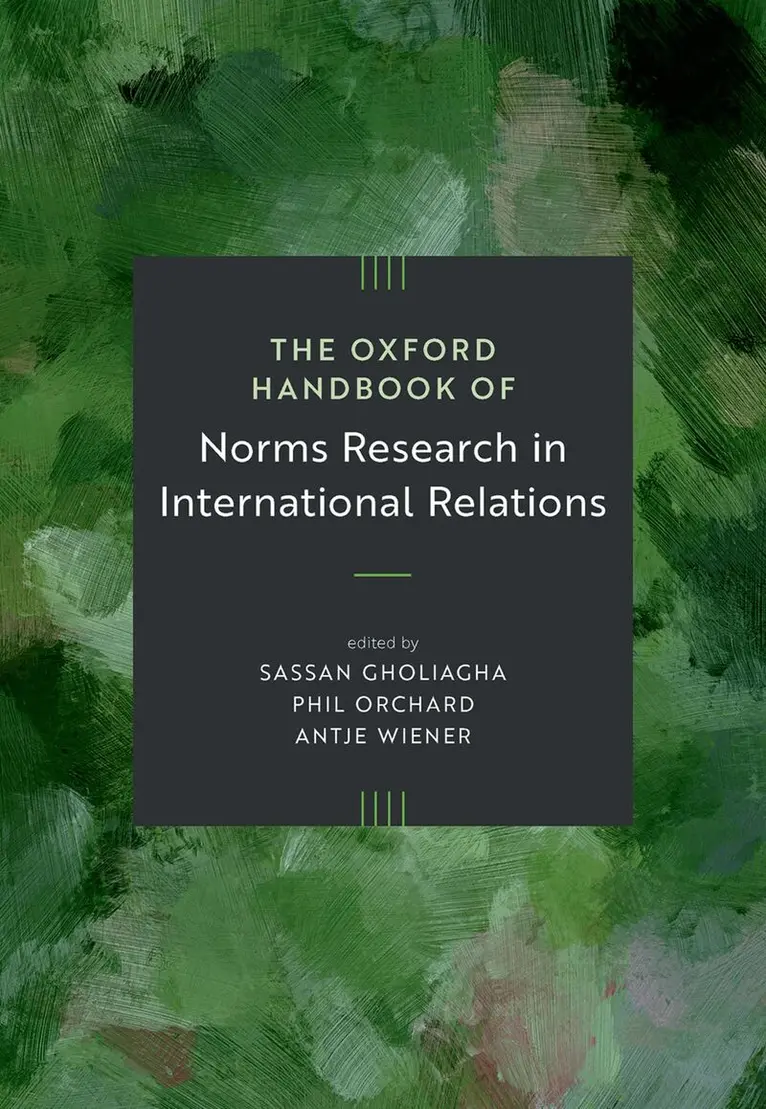
Norms research in international relations has developed sufficiently over the past thirty-five years to become its own sub-discipline within the field. It has its own corresponding 'toolbox' of concepts, approaches, and methods which have often resulted from debates representing distinct perspectives on how norms matter for IR as a field and for global international relations more generally. Even so, three groups of enduring questions continue to sit at the heart of norms research: first, the processes by which norms emerge, change or disappear, on the one hand, and by which they are contested, violated, diffused, or replaced on the other; second, the agency of actors at sites on the macro-, meso-, or micro-scale of global order, and who engages with these processes; and third, the embeddedness or interaction of norms with other pre-existing norms and structures such as the prevailing rules of engagement and clusters of normative meaning.The Oxford Handbook of Norms Research in International Relations provides a state-of-the-art overview of past, current, and future norms research in International Relations. It provides a comprehensive overview of the toolbox that has developed over this time, mapping the field's development based on key conceptual milestones, notable theoretical moves, and developments with regard to the field's contribution to social science theory development on the one hand and politics and policymaking in world politics on the other.
2 091 kr
Skickas inom 10-15 vardagar
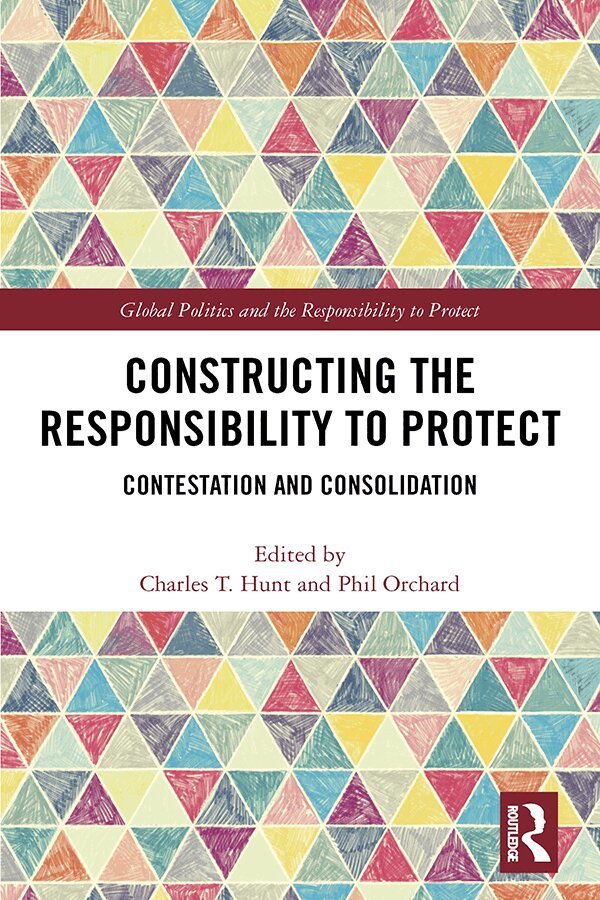
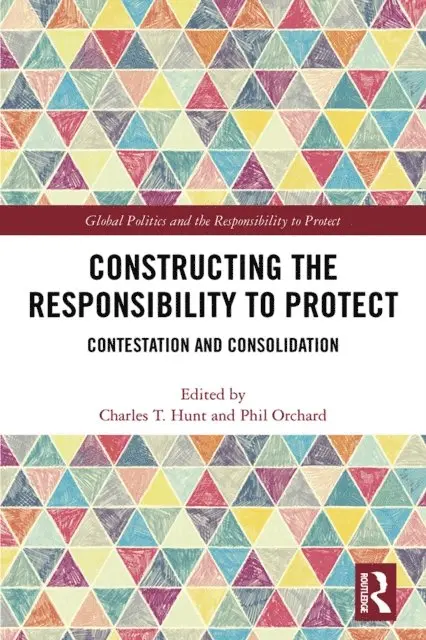
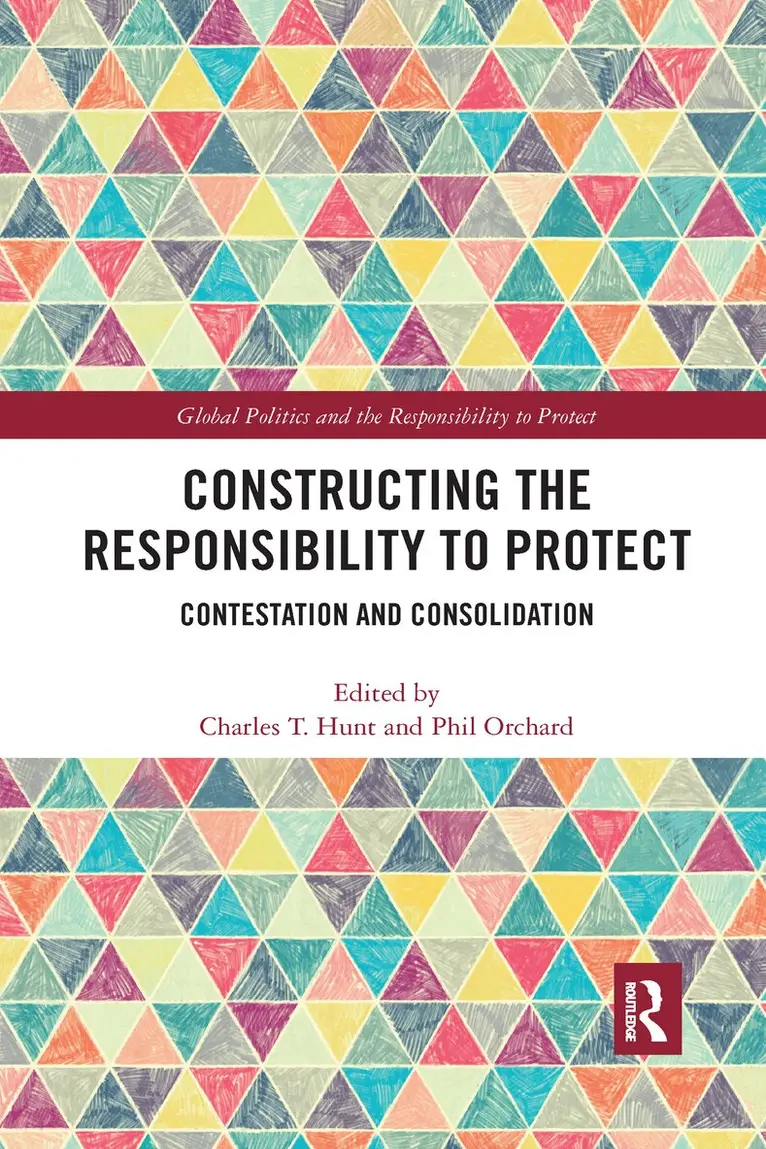
This volume examines the ongoing construction of the Responsibility to Protect (R2P) doctrine, elaborating on areas of both consolidation and contestation.The book focuses on how the R2P doctrine has been both consolidated and contested along three dimensions, regarding its meaning, status and application. The first focuses on how the R2P should be understood in a theoretical sense, exploring it through the lens of the International Relations constructivist approach and through different toolkits available to conventional and critical constructivists. The second focuses on how the R2P interacts with other normative frameworks, and how this interaction can lead to a range of effects from mutual reinforcement and co-evolution through to unanticipated feedback that can undermine consensus and flexibility. The third focuses on how key state actors – including the United States, China and Russia – understand, use and contest the R2P. Together, the book’s chapters demonstrate that broad aspects of the R2P are consolidated in the sense that they are accepted by states even while other, specific aspects, remain subject to contestation in practice and in policy.This book will be of much interest to students of the R2P, human rights, peace studies and international relations.
1 097 kr
Skickas inom 7-10 vardagar
Over the past thirty years, norms research has evolved into a significant subfield within International Relations and beyond. 'Contesting the World' delves into the development of norms, exploring their emergence, change and legitimacy on both domestic and international levels. This in-depth volume presents the interpretation-contestation framework, positioning it as the primary theoretical mechanism for understanding norms. Leading scholars spanning diverse sub-fields and epistemological perspectives investigate the crucial aspects of norm development including norm strength, collision and conflict; interaction and linkages; and the illumination of historical norm development through contestation. 'Contesting the World' offers a fresh perspective on norms research, focusing on ideas, social facts, norm adaptation, and the shift towards viewing norms as processes. It is an invaluable resource for anyone interested in understanding the complexities of norms and their impact on international relations. A fascinating exploration of norms, contestation and the ever-changing world of global politics.
370 kr
Skickas inom 7-10 vardagar
Over the past thirty years, norms research has evolved into a significant subfield within International Relations and beyond. 'Contesting the World' delves into the development of norms, exploring their emergence, change and legitimacy on both domestic and international levels. This in-depth volume presents the interpretation-contestation framework, positioning it as the primary theoretical mechanism for understanding norms. Leading scholars spanning diverse sub-fields and epistemological perspectives investigate the crucial aspects of norm development including norm strength, collision and conflict; interaction and linkages; and the illumination of historical norm development through contestation. 'Contesting the World' offers a fresh perspective on norms research, focusing on ideas, social facts, norm adaptation, and the shift towards viewing norms as processes. It is an invaluable resource for anyone interested in understanding the complexities of norms and their impact on international relations. A fascinating exploration of norms, contestation and the ever-changing world of global politics.
618 kr
Skickas inom 10-15 vardagar
This volume examines the ongoing construction of the Responsibility to Protect (R2P) doctrine, elaborating on areas of both consolidation and contestation.The book focuses on how the R2P doctrine has been both consolidated and contested along three dimensions, regarding its meaning, status and application. The first focuses on how the R2P should be understood in a theoretical sense, exploring it through the lens of the International Relations constructivist approach and through different toolkits available to conventional and critical constructivists. The second focuses on how the R2P interacts with other normative frameworks, and how this interaction can lead to a range of effects from mutual reinforcement and co-evolution through to unanticipated feedback that can undermine consensus and flexibility. The third focuses on how key state actors – including the United States, China and Russia – understand, use and contest the R2P. Together, the book’s chapters demonstrate that broad aspects of the R2P are consolidated in the sense that they are accepted by states even while other, specific aspects, remain subject to contestation in practice and in policy.This book will be of much interest to students of the R2P, human rights, peace studies and international relations.
618 kr
Skickas inom 10-15 vardagar
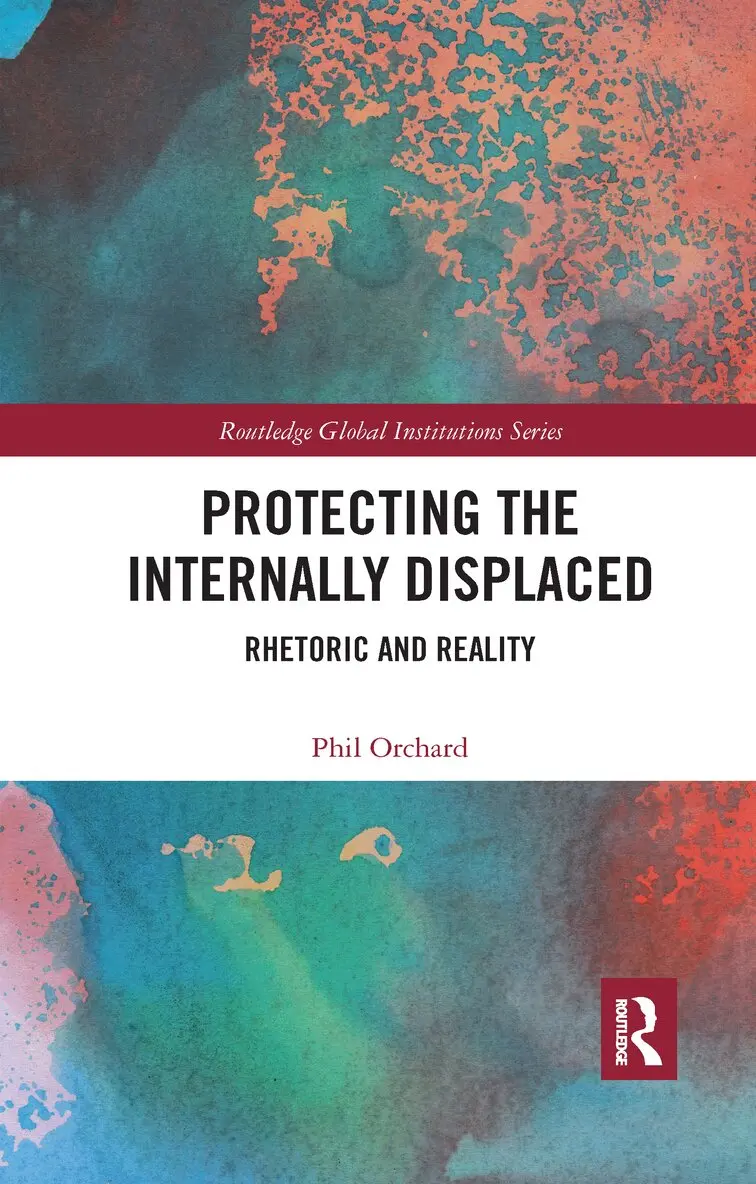
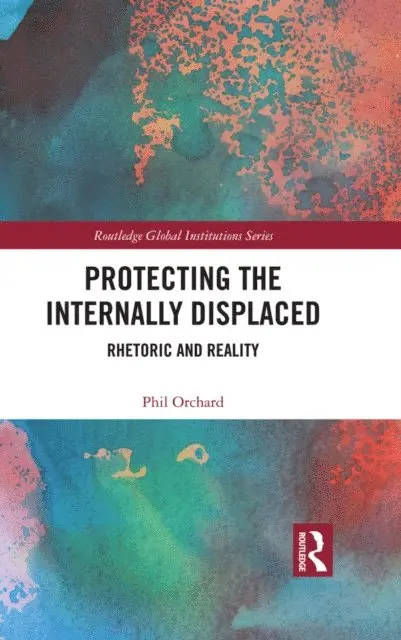
Today, there are over 40 million conflict-induced internally displaced persons (IDPs) globally, almost double the number of refugees. Yet, IDPs are protected only by the soft-law Guiding Principles on Internal Displacement at the global level. Instead of a dedicated international organization, IDPs receive protection and assistance only through the UN’s cluster approach.Orchard argues that while an international IDP protection regime exists, many aspects of it are informal, with IDP issues bound up in a humanitarian regime complex that divides the mandates of key organizations and even the question of IDP status itself. While the Guiding Principles mark an important step forward, implementation of laws and policies based on them at the domestic level remains haphazard. Action at the international level similarly reflects an all-too-often ad hoc approach to IDP issues. Through an in-depth examination of IDP efforts at the international level and across the forty states which have adopted IDP laws and policies, Orchard argues that while progress has been made, new and greater monitoring and accountability mechanisms at both the domestic and international levels are critical. This work will be valuable to scholars, students, and practitioners of forced migration, international relations theory, and the Responsibility to Protect doctrine.
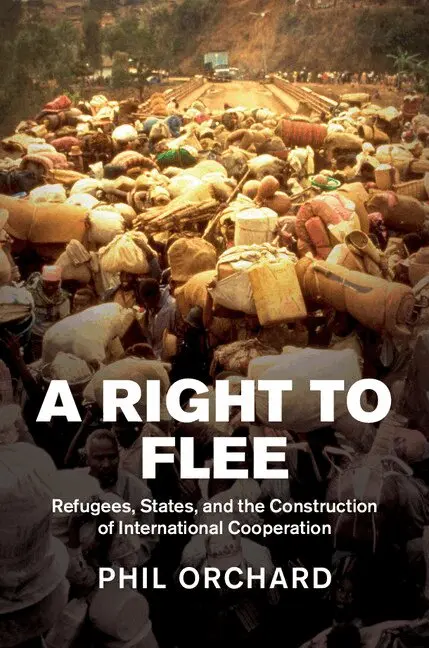
A Right to Flee
Refugees, States, and the Construction of International Cooperation
Inbunden, Engelska, 2014
1 192 kr
Skickas inom 7-10 vardagar
Why do states protect refugees? In the past twenty years, states have sought to limit access to asylum by increasing their border controls and introducing extraterritorial controls. Yet no state has sought to exit the 1951 Refugee Convention or the broader international refugee regime. This book argues that such international policy shifts represent an ongoing process whereby refugee protection is shaped and redefined by states and other actors. Since the seventeenth century, a mix of collective interests and basic normative understandings held by states created a space for refugees to be separate from other migrants. However, ongoing crisis events undermine these understandings and provide opportunities to reshape how refugees are understood, how they should be protected, and whether protection is a state or multilateral responsibility. Drawing on extensive archival and secondary materials, Phil Orchard examines the interplay among governments, individuals, and international organizations that has shaped how refugees are understood today.
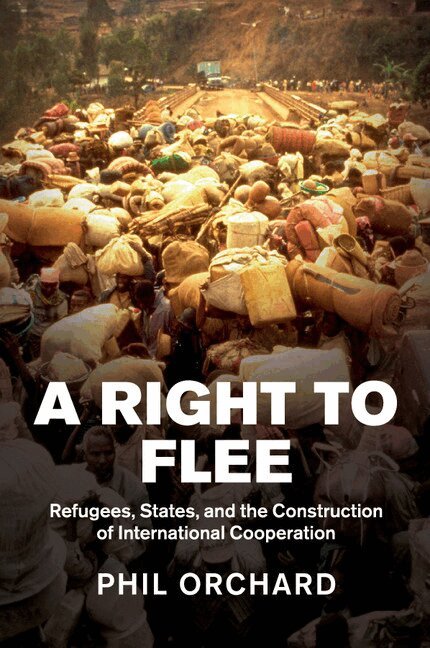
A Right to Flee
Refugees, States, and the Construction of International Cooperation
Häftad, Engelska, 2016
415 kr
Skickas inom 7-10 vardagar
Why do states protect refugees? In the past twenty years, states have sought to limit access to asylum by increasing their border controls and introducing extraterritorial controls. Yet no state has sought to exit the 1951 Refugee Convention or the broader international refugee regime. This book argues that such international policy shifts represent an ongoing process whereby refugee protection is shaped and redefined by states and other actors. Since the seventeenth century, a mix of collective interests and basic normative understandings held by states created a space for refugees to be separate from other migrants. However, ongoing crisis events undermine these understandings and provide opportunities to reshape how refugees are understood, how they should be protected, and whether protection is a state or multilateral responsibility. Drawing on extensive archival and secondary materials, Phil Orchard examines the interplay among governments, individuals, and international organizations that has shaped how refugees are understood today.
2 091 kr
Skickas inom 10-15 vardagar
Today, there are over 40 million conflict-induced internally displaced persons (IDPs) globally, almost double the number of refugees. Yet, IDPs are protected only by the soft-law Guiding Principles on Internal Displacement at the global level. Instead of a dedicated international organization, IDPs receive protection and assistance only through the UN’s cluster approach.Orchard argues that while an international IDP protection regime exists, many aspects of it are informal, with IDP issues bound up in a humanitarian regime complex that divides the mandates of key organizations and even the question of IDP status itself. While the Guiding Principles mark an important step forward, implementation of laws and policies based on them at the domestic level remains haphazard. Action at the international level similarly reflects an all-too-often ad hoc approach to IDP issues. Through an in-depth examination of IDP efforts at the international level and across the forty states which have adopted IDP laws and policies, Orchard argues that while progress has been made, new and greater monitoring and accountability mechanisms at both the domestic and international levels are critical. This work will be valuable to scholars, students, and practitioners of forced migration, international relations theory, and the Responsibility to Protect doctrine.