Philip a. Rolnick - Böcker
Visar alla böcker från författaren Philip a. Rolnick. Handla med fri frakt och snabb leverans.
6 produkter
6 produkter
352 kr
Skickas inom 3-6 vardagar
387 kr
Skickas inom 11-20 vardagar
Confronted by multiple religious possibilities, the rise of atheistic naturalism, and moral relativism, one can easily become perplexed about what matters most—or be tempted to conclude that nothing could matter most. As the first volume of A Post-Christendom Faith, a set of three interrelated theological works, The Long Battle for the Human Soul examines major historical developments that have led to our contemporary confusion—so that we might chart a way forward.Philip Rolnick begins with a theological assessment of the Reformation, Enlightenment, and French Revolution, three movements that attempted, and to some degree accomplished, basic reformulations of humanity. After the shock of the Reformation, with its faith-based criticism, the Enlightenment's reason-based criticism more or less set faith aside. The radical nature of Enlightenment criticism in turn led to the radical anthropological reformulations of the French Revolution—and then devolved into the Terror. Separated from Christian faith, and oftentimes fiercely opposing it, early forms of secular humanism poured their energies into reshaping social and political structures, while the crescendo of critique profoundly altered the spiritual landscape of the West. With foundational certainties shattered, new movements arose that pulled in different directions, some of them dangerous and deadly. Rolnick maps this fracturing through Feuerbach's atheism, the excesses of Romantic literature, the rise of nihilism, the "moral inversion" of Marxism, Comte's positivism, and Nietzsche's all-out war against Christianity.In this story of broken foundations, Rolnick is careful to show that the church and the gospel have never ceased to offer a very different foundation—trustworthy and eternally enduring. This first volume ends on a hopeful note, turning from the problematic humanism of recent centuries to a humanism grounded in incarnational faith. Its christological reflection looks beyond brokenness and toward the one who has never ceased restoring human wholeness.
531 kr
Skickas inom 7-10 vardagar
In Tradition Awakening, volume 2 of A Post-Christendom Faith, Philip Rolnick presents an innovative account of tradition as a countercultural remedy to contemporary deracination. Where the historical roots of current problems were addressed in volume 1, The Long Battle for the Human Soul, this volume is an in-depth development of the solution—the still-untapped possibilities of tradition, defined as a community sustained over generations of time. Because the church is the intergenerational messenger of the gospel, it must take the form of tradition. But in contrast to a stodgy "traditionalism," Rolnick elaborates a traditioning process, a dynamic interaction of "dwelling in and breaking out," borrowing Michael Polanyi's phrase. It is impossible even to begin advanced human life without first dwelling in what is already known; but once the tradition is handed over to newcomers, they will emphasize and deemphasize and sometimes creatively break out into new skills and understandings. Demonstrating the dual stability and creativity of the traditioning process, Rolnick presents the church as both an enclave and an outpost: an enclave fellowship where the gospel is learned and Christ is experienced; and an outpost for evangelism. Through these functions the church attempts to deepen faith in those who have it and to awaken faith in those who do not.Rolnick then explores the interrelationship between the gospel in the greater church and the "domestic church," the human family—itself a tradition. As part of a protracted critique of autonomy, the growing phenomenon of "spiritual but not religious" is examined as a foil to tradition. In education and across the public square our post-Christendom civilization has become vulnerable to virulent pathologies. But alerted to the high stakes of contemporary struggles, the church and the family can bolster their own strength, their members' spiritual health, and indirectly exert a medicinal influence on the ailments of late modernity.Tradition Awakening is not just about God; it is also a Christian humanism—a vision of humanity elevated by divine input.
357 kr
Skickas inom 5-8 vardagar
191 kr
Skickas inom 5-8 vardagar
366 kr
Skickas inom 10-15 vardagar
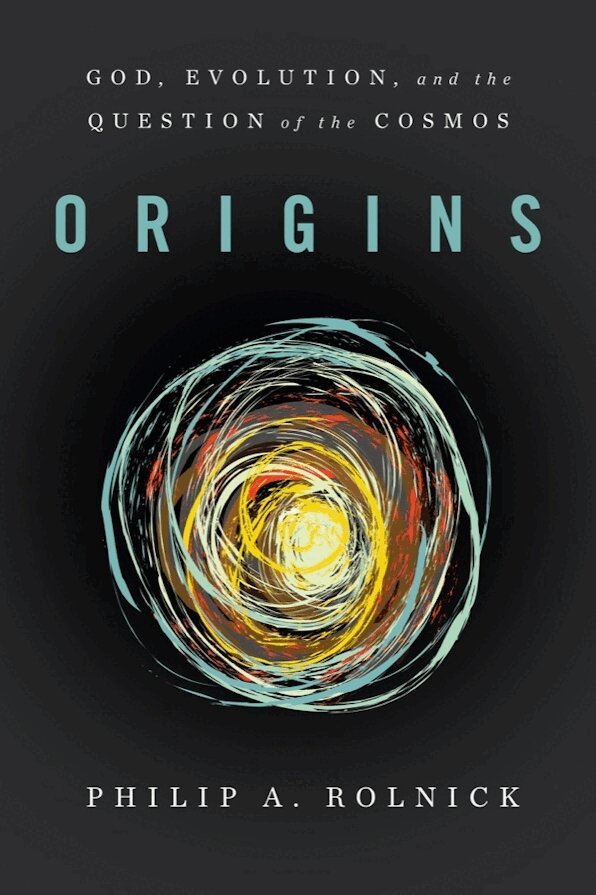
Rather than seeing science and religion as oppositional, in Origins: God, Evolution, and the Question of the Cosmos Philip Rolnick demonstrates the remarkable compatibility of contemporary science and traditional Christian theology.Rolnick directly engages the challenges of evolutionary biology - its questions about design, natural selection, human uniqueness, and suffering, pain, and death. In doing so, he reveals how biological challenges can be turned to theological advantages, not by disputing scientific data and theory, but by inviting evolutionary biology into the Christian conversation about creation.Rolnick then lets the vastly expanded time and macroscopic beauty of big bang cosmology cast new and benign light on both biology and theology. The discovery of a big bang beginning, fine-tuning, and a 3.45 billion year evolutionary process brings new ways to think about the creativity of creation. From the tiny to the tremendous, there is an intelligent generosity built into the features of the cosmos and its living creatures, a spectrum of interconnected phenomena that seems tinged with grace. By recognizing the gifts of creation that have been scientifically uncovered, Origins presents a new way to understand this universe of grace and reason.