Philip Beeley – författare
Visar alla böcker från författaren Philip Beeley. Handla med fri frakt och snabb leverans.
21 produkter
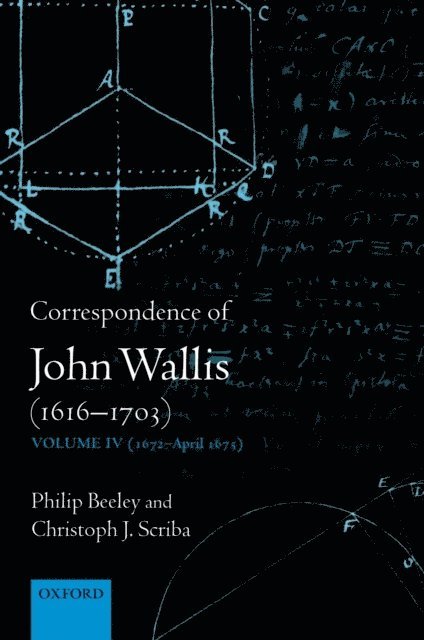
Correspondence of John Wallis (1616-1703)
Volume IV (1672-April 1675)
Av Christoph J. Scriba, Philip Beeley
E-bok, 2014
2823 kr
Lägg i varukorg
The Correspondence of John Wallis (1616 -1703) is a critically acclaimed resource in the history of early modern science. Volume IV covers the period from 1672 to April 1675 and contains over eighty previously unpublished letters. It documents Wallis''s role in the crucial debate over the method of …
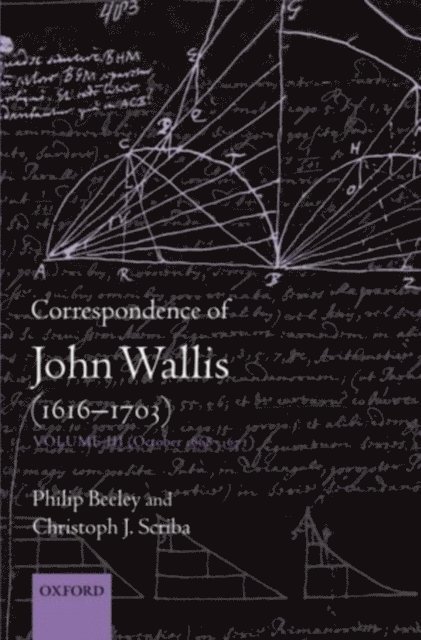
Correspondence of John Wallis (1616-1703)
Volume III (October 1668-1671)
Av Christoph J. Scriba, Philip Beeley
E-bok, 2012
4626 kr
Lägg i varukorg
Containing many previously unpublished letters, this third volume of a six volume collection of the complete correspondence of John Wallis (1616-1703), documents an important period in the history of the Royal Society and the University of Oxford. By providing access to these letters, this …
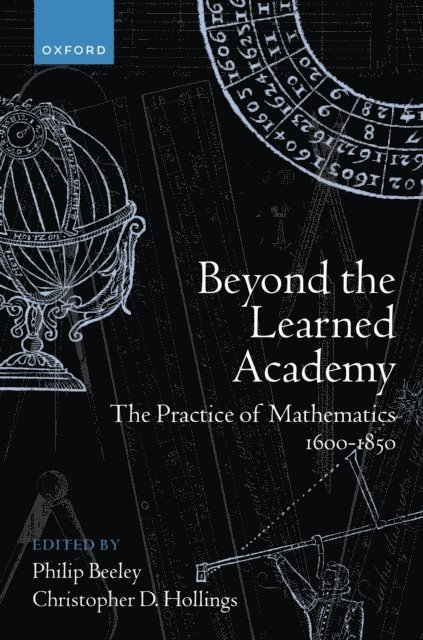
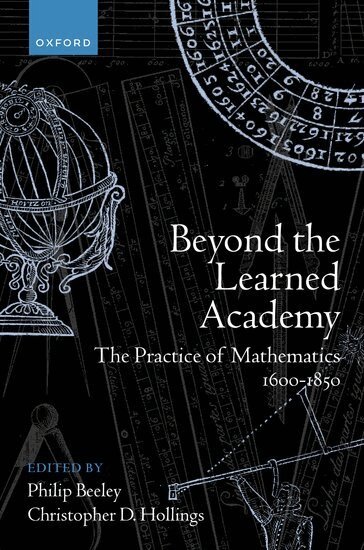
Beyond the Learned Academy
The Practice of Mathematics, 1600-1850
Av Christopher Hollings, Philip Beeley
E-bok, 2024
437 kr
Lägg i varukorg
The tremendous growth of the mathematical sciences in the early modern world was reflected contemporaneously in an increasingly sophisticated level of practical mathematics in fields such as merchants'' accounts, instrument making, teaching, navigation, and gauging. In many ways, mathematics shaped …
Beyond the Learned Academy
The Practice of Mathematics, 1600-1850
Av Christopher Hollings, Philip Beeley
E-bok, 2023
437 kr
Lägg i varukorg
The tremendous growth of the mathematical sciences in the early modern world was reflected contemporaneously in an increasingly sophisticated level of practical mathematics in fields such as merchants'' accounts, instrument making, teaching, navigation, and gauging. In many ways, mathematics shaped …
The Correspondence of John Wallis (1616-1703)
Volume 1 (1641 - 1659)
Av Philip Beeley, Christoph J. Scriba
Inbunden, 2003
4687 kr
Lägg i varukorg
This is the first volume of a six volume compendium on the correspondences of John Wallis (1616-1703). Wallis was Savilian Professor of Geometry at Oxford from 1649 until his death, and was a founding member of the Royal Society and a central figure in the scientific and intellectual history of …
The Correspondence of John Wallis (1616-1703)
Volume II (1660 - September 1668)
Av Philip Beeley, Christoph Scriba
Inbunden, 2005
4481 kr
Lägg i varukorg
This is the second volume of a six volume compendium on the correspondences of John Wallis (1616-1703). Wallis was Savilian Professor of Geometry at Oxford from 1649 until his death, and was a founding member of the Royal Society and a central figure in the scientific and intellectual history of …
Correspondence of John Wallis (1616-1703)
Volume III (October 1668-1671)
Av Philip Beeley, Christoph J. Scriba
Inbunden, 2012
6426 kr
Lägg i varukorg
Containing many previously unpublished letters, this third volume of a six volume collection of the complete correspondence of John Wallis (1616-1703), documents an important period in the history of the Royal Society and the University of Oxford. By providing access to these letters, this …
Correspondence of John Wallis (1616-1703)
Volume IV (1672-April 1675)
Av Philip Beeley, Christoph J. Scriba
Inbunden, 2014
5178 kr
Lägg i varukorg
The Correspondence of John Wallis (1616 -1703) is a critically acclaimed resource in the history of early modern science. Volume IV covers the period from 1672 to April 1675 and contains over eighty previously unpublished letters. It documents Wallis's role in the crucial debate over the method of …
Beyond the Learned Academy
The Practice of Mathematics, 1600-1850
Av Philip Beeley, Christopher Hollings
Inbunden, 2024
545 kr
Lägg i varukorg
The tremendous growth of the mathematical sciences in the early modern world was reflected contemporaneously in an increasingly sophisticated level of practical mathematics in fields such as merchants' accounts, instrument making, teaching, navigation, and gauging. In many ways, mathematics shaped …
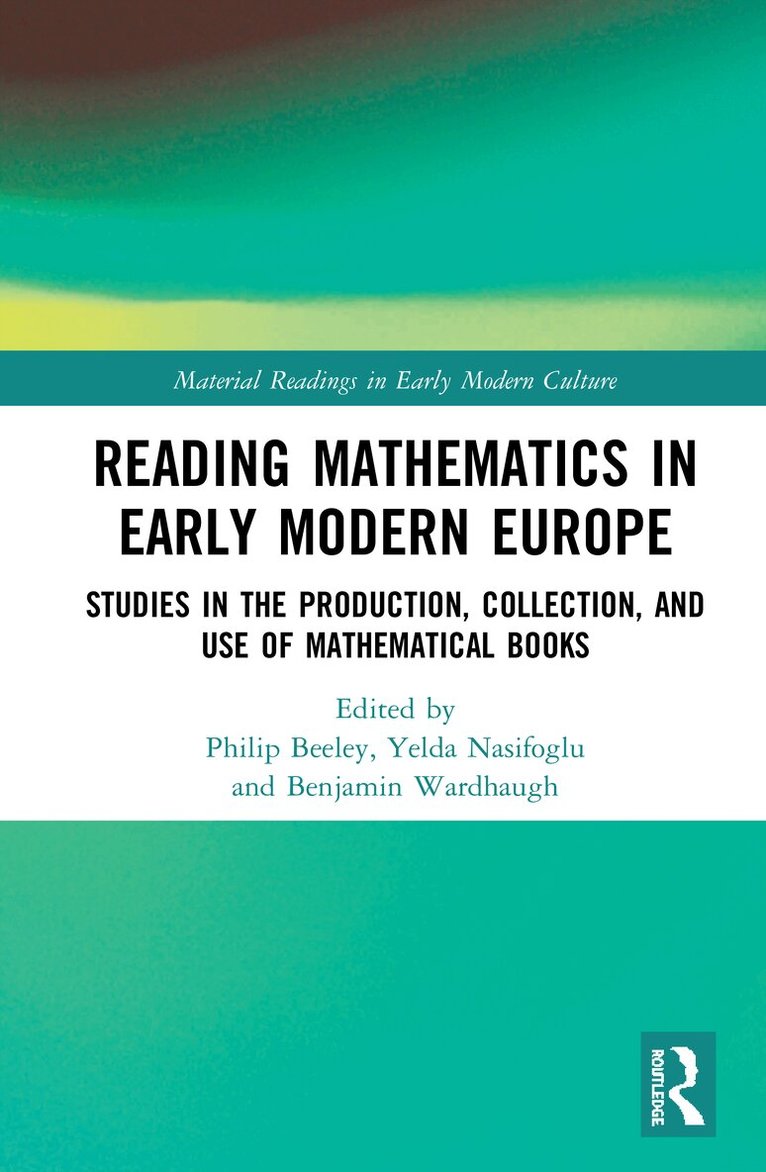
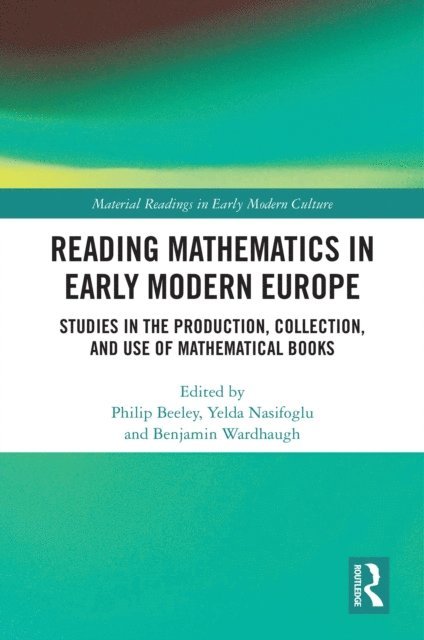
Reading Mathematics in Early Modern Europe
Studies in the Production, Collection, and Use of Mathematical Books
Av Philip Beeley, Yelda Nasifoglu m. fl.
Inbunden, 2020
3156 kr
Lägg i varukorg
Libraries and archives contain many thousands of early modern mathematical books, of which almost equally many bear readers’ marks, ranging from deliberate annotations and accidental blots to corrections and underlinings. Such evidence provides us with the material and intellectual tools for …
Reading Mathematics in Early Modern Europe
Studies in the Production, Collection, and Use of Mathematical Books
Av Philip Beeley, Yelda Nasifoglu m. fl.
Häftad, 2023
795 kr
Lägg i varukorg
Libraries and archives contain many thousands of early modern mathematical books, of which almost equally many bear readers’ marks, ranging from deliberate annotations and accidental blots to corrections and underlinings. Such evidence provides us with the material and intellectual tools for …
Reading Mathematics in Early Modern Europe
Studies in the Production, Collection, and Use of Mathematical Books
Av Benjamin Wardhaugh, Yelda Nasifoglu m. fl.
E-bok, 2020
814 kr
Lägg i varukorg
Libraries and archives contain many thousands of early modern mathematical books, of which almost equally many bear readers’ marks, ranging from deliberate annotations and accidental blots to corrections and underlinings. Such evidence provides us with the material and intellectual tools for …
Reading Mathematics in Early Modern Europe
Studies in the Production, Collection, and Use of Mathematical Books
Av Benjamin Wardhaugh, Yelda Nasifoglu m. fl.
E-bok, 2020
814 kr
Lägg i varukorg
Libraries and archives contain many thousands of early modern mathematical books, of which almost equally many bear readers’ marks, ranging from deliberate annotations and accidental blots to corrections and underlinings. Such evidence provides us with the material and intellectual tools for …
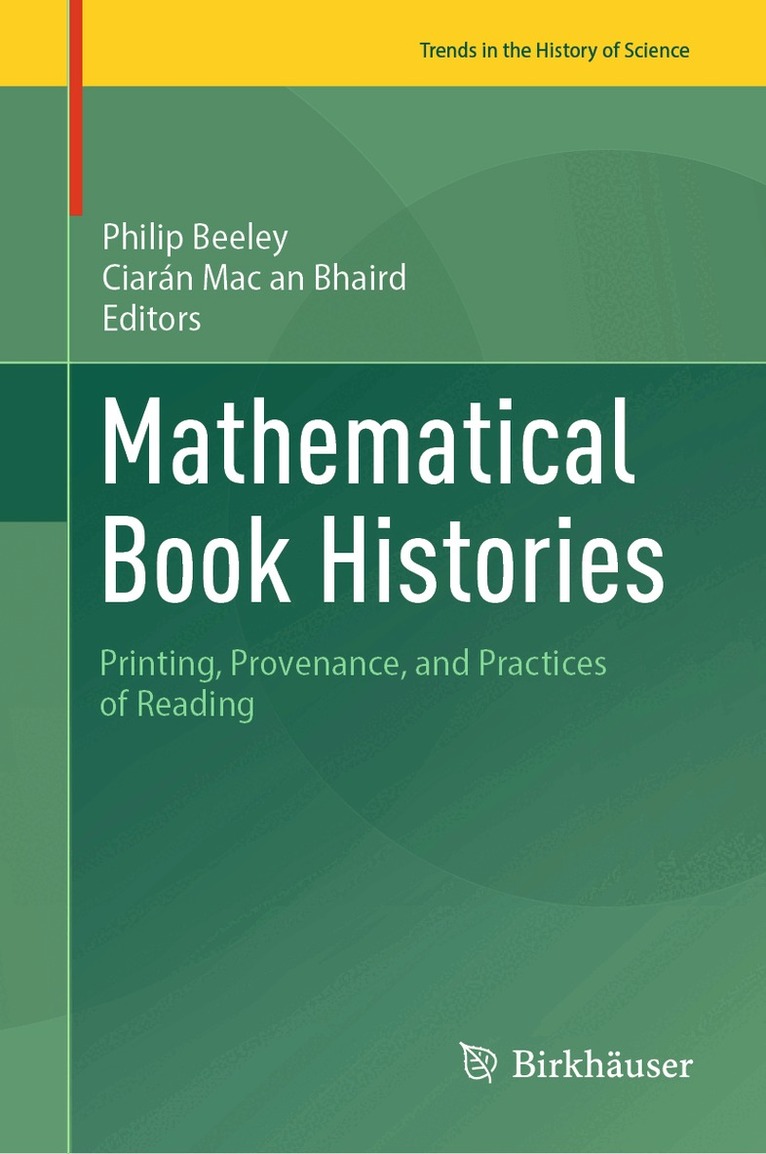
Mathematical Book Histories
Printing, Provenance, and Practices of Reading
Av Philip Beeley, Ciarán Mac an Bhaird
Inbunden, 2024
1979 kr
Lägg i varukorg
This book both articulates and responds to increasing scholarly interest in the materiality of the book. Taking as its base the unique collection of mathematical books in the Russell Library at Maynooth, it addresses questions related to printing techniques and print culture, book production, …
Mathematical Book Histories
Printing, Provenance, and Practices of Reading
Av Ciaran Mac an Bhaird, Philip Beeley
E-bok, 2024
2599 kr
Lägg i varukorg
This book both articulates and responds to increasing scholarly interest in the materiality of the book. Taking as its base the unique collection of mathematical books in the Russell Library at Maynooth, it addresses questions related to printing techniques and print culture, book production, …
Mathematical Book Histories
Printing, Provenance, and Practices of Reading
Av Philip Beeley, Ciarán Mac an Bhaird
Häftad, 2025
1979 kr
Lägg i varukorg
This book both articulates and responds to increasing scholarly interest in the materiality of the book. Taking as its base the unique collection of mathematical books in the Russell Library at Maynooth, it addresses questions related to printing techniques and print culture, book production, …
b
Av Stefan Lorenz, Herma Kliege-Biller m. fl.
E-bok, 2014
5204 kr
Lägg i varukorg
Der zweite Band der philosophischen Korrespondenz zeigt Leibniz während seiner Tätigkeit in Hannover und Wolfenbüttel, unterbrochen durch die mehrjährige Reise nach Süddeutschland und Italien (1687–1690). Eine besondere Stellung nimmt der gewichtige Briefwechsel mit Antoine Arnauld ein, in dem es …
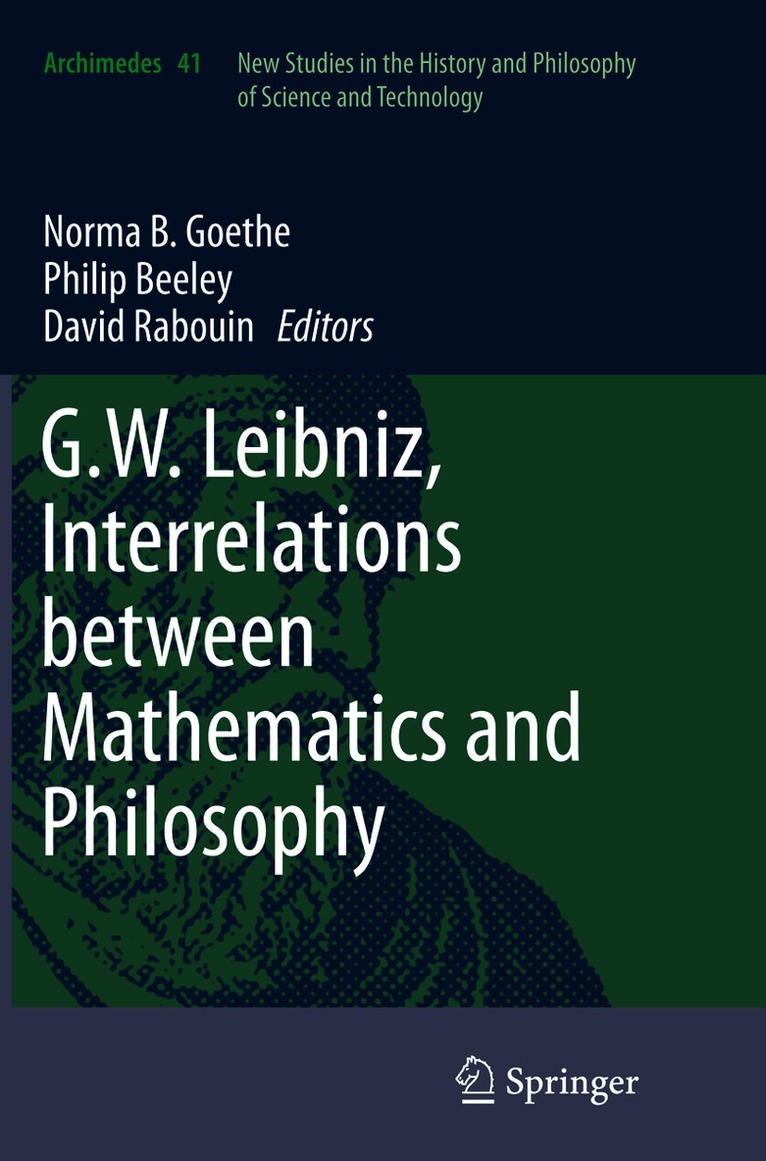
G.W. Leibniz, Interrelations between Mathematics and Philosophy
Av Norma B. Goethe, Philip Beeley m. fl.
Häftad, 2016
607 kr
Lägg i varukorg
Up to now there have been scarcely any publications on Leibniz dedicated to investigating the interrelations between philosophy and mathematics in his thought. In part this is due to the previously restricted textual basis of editions such as those produced by Gerhardt. Through recent volumes of …
G.W. Leibniz, Interrelations between Mathematics and Philosophy
Av Norma B. Goethe, Philip Beeley m. fl.
Inbunden, 2015
607 kr
Lägg i varukorg
Up to now there have been scarcely any publications on Leibniz dedicated to investigating the interrelations between philosophy and mathematics in his thought. In part this is due to the previously restricted textual basis of editions such as those produced by Gerhardt. Through recent volumes of …
G.W. Leibniz, Interrelations between Mathematics and Philosophy
Av David Rabouin, Philip Beeley m. fl.
E-bok, 2015
815 kr
Lägg i varukorg
Up to now there have been scarcely any publications on Leibniz dedicated to investigating the interrelations between philosophy and mathematics in his thought. In part this is due to the previously restricted textual basis of editions such as those produced by Gerhardt. Through recent volumes of …