Philip Bohlman - Böcker
Visar alla böcker från författaren Philip Bohlman. Handla med fri frakt och snabb leverans.
3 produkter
3 produkter
1 757 kr
Skickas inom 5-8 vardagar
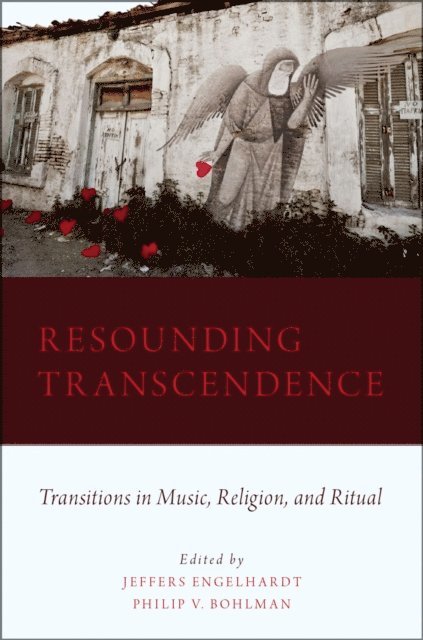
Resounding Transcendence is a pathbreaking set of ethnographic and historical essays by leading scholars exploring the ways sacred music effects cultural, political, and religious transitions in the contemporary world. With chapters covering Christian, Muslim, Jewish, and Buddhist practices in East and Southeast Asia, the Indian subcontinent, North America, the Caribbean, North Africa, and Europe, the volume establishes the theoretical and methodological foundations for music scholarship to engage in current debates about modern religion and secular epistemologies. It also transforms those debates through sophisticated, nuanced treatments of sound and music - ubiquitous elements of ritual and religion often glossed over in other disciplines.Resounding Transcendence confronts the relationship of sound, divinity, and religious practice in diverse post-secular contexts. By examining the immanence of transcendence in specific social and historical contexts and rethinking the reified nature of "religion" and "world religions," these authors examine the dynamics of difference and transition within and between sacred musical practices. The work in this volume transitions between traditional spaces of sacred musical practice and emerging public spaces for popular religious performance; between the transformative experience of ritual and the sacred musical affordances of media technologies; between the charisma of individual performers and the power of the marketplace; and between the making of authenticity and hybridity in religious repertoires and practices. Broad in scope, rich in ethnographic and historical detail, and theoretically ambitious, Resounding Transcendence is an essential contribution to the study of music and religion.
537 kr
Skickas inom 5-8 vardagar
Resounding Transcendence is a pathbreaking set of ethnographic and historical essays by leading scholars exploring the ways sacred music effects cultural, political, and religious transitions in the contemporary world. With chapters covering Christian, Muslim, Jewish, and Buddhist practices in East and Southeast Asia, the Indian subcontinent, North America, the Caribbean, North Africa, and Europe, the volume establishes the theoretical and methodological foundations for music scholarship to engage in current debates about modern religion and secular epistemologies. It also transforms those debates through sophisticated, nuanced treatments of sound and music - ubiquitous elements of ritual and religion often glossed over in other disciplines.Resounding Transcendence confronts the relationship of sound, divinity, and religious practice in diverse post-secular contexts. By examining the immanence of transcendence in specific social and historical contexts and rethinking the reified nature of "religion" and "world religions," these authors examine the dynamics of difference and transition within and between sacred musical practices. The work in this volume transitions between traditional spaces of sacred musical practice and emerging public spaces for popular religious performance; between the transformative experience of ritual and the sacred musical affordances of media technologies; between the charisma of individual performers and the power of the marketplace; and between the making of authenticity and hybridity in religious repertoires and practices. Broad in scope, rich in ethnographic and historical detail, and theoretically ambitious, Resounding Transcendence is an essential contribution to the study of music and religion.
454 kr
Skickas inom 5-8 vardagar
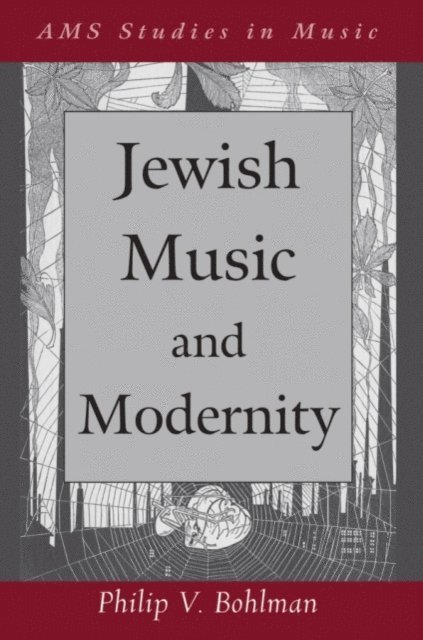
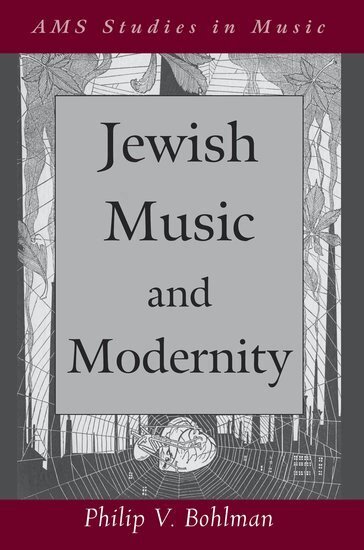
Is there really such a thing as Jewish music? And how does it survive as a practice of worship and cultural expression even in the face of the many brutal aesthetic and political challenges of modernity? In Jewish Music and Modernity, Philip V. Bohlman imparts these questions with a new light that transforms the very historiography of Jewish culture in modernity. Based on decades of fieldwork and archival study throughout the world, Bohlman intensively examines the many ways in which music has historically borne witness to the confrontation between modern Jews and the world around them. Weaving a historical narrative that spans from the end of the Middle Ages to the Holocaust, he moves through the vast confluence of musical styles and repertories. From the sacred and to the secular, from folk to popular music, and in the many languages in which it was written and performed, he accounts for areas of Jewish music that have rarely been considered before. Jewish music, argues Bohlman, both survived in isolation and transformed the nations in which it lived. When Jews and Jewish musicians entered modernity, authenticity became an ideal to be supplanted by the reality of complex traditions. Klezmer music emerged in rural communities cohabited by Jews and Roma; Jewish cabaret resulted from the collaborations of migrant Jews and non-Jews to the nineteenth-century metropoles of Berlin and Budapest, Prague and Vienna; cantors and composers experimented with new sounds. The modernist impulse from Felix Mendelssohn to Gustav Pick to Arnold Schoenberg and beyond became possible because of the ways music juxtaposed aesthetic and cultural differences. Jewish Music and Modernity demonstrates how borders between repertories are crossed and the sound of modernity is enriched by the movement of music and musicians from the peripheries to the center of modern culture. Bohlman ultimately challenges readers to experience the modern confrontation of self and other anew.