Philip Darby – författare
707 kr
Skickas inom 10-15 vardagar
695 kr
Skickas inom 10-15 vardagar
739 kr
Läs direkt efter köp
973 kr
Skickas inom 10-15 vardagar
2 181 kr
Skickas inom 10-15 vardagar
1 538 kr
Skickas inom 10-15 vardagar
523 kr
Skickas inom 10-15 vardagar
795 kr
Läs direkt efter köp
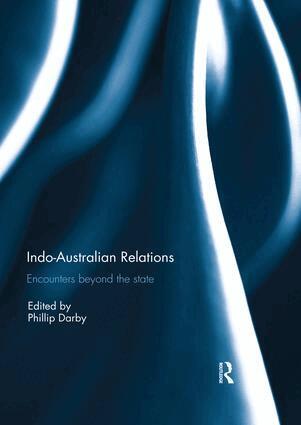
This book explores a range of connections between India and Australia that fall outside the formal diplomacy of the two states. It examines how race, class and gender shape conceptions of the two nations, whose voices are heard and whose are not, and the politics that emerge from sport, culture, the drive for development as well as from language and the poetic. The book seeks to challenge the primacy of the state in determining the character of the nation and its monopoly of relations with other peoples. To this end, it looks to everyday life to find linkages not only between India and Australia but also extending through the South and Southeast Asian regions.
This book was published as a special issue of Postcolonial Studies.
795 kr
Läs direkt efter köp
This book explores a range of connections between India and Australia that fall outside the formal diplomacy of the two states. It examines how race, class and gender shape conceptions of the two nations, whose voices are heard and whose are not, and the politics that emerge from sport, culture, the drive for development as well as from language and the poetic. The book seeks to challenge the primacy of the state in determining the character of the nation and its monopoly of relations with other peoples. To this end, it looks to everyday life to find linkages not only between India and Australia but also extending through the South and Southeast Asian regions.
This book was published as a special issue of Postcolonial Studies.
597 kr
Läs direkt efter köp
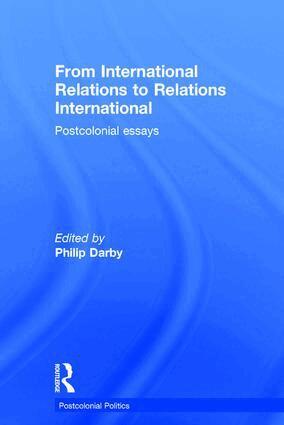
This book brings postcolonial critique directly to bear on established ways of theorizing international relations. Its primary concern is with the non-European world and its relations with the North. In advancing an alternative conception of "relations international", the book draws on alternative source material and different forms of writing. It also features short stories, an interview and explores the role of poetics and performance.
The suzerainty of the disciplinary writ is challenged on three primary grounds. Firstly on its Eurocentrism, which leads the discipline to pass lightly over the distinctive life experiences of most of the world’s people. Secondly, on the discipline’s failure to engage in any systematic way with other bodies of knowledge about the international, as for example international political economy, postcolonialism and development. Lastly, it confronts the ‘top down’ nature of the politics of the discipline, and that seldom addresses everyday life.
From squatter towns to the evasions of the poor, from law through to literature, this work raises a number of problems for International relations. It challenges a colonial mindset, de-centres the west and opens the field to new approaches that are far more inter-disciplinary than international relations generally allows. It is a provocative contribution for students and scholars of IR and Postcolonial studies alike.
597 kr
Läs direkt efter köp
This book brings postcolonial critique directly to bear on established ways of theorizing international relations. Its primary concern is with the non-European world and its relations with the North. In advancing an alternative conception of "relations international", the book draws on alternative source material and different forms of writing. It also features short stories, an interview and explores the role of poetics and performance.
The suzerainty of the disciplinary writ is challenged on three primary grounds. Firstly on its Eurocentrism, which leads the discipline to pass lightly over the distinctive life experiences of most of the world’s people. Secondly, on the discipline’s failure to engage in any systematic way with other bodies of knowledge about the international, as for example international political economy, postcolonialism and development. Lastly, it confronts the ‘top down’ nature of the politics of the discipline, and that seldom addresses everyday life.
From squatter towns to the evasions of the poor, from law through to literature, this work raises a number of problems for International relations. It challenges a colonial mindset, de-centres the west and opens the field to new approaches that are far more inter-disciplinary than international relations generally allows. It is a provocative contribution for students and scholars of IR and Postcolonial studies alike.