Philip De Greff Ball - Böcker
Visar alla böcker från författaren Philip De Greff Ball. Handla med fri frakt och snabb leverans.
2 produkter
2 produkter
600 kr
Skickas inom 7-10 vardagar
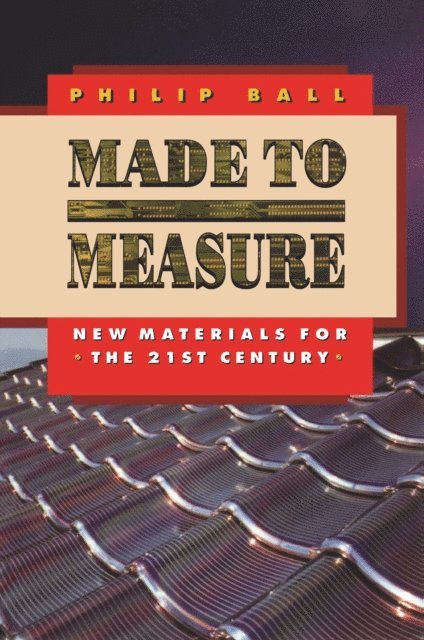
Made to Measure introduces a general audience to one of today's most exciting areas of scientific research: materials science. Philip Ball describes how scientists are currently inventing thousands of new materials, ranging from synthetic skin, blood, and bone to substances that repair themselves and adapt to their environment, that swell and flex like muscles, that repel any ink or paint, and that capture and store the energy of the Sun. He shows how all this is being accomplished precisely because, for the first time in history, materials are being "made to measure": designed for particular applications, rather than discovered in nature or by haphazard experimentation. Now scientists literally put new materials together on the drawing board in the same way that a blueprint is specified for a house or an electronic circuit. But the designers are working not with skylights and alcoves, not with transistors and capacitors, but with molecules and atoms.This book is written in the same engaging manner as Ball's popular book on chemistry, Designing the Molecular World, and it links insights from chemistry, biology, and physics with those from engineering as it outlines the various areas in which new materials will transform our lives in the twenty-first century. The chapters provide vignettes from a broad range of selected areas of materials science and can be read as separate essays. The subjects include photonic materials, materials for information storage, smart materials, biomaterials, biomedical materials, materials for clean energy, porous materials, diamond and hard materials, new polymers, and surfaces and interfaces.
242 kr
Skickas inom 7-10 vardagar
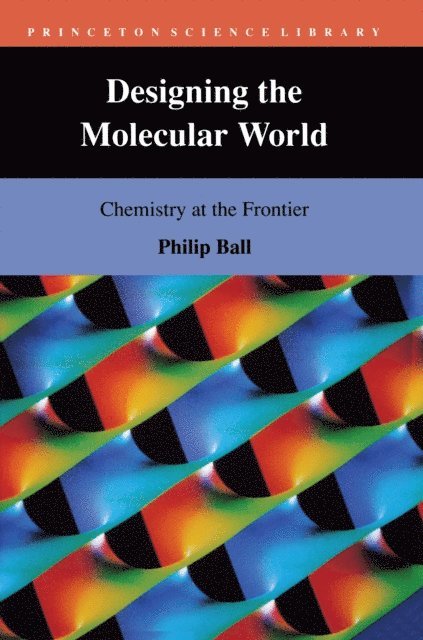
Some of the most exciting scientific developments in recent years have come not from theoretical physicists, astronomers, or molecular biologists but instead from the chemistry lab. Chemists have created superconducting ceramics for brain scanners, designed liquid crystal flat screens for televisions and watch displays, and made fabrics that change color while you wear them. They have fashioned metals from plastics, drugs from crude oil, and have pinpointed the chemical pollutants affecting our atmosphere and are now searching for remedies for the imperiled planet. Philip Ball, an editor for the prestigious magazine Nature, lets the lay reader into the world of modern chemistry. Here, for example, chemists find new uses for the improbable buckminsterfullerene molecules--60-atom carbon soccerballs, dubbed "buckyballs"--which seem to have applications for everything from lubrication to medicine to electronics.The book is not intended as an introduction to chemistry, but as an accessible survey of recent developments throughout many of the major fields allied with chemistry: from research in traditional areas such as crystallography and spectroscopy to entirely new fields of study such as molecular electronics, artificial enzymes, and "smart" polymer gels. Ball's grand tour along the leading edge of scientific discovery will appeal to all curious readers, with or without any scientific training, to chemistry students looking for future careers, and to practicing chemical researchers looking for information on other specialties within their discipline.