Philip F. Gura - Böcker
Visar alla böcker från författaren Philip F. Gura. Handla med fri frakt och snabb leverans.
10 produkter
10 produkter
657 kr
Skickas inom 5-8 vardagar
The Crossroads of American History and Literature collects two decades' worth of the best-known essays of Philip F. Gura. Beginning with a definitive overview of studies of colonial literature, Gura ranges through such subjects in colonial American history as the intellectual life of the Connecticut River Valley, Cotton Mather's understanding of political leadership, and the religious upheavals of the Great Awakening. In the nineteenth century, he visits such varied topics as the history of print culture in rural communities, the philological interests of the Transcendentalist Elizabeth Peabody, the craft and business of the early Amerian music trades, and Thoreau's interest in exploration literature and in the Native American. Displaying remarkable sophistication in a variety of fields that, taken together, constitute the heart of American Studies, this collection illustrates the complexity of American cultural history.
334 kr
Skickas inom 5-8 vardagar
Philip F. Gura's Truth's Ragged Edge is perhaps the first comprehensive study of the early American novel since Richard Chase's 1957 classic, The American Novel and Its Tradition. Gura opens with the first truly homegrown genre of fiction: religious tracts, which were parables, intended to instruct the Christian reader. He then turns to the city novels of the 1840s, which depicted with mixed feelings the rapid growth and modernization of American society. He concludes with fresh interpretations of the introspective novels that appeared before the Civil War, such as those by Hawthorne and by Melville, from whom Gura takes his title. The grand narrative sweep of the book is balanced by Gura's great insight that the early novel never fully left its origins behind, even as it evolved-it remained a means of theological and philosophical dispute, and reflected the oldest and deepest divisions in American Christianity, politics, and culture. In addition to discussing novels that are considered classics, Gura recovers many novels - by authors as diverse as the evangelical writer Susan Warner, the African American novelist Frank J.Webb, and the early feminist novelist Elizabeth Stoddard - that will be revelations to the contemporary reader. Panoramic and original, Truth's Ragged Edge is an indispensable guide to the origins and development of the American novel and will become a standard book on its subject.
407 kr
Skickas inom 10-15 vardagar
Banks failed, credit contracted, inequality grew, and people everywhere were out of work while political paralysis and slavery threatened to rend the nation in two. As financial crises always have, the Panic of 1837 drew forth a plethora of reformers who promised to restore America to greatness. Animated by an ethic of individualism and self-reliance, they became prophets of a new moral order: if only their fellow countrymen would call on each individual’s God-given better instincts, the most intractable problems could be resolved.Inspired by this reformist fervor, Americans took to strict dieting, water cures, phrenology readings, mesmerism, utopian communities, free love, mutual banking, and a host of other elaborate self-improvement schemes. Vocal activists were certain that solutions to the country’s ills started with the reformation of individuals, and through them communities, and through communities the nation. This set of assumptions ignored the hard political and economic realities at the core of the country’s malaise, however, and did nothing to prevent another financial panic twenty years later, followed by secession and civil war.Focusing on seven individuals—George Ripley, Horace Greeley, William B. Greene, Orson Squire Fowler, Mary Gove Nichols, Henry David Thoreau, and John Brown—Philip Gura explores their efforts, from the comical to the homicidal, to beat a new path to prosperity. A narrative of people and ideas, Man’s Better Angels captures an intellectual moment in American history that has been overshadowed by the Civil War and the pragmatism that arose in its wake.
309 kr
Skickas inom 3-6 vardagar
262 kr
Skickas inom 5-8 vardagar
399 kr
Skickas inom 7-10 vardagar
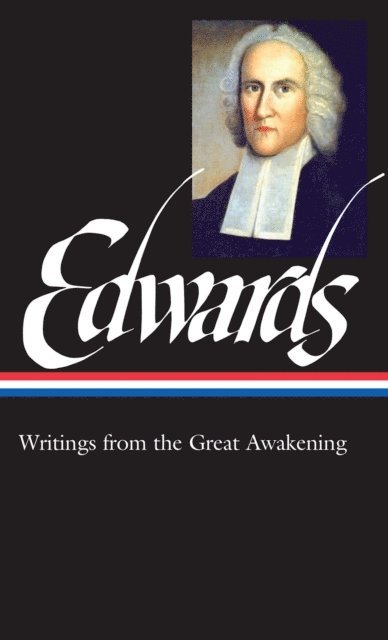
A riveting story of faith, politics, and ideas, Liberty or Justice for All? brings to life four of America’s greatest thinkers, whose dialogue across the ages has never been more relevant. The book traces a striking pattern—the vexed relationship of individual liberty to inclusive social justice—in an elaborate fabric, woven over more than three centuries of American history.Philip F. Gura begins his nimble tale with Jonathan Edwards, a fiery preacher who insisted that God would reward those who embraced social cooperation. One generation later, the Founding Fathers grounded their own project of civic renewal in rights and freedom. But if every citizen is guaranteed life, liberty, and the pursuit of happiness, does this mean America is a nation where the individual reigns supreme?America’s young democracy soon found its prophet in Ralph Waldo Emerson, who preached a gospel of self-reliance, small government, and self-improvement. But with the coming of the Civil War, Emerson’s triumphant individual became a cog in a vast war machine. Radical technological transformations convinced the psychologist-turned-philosopher William James that the self was more fragmented and fragile than Emerson believed. He found virtue in pluralism and diversity, seeing selfishness as the cardinal sin. Two world wars and several failed revolutions later, John Rawls, shaken by the divisions of Vietnam, sought to establish a new secular foundation for social cooperation. Over time, we have sought to hold these opposing value systems in delicate balance, promising both liberty and justice for all.
2 277 kr
Skickas inom 3-6 vardagar
A riveting story of faith, politics, and ideas, Liberty or Justice for All? brings to life four of America’s greatest thinkers, whose dialogue across the ages has never been more relevant. The book traces a striking pattern—the vexed relationship of individual liberty to inclusive social justice—in an elaborate fabric, woven over more than three centuries of American history.Philip F. Gura begins his nimble tale with Jonathan Edwards, a fiery preacher who insisted that God would reward those who embraced social cooperation. One generation later, the Founding Fathers grounded their own project of civic renewal in rights and freedom. But if every citizen is guaranteed life, liberty, and the pursuit of happiness, does this mean America is a nation where the individual reigns supreme?America’s young democracy soon found its prophet in Ralph Waldo Emerson, who preached a gospel of self-reliance, small government, and self-improvement. But with the coming of the Civil War, Emerson’s triumphant individual became a cog in a vast war machine. Radical technological transformations convinced the psychologist-turned-philosopher William James that the self was more fragmented and fragile than Emerson believed. He found virtue in pluralism and diversity, seeing selfishness as the cardinal sin. Two world wars and several failed revolutions later, John Rawls, shaken by the divisions of Vietnam, sought to establish a new secular foundation for social cooperation. Over time, we have sought to hold these opposing value systems in delicate balance, promising both liberty and justice for all.
334 kr
Skickas inom 10-15 vardagar
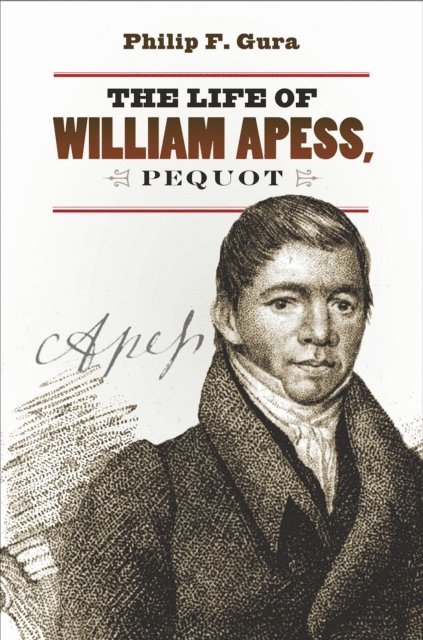
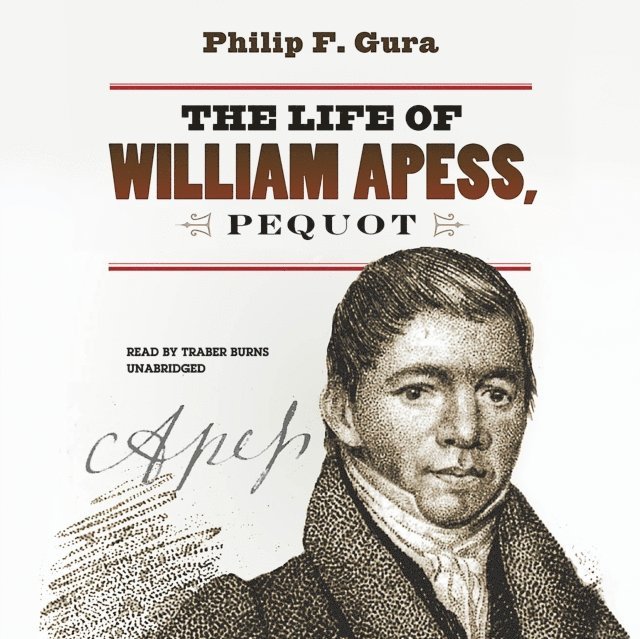
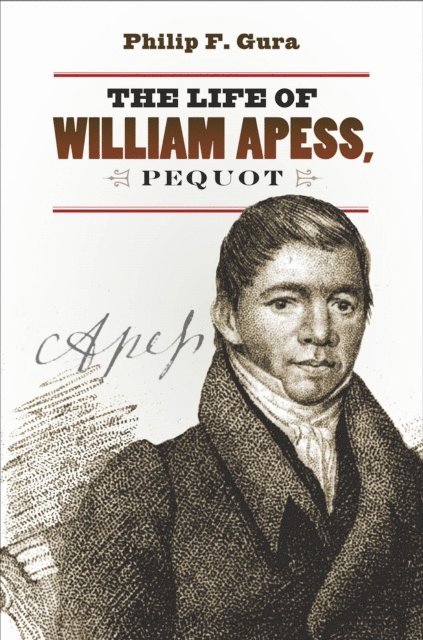
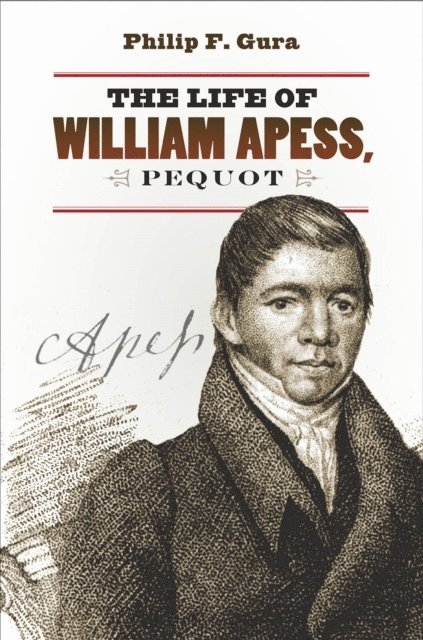
The Pequot Indian intellectual, author, and itinerant preacher William Apess (1798-1839) was one the most important voices of the nineteenth century. Here, Philip F. Gura offers the first book-length chronicle of Apess's fascinating and consequential life. After an impoverished childhood marked by abuse, Apess soldiered with American troops during the War of 1812, converted to Methodism, and rose to fame as a lecturer who lifted a powerful voice of protest against the plight of Native Americans in New England and beyond. His 1829 autobiography, A Son of the Forest, stands as the first published by a Native American writer. Placing Apess's activism on behalf of Native American people in the context of the era's rising tide of abolitionism, Gura argues that this founding figure of Native intellectual history deserves greater recognition in the pantheon of antebellum reformers. Following Apess from his early life through the development of his political radicalism to his tragic early death and enduring legacy, this much-needed biography showcases the accomplishments of an extraordinary Native American.
399 kr
Kommande
Exploring the books and reading practices behind the creation of Transcendentalist philosophy and communityTranscendentalism emerged in early 19th century New England as a uniquely American philosophical, spiritual, and literary movement. Its first generation of thinkers—including Ralph Waldo Emerson, Theodore Parker, and Margaret Fuller—created a worldview that stressed the inherent goodness of the "self-reliant" individual and the presence of the divine in nature. These intellectuals gathered in informal symposia devoted to what Emerson called "creative reading," a practice that stresses the transformative potential of the written word that was central to the movement's emergence, growth, and spread. But what were these thinkers reading and how did it influence the development of Transcendentalism?In Reading with the Transcendentalists, renowned literary scholar Philip F. Gura focuses on 10 American, British, and European books that were essential to the movement's thoughts, writings, and activities. Many of the authors of these books—James Marsh, Madame de Staël, Samson Reed, George Ripley, Thomas Carlyle, Albert Brisbane, and George Sand—stood outside of Transcendentalism yet profoundly influenced it. Others such as Emerson, Parker, and Fuller were the movement's central architects, whose writings in turn inspired the next generation, including Henry David Thoreau and Caroline Healey Dall. Each of these books challenged prevailing religious, philosophical, and social conventions in ways that resonated deeply with burgeoning Transcendentalist ideals.Blending intellectual biography with book history, Gura crafts a captivating cultural history that reconstructs the dynamic social networks of the early Transcendentalists, in which ideas from the written word circulated, evolved, and acquired new meanings. The result is an rich portrait of reading as a creative and communal act, and an exploration of how books ignite curiosity, sustain friendship, and catalyze intellectual transformation. Through a carefully developed narrative structure that is filled not only with books and reading but with headline-worthy scandals, disputes, and falling outs and realignments, Gura traces the historical arc of a transnational intellectual movement that helped lay the foundation for the idea of "America."
1 058 kr
Kommande
Exploring the books and reading practices behind the creation of Transcendentalist philosophy and communityTranscendentalism emerged in early 19th century New England as a uniquely American philosophical, spiritual, and literary movement. Its first generation of thinkers—including Ralph Waldo Emerson, Theodore Parker, and Margaret Fuller—created a worldview that stressed the inherent goodness of the "self-reliant" individual and the presence of the divine in nature. These intellectuals gathered in informal symposia devoted to what Emerson called "creative reading," a practice that stresses the transformative potential of the written word that was central to the movement's emergence, growth, and spread. But what were these thinkers reading and how did it influence the development of Transcendentalism?In Reading with the Transcendentalists, renowned literary scholar Philip F. Gura focuses on 10 American, British, and European books that were essential to the movement's thoughts, writings, and activities. Many of the authors of these books—James Marsh, Madame de Staël, Samson Reed, George Ripley, Thomas Carlyle, Albert Brisbane, and George Sand—stood outside of Transcendentalism yet profoundly influenced it. Others such as Emerson, Parker, and Fuller were the movement's central architects, whose writings in turn inspired the next generation, including Henry David Thoreau and Caroline Healey Dall. Each of these books challenged prevailing religious, philosophical, and social conventions in ways that resonated deeply with burgeoning Transcendentalist ideals.Blending intellectual biography with book history, Gura crafts a captivating cultural history that reconstructs the dynamic social networks of the early Transcendentalists, in which ideas from the written word circulated, evolved, and acquired new meanings. The result is an rich portrait of reading as a creative and communal act, and an exploration of how books ignite curiosity, sustain friendship, and catalyze intellectual transformation. Through a carefully developed narrative structure that is filled not only with books and reading but with headline-worthy scandals, disputes, and falling outs and realignments, Gura traces the historical arc of a transnational intellectual movement that helped lay the foundation for the idea of "America."