Philip Francis Esler – författare
Visar alla böcker från författaren Philip Francis Esler. Handla med fri frakt och snabb leverans.
10 produkter
10 produkter
Häftad, Engelska, 2005
444 kr
Skickas inom 5-8 vardagar
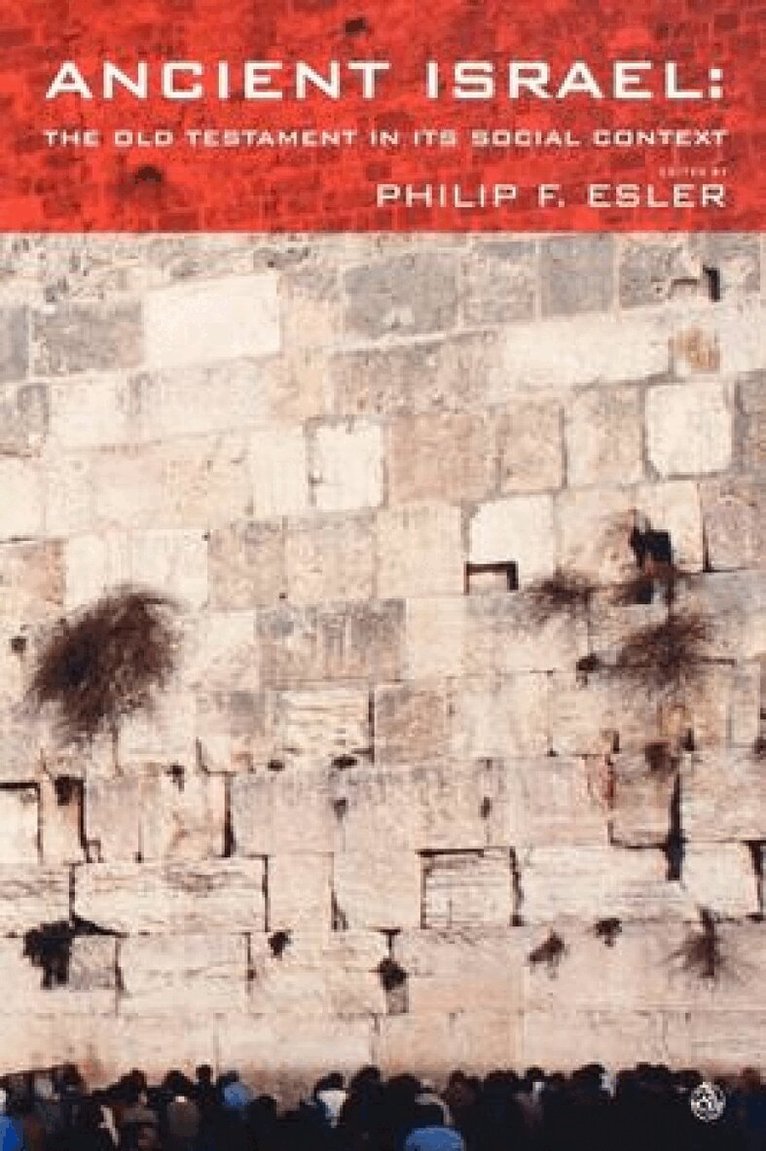
The book begins by providing a brief history and overview of social scientific analysis of the Old Testament, to bring the reader up to speed with the current scholarship. The remaining chapters are divided into three parts. The first part of the book, chapters 3-9, apply social-scientific models to general issues in Old Testament research, issues such as tribalism, polygamy, rituals and in particular sacrifice, the practice of exchange and the acquisition of wealth in the biblical world. Three models of patron and client, limited wealth, and honour and shame are used. The second part, chapters 10-16, apply social-scientific models to particular texts, including Micah 1-3 and Micah 6: 9-15 on economic states, the use of euphemisms for male genetalia in Deuteronomy 25: 11-12 using cross-cultural sociolinguistc research, the sacrifice of Jephthah's daughter is examined in an honour and shame framework, examining Judges 10 to 11, and in 2 Samuels 10-13, the social dynamic of challenge and response is examined in relation to David's sacking of Rabbah. Chapter 14 looks at Ezekiel and the call to be a prophet, and uses the social-scientific disciplines of cultural anthropology and cognitive neuroscience to analyse the call, to better understand and appreciate this event. Symbols of war are examined in the final chapter in this part, in Maccabees 1, applying anthropological theories of war. The third part of the book, chapters 18-20, focuses on hermeneutical issues, looking first at psychological interpretations, then identity theory and political interpretations and finally at the role of social sciences as a whole in biblical interpretation.
Del 57 - Society for New Testament Studies Monograph Series
Community and Gospel in Luke-Acts
The Social and Political Motivations of Lucan Theology
Häftad, Engelska, 1989
643 kr
Skickas inom 7-10 vardagar
In this widely-acclaimed study, Dr Esler makes extensive use of sociology and anthropology to examine the author of Luke Acts' theology as a response to social and political pressures upon the Christian community for whom he was writing. As well as interesting those concerned with prevalent developments in New Testament scholarship, Esler's book offers a New Testament paradigm for those interested in generating a theology attuned to the social and political realities affecting the twentieth-century Christian congregations.
Häftad, Engelska, 2003
742 kr
Skickas inom 3-6 vardagar
Häftad, Engelska, 2005
432 kr
Skickas inom 3-6 vardagar
Inbunden, Engelska, 2005
553 kr
Skickas inom 3-6 vardagar
Inbunden, Engelska, 2011
700 kr
Skickas inom 5-8 vardagar
E-bok
PDF, Engelska, 2017471 kr
Läs direkt efter köp
In recent decades the ancient apocalyptic work 1 Enoch has been intensively explored for its historical meaning and its contribution to Israelite and Christ-movement thought and identity. Yet its theological meaning, what it can contribute to understanding of the divine-human interface today, has been neglected by scholarship. This is surprising given that 1 Enoch is Scripture for the Ethiopian and Eritrean Orthodox churches and has been a major influence on Christian theology, experience, and art in Ethiopia since the fifth and sixth centuries CE. This book inaugurates a project in Western scholarship to bring 1 Enoch into theological discussion. It contains a number of essays delivered at meetings in Addis Ababa, Ethiopia, and Cheltenham, England, involving scholars from Ethiopia, Germany, the UK, and the USA. The papers cover topics such as the appropriate theological response to a text that is Scripture for only some Christians; the role of 1 Enoch in Ethiopian ecclesial and theological tradition; the theological potential of 1 Enoch in areas such as the environment, politics, social justice, Christology, persecution, the problem of evil and how 1 Enoch stimulates artistic expression today. The Blessing of Enoch aims to launch a wider discussion on 1 Enoch and contemporary theology.
E-bok
PDF, Engelska, 2017487 kr
Läs direkt efter köp
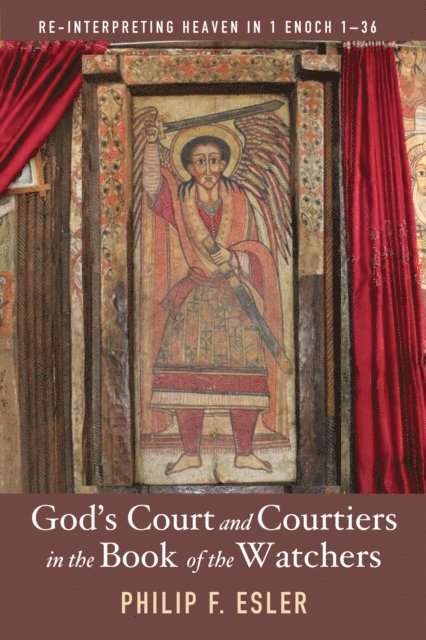
First Enoch is an ancient Judean work that inaugurated the genre of apocalypse. Chapters 1-36 tell the story of the descent of angels called "e;Watchers"e; from heaven to earth to marry human women before the time of the flood, the chaos that ensued, and God's response. They also relate the journeying of the righteous scribe Enoch through the cosmos, guided by angels. Heaven, including the place and those who dwell there (God, the angels, and Enoch), plays a central role in the narrative. But how should heaven be understood? Existing scholarship, which presupposes "e;Judaism"e; as the appropriate framework, views the Enochic heaven as reflecting the temple in Jerusalem, with God's house replicating its architecture and the angels and Enoch functioning like priests. Yet recent research shows the Judeans constituted an ethnic group, and this view encourages a fresh examination of 1 Enoch 1-36. The actual model for heaven proves to be a king in his court surrounded by his courtiers. The major textual features are explicable in this perspective, whereas the temple-and-priests model is unconvincing. The author was a member of a nontemple, scribal group in Judea that possessed distinctive astronomical knowledge, promoted Enoch as its exemplar, and was involved in the wider sociopolitical world of their time.
Häftad, Engelska, 2011
450 kr
Skickas inom 5-8 vardagar
E-bok
Engelska, 2011779 kr
Läs direkt efter köp
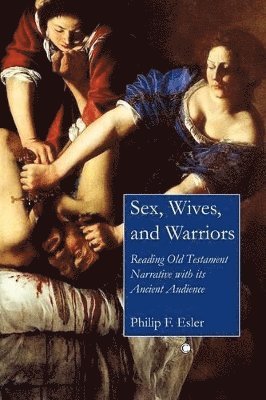
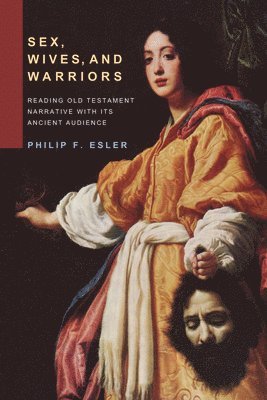
Why and how should we read Old Testament narrative? This book provides fresh answers to these questions. First, it models possible readers of the Bible--religious and nonreligious, professional and nonprofessional--and the reasons that might attract them to it. Second, with the aid of Mediterranean anthropology, it sets out an approach that helps us to interpret a selection of narratives with a cultural understanding close to that of an ancient Israelite. Powerful stories, such as those of Tamar and Judah in Genesis 38, Hannah in 1 Samuel 1-2, Saul and David in 1 Samuel, David and Bathsheba in 2 Samuel 10-12, and Judith, burst into new light when understood in closer relation to their original audience. Interpreted in this way, these narratives allow us to refresh the memory that links us with pivotal stories in Jewish and Christian identities, they disclose more ample possibilities for being human, they foster our capacity for intercultural understanding, and they provide aesthetic pleasure from their embodying plots of great imaginative power.