Philip J. Burton - Böcker
Visar alla böcker från författaren Philip J. Burton. Handla med fri frakt och snabb leverans.
4 produkter
4 produkter
2 052 kr
Skickas inom 5-8 vardagar
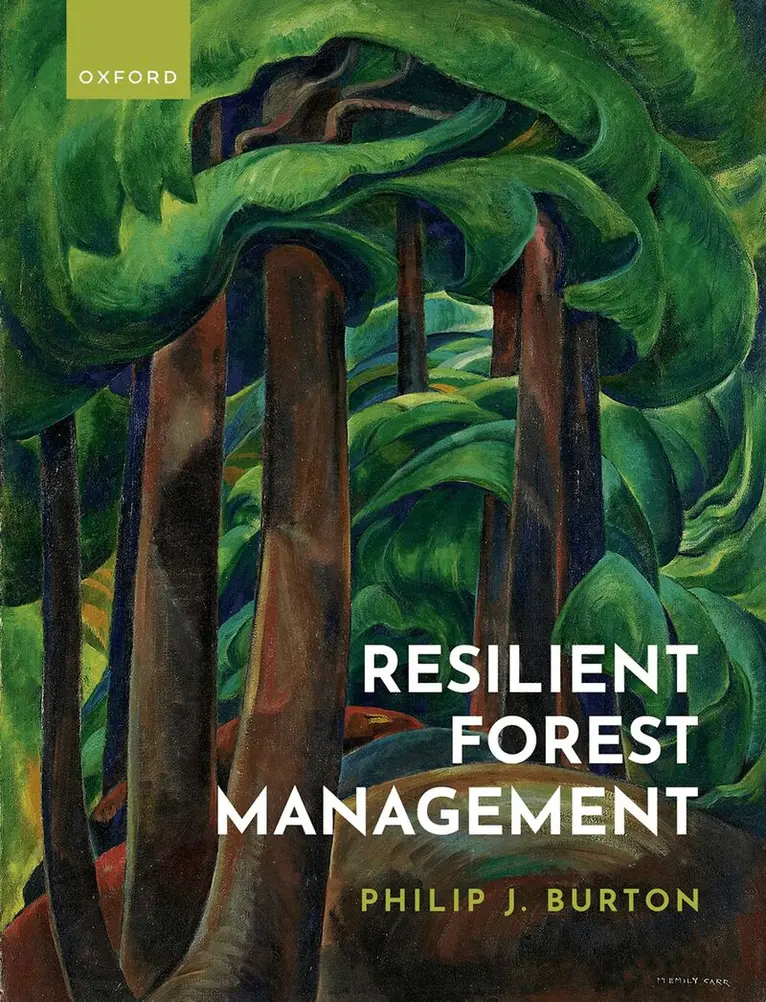
Global forest management is now grappling with ways to address the many dimensions of global change, including a warming climate and increasing forest disturbance from fires and pest outbreaks, along with changes in public values. However, the dominant forest management paradigms still assume a constant and predictable world in which command-and-control (i.e., treating long-lived forests much like short-lived agricultural crops) and single-value (i.e., timber) optimization still prevail. This novel text argues for new approaches to forest management that focus on resilience and embracing adaptability to the changing socio-ecological environment as it unfolds. Resilience is the ability of a system to maintain its essential attributes (in the form of composition, structure, and/or function) in response to stress, disruption, or disturbance. Managing a system for resilience places an emphasis on persistence rather than growth, efficiency, or profitability, which can be fulfilled by enhancing the capacity to resist change (i.e., robustness) or by enhancing the capacity to incorporate change in desirable directions (i.e., flexibility), or a combination of the two. Resilient Forest Management develops many of the same resilience-enhancing strategies for protected areas, multi-purpose forests, and timber production lands, but with different degrees of emphasis. Featured prominently are practices that enhance diversity, connectivity in space and time, and adaptive management as informed by vulnerability analysis and broad stakeholder consultation. In so doing, Resilient Forest Management builds on foundational concepts of ecological forestry and our understanding of complex adaptive systems and takes sustainable forest management to the next level. Resilient Forest Management will be suitable as a primary or supplementary text in forest policy and management. It will appeal to graduate-level students and researchers in the fields of forestry and conservation along with active policymakers in government, the forest industry, and environmental non-governmental organizations. While focused on forestry, parks managers, agriculturists, and urban planners too will find much useful insight and many creative solutions to sustainable development in a changing world.
669 kr
Skickas inom 5-8 vardagar
Global forest management is now grappling with ways to address the many dimensions of global change, including a warming climate and increasing forest disturbance from fires and pest outbreaks, along with changes in public values. However, the dominant forest management paradigms still assume a constant and predictable world in which command-and-control (i.e., treating long-lived forests much like short-lived agricultural crops) and single-value (i.e., timber) optimization still prevail. This novel text argues for new approaches to forest management that focus on resilience and embracing adaptability to the changing socio-ecological environment as it unfolds. Resilience is the ability of a system to maintain its essential attributes (in the form of composition, structure, and/or function) in response to stress, disruption, or disturbance. Managing a system for resilience places an emphasis on persistence rather than growth, efficiency, or profitability, which can be fulfilled by enhancing the capacity to resist change (i.e., robustness) or by enhancing the capacity to incorporate change in desirable directions (i.e., flexibility), or a combination of the two. Resilient Forest Management develops many of the same resilience-enhancing strategies for protected areas, multi-purpose forests, and timber production lands, but with different degrees of emphasis. Featured prominently are practices that enhance diversity, connectivity in space and time, and adaptive management as informed by vulnerability analysis and broad stakeholder consultation. In so doing, Resilient Forest Management builds on foundational concepts of ecological forestry and our understanding of complex adaptive systems and takes sustainable forest management to the next level. Resilient Forest Management will be suitable as a primary or supplementary text in forest policy and management. It will appeal to graduate-level students and researchers in the fields of forestry and conservation along with active policymakers in government, the forest industry, and environmental non-governmental organizations. While focused on forestry, parks managers, agriculturists, and urban planners too will find much useful insight and many creative solutions to sustainable development in a changing world.
331 kr
Skickas inom 7-10 vardagar
Salvage logging - removing trees from a forested area in the wake of a catastrophic event such as a wildfire or hurricane - is highly controversial. Policymakers and those with an economic interest in harvesting trees typically argue that damaged areas should be logged so as to avoid "wasting" resources, while many forest ecologists contend that removing trees following a disturbance is harmful to a variety of forest species and can interfere with the natural process of ecosystem recovery."Salvage Logging and Its Ecological Consequences" brings together three leading experts on forest ecology to explore a wide range of issues surrounding the practice of salvage logging. They gather and synthesize the latest research and information about its economic and ecological costs and benefits, and consider the impacts of salvage logging on ecosystem processes and biodiversity.The book examines: what salvage logging is and why it is controversial; natural and human disturbance regimes in forested ecosystems; differences between salvage harvesting and traditional timber harvesting; scientifically documented ecological impacts of salvage operations; and, the importance of land management objectives in determining appropriate post-disturbance interventions.Brief case studies from around the world highlight a variety of projects, including operations that have followed wildfires, storms, volcanic eruptions, and insect infestations. In the final chapter, the authors discuss policy management implications and offer prescriptions for mitigating the impacts of future salvage harvesting efforts."Salvage Logging and Its Ecological Consequences" is a "must-read" volume for policymakers, students, academics, practitioners, and professionals involved in all aspects of forest management, natural resource planning, and forest conservation.
Del 56 - Burleigh Dodds Science: Instant Insights
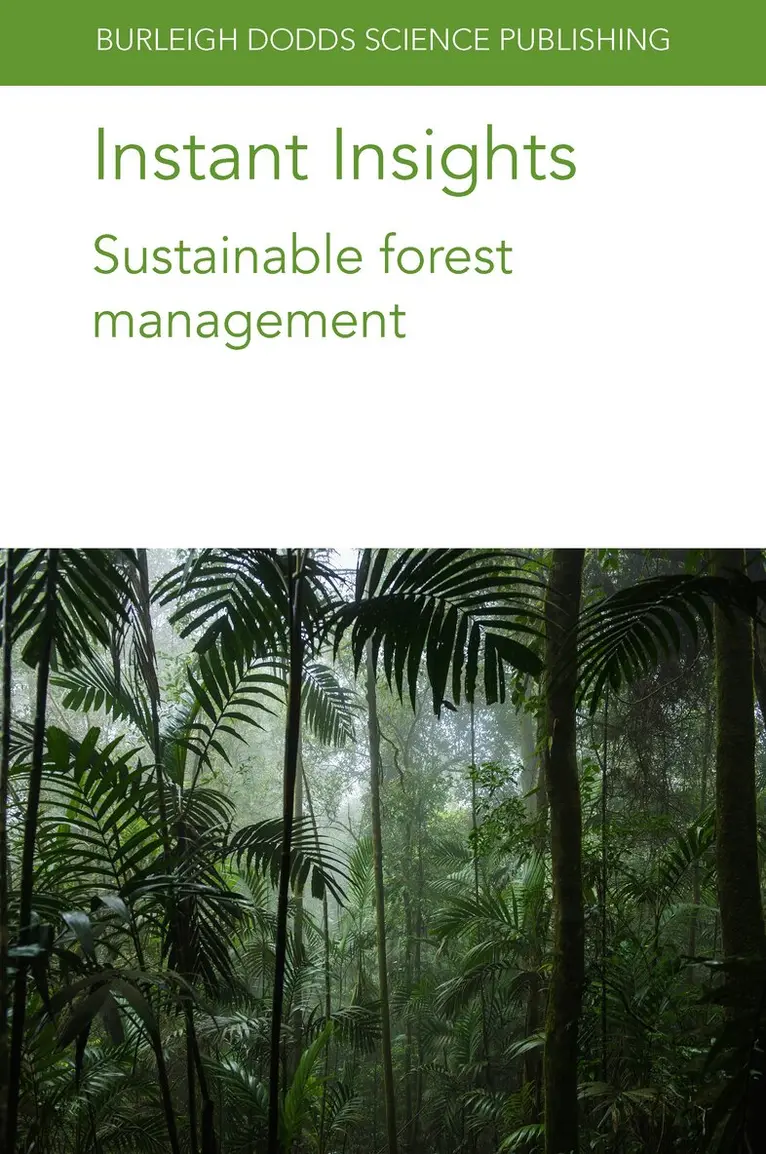
Instant Insights: Sustainable Forest Management
Häftad, Engelska, 2022
677 kr
Skickas inom 5-8 vardagar
This collection features five peer-reviewed literature reviews on sustainable forest management.The first chapter discusses the varying definitions of sustainable forest management (SFM) in tropical landscapes, as well as the trade-offs associated with SFM. The chapter also reviews the spatial scales of assessing SFM and explores expanding the scope of SFM from individual strands to forested landscapes.The second chapter provides a comprehensive review of the current research undertaken in sustainable forestry. It considers the concept and evolution of sustainable forestry and the challenges which arise as a result of implementing SFM practices. The third chapter reviews the role and impact of forest certification schemes in the achievement of SFM. The chapter summarises the wealth of research available on the development of forest certification and how individual elements can be optimised to further improve the model.The fourth chapter discusses the recent history and implementation challenges of SFM across the Congo Basin, including logging concessions, land zones and the processes and institutions required to implement effective SFM policies.The final chapter analyses the potential trade-offs between ecosystem services and biodiversity in the southern Patagonian forests. The chapter explores the implementation of SFM as a strategy to mitigate these trade-offs at a landscape level.