Philip Lieberman - Böcker
Visar alla böcker från författaren Philip Lieberman. Handla med fri frakt och snabb leverans.
9 produkter
9 produkter
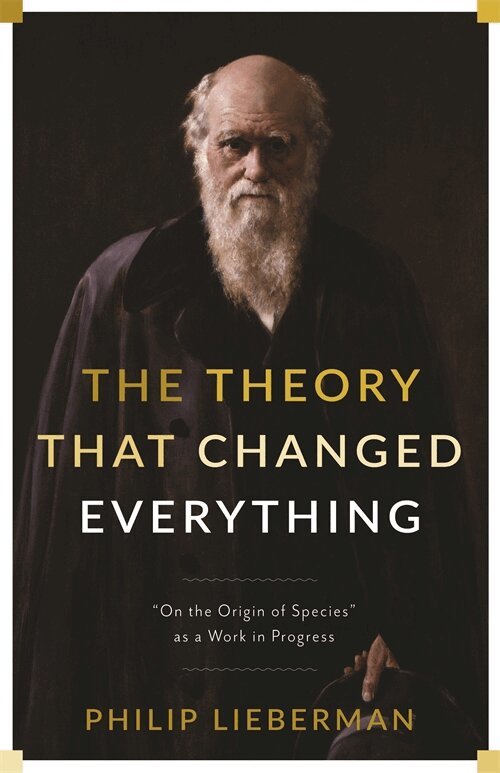
Theory That Changed Everything
"On the Origin of Species" as a Work in Progress
Inbunden, Engelska, 2017
251 kr
Skickas
Few people have done as much to change how we view the world as Charles Darwin. Yet On the Origin of Species is more cited than read. Some of it is considered outdated; in some ways, it has been consigned to the nineteenth century. In The Theory That Changed Everything, the renowned cognitive scientist Philip Lieberman demonstrates that there is no better guide to the world's living things than Darwin, as the phenomena that he observed are still being explored at the frontiers of science. In a wide-ranging voyage from Darwin's transformative trip aboard the Beagle to Lieberman's own sojourns in the remotest regions of the Himalayas, this book relates contemporary findings to the major concepts of Darwinian theory. Drawing on his own research into the evolution of human linguistic and cognitive abilities, Lieberman explains the paths that adapted human anatomy to language, the acrobatics of the lungs and larynx and a tongue that facilitates speech at the cost of the peril of choking.He demystifies the role of recently identified transcriptional and epigenetic factors encoded in DNA, explaining how nineteenth-century Swedish famines alternating with years of plenty caused survivors' grandchildren to die many years short of their life expectancy. Lieberman is equally at home decoding supermarket shelves and climbing with the Sherpas as he discusses how natural selection explains features from lactose tolerance to ease of breathing at Himalayan altitudes. With conversational clarity and memorable examples, Lieberman relates the insights that led to groundbreaking discoveries in both Darwin's time and our own while asking provocative questions about what Darwin would have made of controversial issues today.
Theory That Changed Everything
"On the Origin of Species" as a Work in Progress
Häftad, Engelska, 2019
227 kr
Skickas inom 7-10 vardagar
Few people have done as much to change how we view the world as Charles Darwin. Yet On the Origin of Species is more cited than read, and parts of it are even considered outdated. In some ways, it has been consigned to the nineteenth century. In The Theory That Changed Everything, the renowned cognitive scientist Philip Lieberman demonstrates that there is no better guide to the world’s living—and still evolving—things than Darwin and that the phenomena he observed are still being explored at the frontiers of science.In an exploration that ranges from Darwin’s transformative trip aboard the Beagle to Lieberman’s own sojourns in the remotest regions of the Himalayas, this book relates fresh, contemporary findings to the major concepts of Darwinian theory, which transcends natural selection. Drawing on his own research into the evolution of human linguistic and cognitive abilities, Lieberman explains the paths that adapted human anatomy to language. He demystifies the role of recently identified transcriptional and epigenetic factors encoded in DNA, explaining how nineteenth-century Swedish famines alternating with years of plenty caused survivors’ grandchildren to die many years short of their life expectancy. Lieberman is equally at home decoding supermarket shelves and climbing with the Sherpas as he discusses how natural selection explains features from lactose tolerance to ease of breathing at Himalayan altitudes. With conversational clarity and memorable examples, Lieberman relates the insights that led to groundbreaking discoveries in both Darwin’s time and our own while asking provocative questions about what Darwin would have made of controversial issues today, such as GMOs, endangered species, and the God question.
245 kr
Skickas inom 5-8 vardagar
Eve Spoke presents a compelling case for the pivotal role that speech has played in human language and human evolution. Wrestling with the age-old question of why such a large gulf exists between humans and other animals, Philip Lieberman mines both the fossil record and modern neuro-scientific techniques to chart the development of the anatomy and brain mechanisms necessary for human language as we know it. Eschewing any notion of a language gene or instinct, he pursues instead an evolutionary path in which environment acts on a biological capacity to reveal the interconnectedness of systems that make us most human: precise motor skills, speech, language, and complex thought. Lieberman interweaves decades of research in anthropology, neuroscience, psychology and linguistics into his exposition on the evolution of human speech.
591 kr
Skickas inom 7-10 vardagar
This textbook has been carefully designed to provide a thorough introduction to the study of speech. It assumes no technical background, and students from the wide variety of disciplines contributing to this new and exciting field will find the exposition always accessible. Each chapter progresses from simple examples to more detailed discussions of recent primary research and concludes with problem sets which student's will find interesting and enlightening. All the topics that are essential for a basic understanding of the field are covered - the physiological, biological, and neurological bases of speech; the physics of sound; the source-filter theory of speech production; and the principles underlying electrical and computer models of speech production. All students, whatever their area of special interest speech therapy, phonological theory, psycholinguistics. neurolinguistics, anthropology, etc. - will discover in this text the challenge and fascination of the scientific study of speech. The authors undoubtedly succeed in their explicit aim: not only, to prepare students to evaluate critically the latest research, but also to encourage them to undertake their own research projects.
Del 9 - Perspectives in Cognitive Neuroscience
Human Language and Our Reptilian Brain
The Subcortical Bases of Speech, Syntax, and Thought
Häftad, Engelska, 2002
438 kr
Skickas inom 10-15 vardagar
This book is an entry into the fierce current debate among psycholinguists, neuroscientists, and evolutionary theorists about the nature and origins of human language. A prominent neuroscientist here takes up the Darwinian case, using data seldom considered by psycholinguists and neurolinguists to argue that human language--though more sophisticated than all other forms of animal communication--is not a qualitatively different ability from all forms of animal communication, does not require a quantum evolutionary leap to explain it, and is not unified in a single "language instinct." Using clinical evidence from speech-impaired patients, functional neuroimaging, and evolutionary biology to make his case, Philip Lieberman contends that human language is not a single separate module but a functional neurological system made up of many separate abilities. Language remains as it began, Lieberman argues: a device for coping with the world. But in a blow to human narcissism, he makes the case that this most remarkable human ability is a by-product of our remote reptilian ancestors' abilities to dodge hazards, seize opportunities, and live to see another day.
727 kr
Skickas inom 10-15 vardagar
In this forcefully argued book, the leading evolutionary theorist of language draws on evidence from evolutionary biology, genetics, physical anthropology, anatomy, and neuroscience, to provide a framework for studying the evolution of human language and cognition. Philip Lieberman argues forcibly that the widely influential theories of language's development, advanced by Chomskian linguists and cognitive scientists, especially those that postulate a single dedicated language "module," "organ," or "instinct," are inconsistent with principles and findings of evolutionary biology and neuroscience. He argues that the human neural system in its totality is the basis for the human language ability, for it requires the coordination of neural circuits that regulate motor control with memory and higher cognitive functions. Pointing out that articulate speech is a remarkably efficient means of conveying information, Lieberman also highlights the adaptive significance of the human tongue. Fully human language involves the species-specific anatomy of speech, together with the neural capacity for thought and movement. In Lieberman's iconoclastic Darwinian view, the human language ability is the confluence of a succession of separate evolutionary developments, jury-rigged by natural selection to work together for an evolutionarily unique ability.
405 kr
Skickas inom 10-15 vardagar
This book synthesizes much of the exciting recent research in the biology of language. Drawing on data from anatomy, neurophysiology, physiology, and behavioral biology, Philip Lieberman develops a new approach to the puzzle of language, arguing that it is the result of many evolutionary compromises. Within his discussion, Lieberman skillfully addresses matters as various as the theory of neoteny (which he refutes), the mating calls of bullfrogs, ape language, dyslexia, and computer-implemented models of the brain.
479 kr
Skickas inom 10-15 vardagar
In a stimulating synthesis of cognitive science, anthropology, and linguistics, Philip Lieberman tackles the fundamental questions of human nature: How and why are human beings so different from other species? Can the Darwinian theory of evolution explain human linguistic and cognitive ability? How do our processes of language and thought differ from those of Homo erectus 500,000 years ago, or of the Neanderthals 35,000 years ago? What accounts for human moral sense?Lieberman believes that evolution for rapid, efficient vocal communication forged modern human beings by creating the modern human brain. Earlier hominids lacked fully human speech and syntax, which together allow us to convey complex thoughts rapidly. The author discusses how natural selection acted on older brain mechanisms to produce a structure that can regulate the motor activity necessary for speech and command the complex syntax that enhances the creativity of human language. The unique brain mechanisms underlying human language also enhance human cognitive ability, allowing us to derive abstract concepts and to plan complex activities. These factors are necessary for the development of true altruism and moral behavior.Lieberman supports his argument about the evolution of speech and the human brain by combining the comparative method of Charles Darwin, insights from archaeology and child development, and the results of high-tech research with computerized brain scanning and computer models that can recreate speech sounds made by our ancestors over 100,000 years ago. Uniquely Human will stimulate fresh thought and controversy on the basic question of how we came to be.
371 kr
Skickas inom 7-10 vardagar
The Unpredictable Species argues that the human brain evolved in a way that enhances our cognitive flexibility and capacity for innovation and imitation. In doing so, the book challenges the central claim of evolutionary psychology that we are locked into predictable patterns of behavior that were fixed by genes, and refutes the claim that language is innate. Philip Lieberman builds his case with evidence from neuroscience, genetics, and physical anthropology, showing how our basal ganglia--structures deep within the brain whose origins predate the dinosaurs--came to play a key role in human creativity. He demonstrates how the transfer of information in these structures was enhanced by genetic mutation and evolution, giving rise to supercharged neural circuits linking activity in different parts of the brain. Human invention, expressed in different epochs and locales in the form of stone tools, digital computers, new art forms, complex civilizations--even the latest fashions--stems from these supercharged circuits. The Unpredictable Species boldly upends scientifically controversial yet popular beliefs about how our brains actually work.Along the way, this compelling book provides insights into a host of topics related to human cognition, including associative learning, epigenetics, the skills required to be a samurai, and the causes of cognitive confusion on Mount Everest and of Parkinson's disease.