Philip Rocco - Böcker
Visar alla böcker från författaren Philip Rocco. Handla med fri frakt och snabb leverans.
4 produkter
4 produkter
291 kr
Skickas inom 10-15 vardagar
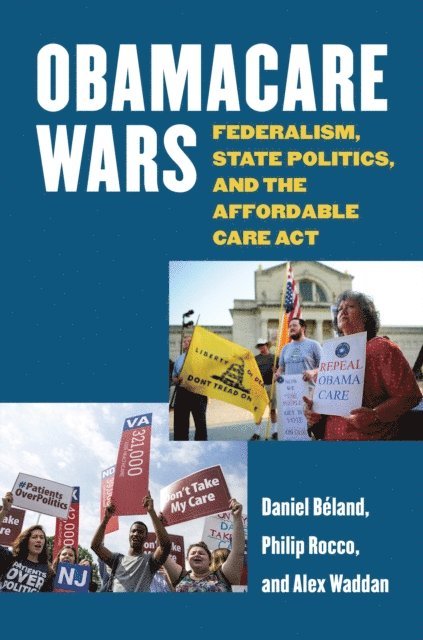
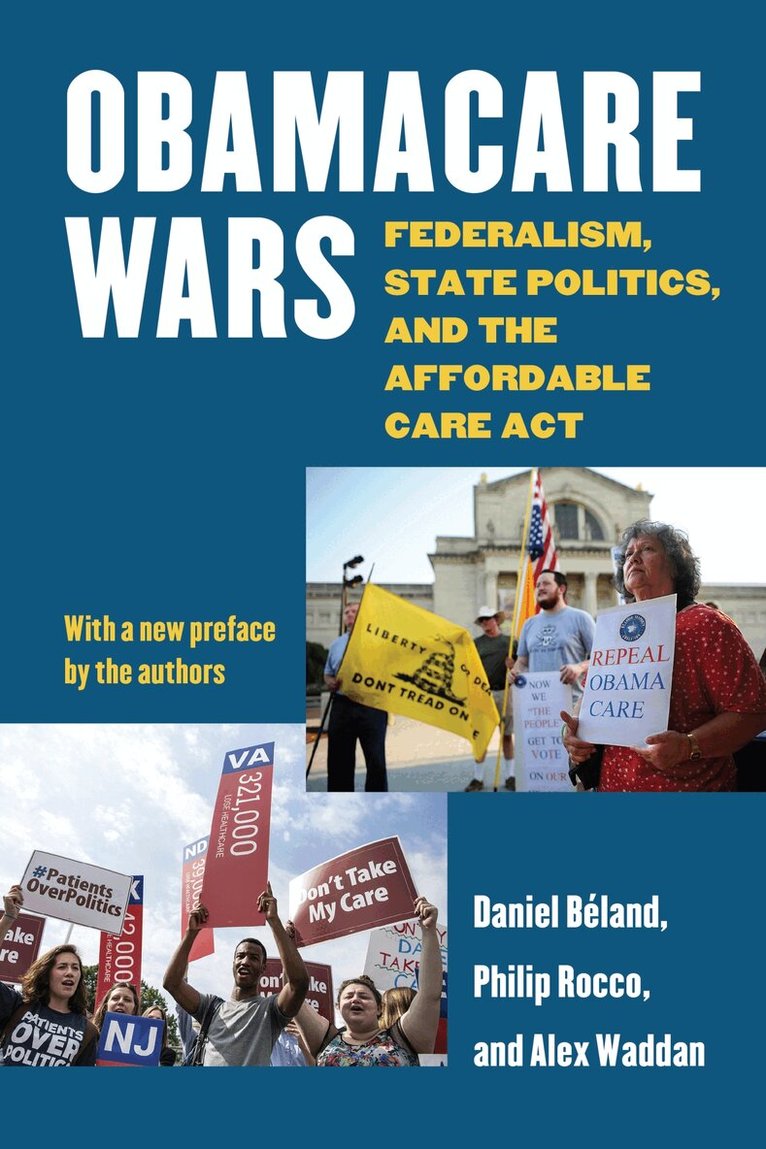
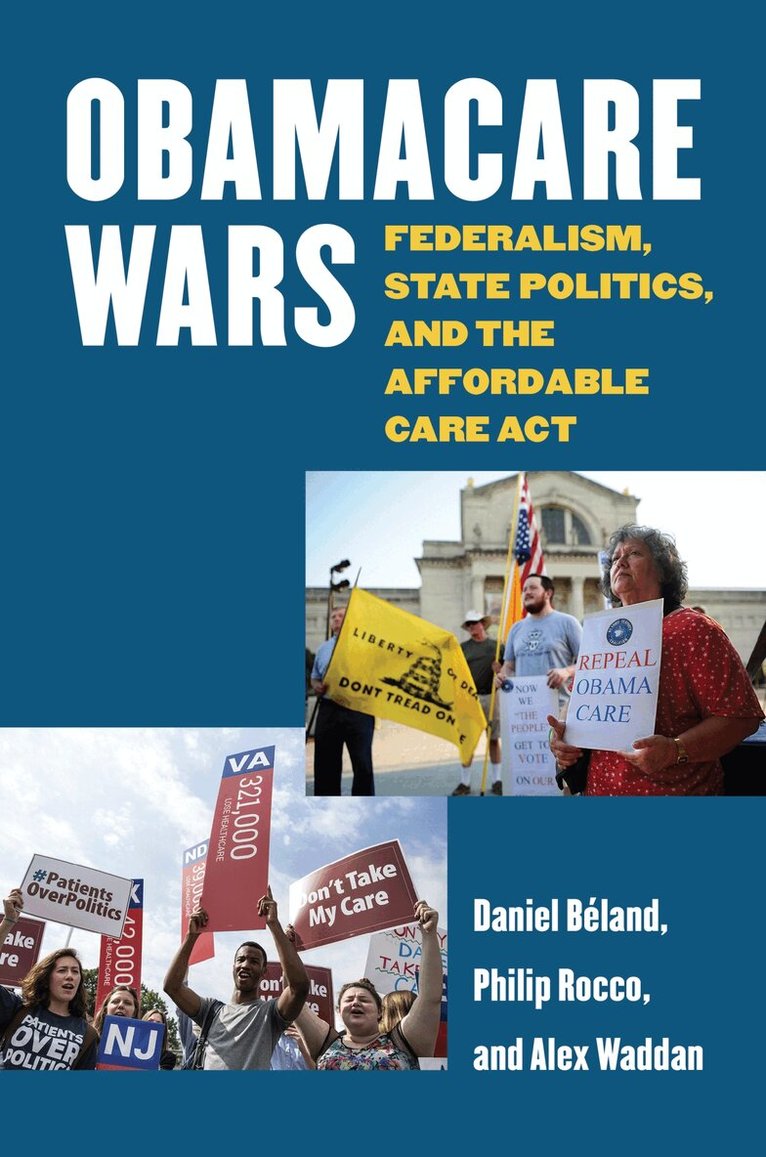
Not five minutes after the Affordable Care Act (ACA) was signed into law, in March 2010, Virginia’s attorney general was suing to stop it. And yet, the ACA rolled out, in infamously bumpy fashion, and rolled on, fought and defended at every turn—despite President Obama’s claim, in 2014, that its proponents and opponents could finally “stop fighting old political battles that keep us gridlocked.” But not only would the battles not stop, as Obamacare Wars makes acutely clear, they spread from Washington, DC, to a variety of new arenas. The first thorough account of the implementation of the ACA, this book reveals the fissures the act exposed in the American federal system.Obamacare Wars shows how the law’s intergovernmental structure, which entails the participation of both the federal government and the states, has deeply shaped the politics of implementation. Focusing on the creation of insurance exchanges, the expansion of Medicaid, and execution of regulatory reforms, Daniel BÉland, Philip Rocco, and Alex Waddan examine how opponents of the ACA fought back against its implementation. They also explain why opponents of the law were successful in some efforts and not in others—and not necessarily in a seemingly predictable red vs. blue pattern. Their work identifies the role of policy legacies, institutional fragmentation, and public sentiments in each instance as states grappled with new institutions, as in the case of the exchanges, or existing structures, in Medicaid and regulatory reform.Looking broadly at national trends and specifically at the experience of individual states, Obamacare Wars brings much-needed clarity to highly controversial but little-understood aspects of the Affordable Care Act’s odyssey, with implications for how we understand the future trajectory of health reform, as well as the multiple forms of federalism in American politics.
Counting Like a State
How Intergovernmental Partnerships Shaped the 2020 US Census
Inbunden, Engelska, 2025
598 kr
Skickas inom 10-15 vardagar
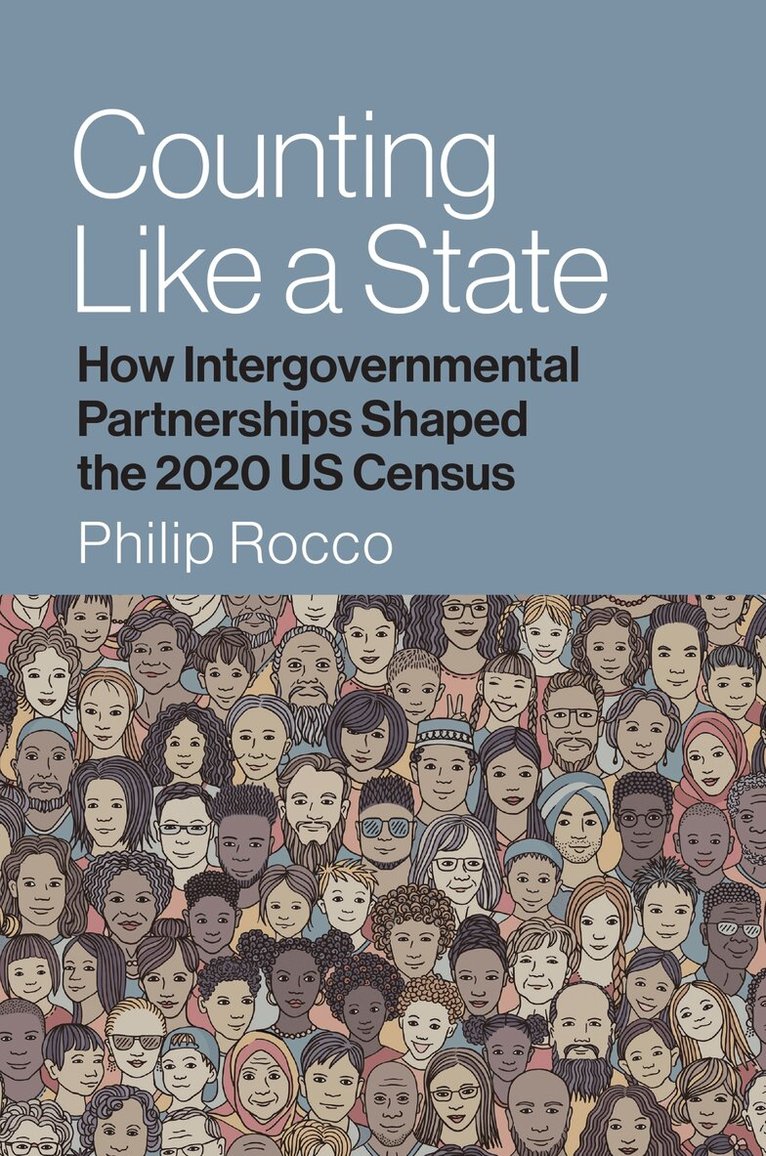
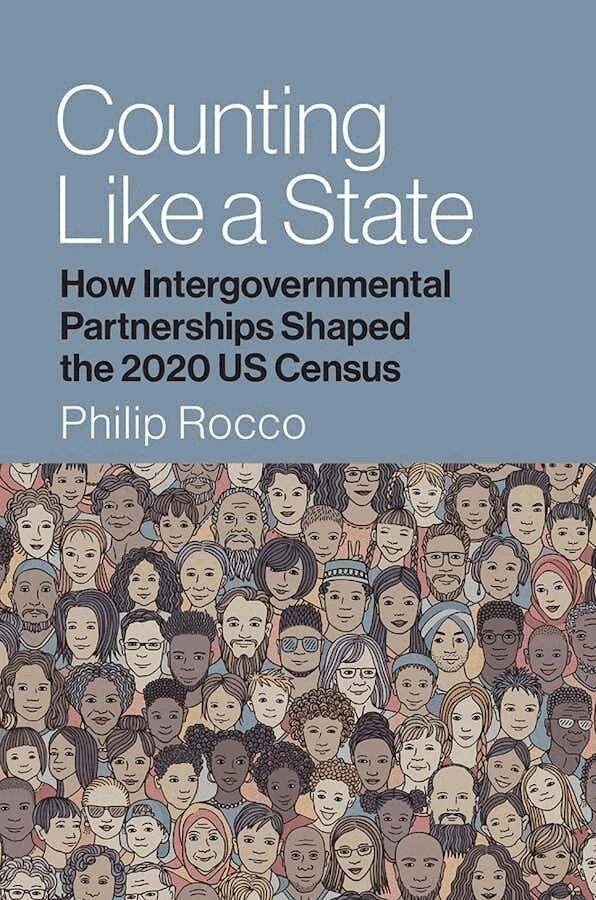
An inside look at the 2020 Census that shows the importance of state and local cooperation in the complex federal project of census taking.The census plays a foundational, if all too easily ignored, role in the operation of the American state, shaping everything from congressional representation to the allocation of trillions of federal dollars. While census taking aspires to the high-modernist goal of “seeing like a state”—centralizing, standardizing, and homogenizing knowledge about a polity—it is subject to far more conflict and negotiation than final tabulations, maps, or technical documentation make apparent. This is especially true in a large, decentralized polity like the United States where the Constitution entrusts the ultimate authority for the census in the legislative branch.In Counting Like a State, Philip Rocco shows how the production of the US census now hinges crucially not only on what happens in Washington but also on a series of intergovernmental partnerships. State and local officials, though not formally responsible for census taking, figure importantly in the implementation of the decennial count. These officials are essential partners in the construction and maintenance of address lists, as well as in outreach and promotion campaigns in hard-to-count communities. The 2020 Census compounded these challenges with new crises. Intergovernmental partnerships played a key role in preventing President Trump from adding a citizenship question, as state and local officials mounted a coordinated legal counteroffensive. Many local officials also simply refused to cooperate with the Trump administration’s efforts to exclude undocumented immigrants from the apportionment count. The census also took place in the context of a global pandemic that stretched administrative resources to the breaking point. While these partnerships allowed the Census Bureau to adapt to ever-changing conditions on the ground, state and local governments also sounded the alarm when the Trump administration sought to rush the census. These efforts helped preserve the quality of the data collected in the 2020 count.Rocco’s illuminating study of the 2020 Census pulls back the curtain on the administrative state to reveal how something as complex and centralizing as a census takes place within a decentralized, federalist system. Drawing on analyses of interviews with hundreds of public officials and quantitative analyses of state and local census activities, Counting Like a State allows scholars and practitioners to better understand what facilitates as well as what impedes effective intergovernmental partnerships for census taking.
Counting Like a State
How Intergovernmental Partnerships Shaped the 2020 US Census
Häftad, Engelska, 2025
316 kr
Skickas inom 10-15 vardagar
An inside look at the 2020 Census that shows the importance of state and local cooperation in the complex federal project of census taking.The census plays a foundational, if all too easily ignored, role in the operation of the American state, shaping everything from congressional representation to the allocation of trillions of federal dollars. While census taking aspires to the high-modernist goal of “seeing like a state”—centralizing, standardizing, and homogenizing knowledge about a polity—it is subject to far more conflict and negotiation than final tabulations, maps, or technical documentation make apparent. This is especially true in a large, decentralized polity like the United States where the Constitution entrusts the ultimate authority for the census in the legislative branch.In Counting Like a State, Philip Rocco shows how the production of the US census now hinges crucially not only on what happens in Washington but also on a series of intergovernmental partnerships. State and local officials, though not formally responsible for census taking, figure importantly in the implementation of the decennial count. These officials are essential partners in the construction and maintenance of address lists, as well as in outreach and promotion campaigns in hard-to-count communities. The 2020 Census compounded these challenges with new crises. Intergovernmental partnerships played a key role in preventing President Trump from adding a citizenship question, as state and local officials mounted a coordinated legal counteroffensive. Many local officials also simply refused to cooperate with the Trump administration’s efforts to exclude undocumented immigrants from the apportionment count. The census also took place in the context of a global pandemic that stretched administrative resources to the breaking point. While these partnerships allowed the Census Bureau to adapt to ever-changing conditions on the ground, state and local governments also sounded the alarm when the Trump administration sought to rush the census. These efforts helped preserve the quality of the data collected in the 2020 count.Rocco’s illuminating study of the 2020 Census pulls back the curtain on the administrative state to reveal how something as complex and centralizing as a census takes place within a decentralized, federalist system. Drawing on analyses of interviews with hundreds of public officials and quantitative analyses of state and local census activities, Counting Like a State allows scholars and practitioners to better understand what facilitates as well as what impedes effective intergovernmental partnerships for census taking.
671 kr
Skickas inom 10-15 vardagar
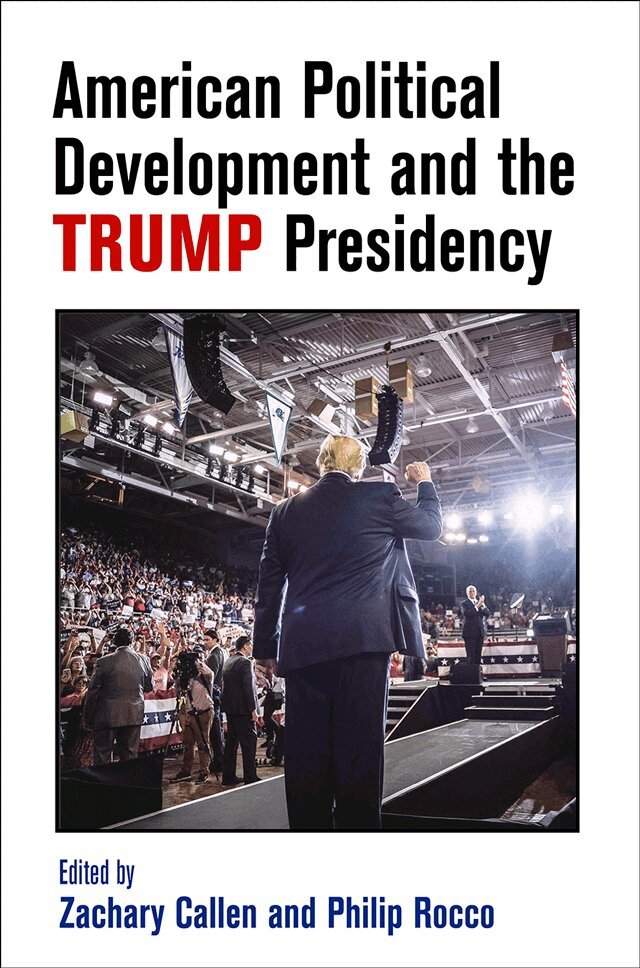
Leading political scientists analyze the presidency of Donald Trump and its impact on the future of American politicsIn virtually all respects, the Trump presidency has disrupted patterns of presidential governance. However, does Trump signify a disruption, not merely in political style but in regime type in the United States? Assessing Trump's potential impact on democratic institutions requires an analysis of how these institutions-including especially the executive branch-have developed over time as well as an examination of the intersecting evolution of political parties, racial ideologies, and governing mechanisms. To explore how time and temporality have shaped the Trump presidency, editors Zachary Callen and Philip Rocco have brought together scholars in the research tradition of American political development (APD), which explicitly aims to consider how interactions between a range of institutions result in the shifting of power and authority in American politics, with careful attention paid to complex processes unfolding over time. By focusing on the factors that contribute to both continuity and change in American politics, APD is ideally situated to take a long view and help make sense of the Trump presidency.American Political Development and the Trump Presidency features contributions by leading political scientists grappling with the reasons why Donald Trump was elected and the meaning of his presidency for the future of American politics. Taking a historical and comparative approach-instead of viewing Trump's election as a singular moment in American politics-the essays here consider how Trump's election coincides with larger changes in democratic ideals, institutional structures, long-standing biases, and demographic trends. The Trump presidency, as this volume demonstrates, emerged from a gradual unsettling of ideational and institutional lineages. In turn, these essays consider how Trump's disruptive style of governance may further unsettle the formal and informal rules of American political life.Contributors: William D. Adler, Gwendoline Alphonso, Julia R. Azari, Zachary Callen, Megan Ming Francis, Daniel J. Galvin, Travis M. Johnston, Andrew S. Kelly, Robert C. Lieberman, Paul Nolette, Philip Rocco, Adam Sheingate, Chloe Thurston.