Philip S. Ulinski - Böcker
Visar alla böcker från författaren Philip S. Ulinski. Handla med fri frakt och snabb leverans.
3 produkter
3 produkter
785 kr
Skickas inom 7-10 vardagar
The third of a planned group of volumes dealing with reptilian nervous systems, Sensorimotor Integration focuses chiefly on visual and sensorimotor aspects of reptilian neurobiology. Chapters examine data for numerous species, drawing together the most current work and thinking on each topic and emphasizing results from recent studies. "This volume would be a valuable addition to any comparative anatomist's bookshelf, and one that should be of great interest to comparative neurobiologists and neuroanatomists alike."--Katherine V. Fite, Quarterly Review of Biology
2 163 kr
Skickas inom 10-15 vardagar
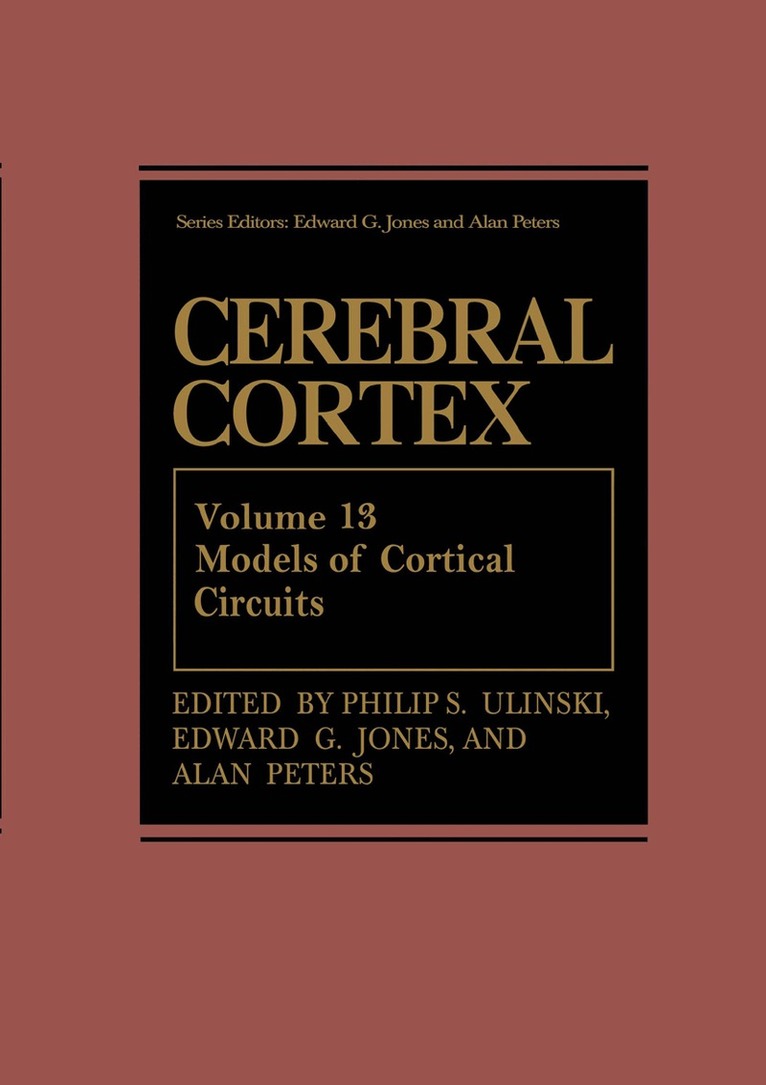
Thisisthefirstvolumeinthe CerelJral Cortexseriesdevotedtomathematicalmodels ofthecortex. Itwasmotivatedbytherealizationthatcomputationalmodelsof individualneuronsandensemblesofneuronsareincreasinglyusedinresearchon corticalorganizationandfunction. Thisis,inpart,becauseofthenowubiquitous presenceofpowerfulandaffordablecomputers. Suitablemachineswereformerly rareinresearchlaboratoriesandrequiredsubstantialprogrammingexpertisetobe usedinconstructingandusingneuronalmodels. However,computersarenow routinelyusedinallareasofneurobiologyandanumberofsoftwarepackagesallow scientistswithminimalcomputerscienceandmathematicalbackgroundstocon- structseriousneuronalmodels. Asecondfactorleadingtotheproliferationof modelingstudiesisthedevelopmentoftechnologiesthatallowthekindsofdata collectionneededtodeveloprealisticmodelsofcorticalneurons. Characterization ofthekineticsofvoltage-andligand-gatedchannelsandreceptorshadbeenlim- itedtorelativelylargeneurons. However,therapiddevelopmentofsliceprepara- tions,patch-clampmethods,andimagingmethodsbasedonvoltage-sensitivedyes andintracellularcalciumindicatorshasresultedinasignificantdatabaseonthe biophysicalfeaturesofcorticalneurons.Thescopeofmodelingapproachestocorticalneuronsandfunctionsiswide anditseemednecessarytolimitthepurviewofthevolume. Thefocusisonattempts tounderstandthepropertiesofindividualcorticalneuronsandneuronalcircuitry throughmodelsthatincorporatesignificantfeaturesofcellularmorphologyand physiology. Noattemptwasmadetoincludemodelingapproachestounderstanding corticaldevelopmentandplasticity. Thus,workdealingwiththedevelopmentof oculardominancecolumnsandtheorientationselectivityofneuronsinvisualcortex isnotconsidered. Similarly,modelsdealingwiththecellularmechanismsunderlying long-termplasticityandwithapproachestolearningandmemorybasedonmodifica- tionofHebbiansynapsesarenotconsidered. Relativelyabstractattemptstounder- standhigherlevelandcognitiveprocessesbasedonneuralnetsrepresentasecond, majorareaofworkthatisnottreated. Modelsofcognitiveprocessesbasedon dynamicalsystemsmethodsinwhichnoattemptismadetoincludethebiophysical featuresofindividualneuronsarealsonotconsidered. vii viii Thetenmajorchaptersfallintothreegroups. Thefirstgroupdealswith compartmentalmodelsofindividualcorticalneurons.LyleBorg-Grahamprovides PREFACE anintroductiontothemethodsinvolvedinconstructingcompartmentalmodels andthenreviewstheexistingmodelsofhippocampalpyramidalcells. Becauseof theeffectivenessofhippocampalslicepreparations,theseneuronshavewell-ehar- acterizedbiophysicalproperties. Thischapterillustrateshowcompartmentalmod- elscanbeusedtosynthesizeexperimentaldataandprovideanintegrativeviewof thepropertiesofindividualneurons. PaulRhodescontinuesthethemebyfocusing ontheroleofvoltage-gatedchannelslocatedonthedendritesofcorticalneurons. Thisisanareainwhichtechnologicaladvancesinthevisualizationofneuronsin slicepreparationsbasedoninfraredmicroscopyhavegreatlyexpandedtheinfor- mationavailableondendriticfunctioninjustafewyears. Thechapterbothreviews theexperimentaldataonactivedendriticconductancesandemphasizestheirpo- tentialfunctionalroles. Thesecondgroupofchaptersdealwiththegenerationofreceptivefield propertiesofneuronswithinvisualcortex. Theyaddressissuesstemmingfromthe originalattempttounderstandhowthereceptivefieldpropertiesofneuronsincat andmonkeyprimaryvisualcortexaregeneratedbyinteractionsbetweengenicu- lateafferentsandcorticalneurons.ThechapterbyFlorentinWorgotterevaluates modelsthathavebeenusedtoanalyzethegenerationofreceptivefieldproperties. RodneyDouglasandhiscolleaguesaddressaspecificsetofissuesdealingwiththe roleofintracorticalexcitationmediatedbypyramidalcellcollaterals. Animportant featureofthischapterisitsrelationtoattempttoconstructfabricatedcircuitsthat duplicatethefunctionsofcorticalcircuits. ThechapterbyPhilipUlinskifocuseson thegenerationofmotion-selectivepropertiesincorticalneurons. Itseekstoidenti- tycellularmechanismsusedbyneuronsthatrespondpreferentiallytovisualstimuli movingwithparticularspeedsordirections. MatteoCarandiniandhiscolleagues discussthefeatureofcorticalneurons,knownasgaincontrol,thatallowsneurons torespondeffectivelytovisualstimulibypoolinginformationacrosspopulationsof corticalneurons. ThechapterbyHughWilsondealswiththereceptivefieldproper- tiesofextrastriateareasandintroducesnewworkanalyzingface-selectiveneurons. Thefinalsetofchaptersconsidermodelsofensemblesofthalamicandcortical neurons. ThechapterbyWilliamLyttonandElizabethThomasusesthetheoryof dynamicalsystemstoanalyzethetemporalrelationshipsbetweenthalamicand corticalneurons.Animportantfeatureoftheinteractionbetweenthalamusand cortexisthepresenceofoscillationsthatdependinpartuponthevoltage-gated conductancespresentonindividualneuronsandinpartonthestructureofthe overallnetwork. PaulBushcontinuesthisemphasisonoscillationsbydiscussinga modelthatdealswiththegenerationofsynchronizedoscillationsinvisualcortex. Oscillationsofthiskindhaveattractedsubstantialattentioninrecentyearsbecause oftheirpotentialroleincognitiveprocesses. Thelastchapter,byMichaelHasselmo andChristianeLinster,reviewstheirworkonmodelingpiriformcortex,emphasiz- ingtheroleofcholinergicmechanismsinmodulatingtheactivityofcorticalneu- rons. Anattempthasbeenmadethroughouttomakethevolumeaccessibleto readerswithminimalmathematicalbackgrounds. Thevolumethusbeginswitha shorthistoryofmodelsofcorticalneuronsandcircuitrythatintroducestheprinci- palmodelingstyles. ThechaptersbyWorgotterandUlinskicontainmoreextensive ix introductionstosomeofthemodelingmethodsthathavebeenusedtostudyvisual cortex,andthemathematicallychallengedreaderwillfindthatthechapterby PREFACE LyttonandThomascontainsareadableintroductiontotheuseofdynamical systemstheoryinneurobiology. PhilipS. Ulinski EdwardG.Jones Chicago and Davis Contents Chapter 1 ModelingCorticalCircuitry:AHistoryandProspectus PhilipS. Ulinski 1. Introduction "...1 2. LorentedeNothroughDynamicalSystemsModels...2 2. 1. LorentedeNo...2 2. 2. CellAssembliesandNeuralNets...3 2. 3. DynamicSystemsModels...8 3. HodgkinandHuxleythroughNetworkModels...11 3. 1. HodgkinandHuxley...11 3. 2. WilfridRall...11 3. 3. SoftwarePackages...13 3. 4. RealisticModelsofCorticalNetworks...14 4. Prospectus...14 5. References...15 Chapter 2 InterpretationsofDataandMechanismsforHippocampalPyramidal CellModels LyleJ Borg-Graham 1. Introduction...19 1. 1. NeuronModelEvolution-followingElectrophysiology...19 1. 2. NeuronModelEvaluation-followingtheParameters...21 1. 3. WhyHippocampus? 21 1. 4. OrganizationofThisChapter...22 xi xii 2. TheDatabaseforSingle-NeuronModels...23 2. 1. VoltageClampversusCurrentClamp...23 CONTENTS 2. 2. Single-ChannelversusMacroscopicCurrents...24 2. 3. TypeofPreparation...24 2. 4. KineticandPharmacologicalDissection...25 2. 5. TemperatureDependence...26 2. 6. AgeDependence...27 2. 7. HippocampalSubfieldDependence...27 2. 8. DifferencesinFiringPropertiesbetweenSharpversusPatch Recordings...28 2. 9. TheMeasuredVoltage...
2 163 kr
Skickas inom 10-15 vardagar
Thisisthefirstvolumeinthe CerelJral Cortexseriesdevotedtomathematicalmodels ofthecortex. Itwasmotivatedbytherealizationthatcomputationalmodelsof individualneuronsandensemblesofneuronsareincreasinglyusedinresearchon corticalorganizationandfunction. Thisis,inpart,becauseofthenowubiquitous presenceofpowerfulandaffordablecomputers. Suitablemachineswereformerly rareinresearchlaboratoriesandrequiredsubstantialprogrammingexpertisetobe usedinconstructingandusingneuronalmodels. However,computersarenow routinelyusedinallareasofneurobiologyandanumberofsoftwarepackagesallow scientistswithminimalcomputerscienceandmathematicalbackgroundstocon- structseriousneuronalmodels. Asecondfactorleadingtotheproliferationof modelingstudiesisthedevelopmentoftechnologiesthatallowthekindsofdata collectionneededtodeveloprealisticmodelsofcorticalneurons. Characterization ofthekineticsofvoltage-andligand-gatedchannelsandreceptorshadbeenlim- itedtorelativelylargeneurons. However,therapiddevelopmentofsliceprepara- tions,patch-clampmethods,andimagingmethodsbasedonvoltage-sensitivedyes andintracellularcalciumindicatorshasresultedinasignificantdatabaseonthe biophysicalfeaturesofcorticalneurons.Thescopeofmodelingapproachestocorticalneuronsandfunctionsiswide anditseemednecessarytolimitthepurviewofthevolume. Thefocusisonattempts tounderstandthepropertiesofindividualcorticalneuronsandneuronalcircuitry throughmodelsthatincorporatesignificantfeaturesofcellularmorphologyand physiology. Noattemptwasmadetoincludemodelingapproachestounderstanding corticaldevelopmentandplasticity. Thus,workdealingwiththedevelopmentof oculardominancecolumnsandtheorientationselectivityofneuronsinvisualcortex isnotconsidered. Similarly,modelsdealingwiththecellularmechanismsunderlying long-termplasticityandwithapproachestolearningandmemorybasedonmodifica- tionofHebbiansynapsesarenotconsidered. Relativelyabstractattemptstounder- standhigherlevelandcognitiveprocessesbasedonneuralnetsrepresentasecond, majorareaofworkthatisnottreated. Modelsofcognitiveprocessesbasedon dynamicalsystemsmethodsinwhichnoattemptismadetoincludethebiophysical featuresofindividualneuronsarealsonotconsidered. vii viii Thetenmajorchaptersfallintothreegroups. Thefirstgroupdealswith compartmentalmodelsofindividualcorticalneurons.LyleBorg-Grahamprovides PREFACE anintroductiontothemethodsinvolvedinconstructingcompartmentalmodels andthenreviewstheexistingmodelsofhippocampalpyramidalcells. Becauseof theeffectivenessofhippocampalslicepreparations,theseneuronshavewell-ehar- acterizedbiophysicalproperties. Thischapterillustrateshowcompartmentalmod- elscanbeusedtosynthesizeexperimentaldataandprovideanintegrativeviewof thepropertiesofindividualneurons. PaulRhodescontinuesthethemebyfocusing ontheroleofvoltage-gatedchannelslocatedonthedendritesofcorticalneurons. Thisisanareainwhichtechnologicaladvancesinthevisualizationofneuronsin slicepreparationsbasedoninfraredmicroscopyhavegreatlyexpandedtheinfor- mationavailableondendriticfunctioninjustafewyears. Thechapterbothreviews theexperimentaldataonactivedendriticconductancesandemphasizestheirpo- tentialfunctionalroles. Thesecondgroupofchaptersdealwiththegenerationofreceptivefield propertiesofneuronswithinvisualcortex. Theyaddressissuesstemmingfromthe originalattempttounderstandhowthereceptivefieldpropertiesofneuronsincat andmonkeyprimaryvisualcortexaregeneratedbyinteractionsbetweengenicu- lateafferentsandcorticalneurons.ThechapterbyFlorentinWorgotterevaluates modelsthathavebeenusedtoanalyzethegenerationofreceptivefieldproperties. RodneyDouglasandhiscolleaguesaddressaspecificsetofissuesdealingwiththe roleofintracorticalexcitationmediatedbypyramidalcellcollaterals. Animportant featureofthischapterisitsrelationtoattempttoconstructfabricatedcircuitsthat duplicatethefunctionsofcorticalcircuits. ThechapterbyPhilipUlinskifocuseson thegenerationofmotion-selectivepropertiesincorticalneurons. Itseekstoidenti- tycellularmechanismsusedbyneuronsthatrespondpreferentiallytovisualstimuli movingwithparticularspeedsordirections. MatteoCarandiniandhiscolleagues discussthefeatureofcorticalneurons,knownasgaincontrol,thatallowsneurons torespondeffectivelytovisualstimulibypoolinginformationacrosspopulationsof corticalneurons. ThechapterbyHughWilsondealswiththereceptivefieldproper- tiesofextrastriateareasandintroducesnewworkanalyzingface-selectiveneurons. Thefinalsetofchaptersconsidermodelsofensemblesofthalamicandcortical neurons. ThechapterbyWilliamLyttonandElizabethThomasusesthetheoryof dynamicalsystemstoanalyzethetemporalrelationshipsbetweenthalamicand corticalneurons.Animportantfeatureoftheinteractionbetweenthalamusand cortexisthepresenceofoscillationsthatdependinpartuponthevoltage-gated conductancespresentonindividualneuronsandinpartonthestructureofthe overallnetwork. PaulBushcontinuesthisemphasisonoscillationsbydiscussinga modelthatdealswiththegenerationofsynchronizedoscillationsinvisualcortex. Oscillationsofthiskindhaveattractedsubstantialattentioninrecentyearsbecause oftheirpotentialroleincognitiveprocesses. Thelastchapter,byMichaelHasselmo andChristianeLinster,reviewstheirworkonmodelingpiriformcortex,emphasiz- ingtheroleofcholinergicmechanismsinmodulatingtheactivityofcorticalneu- rons. Anattempthasbeenmadethroughouttomakethevolumeaccessibleto readerswithminimalmathematicalbackgrounds. Thevolumethusbeginswitha shorthistoryofmodelsofcorticalneuronsandcircuitrythatintroducestheprinci- palmodelingstyles. ThechaptersbyWorgotterandUlinskicontainmoreextensive ix introductionstosomeofthemodelingmethodsthathavebeenusedtostudyvisual cortex,andthemathematicallychallengedreaderwillfindthatthechapterby PREFACE LyttonandThomascontainsareadableintroductiontotheuseofdynamical systemstheoryinneurobiology. PhilipS. Ulinski EdwardG.Jones Chicago and Davis Contents Chapter 1 ModelingCorticalCircuitry:AHistoryandProspectus PhilipS. Ulinski 1. Introduction "...1 2. LorentedeNothroughDynamicalSystemsModels...2 2. 1. LorentedeNo...2 2. 2. CellAssembliesandNeuralNets...3 2. 3. DynamicSystemsModels...8 3. HodgkinandHuxleythroughNetworkModels...11 3. 1. HodgkinandHuxley...11 3. 2. WilfridRall...11 3. 3. SoftwarePackages...13 3. 4. RealisticModelsofCorticalNetworks...14 4. Prospectus...14 5. References...15 Chapter 2 InterpretationsofDataandMechanismsforHippocampalPyramidal CellModels LyleJ Borg-Graham 1. Introduction...19 1. 1. NeuronModelEvolution-followingElectrophysiology...19 1. 2. NeuronModelEvaluation-followingtheParameters...21 1. 3. WhyHippocampus? 21 1. 4. OrganizationofThisChapter...22 xi xii 2. TheDatabaseforSingle-NeuronModels...23 2. 1. VoltageClampversusCurrentClamp...23 CONTENTS 2. 2. Single-ChannelversusMacroscopicCurrents...24 2. 3. TypeofPreparation...24 2. 4. KineticandPharmacologicalDissection...25 2. 5. TemperatureDependence...26 2. 6. AgeDependence...27 2. 7. HippocampalSubfieldDependence...27 2. 8. DifferencesinFiringPropertiesbetweenSharpversusPatch Recordings...28 2. 9. TheMeasuredVoltage...