Philip Sicker - Böcker
Visar alla böcker från författaren Philip Sicker. Handla med fri frakt och snabb leverans.
5 produkter
5 produkter
362 kr
Skickas inom 7-10 vardagar
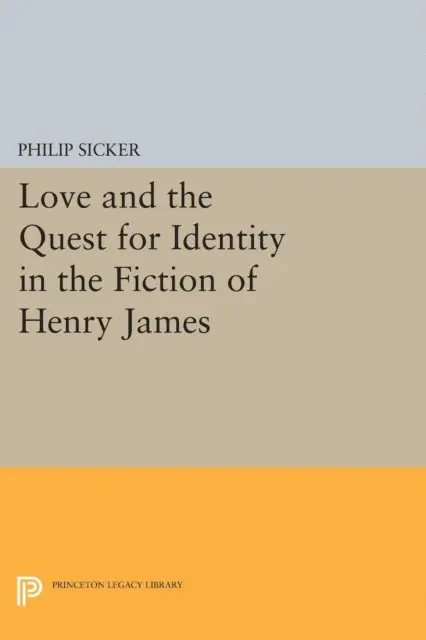
Contrary to the majority of Henry James's critics who either have ignored the central importance of love in his work or have mislabeled it as Platonic," "infantile," and "asexual," Philip Sicker shows that romantic love played a substantial role in James's fiction. Originally published in 1980. The Princeton Legacy Library uses the latest print-on-demand technology to again make available previously out-of-print books from the distinguished backlist of Princeton University Press. These editions preserve the original texts of these important books while presenting them in durable paperback and hardcover editions. The goal of the Princeton Legacy Library is to vastly increase access to the rich scholarly heritage found in the thousands of books published by Princeton University Press since its founding in 1905.
1 626 kr
Skickas inom 3-6 vardagar
Contrary to the majority of Henry James's critics who either have ignored the central importance of love in his work or have mislabeled it as Platonic," "infantile," and "asexual," Philip Sicker shows that romantic love played a substantial role in James's fiction. Originally published in 1980. The Princeton Legacy Library uses the latest print-on-demand technology to again make available previously out-of-print books from the distinguished backlist of Princeton University Press. These editions preserve the original texts of these important books while presenting them in durable paperback and hardcover editions. The goal of the Princeton Legacy Library is to vastly increase access to the rich scholarly heritage found in the thousands of books published by Princeton University Press since its founding in 1905.
809 kr
Skickas inom 10-15 vardagar
ARTICLESAmanda Sigler, Joyce's Ellmann: The Beginnings of James JoycePeter Nohrnberg, "Building Up a Nation Once Again": Irish Masculinity, Violence, and the Cultural Politicsof Sports in A Portrait of the Artist as a Young Man and UlyssesDenise Ayo, Scratching at Scabs: The Garryowens of IrelandLauren Rich, A Table for One: Hunger and Unhomeliness in Joyce's Public EateriesAngela Nemecek, Reading the Disabled Woman: Gerty MacDowell and the Stigmaphilic Space of "Nausicaa"Dieter Fuchs, Szombathely, Vienna, Budapest: Epic Geography and the Austro-Hungarian Subtextof James Joyce's UlyssesRoy Benjamin, Intermisunderstanding Minds: The First Gospel in Finnegans WakeNOTESFaith Steinberg, Joyce Illustrates Finnegans Wake (verbally) and HCE Goes Tomb-HoppingJoseph Kestner, James Joyce's "Araby" on FilmBrandon Lansom, Orpheus Descending: Images of Psychic Descent in "Hades" and "Circe"Thomas Rendall, Joyce's "The Dead" and the Mid-life Crisis
1 691 kr
Skickas inom 5-8 vardagar
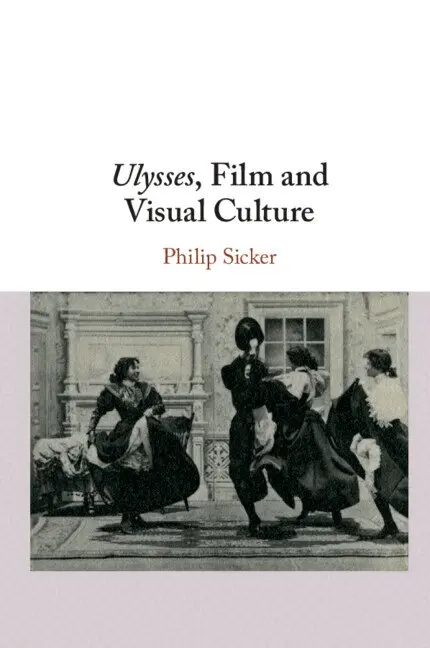
Although Joyce was losing his sight when he wrote Ulysses, Stephen's and Bloom's visual experiences are extraordinarily rich and complex. Absorbing the influences of popular visual attractions such as dioramas, stereoscopes and mutoscopes, their perceptions of Dublin are shaped by what Walter Benjamin calls 'unconscious optics'. Analyzing closely the texture of their impressions and of Joyce's prismatic narrative styles, Philip Sicker explores the phenomenon of sight from a wide-ranging set of perspectives: eighteenth-century epistemology (Locke and Berkeley), theories of the flaneur (Baudelaire and Benjamin), Italian Futurist art (Marinetti and Boccioni), photography (Barthes and Sontag), and the silent films Joyce watched in Dublin and Trieste. The concept of 'spectacle' as a mechanically-constructed visual experience informs Sicker's examination of mediated perception and emerges as a hallmark of modernist culture itself. This study is an important contribution to the growing interest in how deeply the philosophy and science of visual perception influenced modernism.
Del 14 - Film Cultures
Kieslowski's Decalogue
Broken Commandments, Shattered Lives
Inbunden, Engelska, 2025
882 kr
Skickas inom 5-8 vardagar
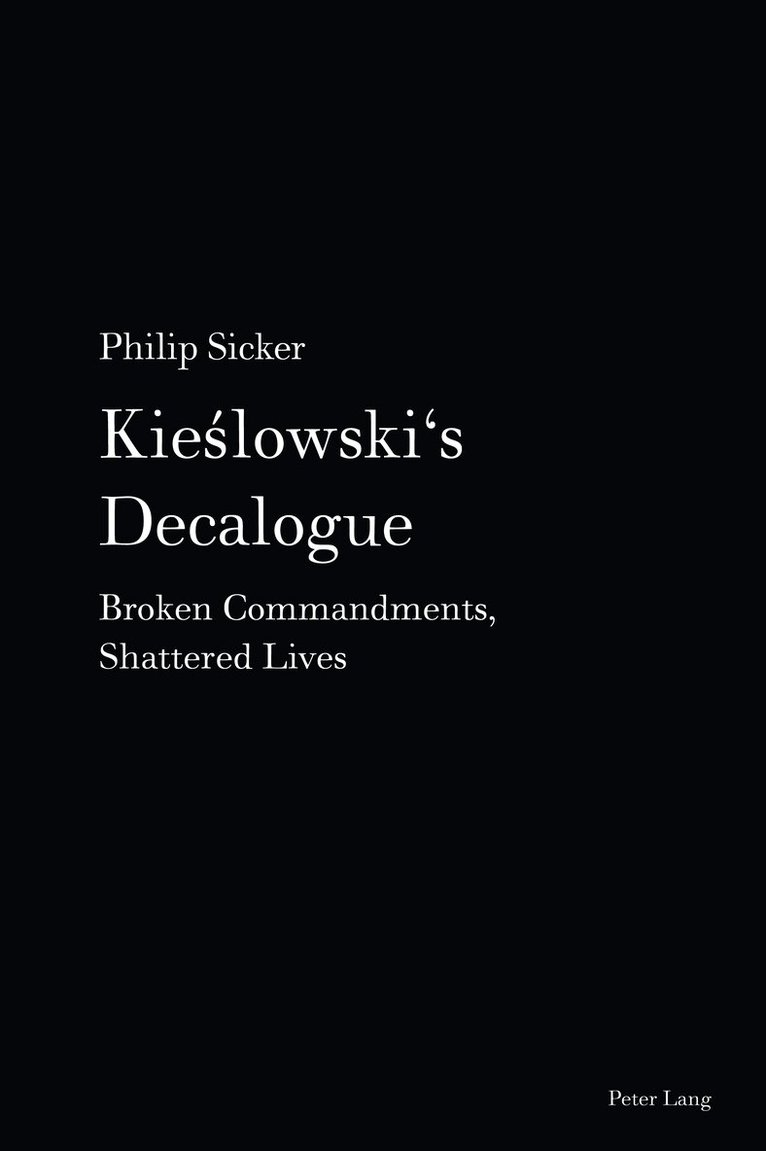
Written and produced under martial law in 1980’s Communist Poland, Krzysztof Kieślowski’s Decalogue presents a collective portrait of a demoralized nation populated by gloomy individualists" who respond to other people with antagonism or indifference. Feeling betrayed by a history of brutal invasions, the series’ characters struggle to cast off a legacy of a bitterness that has arisen because their national hopes have been so frequently shattered. Yet the central questions that animate The Decalogue are not political but ethical and ontological: How should one live? And why should one live at all in an atomized civilization? In exploring these questions in relation to the Ten Commandments, the series’ unifying principle is, paradoxically, disintegration: Kieślowski’s protagonists break the Commandments in a fractured world drained of meaning. Disintegration functions as a multidimensional principle—moral, historical, social, and psychological—informing The Decalogue’s conception, organization, and style. In analyzing these features the study draws on a wide range of philosophical, literary and psychoanalytic inter-texts.