• Fri frakt över 249 kr
  • •
  • Snabba leveranser
  • •
  • Billiga böcker
Kundservice

Du är på sajten för privatpersoner.

Företag, bibliotek eller offentlig verksamhet?

Du handlar på classic.bokus.com, där alla dina funktioner finns intakta.
Till classic.bokus.com
Bokus logotyp. Gå till startsidan.
  • Erbjudanden
  • Nyheter
  • Student
  • Topplistor
  • Barn & ungdom
  • Bokus Play
  • E-böcker
  • Pocketböcker
  • Spel & pussel

10% rabatt på allt med kod: NYSTART10 →

Sidfot

Mina sidor

    Hjälp

    • Kundservice
    • Vanliga frågor och svar
    • Frakt och leverans
    • Retur vid ångerrätt
    • Reklamera vara
    • Betalning
    • Köpvillkor
    • Allmänna villkor
    • Information om webbplatsens tillgänglighet

    Om Bokus

    • Om oss
    • Pressrum
    • För studenter
    • För företag
    • För bibliotek och offentlig verksamhet
    • För leverantörer
    • Hållbarhet

    Populärt

    • Aktuella erbjudanden
    • Presentkort
    • Studentlitteratur
    • Nya böcker
    • Topplistor
    • Signerade böcker
    • Engelska böcker

    Inspiration

    • Boktips
    • BookTok
    • Populära bokserier
    • Barnbokskaraktärer
    • Populära författare
    Logotyp för Bokus
    Följ oss på Facebook (extern länk)Följ oss på Instagram (extern länk)Följ oss på YouTube (extern länk)Följ oss på TikTok (extern länk)
    bokus @ CookiesAnpassa cookiesIntegritetspolicyKöpvillkor
    Till Citymail hemsida (extern länk)Till Budbee hemsida (extern länk)Till Postnord hemsida (extern länk)Till Schenker hemsida (extern länk)Till Early Bird hemsida (extern länk)Till Walleys hemsida (extern länk)
    1. Skönlitteratur
    2. Litteraturvetenskap
    3. Litteraturvetenskap

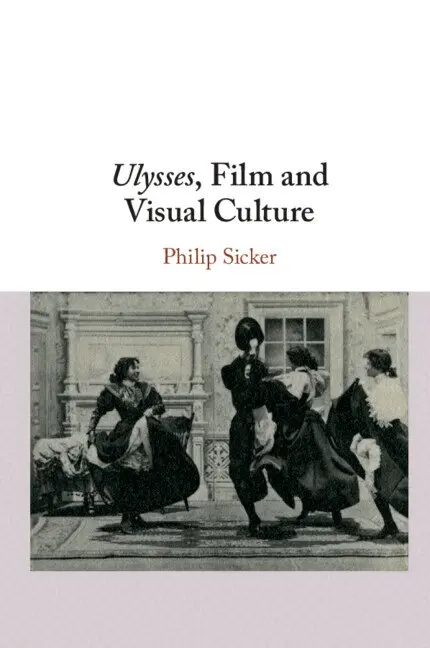
    Ulysses, Film and Visual Culture

    AvPhilip Sicker

    Inbunden, Engelska, 2018

    1 539 kr

    Beställningsvara. Skickas inom 10-15 vardagar. Fri frakt över 249 kr.

    Beskrivning

    Although Joyce was losing his sight when he wrote Ulysses, Stephen's and Bloom's visual experiences are extraordinarily rich and complex. Absorbing the influences of popular visual attractions such as dioramas, stereoscopes and mutoscopes, their perceptions of Dublin are shaped by what Walter Benjamin calls 'unconscious optics'. Analyzing closely the texture of their impressions and of Joyce's prismatic narrative styles, Philip Sicker explores the phenomenon of sight from a wide-ranging set of perspectives: eighteenth-century epistemology (Locke and Berkeley), theories of the flaneur (Baudelaire and Benjamin), Italian Futurist art (Marinetti and Boccioni), photography (Barthes and Sontag), and the silent films Joyce watched in Dublin and Trieste. The concept of 'spectacle' as a mechanically-constructed visual experience informs Sicker's examination of mediated perception and emerges as a hallmark of modernist culture itself. This study is an important contribution to the growing interest in how deeply the philosophy and science of visual perception influenced modernism.

    Produktinformation

    • Utgivningsdatum:2018-09-13
    • Mått:157 x 235 x 19 mm
    • Vikt:540 g
    • Format:Inbunden
    • Språk:Engelska
    • Antal sidor:276
    • Förlag:Cambridge University Press
    • ISBN:9781108428408

    Utforska kategorier

    • Litteraturvetenskap inom Skönlitteratur

    Mer om författaren

    Philip Sicker is Professor of English at Fordham University, New York, and co-editor of Joyce Studies Annual. He has published widely on James Joyce, Henry James, D. H. Lawrence, T. S. Eliot, Thomas Mann, Vladimir Nabokov, narrative theory and film.

    Recensioner i media

    'Sicker's book … brings Ulysses alive by examining its particularities and specificities. … His book demonstrates that there is still much fertile and enriching ground to be tilled and planted in our examination of one of the central books of Western literature.' Peter O'Brien, The Fortnightly Review

    Innehållsförteckning

    • Introduction: Joyce's spectacles: technologies of sight; 1. Ineluctable visuality: Stephen's ways of seeing; 2. 'Caught in this burning scene': Stephen in the gaze of others; 3. Snapshots from the pavement: Bloom as modernist flaneur; 4. Painting motion: 'wandering rocks' as futurist narrative; 5. 'Alone in the hiding twilight': Bloom's cinematic gaze in 'Nausicaa'; 6. Mirages in the lampglow: 'circle' and Melies's dream cinema; 7. Vision conjoined: Stephen and Bloom's intersubjective perception.