Philip Teitelbaum – författare
Visar alla böcker från författaren Philip Teitelbaum. Handla med fri frakt och snabb leverans.
2 produkter
2 produkter
246 kr
Skickas inom 5-8 vardagar
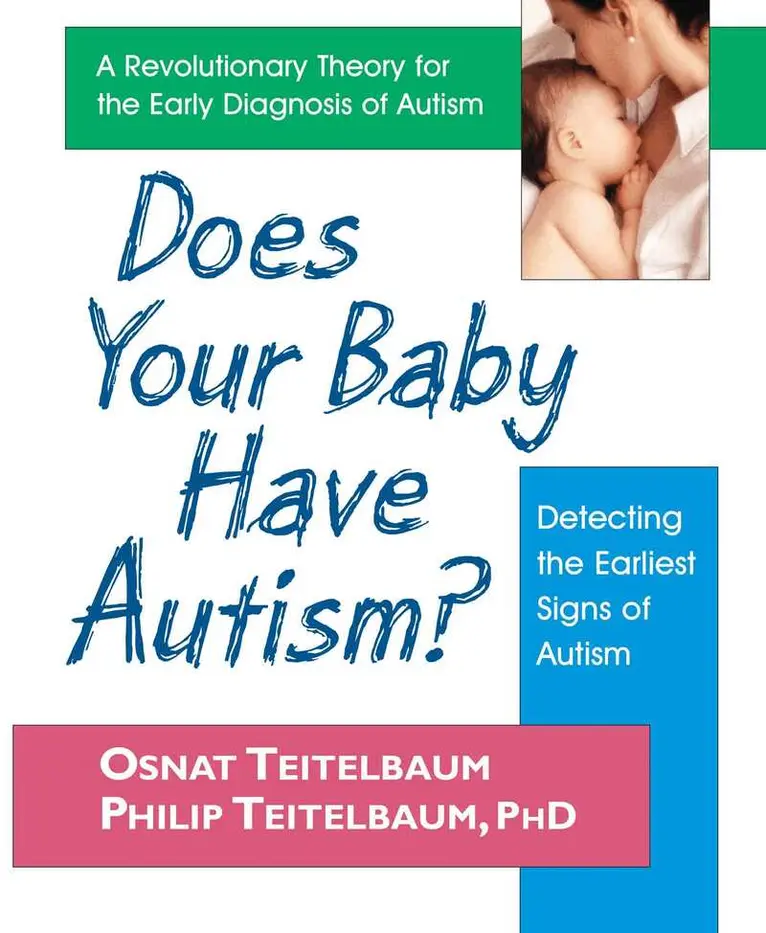
The signs of autism centre on a child's social interaction - from poor eye contact to lack of verbal communication. Unfortunately, these signs usually don't reveal themselves until the age of two or three, at which point, the opportunity for improvement has lessened. But what if it were possible to detect autism within the first six months? That is the basis for Philip and Osnat Teitelbaum's book, DOES YOUR BABY HAVE AUTISM? For nearly two decades, this dedicated husband-and-wife team has worked to develop a pre-screening programme based on physical movement. In DOES YOUR BABY HAVE AUTISM?, the authors first examine the pioneering body movement work of Noa Eshkol and Abraham Wachmann. They then explain how to identify movement disturbances that appear to be the precursors for the development of autism and Asperger's Syndrome, allowing for an 80-percent reduction in diagnosis time. Early diagnosis can make an all-important difference in the treatment of autism. DOES YOUR BABY HAVE AUTISM? provides a key for every parent and carer who is concerned about a child's health.
534 kr
Skickas inom 10-15 vardagar
Motivation addresses a central problem in psychology: Why does an animal's behavior fluctuate in the face of an unaltered environment? In a sense this is the opposite of the question from which work on motivation began, and for which Claude Bernard invented the concept of the fixity of the internal milieu: How does an animal maintain constancy in the face of a fluctuating environment? Dealing with motivation has become extremely complex as new experiments, phenomena, and theories have extended the concept. This book embodies some of the ways in which work on motivation is currently proceeding. One of the major changes has been the recognition that motivation cannot be explained without an understanding of the biological rhythms and activational systems that underlie behavior. Another is that ecological and evolutionary perspectives add enormously to answering the central problem of why an animal does what it does when it does. The book suffers from several omissions. There is no chapter on the devel opment of motivated behavior. There is none on reward systems in the brain, owing to the untimely death of James Olds, whose contribution would have enriched this book appreciably, and to whom we dedicate it. EVELYN SATINOFF PHILIP TEITELBAUM Vll Contents PART I UNDERLYING ACTIVATIONAL SYSTEMS CHAPTER 1 Motivation, Biological Clocks, and Temporal Organization of Behavior 3 Irving Zucker Reactivity to External Stimuli . . . . . . . . . . . . . . . . . . . . . . . . . . . . . . . . 6 Reactivity to Interoceptive Stimuli . . . . . . . . . . . . . . . . . . . . . . . . . . . . . 7 Sources of Biological Rhythmicity . . . . . . . . . . . . . . . . . . . . . . . . . . . . . 9 Rhythm Generation. . . . . . . . . . . . . . . . . . . . . . . . . . . . . 9 . . . . . . . . . . Rhythm Synchronization. . . . . . . . . . . . . . . . . . . . . . . . . 10 . . . . . . . . . . Consequences of Rhythm Desynchronization . . . . . . . . . . . . . . 11 . . . . .