Philip White - Böcker
Visar alla böcker från författaren Philip White. Handla med fri frakt och snabb leverans.
5 produkter
5 produkter
1 495 kr
Skickas inom 5-8 vardagar
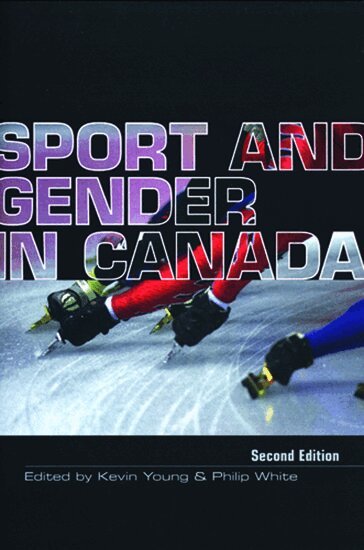
This contributed volume includes articles on sport and gender written by leading scholars in their areas of expertise.Part I demonstrates that 1) the relationship between sport and gender has not developed in a smooth, uncontested, or linear way that always privileges all males and always discriminates against all females, and 2) that the relationship between sport and gender can best be understood sociologically by tracing the intersectionsbetween sport, gender, and other ways that Canadian life has been -- and remains - stratified, such as social class, age, race, ethnicity, and sexuality. In Chapter 1, Melissa Parker and Philip Whiteexplore the chronological development of theoretical frameworks addressing both the gendering of sport and what it means to be gendered in sport. Michael Atkinson argues in Chapter 2 that there is a strong link between types of research methods used and knowledge claims made by researchers. In 'Cultural Struggle and Resistance: Gender, History and Canadian Sport', M. Ann Hall traces the early moments of organized women's sport in Canada to show that women's sport in Canada is built on farstronger foundations than is often assumed. In the following chapter, Kevin Wamsley argues that not all men were privileged by early Canadian sport practices. For instance, he outlines the process throughwhich sport became an arena for the construction of particular types of masculinity, notably masculinities that helped reinforce the dominance of powerful groups of men. Beginning from the premise that Canadian society -- and thus Canadian sport -- is far from 'classless', Peter Donnelly and Jean Harvey provide numerous examples in Chapter 6 to show that there have been major social class and gender inequalities throughout the history of sport. Again, we are reminded that gender is a complexand multidimensional phenomenon that can best be understood if we trace power differences not only between different groups of men and women but also between different versions of 'masculinity' and'femininity' associated with particular social groups, social classes, and social settings.Part II of this book focuses on the work currently being done by leading researchers in the area of sport and gender in Canada on a broad spectrum of sport-related topics. The chapters reflect a variety of theoretical standpoints and methodological procedures. These chapters emphasize the need to study gender in a way that is not only non-categorical but perhaps moves beyond thedistributive level towards understanding how sport assumes particular forms at particular historical junctures and grows out of relations of power that are determined culturally and reinforcedideologically.In Chapter 6, Sally Shaw and Larena Hoeber show how the prevalence of gendered discourses hinders the achievement of gender equity in Canadian amateur sport organizations. The idea that there is no singular masculinity and femininity operating within Canadian sport is developed in Chapter 7 in which Philip White and Kevin Young review research findings on gender and rates and types of sport injury. In Chapter 8 Caroline Davis observes that some femininitiesare more closely associated with body image disorders than others and discusses the biological, sociological, and psychological factors acting on the relationship between sport, physical activity, andeating disorders. Chapter 9 by Peter Donnelly ('Who's Fair Game? Sport, Sexual Harassment, and Abuse') identifies how power differences tend to exist at the heart of abusive and exploitive sport-based relationships. Notions of power relations are also central to Chapter 10 written by Patricia Vertinsky and Sandra O'Brien Cousins on the effects of gender on participation in sport among older Canadians. Specifically, their chapter demonstrates how older women are disadvantaged relative to menwhen it comes to involvement in sport and physical activity. Victoria Paraschak's chapter on sport and Canada's First Nations peoples (Chapter 11) provides vivid examples of how unequal gender relationsare created and reproduced over time. Chapter 12 calls for a collapsing of the rigid binary categories of hetero/homosexuality on the grounds that these are used to preclude full and equal gay and lesbian participation in sport.Identifying patterns of exclusion from participation in sport and physical activity is also the focus of Chapter 13 which is authored by Wendy Frisby, Colleen Reid and Pamela Ponic. This chapter demonstrates how a combination of poverty andprevailing municipal recreation department policies seriously limit the opportunities of many women from active recreation. In Chapter 14, Brian Wilson explores how the media reinforces taken-for-grantedunderstandings of gender-appropriate orientations toward the body and sport. In the following chapter, Jamie Bryshun and Kevin Young provide some of the first substantial evidence for the routine involvement of female athletes in initiation (hazing) rituals in Canada and conclude that power relations between neophyte and veteran female players may be just as aggressive, coercive, and high-risk as those occurring on male teams.Sport and Gender in Canada reflects a growingbody of work highlighting the diversity that exists among Canadian sportswomen and sportsmen in terms of factors such as age, race, heritage, sexuality, and social class. To speak of a 'generic'sporting masculinity or femininity, or indeed of a generic sporting experience, simply does not do justice to the complexity of Canadian sporting life.
2 113 kr
Tillfälligt slut
A 'textbook' plant typically comprises about 85 percent water and 13.5 percent carbohydrates. The remaining fraction contains at least 14 mineral elements, without which plants would be unable to complete their life cycles. This book provides an overview of plant nutritional genomics.
1 301 kr
Skickas inom 10-15 vardagar
First published in 1976, The Worker Directors: A Sociology of Participation offers an exploration of industrial democracy and the role of worker participation in corporate decision-making. Drawing on extensive research and case studies, the authors delve into the emergence and implementation of worker-director schemes, with a particular focus on the British steel industry during a period of significant economic and social change.The book examines the evolution of participation in the 1960s, the challenges of organizational adjustment, and the dynamics of worker representation at the boardroom level. Through detailed analysis, the authors provide a nuanced understanding of the experiences, challenges, and contributions of worker directors, while also situating their findings within a broader European context. With its rich sociological insights and practical implications, The Worker Directors remains a seminal work for those interested in industrial relations, organizational change, and the sociology of work.
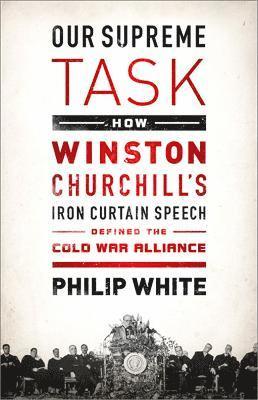
Our Supreme Task
How Winston Churchill's Iron Curtain Speech Defined the Cold War Alliance
Häftad, Engelska, 2013
208 kr
Skickas inom 10-15 vardagar
In 1946, in the midst of global turmoil and after being voted out of office, Winston Churchill made a trip to the unlikely venue of Fulton, Missouri, to deliver an address now known as the Iron Curtain Speech, which defined the dangers of totalitarian Communism. This is the story of that pivotal speech, the college president who made it happen, and the irrepressible man who delivered it.
How to Get Rich
Secret to Financial Stability and Easy Tips (Unleash the Things That Wise and Rich People Do)
Häftad, Engelska, 2023
231 kr
Skickas inom 5-8 vardagar