Philipp Meuser – författare
Visar alla böcker från författaren Philipp Meuser. Handla med fri frakt och snabb leverans.
23 produkter
23 produkter
Häftad, Tyska
375 kr
Skickas inom 3-6 vardagar
Häftad, Engelska, 2022
376 kr
Skickas
Considering the immense diversity of sub-Saharan Africa's architecture and built realities, does it make sense to speak of an African architecture? How does this differ from architecture in Africa? What does the term architecture actually mean in the African context? And how could these questions be conceptualised while leaving behind pre-existing theoretical moulds and biases?Searching for new ways to theorise sub-Saharan African architecture, this collection of 49 essays broadens and develops the discourse around the architecture of a very rapidly changing continent.Its authors – practising architects and renowned scholars – put forward an array of heterogeneous perspectives, question old tropes and emerging narratives, and challenge popular concepts whilst proposing new ones. All with the aim of critically examining and advancing theoretical reflection on African architectures, both on the continent and globally.
Häftad, Engelska, 2022
406 kr
Skickas inom 3-6 vardagar
Originally partof a set, now sold separately, Volume 6 of Sub-Saharan Africa ArchitecturalGuide is dedicated to Central Africa, from the Atlantic Ocean tothe Great Lakes and includes Central African Republic, Cameroon, EquatorialGuinea, São Tomé and Príncipe, Gabon, Republic of the Congo (Brazzaville),Democratic Republic of the Congo (Kinshasa), and Angola.Africa is considered the continent of thefuture. Nowhere else is urbanisation taking place more quickly and thepopulation growing more rapidly. But are enough of us familiar with thearchitectural aspects of this change?The seven volumes of Architectural GuideSub-Saharan Africa present the first comprehensive overview that shows theregion’s architecture in all its vast diversity. In 49 chapters, each focusingon one country, detailed texts and illuminating photos document the wealth ofarchitecture south of the Sahara. Featuring 850 selected buildings and over 200articles, the extensive publication not only showcases but also contextualisesthe continent’s building culture.This set of books paints a multifacetedpicture of sub-Saharan Africa’s architecture across time, revealing howcontemporary architecture has been shaped by its traditional and colonial rootsas well as globalisation and urbanisation. The diverse contributions by almost350 African and international authors come together to produce a superlativework giving the region the attention it so rightfully deserves.
Häftad, Tyska, 2026
508 kr
Skickas inom 3-6 vardagar
Inbunden, Tyska
1 029 kr
Skickas inom 3-6 vardagar
Häftad, Engelska, 2015
814 kr
Skickas inom 3-6 vardagar
Amid the endless plains of Kazakhstan, an extraordinary architectural experiment has arisen: Astana. Formerly an outpost of the Tsarist Empire in the barren steppe, the location had developed into a typical Soviet provincial town. However, both internationally renowned and local architects are now designing spectacular and unique buildings in this dynamic city. Furthermore, Astana will host the Expo 2017 which will take place only twenty years after the city was built in the steppe alongside the old centre. The Astana Architectural Guide documents eighty diverse buildings and projects in the Kazakh metropolis, which was masterplanned by Kisho Kurokawa, and examines the contradictory nature at play within oriental traditions, western models and Soviet influences. Therefore, this publication represents a critical analysis of architecture and capital city planning in the centre of Eurasia.
1 823 kr
Skickas inom 3-6 vardagar
Prefabricated housing has long since ceased to mean the disfigurement of the urban landscape with monotonous grey boxes. Particularly in Central Europe and Russia, modern assembly methods and 100 years of experience in planning prefabricated buildings and constructing with large panels are experiencing a renaissance. Whereas predominantly in Moscow– the largest European metropolis with seventeen million – prefabricated housing is an essential instrument for the provision of residential assistance, prefabrication methods in Germanyand Switzerland, for example, are used to build exclusive properties. This construction manual examines the potential of prefabricated housing on structural, historical and architectural grounds. In addition to an insight into the methods of production and assembly, roughly twenty selected examples provide a contribution to the discussion on affordable housing. Vol. 1: Technologies and MethodsVol. 2: Buildings and Typologies
Inbunden, Tyska, 2023
512 kr
Skickas inom 3-6 vardagar
Häftad, Tyska
303 kr
Skickas inom 3-6 vardagar
Häftad, Tyska, 2024
508 kr
Skickas inom 3-6 vardagar
Inbunden, Engelska, 2026
822 kr
Skickas inom 3-6 vardagar
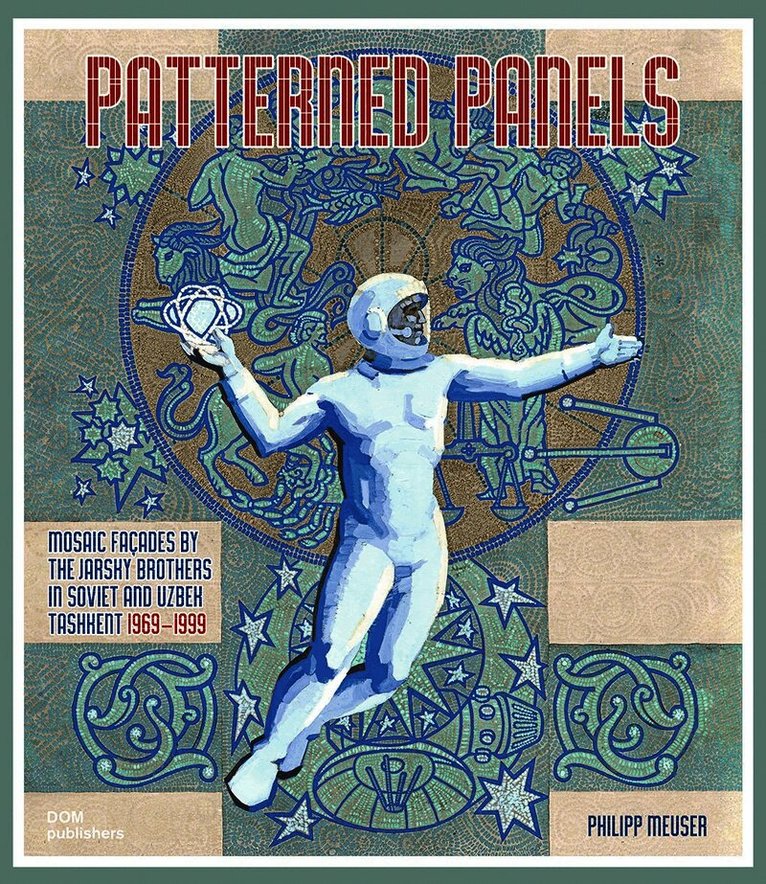
In the wake of Soviet Modernism’s belated renaissance, the monumental façade mosaics of Pyotr, Nikolai, and Alexander Jarsky stand as defiant expressions of individuality within an architecture of mass production. Created for serially manufactured housing blocks in post-earthquake Tashkent, these artworks challenge the conventional narrative of Soviet prefabricated construction as soulless, anonymous, and oppressive. Their vivid ornamentation – geometric, floral, figurative – gives voice to a Soviet-Uzbek style that emerged not through ideology but through artistic resistance embedded in concrete. This book documents for the first time the life and work of the Jarsky brothers, whose mosaic murals now number among Uzbekistan’s officially protected cultural assets. Based on two decades of research and rare personal encounters with the Jarsky family, it presents an architectural history written not by ministries but by hands shaping tiles – and identities – into lasting form.More than an homage, this monograph is a call to action. It interrogates the politics of heritage, the historiography of standardised architecture, and the role of art in contested urban space. As Uzbekistan cautiously begins to valorise its Soviet-era past, the question lingers: will these Modernist surfaces, born of a utopian impulse, find their place on the global stage of architectural heritage?
Del 190 - Grundlagen / Basics
Baupolitik im Wandel
Häftad, Tyska, 2025
305 kr
Skickas inom 3-6 vardagar
Häftad, Tyska, 2025
305 kr
Skickas inom 3-6 vardagar
Häftad, Engelska, 2024
960 kr
Skickas inom 3-6 vardagar
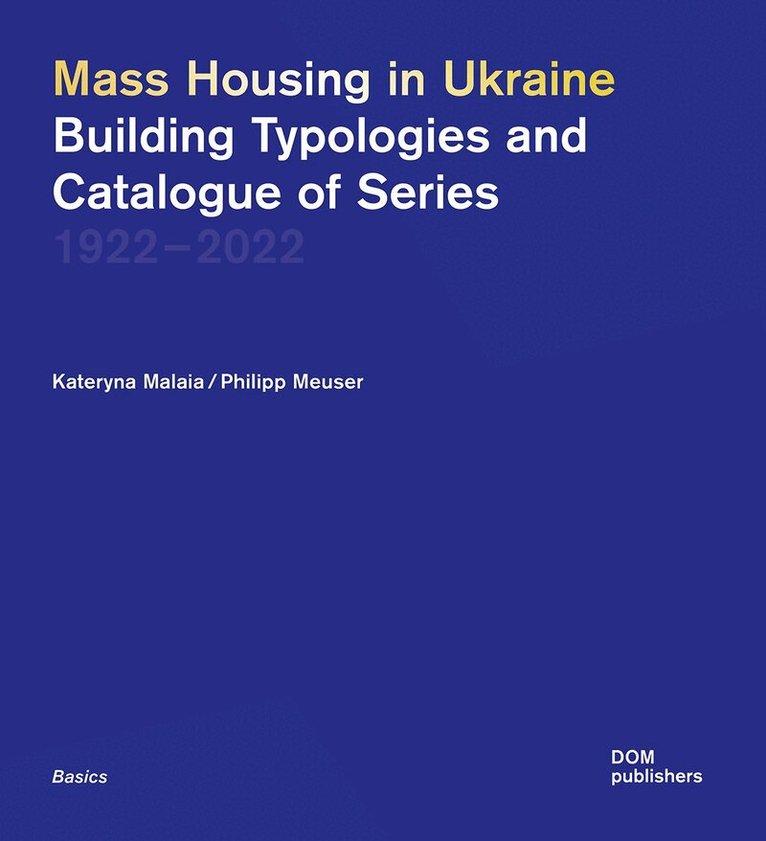
Housing is the most omnipresent urban typology. Housing is also the essential architecture of the human condition. Perhaps more than any other architectural species, housing determines the ways urbanites construct their lives and build their shared futures. The all-out war in Ukraine, started by the Russian Federation in 2022 has disproportionally affected housing and residential infrastructure. The destruction is so targeted, and the damage so significant that it has disfigured entire neighborhoods and erased entire cities. With the scale of damage and loss in mind, and the future wide-ranging reconstruction that will inevitably take place after the war, this study examines the history and typologies of mass housing in Ukraine. It does so in order to evaluate what is lost, explain the diversity of modes of urban living that exist in Ukrainian cities, and finally, reconsider the narrative of how Ukrainian housing came about.The study covers the period of the last 100 years: the time of the most dramatic expansion and change in character of Ukrainian cities. It begins with the experimental buildings constructed in the Soviet Central and Eastern Ukraine and Polish Western Ukraine in the 1920s and 1930s, continues by looking at type projects from the Stalin era, as well as the serial apartment blocks built during the reigns of Khrushchev and Brezhnev and in the late USSR. Finally, it showcases individually designed, yet also typical residential buildings from the turbo-capitalist period of the 1990s and 2000s.With the help of archival materials--texts, blueprints, and photographs--as well as contemporary documentation, the authors analyze 30 examples of Ukrainian-designed or modified housing types. Through uncovering the Ukrainian context, as well as the work of Ukrainian architects, design institutions, contractors, and developers, the history of Ukrainian housing is emancipated from the Russian narrative of the Soviet past. By doing so, we aim to write the history of a specifically Ukrainian building tradition and contribute to embedding it in the context of all-European architectural history.
Inbunden, Engelska, 2024
508 kr
Skickas inom 3-6 vardagar
Housing is the most omnipresent urban typology. Housing is also the essential architecture of the human condition. Perhaps more than any other architectural species, housing determines the ways urbanites construct their lives and build their shared futures. The all-out war in Ukraine, started by the Russian Federation in 2022 has disproportionally affected housing and residential infrastructure. The destruction is so targeted, and the damage so significant that it has disfigured entire neighborhoods and erased entire cities. With the scale of damage and loss in mind, and the future wide-ranging reconstruction that will inevitably take place after the war, this study examines the history and typologies of mass housing in Ukraine. It does so in order to evaluate what is lost, explain the diversity of modes of urban living that exist in Ukrainian cities, and finally, reconsider the narrative of how Ukrainian housing came about.The study covers the period of the last 100 years: the time of the most dramatic expansion and change in character of Ukrainian cities. It begins with the experimental buildings constructed in the Soviet Central and Eastern Ukraine and Polish Western Ukraine in the 1920s and 1930s, continues by looking at type projects from the Stalin era, as well as the serial apartment blocks built during the reigns of Khrushchev and Brezhnev and in the late USSR. Finally, it showcases individually designed, yet also typical residential buildings from the turbo-capitalist period of the 1990s and 2000s.With the help of archival materials--texts, blueprints, and photographs--as well as contemporary documentation, the authors analyze 30 examples of Ukrainian-designed or modified housing types. Through uncovering the Ukrainian context, as well as the work of Ukrainian architects, design institutions, contractors, and developers, the history of Ukrainian housing is emancipated from the Russian narrative of the Soviet past. By doing so, we aim to write the history of a specifically Ukrainian building tradition and contribute to embedding it in the context of all-European architectural history.
Häftad, Engelska, 2023
597 kr
Skickas
For generations, the trilogy of the Kremlin, Red Square, and the GUM department store marked the undisputed centre of Moscow. The last decades brought sweeping changes to the Russian capital. Today the biggest city in Europe and undoubtfully the heart of Eurasia has many centres. Its new squares and parks have set unprecedented standards in urban design. And the city continues to grow – not least due to the construction of gigantic housing complexes and multifunctional projects.This book guides you through Moscow's history, from the fifteenth century to the present day, taking you to well-known landmarks, industrial areas and residential districts. It includes more than 550 buildings, structures, parks and squares. Well-researched descriptions provide in-depth information on the built environment, while detailed maps and QR codes make it easy to find all the featured projects.
Häftad, Engelska, 2026
508 kr
Skickas inom 3-6 vardagar
This Architectural and Cultural Guide East Polynesia challenges the romanticised visions of the South Pacific by critically examining the built environment through the lens of architecture, history, and cultural resilience. Across over 400 richly illustrated pages, it traces how traditional knowledge systems, ecological adaptation, and colonial ruptures have shaped architectural practices from the Cook Islands via French Polynesia and Pitcairn to Rapa Nui in Chilean Polynesia. With contributions from local experts, architects, geologists, and historians, the guide foregrounds the complex entanglements of place, power, and memory. Rather than offering a conventional typological catalogue, it maps networks of meaning: from sacred stone platforms (marae) and climate-responsive vernacular dwellings to the infrastructural legacies of nuclear testing and space-age geopolitics. The Pacific is not portrayed as a void but as a stage of cultural innovation and architectural intelligence.This publication is a carefully curated, research-based exploration of a region where architecture emerges not as monumentality, but as method: flexible, bioclimatic, and socially coded. Aimed at critically minded travellers, scholars, and architects, this volume invites readers to reconsider what architecture can mean in contexts defined not by permanence, but by rhythm, movement, and relational space.
Häftad, Engelska, 2026
611 kr
Skickas inom 3-6 vardagar
250 years United States of AmericaTwo volumes, one region: from Boston’s civic and academic institutions to coastal landscapes and post-industrial sites, this 650-page title maps the full spectrum of the built environment in Connecticut, Maine, Massachusetts, New Hampshire, Rhode Island, and Vermont. More than 500 buildings by famous architects such as Marcel Breuer, Charles Bulfinch, Philip Johnson, Louis Kahn, I. M. Pei, Paul Rudolph, Josep Sert, among others. Since independence began here, New England has developed into a laboratory of American architecture, where civic order took on a permanent form.Volume 1 of the Architectural Guide New England focuses on the region’s urban and institutional centers, stretching from Boston to New Haven. It examines those places where architecture developed as a cultural practice, an academic discipline, and a framework for social order. The volume traces the development of key building types, from the meeting house and the state house to the university campus, and shows how European architectural models were transformed into distinct local traditions. Architecture is not presented as a sequence of styles, but as a continuous discourse. Particular attention is given to the roles of schools and professional networks in establishing New England as a formative center of American architectural culture. The almost 250 buildings discussed demonstrate how the principles of restraint, proportion, and durability became guiding forces whose influence extended far beyond New England.Volume 2 of the Architectural Guide New England examines those regions where building is closely tied to the surrounding landscape. Coastal regions, rural areas, former industrial sites, and islands provide the framework for an architectural history shaped less by institutional concentration than by topographical conditions. The focus mainly lies on questions of adaptation and continuity: adaptive reuse, tourism-related architecture, seasonal buildings, and cultural and religious sites outside of metropolitan centers. The more than 250 buildings in this volume show how architectural concepts are carried forward, modified, or reinterpreted under different social and spatial conditions. In this way, it complements the institutional perspective of Volume 1 with a broader interpretation of the region.
508 kr
Skickas inom 3-6 vardagar
Ten critics from different European countries discuss 20 outstanding architecture projects in Luxembourg. Their texts open up new perspectives on contemporary architecture in the Grand Duchy and enable readers to get involved in the architectural debate, as after all, they will be the ones to determine who wins the Luxembourg Prize for Architectural Criticism for the first time.Texts/Textes/Texte:Anneke Bokern, Beatrix Flagner, Jakub Gołębiewski, Werner Huber, Jean Philippe Hugron, David Kasparek, Inês Moreira, Maik Novotny, Tom Ravenscroft, Christophe Van GerreweyIn cooperation with the OAI, LuxembourgEn partenariat avec l'OAI, LuxembourgIn Zusammenarbeit mit dem OAI, Luxemburg
Häftad, Tyska, 2025
508 kr
Skickas inom 3-6 vardagar
Inbunden, Engelska, 2026
508 kr
Skickas inom 3-6 vardagar
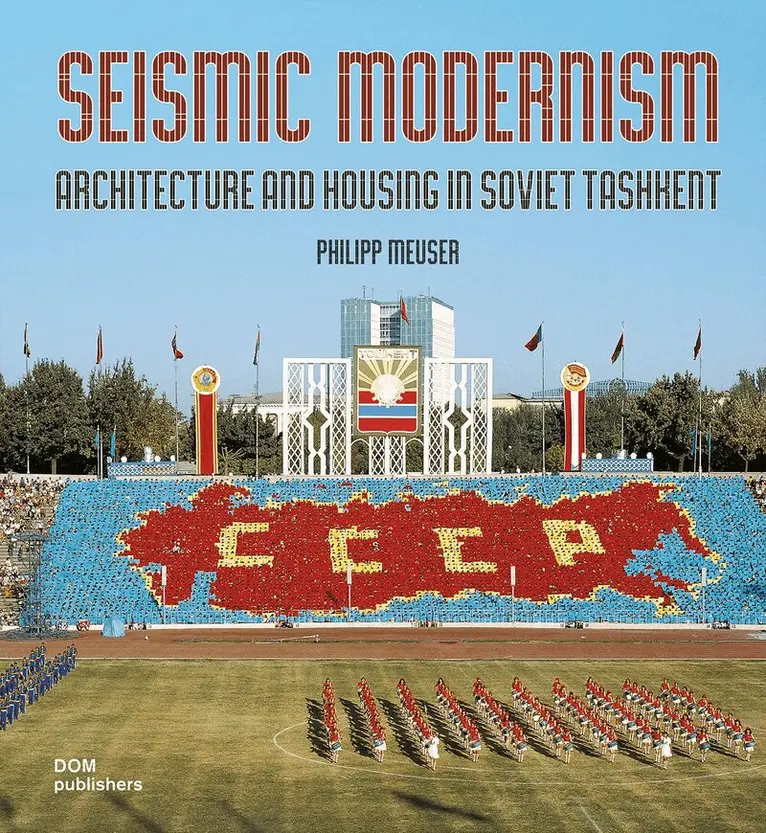
Tashkent, the southernmost metropolis of millions in the Soviet Union, is a city redolent with architectural contrasts and paradoxes. Home to the world’s most beautiful prefabricated buildings, it features a prominent urban duality predicated upon the oriental Old City and the Russian New City.Never was this contrast brought into sharper focus than during the severe earthquake of 1966 which left the New City relatively unscathed but the Old City in ruins. Yet one respite was offered: a rebuilding effort which triggered an upsurge of innovation. The city thus became the face of Seismic Modernism – unprecedented in history, the earthquake stimulated the modernisation of urban development in Tashkent. Architects incorporated regional building traditions in their socialist modern designs, including the visually intriguing façade mosaics attributed to the little-known Jarsky brothers. The rebuilding of Tashkent provides a perfect example of Soviet ideas about urban planning – in which technical standardisation and social requirements were no more of a contradiction than the design of experimental living concepts and the simultaneous search for an expression of national identity in building. Tashkent thus represents a unique example of radical urban redevelopment in a Soviet megacity with standard designs.
Inbunden, Engelska, 2007
1 028 kr
Tillfälligt slut
Inbunden, Engelska, 2007
890 kr
Tillfälligt slut