Philipp Schorch - Böcker
Visar alla böcker från författaren Philipp Schorch. Handla med fri frakt och snabb leverans.
8 produkter
8 produkter
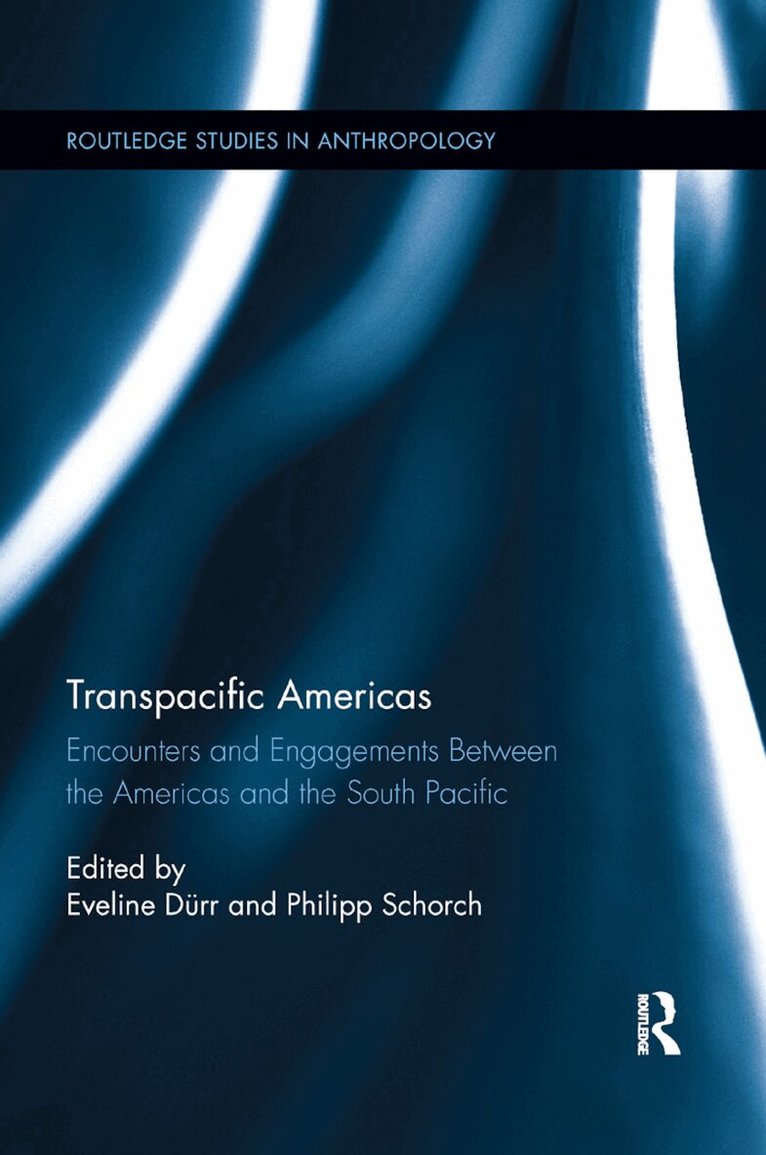
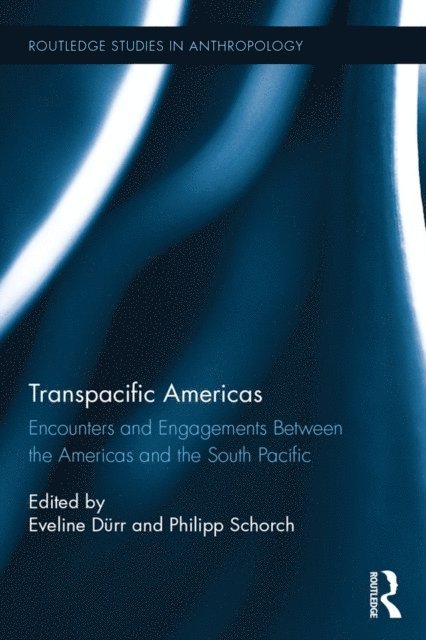
Transpacific Americas
Encounters and Engagements Between the Americas and the South Pacific
Häftad, Engelska, 2019
635 kr
Skickas inom 10-15 vardagar
This volume explores cultural, social and economic connections between the Americas and the South Pacific. It reaches beyond Sino-American collaborations to focus on rather neglected, and sometimes invisible, Southern linkages, asking how these connections originated and have developed over time, which local responses they have generated, and what impact these processes have in the region in terms of representational forms and strategies, new cultural practices, and empowerment of individuals in (post)colonial contexts. The volume also compares and contrasts intriguing parallels of politics and identity formation. By extending the focus beyond East Asia to the Southern Pacific region, including Island connections with the Americas, the volume provides a more comprehensive understanding of recent dynamics and shifting relations across the Pacific. By approaching the Transpacific Americas as an assemblage or relational space, which is created and becomes meaningful through multiple localities and their translocal connections, the book complicates the Euro-American distinction between "centre" and "rim". While the collection offers a distinctive geographical focus, it simultaneously emphasizes the translocal qualities of specific locations through their entanglements in transpacific assemblages within and across cultural, social and economic spheres. Furthermore, without neglecting the inextricable, historical dimension of anthropological perspectives, the focus is on the diverse and unexpected contemporary forms of cultural, social and economic encounters and engagements, and on (re)emerging Indigenous networks. Primarily based on empirical research, the volume explores face-to-face encounters, relations "from below," and transcultural interactions and relationships in, as well as ideas and conceptualizations of, cultural spaces across localities that have long been perceived as separate, but are indeed closely interconnected.
334 kr
Skickas inom 7-10 vardagar
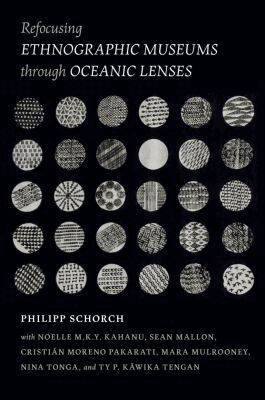
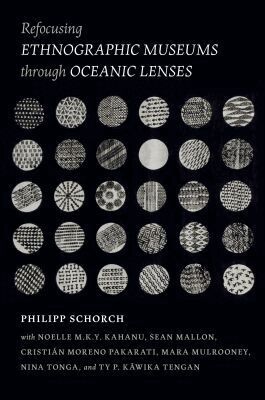
Refocusing Ethnographic Museums through Oceanic Lenses offers a collaborative ethnographic investigation of Indigenous museum practices in three Pacific museums located at the corners of the so-called Polynesian triangle: Bernice Pauahi Bishop Museum, Hawai'i; Museum of New Zealand Te Papa Tongarewa; and Museo Antropológico Padre Sebastián Englert, Rapa Nui. Since their inception, ethnographic museums have influenced academic and public imaginations of other cultural-geographic regions, and the often resulting Euro-Americentric projection of anthropological imaginations has come under intense pressure, as seen in recent debates and conflicts around the Humboldt Forum in Berlin, Germany. At the same time, (post)colonial renegotiations in former European and American colonies have initiated dramatic changes to anthropological approaches through Indigenous museum practices. This book shapes a dialogue between Euro-Americentric myopia and Oceanic perspectives by offering historically informed, ethnographic insights into Indigenous museum practices grounded in Indigenous epistemologies, ontologies, and cosmologies. In doing so, it employs Oceanic lenses that help to reframe Pacific collections in, and the production of public understandings through, ethnographic museums in Europe and the Americas.By offering insights into Indigenous museologies across Oceania, the coauthors seek to recalibrate ethnographic museums, collections, and practices through Indigenous Oceanic approaches and perspectives. This, in turn, should assist any museum scholar and professional in rethinking and redoing their respective institutional settings, intellectual frameworks, and museum processes when dealing with Oceanic affairs; and, more broadly, in doing the ""epistemic work"" needed to confront ""coloniality,"" not only as a political problem or ethical obligation, but ""as an epistemology, as a politics of knowledge."" A noteworthy feature is the book's layered coauthorship and multi-vocality, drawing on a collaborative approach that has put the (widespread) philosophical commitment to dialogical inquiry into (seldom) practice by systematically co-constituting ethnographic knowledge. Further, the book shapes an ""ethnographic kaleidoscope,"" proposing the metaphor of the kaleidoscope as a way of encouraging fluid ethnographic engagements to avoid the impulse to solidify and enclose differences, and remain open to changing ethnographic meanings, positions, performances, and relationships. The coauthors collaboratively mobilize Oceanic eyes, bodies, and sovereignties, thus enacting an ethnographic kaleidoscopic process and effect aimed at refocusing ethnographic museums through Oceanic lenses.
Transpacific Americas
Encounters and Engagements Between the Americas and the South Pacific
Inbunden, Engelska, 2015
2 238 kr
Skickas inom 10-15 vardagar
This volume explores cultural, social and economic connections between the Americas and the South Pacific. It reaches beyond Sino-American collaborations to focus on rather neglected, and sometimes invisible, Southern linkages, asking how these connections originated and have developed over time, which local responses they have generated, and what impact these processes have in the region in terms of representational forms and strategies, new cultural practices, and empowerment of individuals in (post)colonial contexts. The volume also compares and contrasts intriguing parallels of politics and identity formation. By extending the focus beyond East Asia to the Southern Pacific region, including Island connections with the Americas, the volume provides a more comprehensive understanding of recent dynamics and shifting relations across the Pacific. By approaching the Transpacific Americas as an assemblage or relational space, which is created and becomes meaningful through multiple localities and their translocal connections, the book complicates the Euro-American distinction between "centre" and "rim". While the collection offers a distinctive geographical focus, it simultaneously emphasizes the translocal qualities of specific locations through their entanglements in transpacific assemblages within and across cultural, social and economic spheres. Furthermore, without neglecting the inextricable, historical dimension of anthropological perspectives, the focus is on the diverse and unexpected contemporary forms of cultural, social and economic encounters and engagements, and on (re)emerging Indigenous networks. Primarily based on empirical research, the volume explores face-to-face encounters, relations "from below," and transcultural interactions and relationships in, as well as ideas and conceptualizations of, cultural spaces across localities that have long been perceived as separate, but are indeed closely interconnected.
1 271 kr
Skickas inom 5-8 vardagar
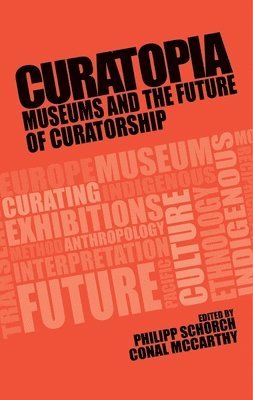
What is the future of curatorship? Is there a vision for an ideal model, a curatopia, whether in the form of a utopia or dystopia? Or is there a plurality of approaches, amounting to a curatorial heterotopia? This pioneering volume addresses these questions by considering the current state of curatorship. It reviews the different models and approaches operating in museums, galleries and cultural organisations around the world and discusses emerging concerns, challenges and opportunities. The collection explores the ways in which the mutual, asymmetrical relations underpinning global, scientific entanglements of the past can be transformed into more reciprocal, symmetrical forms of cross-cultural curatorship in the present, arguing that this is the most effective way for curatorial practice to remain meaningful. International in scope, the volume covers three regions: Europe, North America and the Pacific.
420 kr
Skickas inom 5-8 vardagar
What is the future of curatorship? Is there a vision for an ideal model, a curatopia, whether in the form of a utopia or dystopia? Or is there a plurality of approaches, amounting to a curatorial heterotopia? This pioneering volume addresses these questions by considering the current state of curatorship. It reviews the different models and approaches operating in museums, galleries and cultural organisations around the world and discusses emerging concerns, challenges and opportunities. The collection explores the ways in which the mutual, asymmetrical relations underpinning global, scientific entanglements of the past can be transformed into more reciprocal, symmetrical forms of cross-cultural curatorship in the present, arguing that this is the most effective way for curatorial practice to remain meaningful. International in scope, the volume covers three regions: Europe, North America and the Pacific.
812 kr
Skickas inom 3-6 vardagar
In which ways are environments (post-)socialist and how do they come about? How is the relationship between the built environment, memory, and debates on identity enacted? What are the spatial, material, visual, and aesthetic dimensions of these (post-)socialist enactments or interventions? And how do such (post-)socialist interventions in environments become (re)curated? By addressing these questions, this volume releases ›curation‹ from its usual museological framing and carries it into urban environments and private life-worlds, from predominantly state-sponsored institutional settings with often normative orientations into spheres of subjectification, social creativity, and material commemorative culture.
636 kr
Kommande
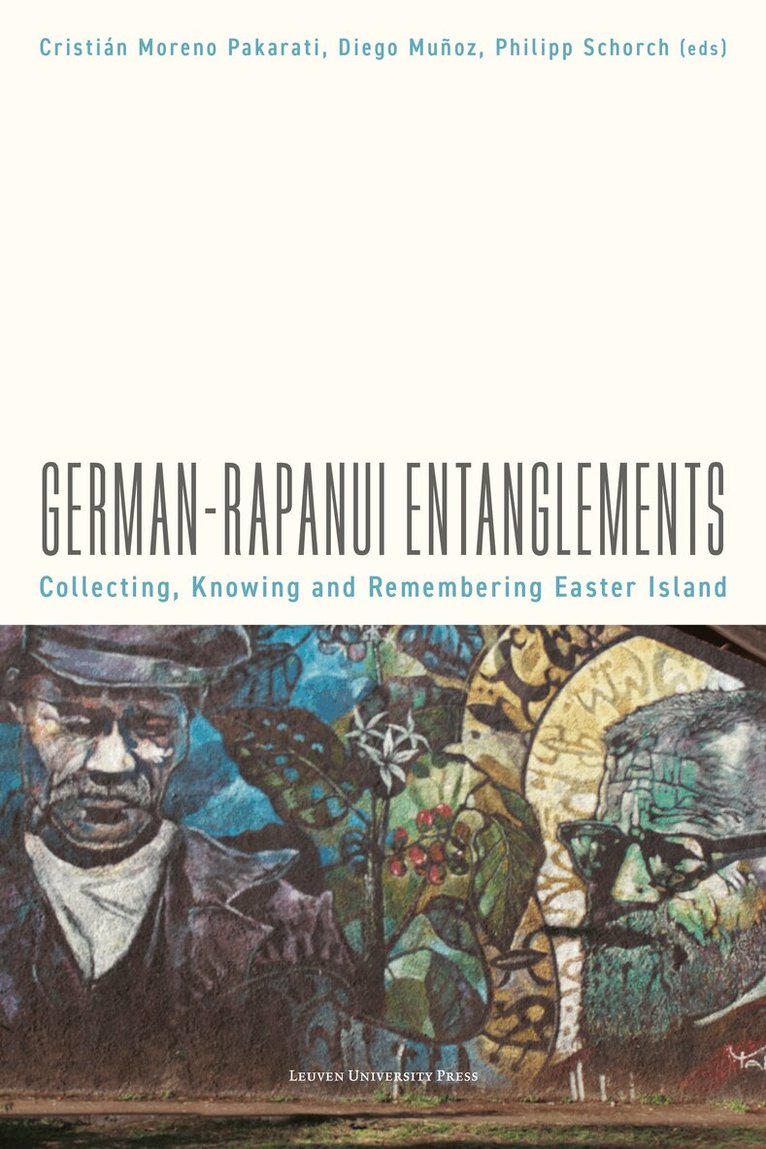
Groundbreaking material-visual history and ethnography of German–Rapanui entanglements.This book traces German-Rapanui entanglements from past to present through encounters between scholars, missionaries, institutions and Indigenous actors, and through the material and visual traces—objects, photographs, and texts—that continue to shape knowledge and memory of Rapa Nui (Easter Island). Moving beyond limiting Eurocentric frames, it highlights how Rapanui people have actively engaged with German and German-speaking individuals and institutions to (re)shape different practices and discourses of ‘Rapanuiness’.The chapters bring these dynamics to life: from Bavarian Capuchin activities that reached far beyond conversion, to collecting and exhibiting networks linking Altötting in Bavaria to Rapa Nui; from German efforts to record oral traditions and the 1957 German–Chilean expedition, to long-term archaeological collaborations at Ava Ranga Uka A Toroke Hau.Written by scholars based in Rapa Nui, Germany, Chile, France, and the United States, the volume shows how Rapanui communities have shifted from being marginalised in the management of their heritage to becoming key agents in its interpretation and future. Together, these studies illuminate three centuries of entanglement—and their powerful resonance today.
738 kr
Kommande
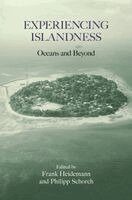
Through the words of twenty contributors, this volume addresses the dialectic relationship between islands and islanders as well as the resulting ways of life produced by this interrelation, a condition considered here as "islandness." It proposes "islandness" as a lens through which to investigate "insular" settings across oceans and interrogate the geographical category of an "island." What different conceptualizations of islandness can be discerned in various parts of the world? How do these conceptualizations frame experiences of time and space? How does this shape human perceptions, cultural practices, as well as relationships and interactions with other-than-human entities? In what ways do insular sensibilities configure ways of being and moving in historical and contemporary contexts? Islandness is an emergent quality; it is a process that the contributors explore theoretically, historically, and ethnographically by approaching diverse regions—the Indian and Pacific Oceans, Highland Asia, Europe, and Latin America—from different disciplinary perspectives. In analyzing these complexities through the lens of islandness, the volume draws transcultural and transregional comparisons in order to shed light on the human-environmental condition. The book’s fifteen chapters deal with both literal and metaphorical islandness across three parts: Oceania, Indian Ocean, and Beyond. Each section explores the processes through which islandness becomes constituted and the practices in which it becomes enacted by establishing and comparing relating regional contexts. Thus, the volume traces ways of experiencing islandness with a dual focus on the empirical dimension—the lived realities and temporalities of islandness—and the metaphorical plane—the ideas of islands or island settings that inform experiences of islandness. For scholars interested in seeing the "island" beyond the ocean, Experiencing Islandness: Oceans and Beyond shows that the metaphorical power of islands frames experiences all around the world.