Philipp W. Rosemann - Böcker
Visar alla böcker från författaren Philipp W. Rosemann. Handla med fri frakt och snabb leverans.
7 produkter
7 produkter
1 252 kr
Skickas inom 5-8 vardagar
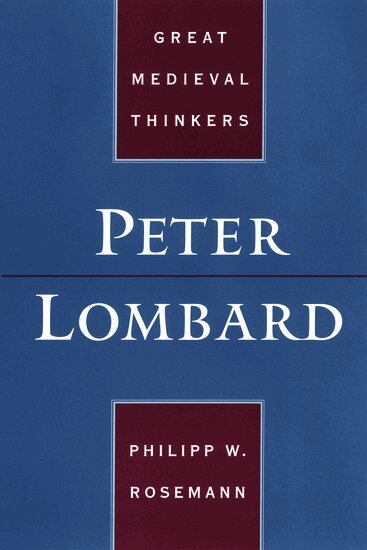
Peter Lombard is best known as the author of a celebrated work entitled Book of Sentences, which for several centuries served as the standard theological textbook in the Christian West. It was the subject of more commentaries than any other work of Christian literature besides the Bible itself. The Book of Sentences is essentially a compilation of older sources, from the Scriptures and Augustine down to several of the Lombard's contemporaries, such as Hugh of Saint Victor and Peter Abelard. Its importance lies in the Lombard's organisation of the theological material, his method of presentation, and the way in which he shaped doctrine in several major areas. Despite his importance, however, there is no accessible introduction to Peter Lombard's life and thought available in any modern language. This volume fills this considerable gap. Philipp W. Rosemann begins by demonstrating how the Book of Sentences grew out of a long tradition of Christian reflection-a tradition, ultimately rooted in Scripture, which by the twelfth century had become ready to transform itself into a theological system. Turning to the Sentences , Rosemann then offers a brief exposition of the Lombard's life and work. He proceeds to a book-by-book examination and interpretation of its main topics, including the nature and attributes of God, the Trinity, creation, angelology, human nature and the Fall, original sin, Christology, ethics, and the sacraments. He concludes by exploring how the Sentences helped shape the further development of the Christian tradition, from the twelfth century through the time of Martin Luther.
651 kr
Skickas inom 5-8 vardagar
Peter Lombard is best known as the author of a celebrated work entitled Book of Sentences, which for several centuries served as the standard theological textbook in the Christian West. It was the subject of more commentaries than any other work of Christian literature besides the Bible itself. The Book of Sentences is essentially a compilation of older sources, from the Scriptures and Augustine down to several of the Lombard's contemporaries, such as Hugh of Saint Victor and Peter Abelard. Its importance lies in the Lombard's organisation of the theological material, his method of presentation, and the way in which he shaped doctrine in several major areas. Despite his importance, however, there is no accessible introduction to Peter Lombard's life and thought available in any modern language. This volume fills this considerable gap. Philipp W. Rosemann begins by demonstrating how the Book of Sentences grew out of a long tradition of Christian reflection-a tradition, ultimately rooted in Scripture, which by the twelfth century had become ready to transform itself into a theological system. Turning to the Sentences , Rosemann then offers a brief exposition of the Lombard's life and work. He proceeds to a book-by-book examination and interpretation of its main topics, including the nature and attributes of God, the Trinity, creation, angelology, human nature and the Fall, original sin, Christology, ethics, and the sacraments. He concludes by exploring how the Sentences helped shape the further development of the Christian tradition, from the twelfth century through the time of Martin Luther.
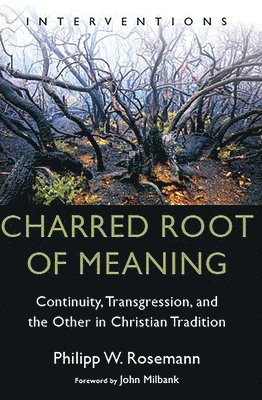
Charred Root of Meaning
Continuity, Transgression, and the Other in Christian Tradition
Häftad, Engelska, 2018
299 kr
Skickas inom 5-8 vardagar
416 kr
Skickas inom 7-10 vardagar
117 kr
Skickas inom 7-10 vardagar
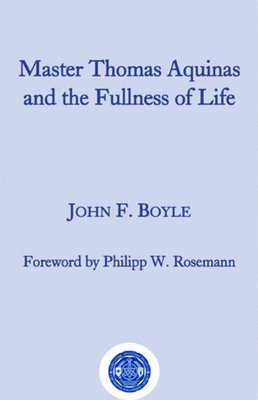
Professor John F. Boyle’s lecture, Master Thomas Aquinas and the Fullness of Life, is a piece that combines a profoundly personal element – the experience of someone who has chosen St. Thomas as his own teacher and master – with the learnedness of one of the most respected contemporary American scholars of the thought of Thomas Aquinas. What we are offered in Professor Boyle’s lecture is not the kind of arid and lifeless speculation that is sometimes – albeit mistakenly – associated with Aquinas’s own style. Boyle emphasizes that Aquinas was far from being a “brain on a stick,” a theologian and thinker so deeply immersed in speculation as to lose sight of the real world, and indeed of what matters in the real world. For what matters in the real world is life, and our ability to conduct this life is a way that is in accordance with the deepest longings of human nature. Boyle demonstrates, with both learning and wit, that it is precisely this life, in its fullness, to which St. Thomas endeavors to lead his students through his teaching. This life has its roots in the humble operations of living that we share with creatures such as plants and animals; it rises to the properly human level in the selfdirection of which we are capable through intellect and will, and which enables us to form ourselves morally in habits that become “second natures” for us; and it is perfectedin the supernatural life of faith in which Christ becomes our teacher and master, who leads us to eternal life with his Father. With Master Boyle through Master Thomas to the Master: that could be the motto of this Aquinas Lecture, which was delivered at the University of Dallas on January 28, 2013. Although the University of Dallas has hosted an annual Aquinas Lecture since 1982, Master Thomas Aquinas and the Fullness of Life is the first to be made available in this new series.
Gratia non tollit naturam
Technologies of the Self and the Catholic Constitution of Time and Space
Häftad, Engelska, 2025
180 kr
Skickas inom 7-10 vardagar
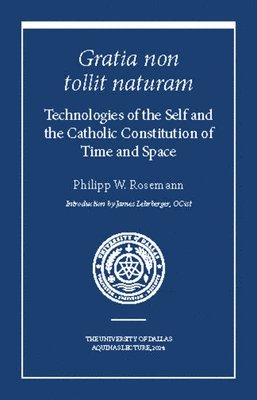
In this short volume, Philipp Rosemann sets out to articulate the structures of Catholic existence in terms adapted from contemporary philosophy. Using a concept from the last works of Michel Foucault, Rosemann focuses on the liturgy as a "technology of the self." Through language, the liturgy "makes" the world in which the believer lives. But whereas modern philosophers hold that the human mind imposes its structures upon reality, the liturgical self exists in accordance with a cosmic order that stems from the Word. If one dialogue partner is Michel Foucault, the other is Joseph Ratzinger, the late Pope Benedict XVI. Although this pairing may seem surprising, two facts suggest its fruitfulness. First, scholars now speak of a "Christian turn" in the late Foucault, a thinker often denounced—falsely—as the epitome of philosophical decadence. Second, as one of the leading liturgists of our time, Ratzinger incorporated crucial insights from modern philosophy into his liturgical theology. In relation to Ratzinger, too, some clichés need to be corrected. In the resulting dialogue between Foucault and Ratzinger, the reader discovers what the specific mode of existence of the "liturgical subject" is, and how Catholic time and space are constituted liturgically. In the end, the Thomistic adage gratia non tollit naturam turns out to be an excellent way of summarizing how the liturgical subject relates to the cosmos: not by destroying it, but by listening to the words of creation and perfecting them. The University of Dallas Aquinas Lecture for 2024, Gratia non tollit naturam is published here with an introduction by Fr. James Lehrberger, OCist.
Del 3 - Medieval commentaries on the <i>Sentences</i> of Peter Lombard
Mediaeval Commentaries on the Sentences of Peter Lombard
Volume 3
Inbunden, Engelska, 2015
3 769 kr
Skickas inom 5-8 vardagar
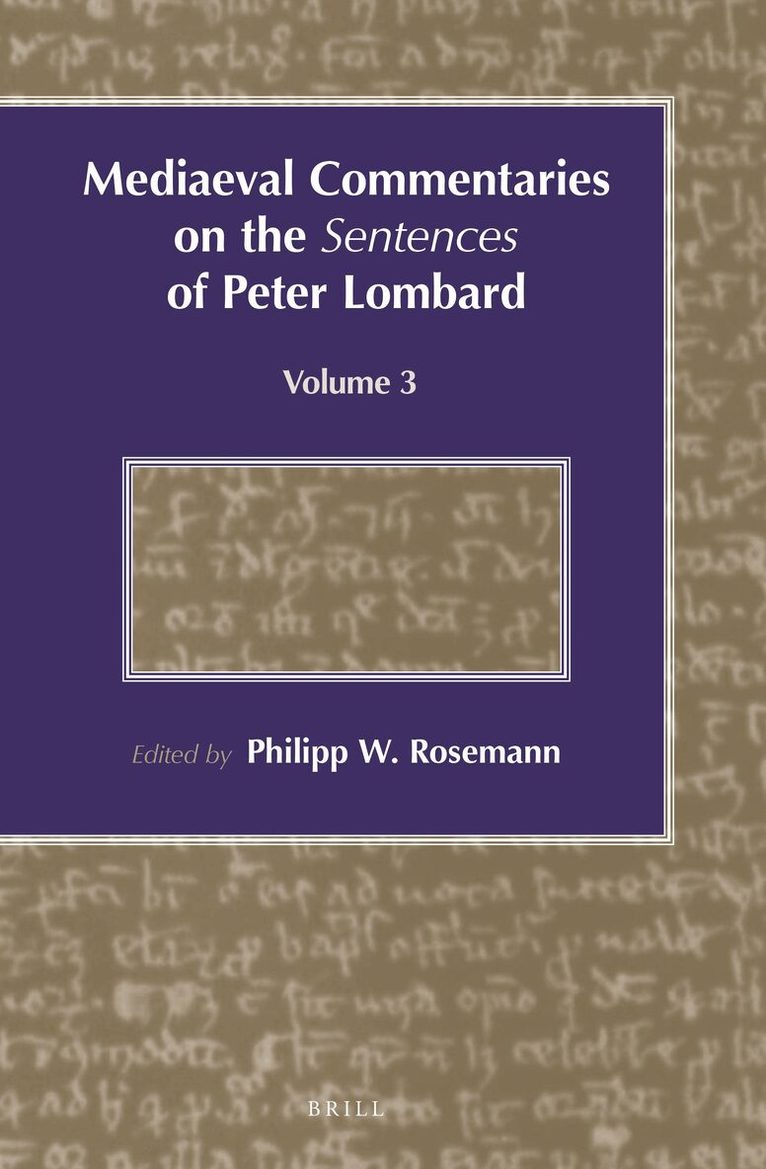
The work published in this third, and final, volume of Brill’s handbook on the tradition of the Book of Sentences breaks new ground in three ways. First, several chapters contribute to the debate concerning the meaning of medieval authority and authorship. For some of the most influential literature on the Sentences consisted of study aids and compilations that were derivative or circulated anonymously. Consequently, the volume also sheds light on theological education “on the ground”—the kind of teaching that was dispensed by the average master and received by the average student. Finally, the contributors show that Peter Lombard’s textbook played a much more dynamic role in later medieval theology than hitherto assumed. The work remained a force to be reckoned with until at least the sixteenth century, especially in the Iberian Peninsula.Contributors are Claire Angotti, Monica Brinzei, Franklin T. Harkins, Severin V. Kitanov, Lidia Lanza, Philipp W. Rosemann, Chris Schabel, John T. Slotemaker, Marco Toste, Jeffrey C. Witt, and Ueli Zahnd.