Phillip B. Levine - Böcker
Visar alla böcker från författaren Phillip B. Levine. Handla med fri frakt och snabb leverans.
4 produkter
4 produkter
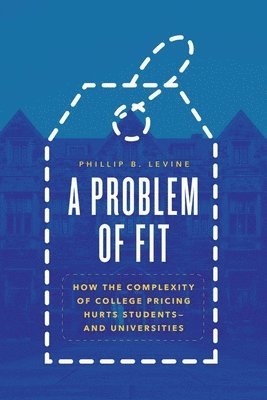
Problem of Fit
How the Complexity of College Pricing Hurts Students-and Universities
Inbunden, Engelska, 2022
731 kr
Skickas inom 7-10 vardagar
A critical examination of the complex system of college pricing-how it works, how it fails, and how fixing it can help both students and universities.How much does it cost to attend college in the United States today? The answer is more complex than many realize. College websites advertise a sticker price, but uncovering the actual price-the one after incorporating financial aid-can be difficult for students and families. This inherent uncertainty leads some students to forgo applying to colleges that would be the best fit for them, or even not attend college at all. The result is that millions of promising young people may lose out on one of society's greatest opportunities for social mobility. Colleges suffer too because losing these prospective students can mean lower enrollment and less socioeconomic diversity. If markets require prices to function well, then the American higher-education system-rife as it is with ambiguity in its pricing-amounts to a market failure.In A Problem of Fit, economist Phillip B. Levine explains why institutions charge the prices they do and discusses the role of financial aid systems in facilitating-and discouraging-access to college. Affordability issues are real, but price transparency is also part of the problem. As Levine makes clear, our conversations around affordability and free tuition miss a larger truth: that the opacity of our current college-financing systems is a primary driver of inequities in education and society. In a clear-eyed assessment of educational access and aid in a post-Covid economy, A Problem of Fit offers a trenchant new argument for educational reforms that are well within reach.
Problem of Fit
How the Complexity of College Pricing Hurts Students-and Universities
Häftad, Engelska, 2022
197 kr
Skickas inom 7-10 vardagar
A critical examination of the complex system of college pricing-how it works, how it fails, and how fixing it can help both students and universities.How much does it cost to attend college in the United States today? The answer is more complex than many realize. College websites advertise a sticker price, but uncovering the actual price-the one after incorporating financial aid-can be difficult for students and families. This inherent uncertainty leads some students to forgo applying to colleges that would be the best fit for them, or even not attend college at all. The result is that millions of promising young people may lose out on one of society's greatest opportunities for social mobility. Colleges suffer too because losing these prospective students can mean lower enrollment and less socioeconomic diversity. If markets require prices to function well, then the American higher-education system-rife as it is with ambiguity in its pricing-amounts to a market failure.In A Problem of Fit, economist Phillip B. Levine explains why institutions charge the prices they do and discusses the role of financial aid systems in facilitating-and discouraging-access to college. Affordability issues are real, but price transparency is also part of the problem. As Levine makes clear, our conversations around affordability and free tuition miss a larger truth: that the opacity of our current college-financing systems is a primary driver of inequities in education and society. In a clear-eyed assessment of educational access and aid in a post-Covid economy, A Problem of Fit offers a trenchant new argument for educational reforms that are well within reach.
244 kr
Kommande
The secret economics of maximizing college financial aid (and why it’s not as miserable as you think).In the college admissions process, a terrifying unknown looms large: How much is this really going to cost? For prospective students and their families, there’s no easy answer. While college prices continue to rise, so do their promises of financial aid for qualified students. But who qualifies? And for how much? How can this monumental life decision be so utterly impossible to understand?Hidden Tuition is an insider’s guide for navigating college financial aid to maximum effect and with (relatively) minimal pain. Economist and financial-aid expert Phillip B. Levine draws on his unique experience—including years of research in higher-education finance and work alongside admissions and financial-aid departments—to help readers first identify, then minimize, what they’ll actually pay for different types of colleges based on their circumstances. With expertise, clarity, and the warmth of someone who’s been through it, Levine details how students can find the hidden tuition costs in the opaque landscape of college pricing and financial aid. He explores topics that include:Why college’s “sticker prices” are rarely what students pay—and how some actual prices are even going downThe best, worst, and most surprising deals for students with different financial resourcesHow to navigate financial aid for divorced and multi-residence householdsWho really benefits from early decisionHow the nature of scholarships and merit-based aid is often framed in misleading waysThe pros and cons of college savings accountsWhen and how to get started on college financingWhy all student loans aren't the same (or aren't all that bad)Debunking common myths and offering practical guidance for both families and individual students, Hidden Tuition makes a maddeningly imperfect process more manageable—and gives students a clearer path through one of life’s biggest financial decisions towards collegiate success.
297 kr
Skickas inom 7-10 vardagar
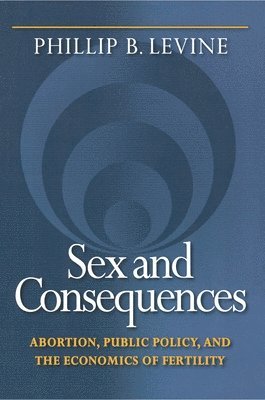
How do individuals change their behavior when abortion access increases? In this innovative book, economist Phillip Levine uses economic analysis to consider this question, comparing abortion to a form of insurance. Like insurance, he contends, abortion provides protection from downside risk. A pregnant woman who would otherwise give birth to an unwanted child has the option to abort. On the other hand, the availability of this option may increase the likelihood of a pregnancy in the first place. In a very restrictive abortion environment, few women would choose to have an abortion; legalizing abortion would reduce unwanted births. But if abortion becomes readily available, it may cause individuals to increase their sexual activity and/or reduce their use of contraception, Levine contends. Women will become pregnant more frequently, but will abort those pregnancies. Therefore, these abortions will not reduce unwanted births. Levine's analysis suggests that the manner in which individuals change their behavior depends on the extent to which abortion is accessible.He supports these assertions using data from both the United States and Eastern Europe, comparing areas that have restricted access to abortion services with those that have liberalized access. Using sound economic analysis, Sex and Consequences goes beyond the ideological arguments that frequently dominate the abortion debate, lending a new perspective to this controversial subject.