Piergiorgio Di Giminiani - Böcker
Visar alla böcker från författaren Piergiorgio Di Giminiani. Handla med fri frakt och snabb leverans.
7 produkter
7 produkter
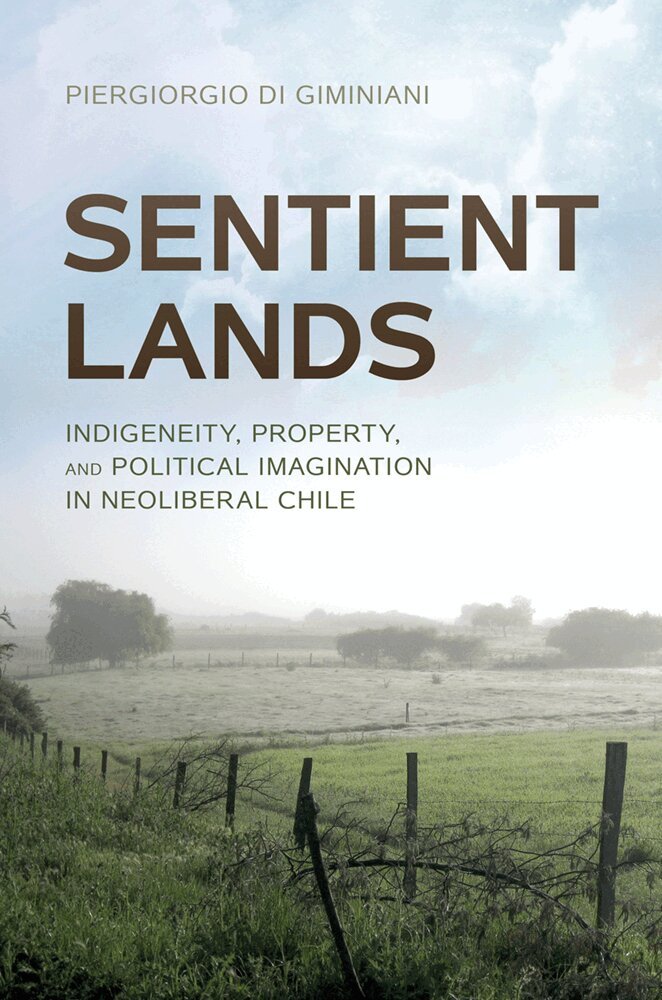
Sentient Lands
Indigeneity, Property, and Political Imagination in Neoliberal Chile
Häftad, Engelska, 2025
361 kr
Skickas inom 7-10 vardagar
In 1990, when Augusto Pinochet’s 17-year military dictatorship ended, democratic rule returned to Chile. Since then, Indigenous organizations have mobilized to demand restitution of their ancestral territories seized over the past 150 years.Sentient Lands is a historically grounded ethnography of the Mapuche people’s engagement with state-run reconciliation and land-restitution efforts. Piergiorgio Di Giminiani analyzes environmental relations, property, state power, market forces, and indigeneity to illustrate how land connections are articulated, in both landscape experiences and land claims. Rather than viewing land claims as simply bureaucratic procedures imposed on local understandings and experiences of land connections, Di Giminiani reveals these processes to be disputed practices of world making.Ancestral land formation is set in motion by the entangled principles of Indigenous and legal land ontologies, two very different and sometimes conflicting processes. Indigenous land ontologies are based on a relation between two subjects—land and people—both endowed with sentient abilities. By contrast, legal land ontologies are founded on the principles of property theory, wherein land is an object of possession that can be standardized within a regime of value. Governments also use land claims to domesticate Indigenous geographies into spatial constructs consistent with political and market configurations.Exploring the unexpected effects on political activism and state reparation policies caused by this entanglement of Indigenous and legal land ontologies, Di Giminiani offers a new analytical angle on Indigenous land politics.
361 kr
Skickas inom 7-10 vardagar
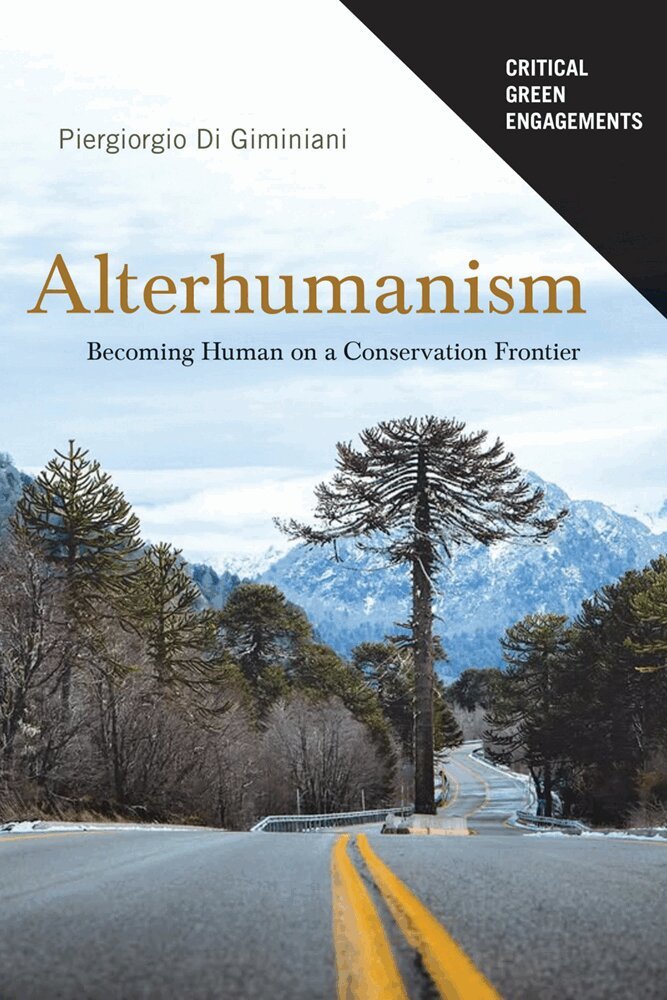
What does it mean to be human in the Anthropocene? Set against the backdrop of southern Chile's conservation frontier, Piergiorgio Di Giminiani's Alterhumanism invites us to recognize the centrality of the human condition in the face of an increasingly uncertain world and imagine future forms of coexistence. Reflecting on more than a decade of ethnographic fieldwork with smallholding settlers, Indigenous Mapuche farmers, environmental activists, entrepreneurs, and conservation scientists, Di Giminiani brings to light how these diverse groups navigate the enduring impacts of settler-caused environmental depletion and their aspirations for new ethics of care. Di Giminiani challenges traditional Western humanism, proposing a more relational and open-ended understanding of humanity shaped by interactions with nonhuman others. Rather than seeking fixed answers, the book explores the fluid and multifaceted nature of becoming human through the lens of conservation politics. By highlighting the entangled, multispecies worlds of southern Chile, Di Giminiani offers a novel approach to understanding the political project of becoming human in the Anthropocene. Alterhumanism is a rich, ethnographically grounded perspective on humanity's evolving relationship with the natural world.
1 057 kr
Skickas inom 7-10 vardagar
What does it mean to be human in the Anthropocene? Set against the backdrop of southern Chile's conservation frontier, Piergiorgio Di Giminiani's Alterhumanism invites us to recognize the centrality of the human condition in the face of an increasingly uncertain world and imagine future forms of coexistence. Reflecting on more than a decade of ethnographic fieldwork with smallholding settlers, Indigenous Mapuche farmers, environmental activists, entrepreneurs, and conservation scientists, Di Giminiani brings to light how these diverse groups navigate the enduring impacts of settler-caused environmental depletion and their aspirations for new ethics of care. Di Giminiani challenges traditional Western humanism, proposing a more relational and open-ended understanding of humanity shaped by interactions with nonhuman others. Rather than seeking fixed answers, the book explores the fluid and multifaceted nature of becoming human through the lens of conservation politics. By highlighting the entangled, multispecies worlds of southern Chile, Di Giminiani offers a novel approach to understanding the political project of becoming human in the Anthropocene. Alterhumanism is a rich, ethnographically grounded perspective on humanity's evolving relationship with the natural world.
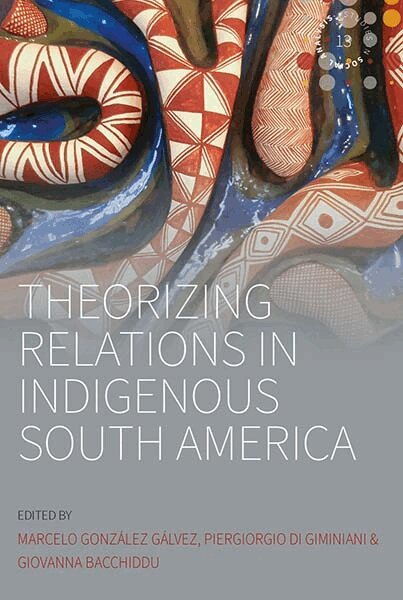
Theorizing Relations in Indigenous South America
Edited by Marcelo González Gálvez, Piergiogio Di Giminiani and Giovanna Bacchiddu
Inbunden, Engelska, 2022
1 747 kr
Skickas inom 3-6 vardagar
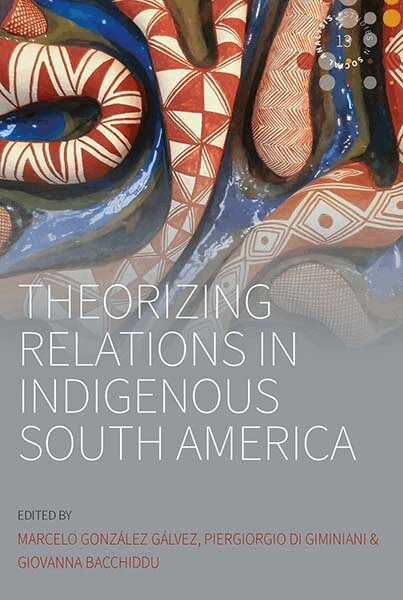
Whether invented, discovered, implicit, or directly addressed, relations remain the main focus of most anthropological inquiries. These relations, once conceptualized in ethnographic fieldwork as self-evident connections between discrete social units, have been increasingly explored through local ontological theories. This collected volume explores how ethnographies of indigenous South America have helped to inspire this analytic shift, demonstrating the continued importance of ethnographic diversity. Most importantly, this volume asserts that comparative ethnographic research can help illustrate complex questions surrounding relations vis-à-vis the homogenizing effects of modern coloniality.
Theorizing Relations in Indigenous South America
Edited by Marcelo González Gálvez, Piergiogio Di Giminiani and Giovanna Bacchiddu
Häftad, Engelska, 2022
496 kr
Skickas inom 3-6 vardagar
Whether invented, discovered, implicit, or directly addressed, relations remain the main focus of most anthropological inquiries. These relations, once conceptualized in ethnographic fieldwork as self-evident connections between discrete social units, have been increasingly explored through local ontological theories. This collected volume explores how ethnographies of indigenous South America have helped to inspire this analytic shift, demonstrating the continued importance of ethnographic diversity. Most importantly, this volume asserts that comparative ethnographic research can help illustrate complex questions surrounding relations vis-à-vis the homogenizing effects of modern coloniality.
Futures of Reparations in Latin America
Imagination, Translation, and Belonging
Häftad, Engelska, 2026
453 kr
Skickas inom 7-10 vardagar
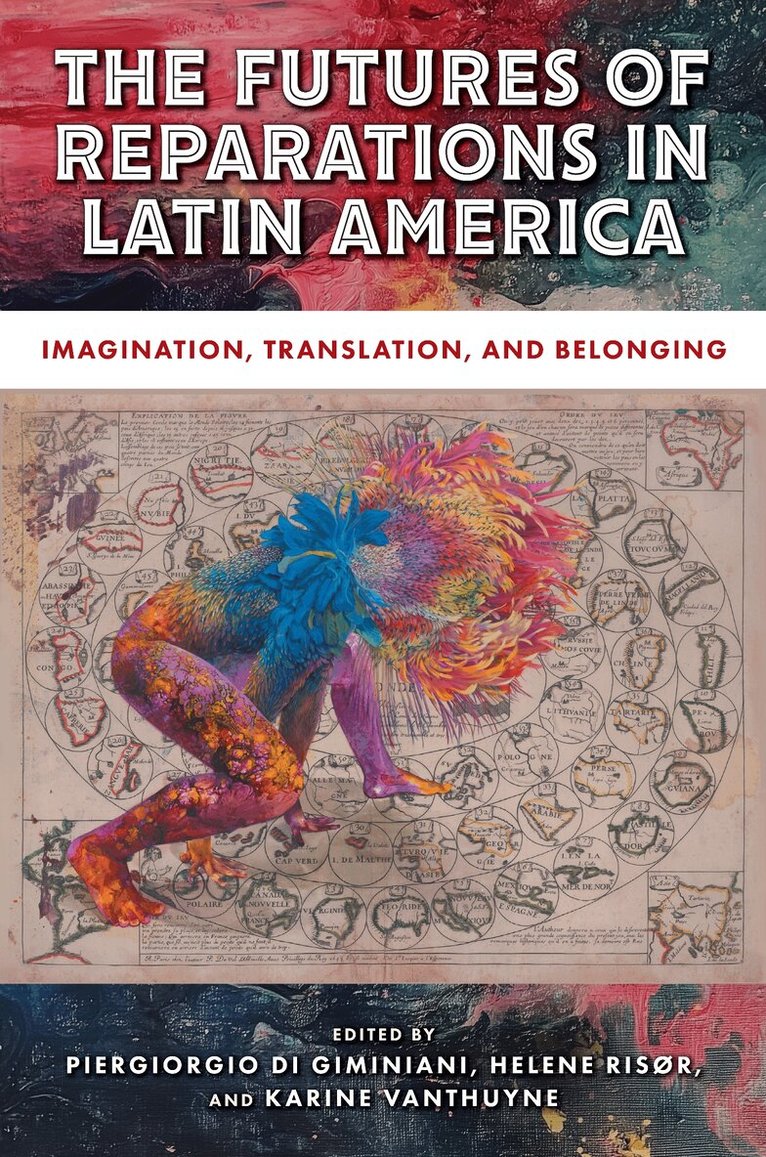
Over the last thirty years, Latin America has undergone an unprecedented wave of reparations targeting victims of political violence during military regimes, Indigenous and Afro-Latin groups affected by historical processes of dispossession, and citizens suffering from environmental harm. Reparations prompt us to face uncomfortable pasts and in so doing, create conditions for imagination of multiple futures. In representing the experiences and hopes of those affected by political violence in El Salvador and Argentina, environmental harm in Guatemala and Peru, and colonial dispossession in Chile and Bolivia, reparations are built upon conflictive forms of future imagination, translation of harm and new forms of belonging to and beyond the nation state, which reifies as much as challenges state authority over the promises of actual repair. In today’s Latin American political debate, hopes for justice and democracy remain anchored to the question of the kinds of future that can be imagined through and after reparation.
Futures of Reparations in Latin America
Imagination, Translation, and Belonging
Inbunden, Engelska, 2026
1 412 kr
Skickas inom 7-10 vardagar
Over the last thirty years, Latin America has undergone an unprecedented wave of reparations targeting victims of political violence during military regimes, Indigenous and Afro-Latin groups affected by historical processes of dispossession, and citizens suffering from environmental harm. Reparations prompt us to face uncomfortable pasts and in so doing, create conditions for imagination of multiple futures. In representing the experiences and hopes of those affected by political violence in El Salvador and Argentina, environmental harm in Guatemala and Peru, and colonial dispossession in Chile and Bolivia, reparations are built upon conflictive forms of future imagination, translation of harm and new forms of belonging to and beyond the nation state, which reifies as much as challenges state authority over the promises of actual repair. In today’s Latin American political debate, hopes for justice and democracy remain anchored to the question of the kinds of future that can be imagined through and after reparation.