Piero Ferri – författare
Visar alla böcker från författaren Piero Ferri. Handla med fri frakt och snabb leverans.
15 produkter
Prospects for the European Monetary System
Av Piero Ferri
E-bok, 1990
803 kr
Lägg i varukorg
The papers in this volume were presented at a conference on "The EMS, Ten Years Later" at the University of Bergamo, Italy, May 1989. They look at the history of the EMS, the reasons underlying the successes attributed to it, the problems it created, and its future.
Prospects for the European Monetary System
Av Piero Ferri
Häftad, 1990
568 kr
Lägg i varukorg
The papers in this volume were presented at a conference on "The EMS, Ten Years Later" at the University of Bergamo, Italy, May 1989. They look at the history of the EMS, the reasons underlying the successes attributed to it, the problems it created, and its future.
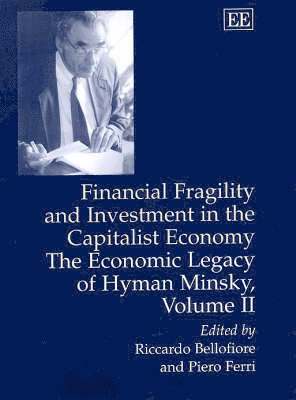
Financial Fragility and Investment in the Capitalist Economy
The Economic Legacy of Hyman Minsky, Volume II
Av Piero Ferri, Riccardo Bellofiore
E-bok, 2001
457 kr
Lägg i varukorg
Hyman Minsky is renowned for his theoretical and empirical investigation of the capitalist economy. In this book, a distinguished group of contributors provides an authoritative account of his contribution to the analysis of capitalism and, more particularly, to the fields of monetary and post …
Aggregate Demand, Inequality and Instability
Av Piero Ferri
Inbunden, 2016
1604 kr
Lägg i varukorg
This book studies the relationships between aggregate demand, inequality and instability. It extends the traditional approach by introducing wealth and inequality into a dynamic macroeconomic model. Furthermore, it examines the role that debt and financial instability can play in turbulent times …
Minsky’s Moment
An Insider’s View on the Economics of Hyman Minsky
Av Piero Ferri
Inbunden, 2019
1882 kr
Lägg i varukorg
Based upon his life-long collaboration with Hyman Minsky, Piero Ferri explores and reconsiders Minsky's moments in the aftermath of the 'Great Recession' of 2008. He sets out the analytical and methodological foundations of Minsky's financial instability hypothesis, offering insightful comments …
Minsky's Moment
An Insider's View on the Economics of Hyman Minsky
Av Piero Ferri
E-bok, 2019
472 kr
Lägg i varukorg
Based upon his life-long collaboration with Hyman Minsky, Piero Ferri explores and reconsiders Minsky''s moments in the aftermath of the ''Great Recession'' of 2008. He sets out the analytical and methodological foundations of Minsky''s financial instability hypothesis, offering insightful comments …
Income Distribution, Growth and Unemployment
A Complex Dynamic Approach
Av Piero Ferri
Inbunden, 2022
1846 kr
Lägg i varukorg
Piero Ferri expertly broadens the analysis of the canonical growth cycle approach by presenting a Minsky–Harrod model, examining how the relationship between income distribution, growth and unemployment becomes increasingly complex. Exploring this new technique to generate a process of growth, …
Income Distribution, Growth and Unemployment
A Complex Dynamic Approach
Av Piero Ferri
E-bok, 2022
462 kr
Lägg i varukorg
Piero Ferri expertly broadens the analysis of the canonical growth cycle approach by presenting a Minsky–Harrod model, examining how the relationship between income distribution, growth and unemployment becomes increasingly complex. Exploring this new technique to generate a process of growth, …
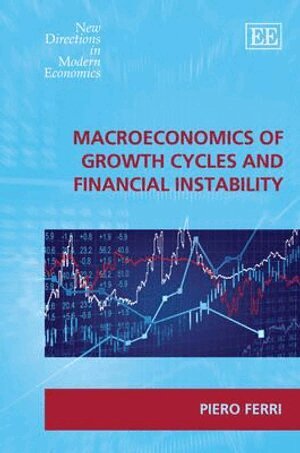
Macroeconomics of Growth Cycles and Financial Instability
Av Piero Ferri
E-bok, 2011
472 kr
Lägg i varukorg
In light of the recent economic crisis and in keeping with Hyman Minsky''s analysis of financial instability, this book considers the important interaction between cycles and growth, via the interplay between demand, supply and real-world financial issues. Piero Ferri presents a macroeconomic study …
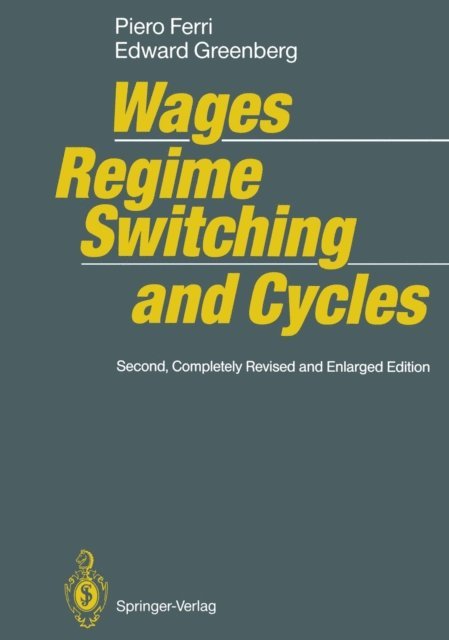
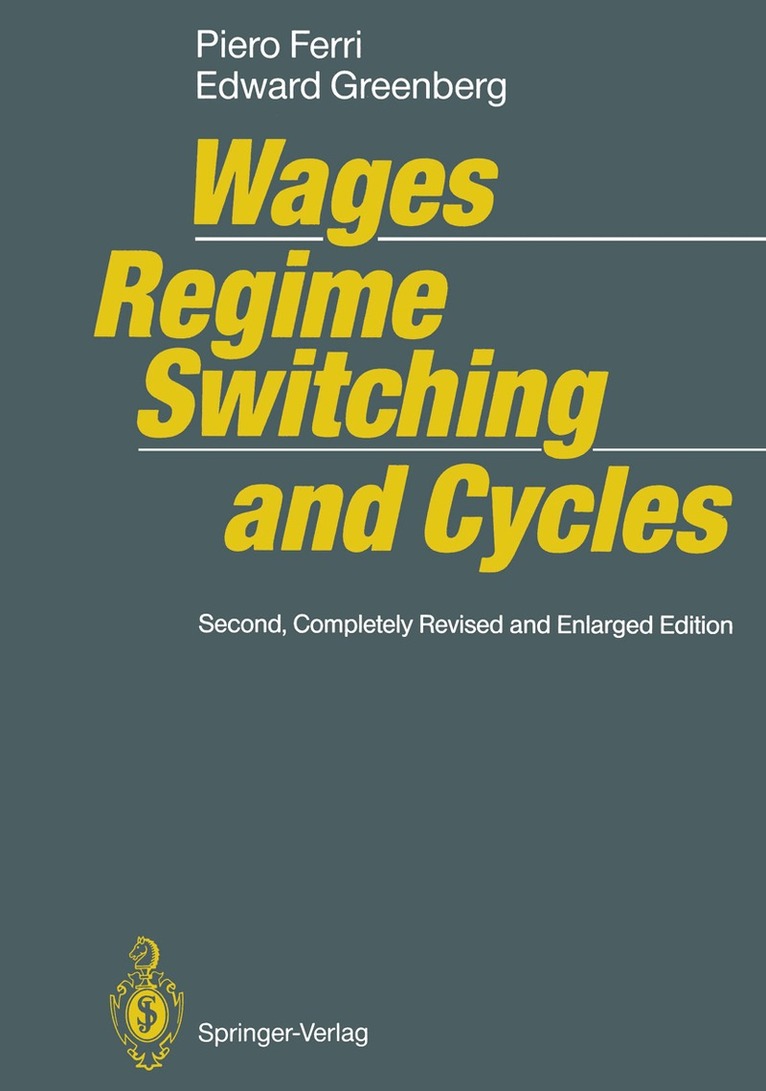
Wages, Regime Switching, and Cycles
Av Edward Greenberg, Piero Ferri
E-bok, 2012
1427 kr
Lägg i varukorg
The initial purposes of this book were to update and extend the discussion and the results presented ill our previous book, The Labor Market and Business Cycle Theories. Our 1990 article, which appeared in The Journal of Economic Behavior and Organization, represented a first step in this …
Wages, Regime Switching, and Cycles
Av Piero Ferri, Edward Greenberg m. fl.
Häftad, 2011
1095 kr
Lägg i varukorg
The initial purposes of this book were to update and extend the discussion and the results presented ill our previous book, The Labor Market and Business Cycle Theories. Our 1990 article, which appeared in The Journal of Economic Behavior and Organization, represented a first step in this …
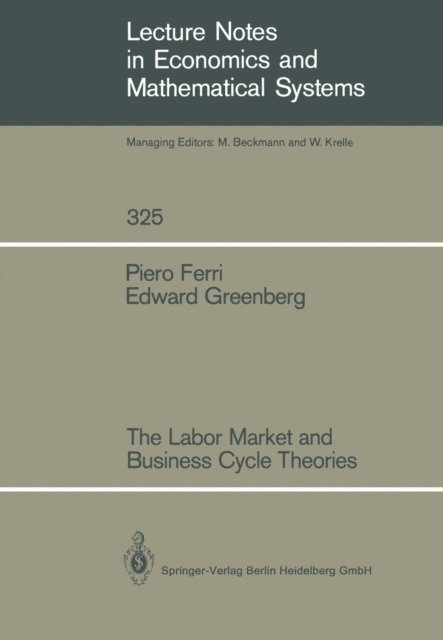
Labor Market and Business Cycle Theories
Av Edward Greenberg, Piero Ferri
E-bok, 2012
1148 kr
Lägg i varukorg
Interest in business cycles has had its ''ups and downs''. After a period of almost steady state growth and of economic tranquility, when the business cycle seemed to be obsolete, the turbulence of the 70s and 80s has contributedto a renewed interest in the topic. Important analytical and …
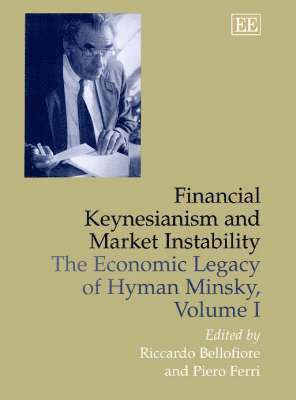
Financial Keynesianism and Market Instability
The Economic Legacy of Hyman Minsky, Volume I
Av Riccardo Bellofiore, Piero Ferri
Inbunden, 2001
1882 kr
Tillfälligt slut
During his lifetime Hyman Minsky made a seminal contribution to the development of financial Keynesianism. In this book, leading academics celebrate his work and explore his economic legacy.Special attention is paid to his work on contemporary economic method, the Great Depression, the European …
Financial Fragility and Investment in the Capitalist Economy
The Economic Legacy of Hyman Minsky, Volume II
Av Riccardo Bellofiore, Piero Ferri
Inbunden, 2001
1947 kr
Tillfälligt slut
Hyman Minsky is renowned for his theoretical and empirical investigation of the capitalist economy. In this book, a distinguished group of contributors provides an authoritative account of his contribution to the analysis of capitalism and, more particularly, to the fields of monetary and post …
Macroeconomics of Growth Cycles and Financial Instability
Av Piero Ferri
Inbunden, 2011
1793 kr
Tillfälligt slut
In light of the recent economic crisis and in keeping with Hyman Minsky's analysis of financial instability, this book considers the important interaction between cycles and growth, via the interplay between demand, supply and real-world financial issues. Piero Ferri presents a macroeconomic study …