
Pietro Paolo Milella – författare
Visar alla böcker från författaren Pietro Paolo Milella. Handla med fri frakt och snabb leverans.
3 produkter
3 produkter
1 601 kr
Skickas inom 5-8 vardagar
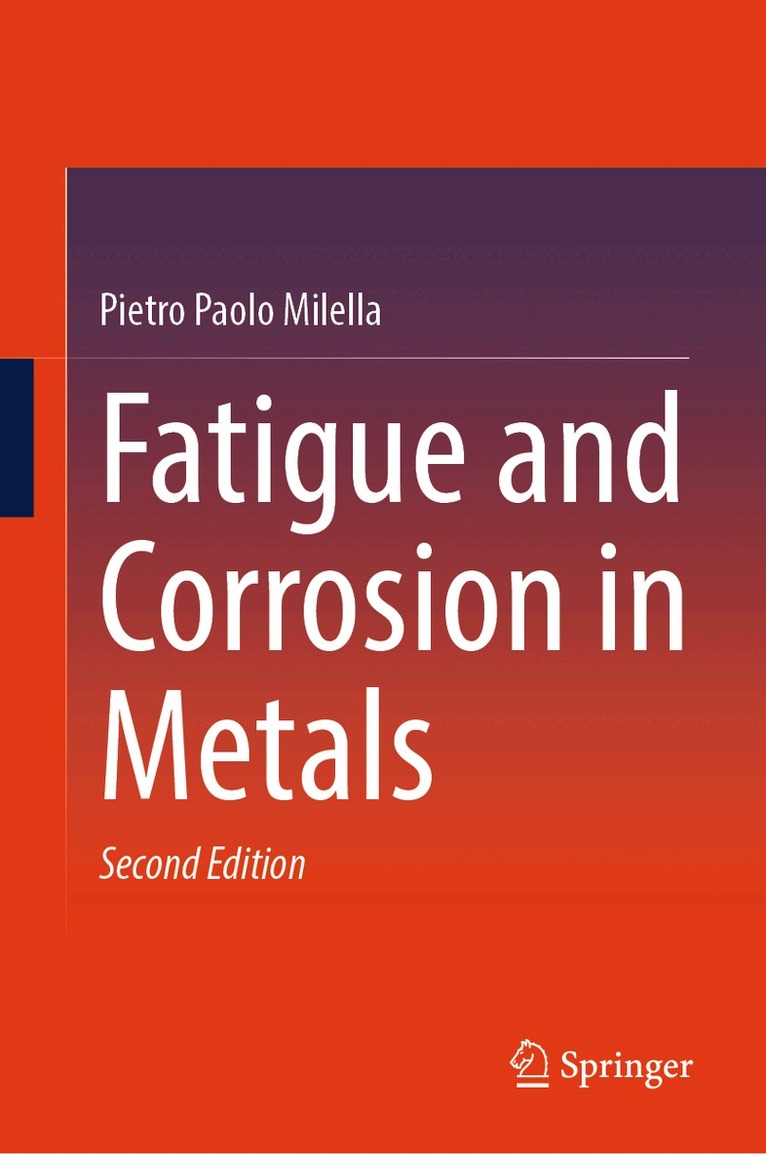
With its combination of readability, love for details and rigor, “Fatigue and Corrosion in Metals” has become an authoritative reference work that has quickly established itself as the most comprehensive guide for fatigue and corrosion design available to date. It has been adopted by several universities as reference textbook and consulted by professional engineers and scholars worldwide. This must-have Second Edition, completely revisited to account for advances in the decade since the previous edition was published, includes: · A new Chapter on damage nucleation.· A new Chapter on Very High Cycle Fatigue.· A new Chapter on fatigue testing and fatigue S-N curve determination.· Expanded analysis of surface treatments and inclusions effect on fatigue.· Expanded treatment of volume process effect on fatigue.· Expanded treatments of corrosion and hydrogen embrittlement.In addition to these enhancements, it includes a detailed treatment of· Phenomenology and morphological aspects of fatigue.· Surface treatments, conditions, and nonmetallic inclusions effects on fatigue.· Stress and strain-based fatigue analysis.· Mean stress and notch effect on fatigue.· Cumulative damage and multiaxial fatigue.· Probabilistic analysis application to fatigue design.· Fatigue in welds.· Stress corrosion and hydrogen embrittlement.· Fracture mechanics application to fatigue and corrosion. It serves as a valuable and needful information source on the desktop of anyone involved with fatigue and corrosion in metals.
1 182 kr
Skickas inom 10-15 vardagar
With its combination of readability, love for details and rigor, “Fatigue and Corrosion in Metals” has become an authoritative reference work that has quickly established itself as the most comprehensive guide for fatigue and corrosion design available to date. It has been adopted by several universities as reference textbook and consulted by professional engineers and scholars worldwide. This must-have Second Edition, completely revisited to account for advances in the decade since the previous edition was published, includes: · A new Chapter on damage nucleation.· A new Chapter on Very High Cycle Fatigue.· A new Chapter on fatigue testing and fatigue S-N curve determination.· Expanded analysis of surface treatments and inclusions effect on fatigue.· Expanded treatment of volume process effect on fatigue.· Expanded treatments of corrosion and hydrogen embrittlement.In addition to these enhancements, it includes a detailed treatment of· Phenomenology and morphological aspects of fatigue.· Surface treatments, conditions, and nonmetallic inclusions effects on fatigue.· Stress and strain-based fatigue analysis.· Mean stress and notch effect on fatigue.· Cumulative damage and multiaxial fatigue.· Probabilistic analysis application to fatigue design.· Fatigue in welds.· Stress corrosion and hydrogen embrittlement.· Fracture mechanics application to fatigue and corrosion. It serves as a valuable and needful information source on the desktop of anyone involved with fatigue and corrosion in metals.
2 975 kr
Kommande
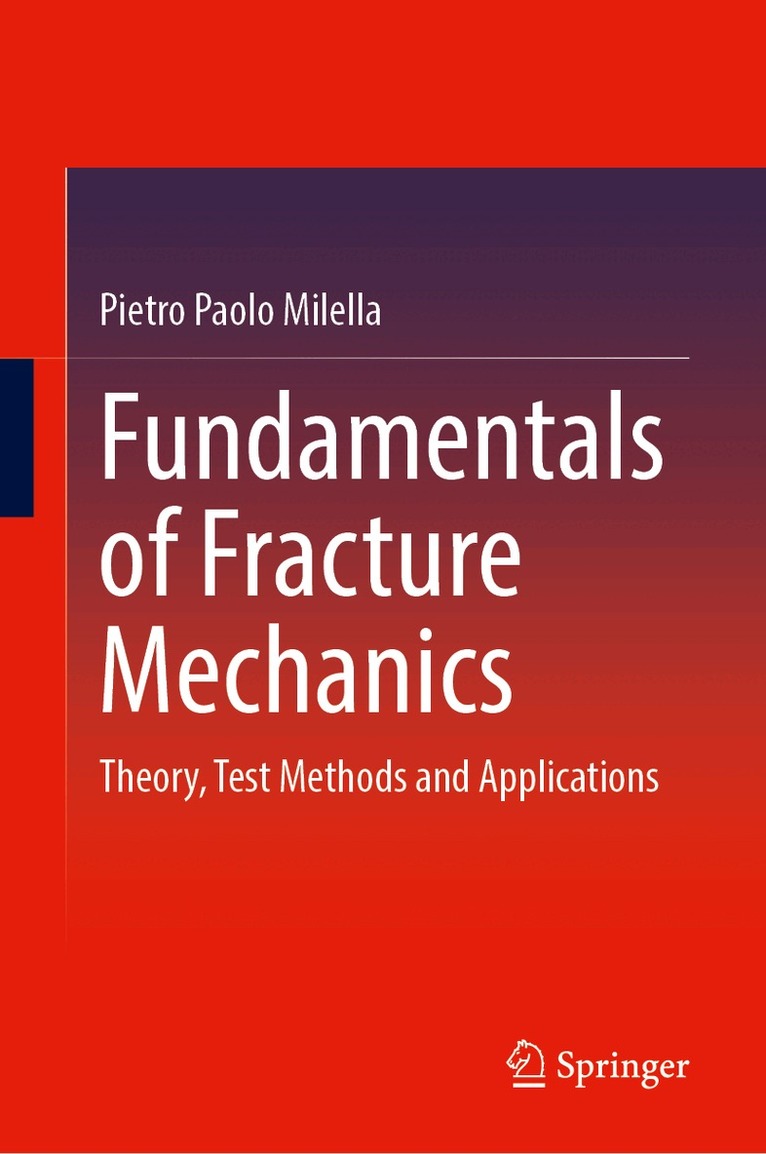
This book covers both the theory and applications of linear and non-linear fracture mechanics, together with the relevant testing methods, providing the essential knowledge of solid mechanics and materials science required for a complete understanding of fracture mechanics. This book on fracture mechanics is also a history of this science as it developed after World War II, particularly through the attempt to explain the inexplicable brittle fractures of Liberty ships. The reader is guided through the chapters from the early efforts to prevent brittle fracture using empirical approaches based on the transition temperature NDT—assessed with a test specimen introduced at the turn of the nineteenth century, the Charpy V notch specimen—and the Fracture Appearance Diagram, to the introduction of the stress intensity factor by G. Irwin, who founded the new science of Fracture Mechanics. The text then progresses to the most recent analytical approaches of Elastic Plastic Fracture Mechanics and General Yield. It also includes three full chapters dedicated to topics never addressed in previous fracture mechanics books, such as warm prestressing, metallurgical variability, and piping and vessel integrity assessment. With more than 800 graphs, drawings, and photographs—many of which have never appeared before in textbooks—this book can be considered one of the most comprehensive references available today on fracture mechanics and serves as a valuable resource for anyone involved in its theory and applications.