Ping-hui Liao - Böcker
Visar alla böcker från författaren Ping-hui Liao. Handla med fri frakt och snabb leverans.
3 produkter
3 produkter
1 212 kr
Skickas inom 3-6 vardagar
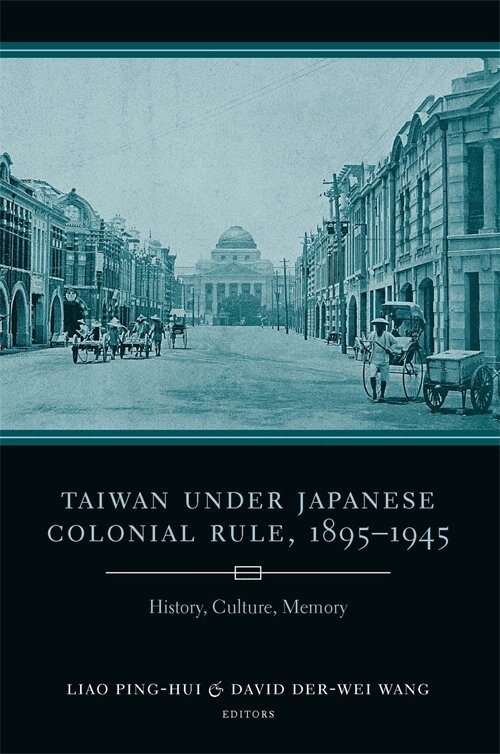
The first study of colonial Taiwan in English, this volume brings together seventeen essays by leading scholars to construct a comprehensive cultural history of Taiwan under Japanese rule. Contributors from the United States, Japan, and Taiwan explore a number of topics through a variety of theoretical, comparative, and postcolonial perspectives, painting a complex and nuanced portrait of a pivotal time in the formation of Taiwanese national identity. Essays are grouped into four categories: rethinking colonialism and modernity; colonial policy and cultural change; visual culture and literary expressions; and from colonial rule to postcolonial independence. Their unique analysis considers all elements of the Taiwanese colonial experience, concentrating on land surveys and the census; transcolonial coordination; the education and recruitment of the cultural elite; the evolution of print culture and national literature; the effects of subjugation, coercion, discrimination, and governmentality; and the root causes of the ethnic violence that dominated the postcolonial era.The contributors encourage readers to rethink issues concerning history and ethnicity, cultural hegemony and resistance, tradition and modernity, and the romancing of racial identity. Their examination not only provides a singular understanding of Taiwan's colonial past, but also offers insight into Taiwan's relationship with China, Japan, and the United States today. Focusing on a crucial period in which the culture and language of Taiwan, China, and Japan became inextricably linked, Taiwan Under Japanese Colonial Rule effectively broadens the critique of colonialism and modernity in East Asia.
745 kr
Skickas inom 10-15 vardagar
As the site of crossings of colonizers, settlers, merchants, and goods, island nations such as Taiwan have seen a rich confluence of cultures, where peoples and languages were either forced to mix or did so voluntarily, due largely to colonial conquest and their crucial role in world economy. Through an examination of socio-cultural phenomena, Comparatizing Taiwan situates Taiwan globally, comparatively, and relationally to bring out the nation’s innate richness. This book examines Taiwan in relation to other islands, cultures, or nations in terms of culture, geography, history, politics, and economy. Comparisons include China, Korea, Canada, Hong Kong, Macau, Ireland, Malaysia, Japan, New Zealand, South Africa, the United States and the Caribbean, and these comparisons present a number of different issues, alongside a range of sometimes divergent implications. By exploring Taiwan’s many relationalities, material as well as symbolic, over a significant historical and geographical span, the contributors move to expand the horizons of Taiwan studies and reveal the valuable insights that can be obtained by viewing nations, societies and cultures in comparison. Through this process, the book offers crucial reflections on how to compare and how to study small nations.This truly interdisciplinary book will be welcomed by students and scholars interested in Taiwan studies, Sinophone studies, comparative cultural studies, postcolonial studies, and literary studies.
2 306 kr
Skickas inom 10-15 vardagar
As the site of crossings of colonizers, settlers, merchants, and goods, island nations such as Taiwan have seen a rich confluence of cultures, where peoples and languages were either forced to mix or did so voluntarily, due largely to colonial conquest and their crucial role in world economy. Through an examination of socio-cultural phenomena, Comparatizing Taiwan situates Taiwan globally, comparatively, and relationally to bring out the nation’s innate richness. This book examines Taiwan in relation to other islands, cultures, or nations in terms of culture, geography, history, politics, and economy. Comparisons include China, Korea, Canada, Hong Kong, Macau, Ireland, Malaysia, Japan, New Zealand, South Africa, the United States and the Caribbean, and these comparisons present a number of different issues, alongside a range of sometimes divergent implications. By exploring Taiwan’s many relationalities, material as well as symbolic, over a significant historical and geographical span, the contributors move to expand the horizons of Taiwan studies and reveal the valuable insights that can be obtained by viewing nations, societies and cultures in comparison. Through this process, the book offers crucial reflections on how to compare and how to study small nations.This truly interdisciplinary book will be welcomed by students and scholars interested in Taiwan studies, Sinophone studies, comparative cultural studies, postcolonial studies, and literary studies.