David Der-wei Wang - Böcker
Visar alla böcker från författaren David Der-wei Wang. Handla med fri frakt och snabb leverans.
13 produkter
13 produkter
1 858 kr
Skickas inom 3-6 vardagar
David Wang's knowledge of modern Chinese literature and his readings provide reinterpretation of the three major Chinese novelists after Lu Xun, traditionally ranked as the dominant voice and influence in the genre of Chinese fictional realism. Wang offers a detailed exegesis of the writers' major works, arguing that Mao Dun, Lao She and Shen Congwen give rise to the polyphonic development of Chinese realism that Lu Xun primarily set into motion.
715 kr
Skickas inom 3-6 vardagar
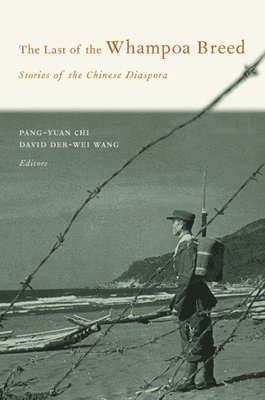
Whampoa Military Academy was China's first modern military institution. For decades the "Spirit of Whampoa" was invoked as the highest praise to all Chinese soldiers who guarded their nation heroically. But of all the battles these soldiers have fought, the most challenging one was the civil war that resulted in the "great divide" of China in the mid-twentieth century. In 1949 the Communists exiled a million soldiers and their families to compounds in Taiwan and cut off communication with mainland China for forty years. The Last of the Whampoa Breed tells the stories of the exiles written by their descendants, many of whom have become Taiwan's most important authors. The book is an important addition to the vastly underrepresented literature of Taiwan in translation and sheds light on the complex relationship between Taiwan and the People's Republic of China. Western readers will not at first recognize the experiences of these soldiers who were severed from a traditional past only to face unfulfilled promises and uncertain futures. Many of the exiles were doomed to live and die homeless and loveless.Yet these life stories reveal a magnanimous, natural dignity that has transcended prolonged mental suffering. "I Wanted to Go to War" describes the sadly ineffectual, even comic attempts to "recapture the mainland." The old soldier in "Tale of Two Strangers" asks to have his ashes scattered over both the land of his dreams and the island that has sheltered him for forty years. Some of the stories recount efforts to make peace with life in Taiwan, as in "Valley of Hesitation," and the second generation's struggles to find a place in the native island society as in "The Vanishing Ball" and "In Remembrance of My Buddies from the Military Compound." Narrating the homeland remembered and the homeland in reality, the stories in this book affirm that "we shall not let history be burned to mere ashes."
1 212 kr
Skickas inom 3-6 vardagar
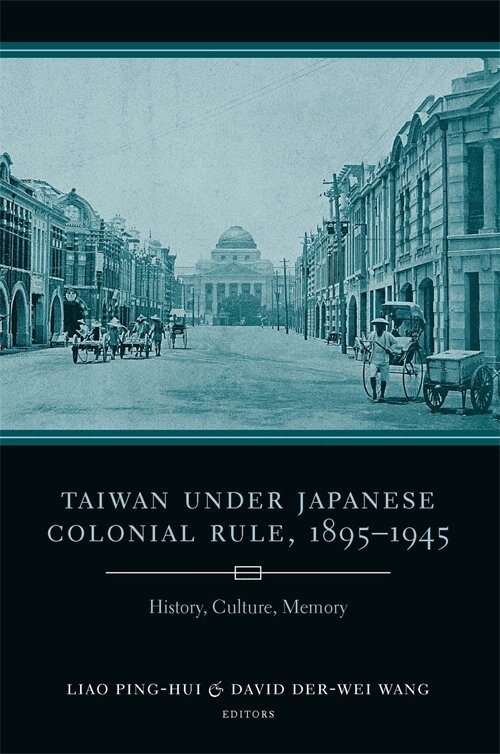
The first study of colonial Taiwan in English, this volume brings together seventeen essays by leading scholars to construct a comprehensive cultural history of Taiwan under Japanese rule. Contributors from the United States, Japan, and Taiwan explore a number of topics through a variety of theoretical, comparative, and postcolonial perspectives, painting a complex and nuanced portrait of a pivotal time in the formation of Taiwanese national identity. Essays are grouped into four categories: rethinking colonialism and modernity; colonial policy and cultural change; visual culture and literary expressions; and from colonial rule to postcolonial independence. Their unique analysis considers all elements of the Taiwanese colonial experience, concentrating on land surveys and the census; transcolonial coordination; the education and recruitment of the cultural elite; the evolution of print culture and national literature; the effects of subjugation, coercion, discrimination, and governmentality; and the root causes of the ethnic violence that dominated the postcolonial era.The contributors encourage readers to rethink issues concerning history and ethnicity, cultural hegemony and resistance, tradition and modernity, and the romancing of racial identity. Their examination not only provides a singular understanding of Taiwan's colonial past, but also offers insight into Taiwan's relationship with China, Japan, and the United States today. Focusing on a crucial period in which the culture and language of Taiwan, China, and Japan became inextricably linked, Taiwan Under Japanese Colonial Rule effectively broadens the critique of colonialism and modernity in East Asia.
544 kr
Skickas inom 10-15 vardagar
" . . . an important contribution to the study of recent Chinese literature." — Choice"This fine, scholarly survey of Chinese literature since 1949 . . . discusses such trends as modernism, nativism, realism, root-seeking and 'scar' literature, 'misty' poets, and political, feminist, and societal issues in modern Chinese literature." —Library JournalThis volume is a survey of modern Chinese literature in the second half of the twentieth century. It has three goals: (1) to introduce figures, works, movements, and debates that constitute the dynamics of Chinese literature from 1949 to the end of the century; (2) to depict the enunciative endeavors, ranging from ideological treatises to avant-garde experiments, that inform the polyphonic discourse of Chinese cultural politics; (3) to observe the historical factors that enacted the interplay of literary (post)modernities across the Chinese communities in the Mainland, Taiwan, Hong Kong, and overseas.
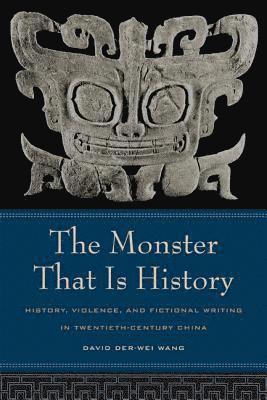
Monster That Is History
History, Violence, and Fictional Writing in Twentieth-Century China
Häftad, Engelska, 2004
680 kr
Skickas inom 3-6 vardagar
In ancient China a monster called Taowu was known for both its vicious nature and its power to see the past and the future. Over the centuries Taowu underwent many incarnations until it became identifiable with history itself. Since the seventeenth century, fictive accounts of history have accommodated themselves to the monstrous nature of Taowu. Moving effortlessly across the entire twentieth-century literary landscape, David Der-wei Wang delineates the many meanings of Chinese violence and its literary manifestations. Taking into account the campaigns of violence and brutality that have rocked generations of Chinese - often in the name of enlightenment, rationality, and utopian plenitude - this book places its arguments along two related axes: history and representation, modernity and monstrosity. Wang considers modern Chinese history as a complex of geopolitical, ethnic, gendered, and personal articulations of bygone and ongoing events. His discussion ranges from the politics of decapitation to the poetics of suicide, and from the typology of hunger and starvation to the technology of crime and punishment.
Del 249 - Harvard East Asian Monographs
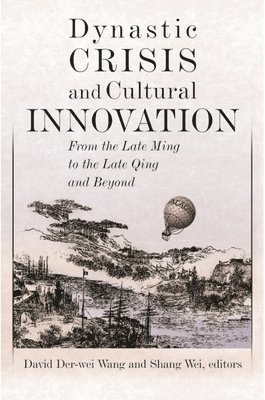
Dynastic Crisis and Cultural Innovation
From the Late Ming to the Late Qing and Beyond
Inbunden, Engelska, 2006
493 kr
Skickas inom 7-10 vardagar
This volume addresses cultural and literary transformation in the late Ming (1550-1644) and late Qing (1851-1911) eras. Although conventionally associated with a devastating sociopolitical crisis, each of these periods was also a time when Chinese culture was rejuvenated. Focusing on the twin themes of crisis and innovation, the seventeen chapters in this book aim to illuminate the late Ming and late Qing as eras of literary-cultural innovation during periods of imperial disintegration; to analyze linkages between the two periods and the radical heritage they bequeathed to the modern imagination; and to rethink the "premodernity" of the late Ming and late Qing in the context of the end of the age of modernism. The chapters touch on a remarkably wide spectrum of works, some never before discussed in English, such as poetry, drama, full-length novels, short stories, tanci narratives, newspaper articles, miscellanies, sketches, familiar essays, and public and private historical accounts. More important, they intersect on issues ranging from testimony about dynastic decline to the negotiation of authorial subjectivity, from the introduction of cultural technology to the renewal of literary convention.
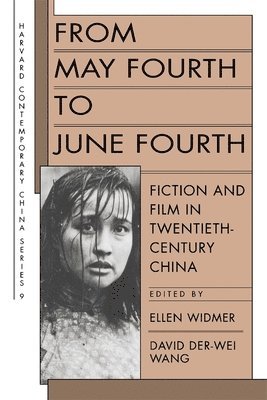
Del 9 - Harvard Contemporary China Series
From May Fourth to June Fourth
Fiction and Film in Twentieth-Century China
Häftad, Engelska, 1993
551 kr
Skickas inom 10-15 vardagar
What do the Chinese literature and film inspired by the Cultural Revolution (1966–1976) have in common with the Chinese literature and film of the May Fourth movement (1918–1930)? This new book demonstrates that these two periods of the highest literary and cinematic creativity in twentieth-century China share several aims: to liberate these narrative arts from previous aesthetic orthodoxies, to draw on foreign sources for inspiration, and to free individuals from social conformity.Although these consistencies seem readily apparent, with a sharper focus the distinguished contributors to this volume reveal that in many ways discontinuity, not continuity, prevails. Their analysis illuminates the powerful meeting place of language, imagery, and narrative with politics, history, and ideology in twentieth-century China.Drawing on a wide range of methodologies, from formal analysis to feminist criticism, from deconstruction to cultural critique, the authors demonstrate that the scholarship of modern Chinese literature and film has become integral to contemporary critical discourse. They respond to Eurocentric theories, but their ultimate concern is literature and film in China’s unique historical context. The volume illustrates three general issues preoccupying this century’s scholars: the conflict of the rural search for roots and the native soil movement versus the new strains of urban exoticism; the diacritics of voice, narrative mode, and intertextuality; and the reintroduction of issues surrounding gender and subjectivity.
415 kr
Skickas inom 7-10 vardagar
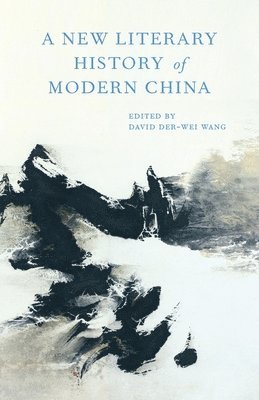
Literature, from the Chinese perspective, makes manifest the cosmic patterns that shape and complete the world—a process of “worlding” that is much more than mere representation. In that spirit, A New Literary History of Modern China looks beyond state-sanctioned works and official narratives to reveal China as it has seldom been seen before, through a rich spectrum of writings covering Chinese literature from the late-seventeenth century to the present.Featuring over 140 Chinese and non-Chinese contributors from throughout the world, this landmark volume explores unconventional forms as well as traditional genres—pop song lyrics and presidential speeches, political treatises and prison-house jottings, to name just a few. Major figures such as Lu Xun, Shen Congwen, Eileen Chang, and Mo Yan appear in a new light, while lesser-known works illuminate turning points in recent history with unexpected clarity and force. Many essays emphasize Chinese authors’ influence on foreign writers as well as China’s receptivity to outside literary influences. Contemporary works that engage with ethnic minorities and environmental issues take their place in the critical discussion, alongside writers who embraced Chinese traditions and others who resisted. Writers’ assessments of the popularity of translated foreign-language classics and avant-garde subjects refute the notion of China as an insular and inward-looking culture.A vibrant collection of contrasting voices and points of view, A New Literary History of Modern China is essential reading for anyone seeking a deeper understanding of China’s literary and cultural legacy.
1 097 kr
Skickas inom 7-10 vardagar
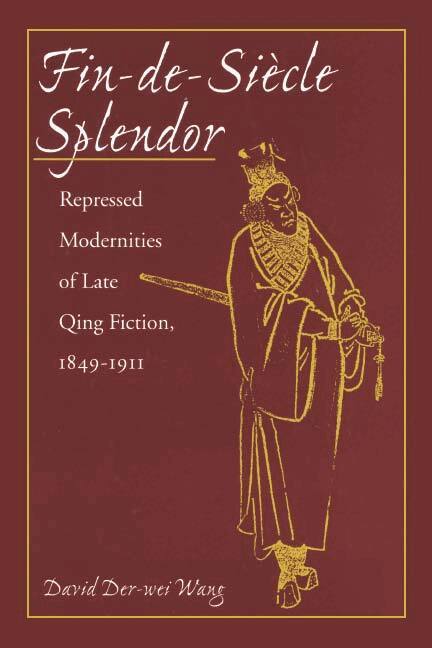
The reigning view of literary historians has been that the May Fourth movement of 1919 marks the division between the traditional and the modern in Chinese literature. This book argues that signs of reform and innovation can be discerned long before May Fourth, and that as China entered the arena of modern, international history in the late Qing, it was already developing its own complex matrix of incipient modernities. It demonstrates that late Qing fiction nurtured a creative, innovative poetics, one that was spurned by the reformers of the May Fourth generation in favor of Western-style realism.The author recognizes that a full account of modern Chinese fiction needs to ask why so many genres, styles, themes, and figures found in late imperial fiction were repressed by "modern" Chinese literary discourse. He focuses on four genres of late Qing fiction that have been either rudely dismissed in pejorative terms or simply ignored: depravity romances, court-case and chivalric cycles, grotesque exposés, and scientific fantasies. The author shows that in spite of the realist orthodoxy that has dominated Chinese literature since the May Fourth movement, these unwelcome genres have continually found their way back into mainstream discourse, their influence being increasingly evident in recent decades.This first comprehensive study of late Qing fiction discusses more than sixty works, at least half of which have rarely or never been dealt with by Western or Chinese scholars. Richly informed by contemporary literary theory, this book constitutes a polemical rethinking of the nature of Chinese literary and cultural modernity.
476 kr
Skickas inom 7-10 vardagar
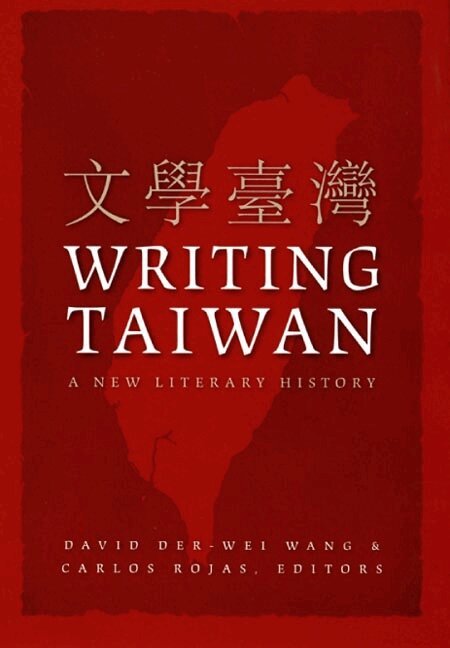
Writing Taiwan is the first volume in English to examine the entire span of modern Taiwan literature, from the first decades of the twentieth century to the present. In this collection, leading literary scholars based in Taiwan and the United States consider prominent Taiwanese authors and works in genres including poetry, travel writing, and realist, modernist, and postmodern fiction. The diversity of Taiwan literature is signaled by the range of authors treated, including Yang Chichang, who studied Japanese literature in Tokyo in the early 1930s and wrote all of his own poetry and fiction in Japanese; Li Yongping, an ethnic Chinese born in Malaysia and educated in Taiwan and the United States; and Liu Daren, who was born in mainland China and effectively exiled from Taiwan in the 1970s on account of his political activism.Because the island of Taiwan spent the first half of the century as a colony of Japan and the second half in an umbilical relationship to China, its literature challenges basic assumptions about what constitutes a “national literature.” Several contributors directly address the methodological and epistemological issues involved in writing about “Taiwan literature.” Other contributors investigate the cultural and political grounds from which specific genres and literary movements emerged. Still others explore themes of history and memory in Taiwan literature and tropes of space and geography, looking at representations of boundaries as well as the boundary-crossing global flows of commodities and capital. Like Taiwan’s history, modern Taiwan literature is rife with conflicting legacies and impulses. Writing Taiwan reveals a sense of its richness and diversity to English-language readers.Contributors. Yomi Braester, Sung-sheng Yvonne Chang, Fangming Chen, Lingchei Letty Chen, Chaoyang Liao, Ping-hui Liao, Joyce C. H. Liu, Kim-chu Ng, Carlos Rojas, Xiaobing Tang, Ban Wang, David Der-wei Wang, Gang Gary Xu, Michelle Yeh, Fenghuang Ying
Classicism in Digital Times
Cultural Remembrance As Reimagination in the Sinophone Cyberspace
Häftad, Engelska, 2024
164 kr
Skickas inom 7-10 vardagar
Topics covered include Chinese/Sinophone identity in the digital age; the challenges and opportunities of digital media, including the impact of censorship; decentralization versus the hegemonic exercise of cultural memory in China and beyond; cultural memory as imagined nostalgia in consumer culture; and the power of social media and popular culture in identity formation.ContributorsFangdai Chen, Yedong Chen, Tarryn Li-Min Chun, Rossella Ferrari, Chieh-ting Hsieh, Liang Luo, Michael O’Krent, Xiaofei Tian, Laura Vermeeren, David Der-wei Wang, Zhiyi Yang, Michelle Ye
324 kr
Skickas inom 7-10 vardagar
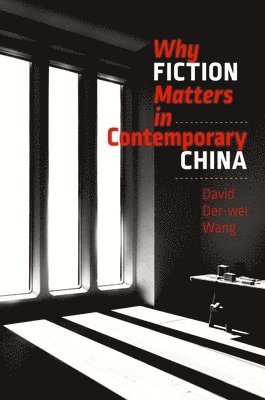
Contemporary discussions of China tend to focus on politics and economics, giving Chinese culture little if any attention. Why Fiction Matters in Contemporary China offers a corrective, revealing the crucial role that fiction plays in helping contemporary Chinese citizens understand themselves and their nation. Where history fails to address the consequences of man-made and natural atrocities, David Der-Wei Wang argues, fiction arises to bear witness to the immemorial and unforeseeable.Beginning by examining President Xi Jinping’s call in 2013 to “tell the good China story,” Wang illuminates how contemporary Chinese cultural politics have taken a “fictional turn,” which can trace its genealogy to early modern times. He does so by addressing a series of discourses by critics within China, including Liang Qichao, Lu Xun, and Shen Congwen, as well as critics from the West such as Arendt, Benjamin, and Deleuze. Wang highlights the variety and vitality of fictional works from China as well as the larger Sinophone world, ranging from science fiction to political allegory, erotic escapade to utopia and dystopia. The result is an insightful account of contemporary China, one that affords countless new insights and avenues for understanding.