Pitirim Sorokin - Böcker
Visar alla böcker från författaren Pitirim Sorokin. Handla med fri frakt och snabb leverans.
6 produkter
6 produkter
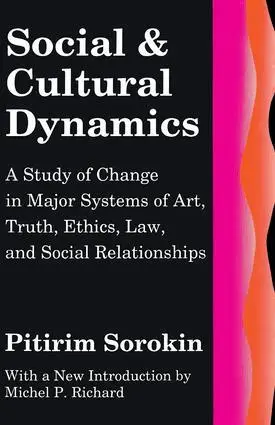
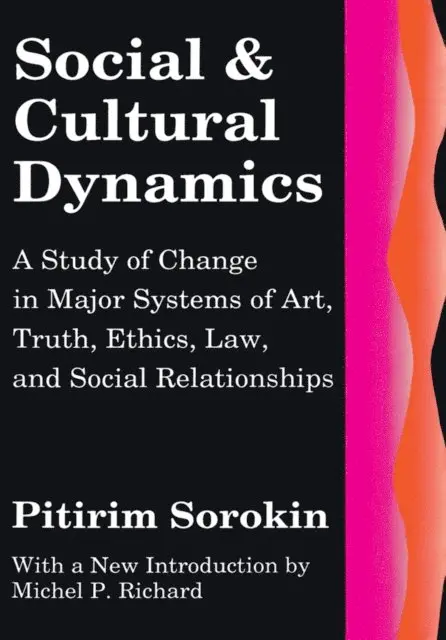
Social and Cultural Dynamics
A Study of Change in Major Systems of Art, Truth, Ethics, Law and Social Relationships
Häftad, Engelska, 1985
745 kr
Skickas inom 10-15 vardagar
This classic work is a revised and abridged version, in a single volume, of the work which more than any other catapulted Pitirim Sorokin into being one of the most famed figures of twentieth-century sociology. Its original publication occurred before World War II. This revised version, written some twenty years later, reflects a postwar environment. Earlier than most, Sorokin took the consequences of the breakdown of colonialism into account in discussing the renaissance of the great cultures of African and Asian civilization. Other than perhaps F.S.C. Northrop, no individual better incorporated the new role of the Indian, Chinese, Japanese, and Arabic peoples in this postwar world.Sorokin came to view social and cultural dynamics in terms of three major processes: a major shift of mankind's creative center from Europe to the Pacific; a progressive disintegration of the sensate culture; and finally the first blush of the emergence and growth of a new idealistic sociocultural order. This volume is perhaps most famous for revealing Sorokin's remarkable efforts to understand the relationship of war and peace to the process of social and political change. Contrary to received wisdom, he shows that the magnitude and depth of war grows in periods of social, cultural, and territorial expansion by the nation. In short, war is just as often a function of development as it is of social decay.This long-unavailable volume remains one of the major touchstones by which we can judge efforts to create an international social science. There are few areas of social or cultural life that are not covered—from painting, art, and music, to the ethos of universalism and particularism. These are terms which Sorokin introduced into the literature long before the rise of functional doctrines. For all those interested in cultural and historical processes, this volume provides the essence of Sorokin's remarkably prescient effort to achieve sociological transcendence, by taking seriously the place of spiritual beliefs in the structure of societies.
511 kr
Skickas inom 5-8 vardagar
397 kr
Skickas inom 5-8 vardagar
2 103 kr
Skickas inom 10-15 vardagar
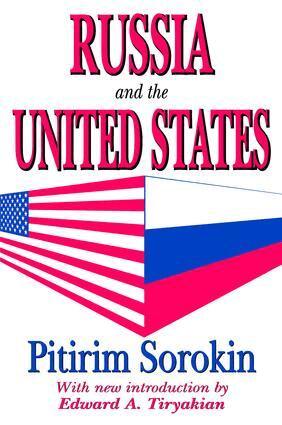
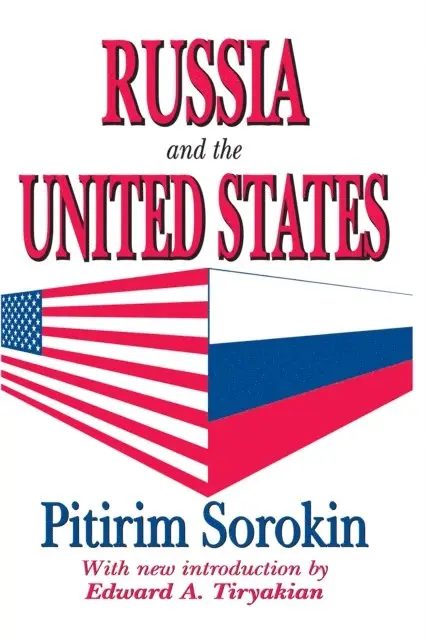
Throughout the Cold War, both the United States and the Soviet Union viewed themselves as saviors of the world, and each saw itself as working on behalf of humanity against the other. The unexpected implosion of the Soviet empire in 1989 brought an end to this bipolar world and left both nations uncertain about their relations to the world and to each other. Antagonism between the United States and Russia is rooted in a lack of knowledge of each other's culture and history. This pioneering volume, first published in 1944 at the height of the U.S.-Soviet alliance, steers us through the labyrinth of mutual ignorance that continues in the post-Cold War era. Pitirim Alexandrovitch Sorokin is one of the major figures of modern sociology. Born in rural Russia in 1889, he took an active part in the country's political life. Following his emigration to the United States, he strove to develop an insider's knowledge of his new home. Russia and the United States was written in the hope of fostering cooperation between the two countries in the postwar world. By noting a shared belief in each nation's historical role or "exceptionalism," Sorokin argues that there is a fundamental compatibility in the basic values of the two countries, facilitated by shared mental, cultural, and social attitudes that preceded the communist period.Without minimizing the tyrannical nature of the Soviet regime, Sorokin locates and traces the development of democratic tendencies in Russia. He also points out that American democracy has not been fully achieved and that both nations have yet to fulfill their ideals. Both countries have been melting pots of diverse racial, ethnic, national, and cultural groups and peoples, and from their multiethnic composition, Russia and the United States have each developed a rich and creative culture. Sorokin rejects the notion of diametrically opposed American and Russian "souls," in favor of an appreciation of shared values.
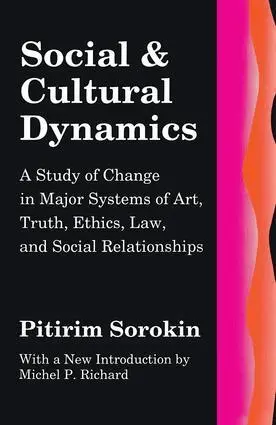
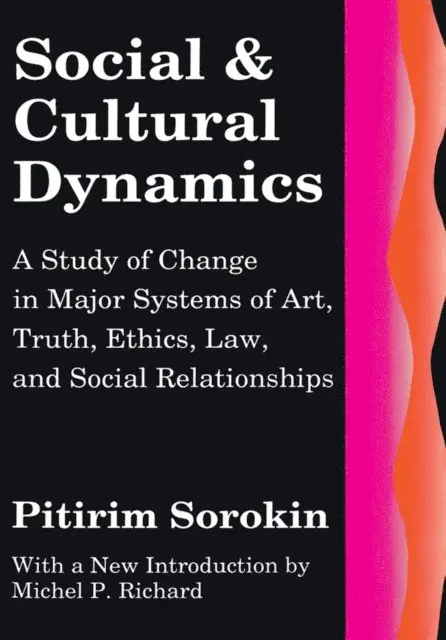
Social and Cultural Dynamics
A Study of Change in Major Systems of Art, Truth, Ethics, Law and Social Relationships
Inbunden, Engelska, 2017
2 238 kr
Skickas inom 10-15 vardagar
This classic work is a revised and abridged version, in a single volume, of the work which more than any other catapulted Pitirim Sorokin into being one of the most famed figures of twentieth-century sociology. Its original publication occurred before World War II. This revised version, written some twenty years later, reflects a postwar environment. Earlier than most, Sorokin took the consequences of the breakdown of colonialism into account in discussing the renaissance of the great cultures of African and Asian civilization. Other than perhaps F.S.C. Northrop, no individual better incorporated the new role of the Indian, Chinese, Japanese, and Arabic peoples in this postwar world.Sorokin came to view social and cultural dynamics in terms of three major processes: a major shift of mankind's creative center from Europe to the Pacific; a progressive disintegration of the sensate culture; and finally the first blush of the emergence and growth of a new idealistic sociocultural order. This volume is perhaps most famous for revealing Sorokin's remarkable efforts to understand the relationship of war and peace to the process of social and political change. Contrary to received wisdom, he shows that the magnitude and depth of war grows in periods of social, cultural, and territorial expansion by the nation. In short, war is just as often a function of development as it is of social decay.This long-unavailable volume remains one of the major touchstones by which we can judge efforts to create an international social science. There are few areas of social or cultural life that are not covered from painting, art, and music, to the ethos of universalism and particularism. These are terms which Sorokin introduced into the literature long before the rise of functional doctrines. For all those interested in cultural and historical processes, this volume provides the essence of Sorokin's remarkably prescient effort to achieve sociological transcendence, by taking seriously the place of spiritual beliefs in the structure of societies.
670 kr
Skickas inom 10-15 vardagar
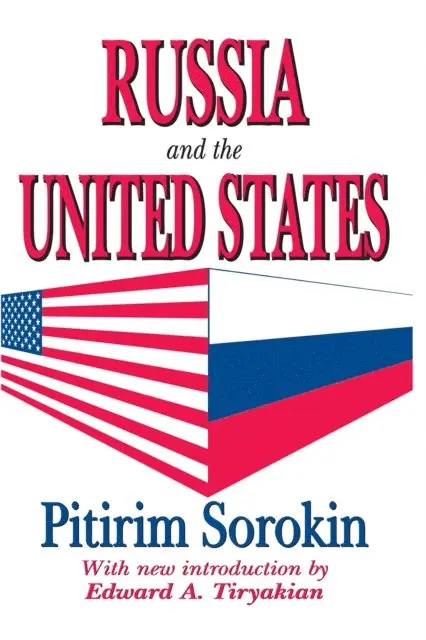
Throughout the Cold War, both the United States and the Soviet Union viewed themselves as saviors of the world, and each saw itself as working on behalf of humanity against the other. The unexpected implosion of the Soviet empire in 1989 brought an end to this bipolar world and left both nations uncertain about their relations to the world and to each other. Antagonism between the United States and Russia is rooted in a lack of knowledge of each other's culture and history. This pioneering volume, first published in 1944 at the height of the U.S.-Soviet alliance, steers us through the labyrinth of mutual ignorance that continues in the post-Cold War era. Pitirim Alexandrovitch Sorokin is one of the major figures of modern sociology. Born in rural Russia in 1889, he took an active part in the country's political life. Following his emigration to the United States, he strove to develop an insider's knowledge of his new home. Russia and the United States was written in the hope of fostering cooperation between the two countries in the postwar world. By noting a shared belief in each nation's historical role or "exceptionalism," Sorokin argues that there is a fundamental compatibility in the basic values of the two countries, facilitated by shared mental, cultural, and social attitudes that preceded the communist period.Without minimizing the tyrannical nature of the Soviet regime, Sorokin locates and traces the development of democratic tendencies in Russia. He also points out that American democracy has not been fully achieved and that both nations have yet to fulfill their ideals. Both countries have been melting pots of diverse racial, ethnic, national, and cultural groups and peoples, and from their multiethnic composition, Russia and the United States have each developed a rich and creative culture. Sorokin rejects the notion of diametrically opposed American and Russian "souls," in favor of an appreciation of shared values.