P.L. Chambers – författare
Visar alla böcker från författaren P.L. Chambers. Handla med fri frakt och snabb leverans.
8 produkter
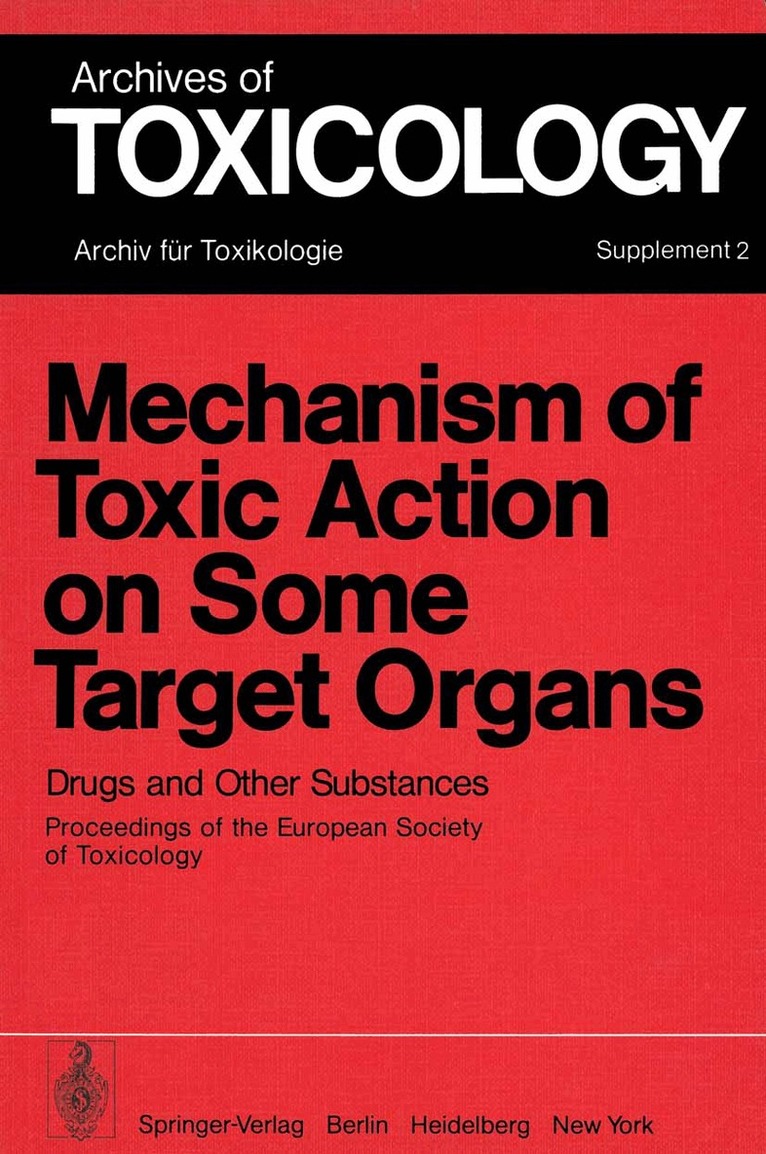
Mechanism of Toxic Action on Some Target Organs
Drugs and Other Substances
Häftad, 1979
1130 kr
Lägg i varukorg
The first oral contraceptive became available in 1960 and since then these sub stances, which have been used by millions of women, have probably been the most widely studied group of drugs in medical history (Drill, 1966, 1977). Part of the evaluation oCoral contraceptives has involved their …
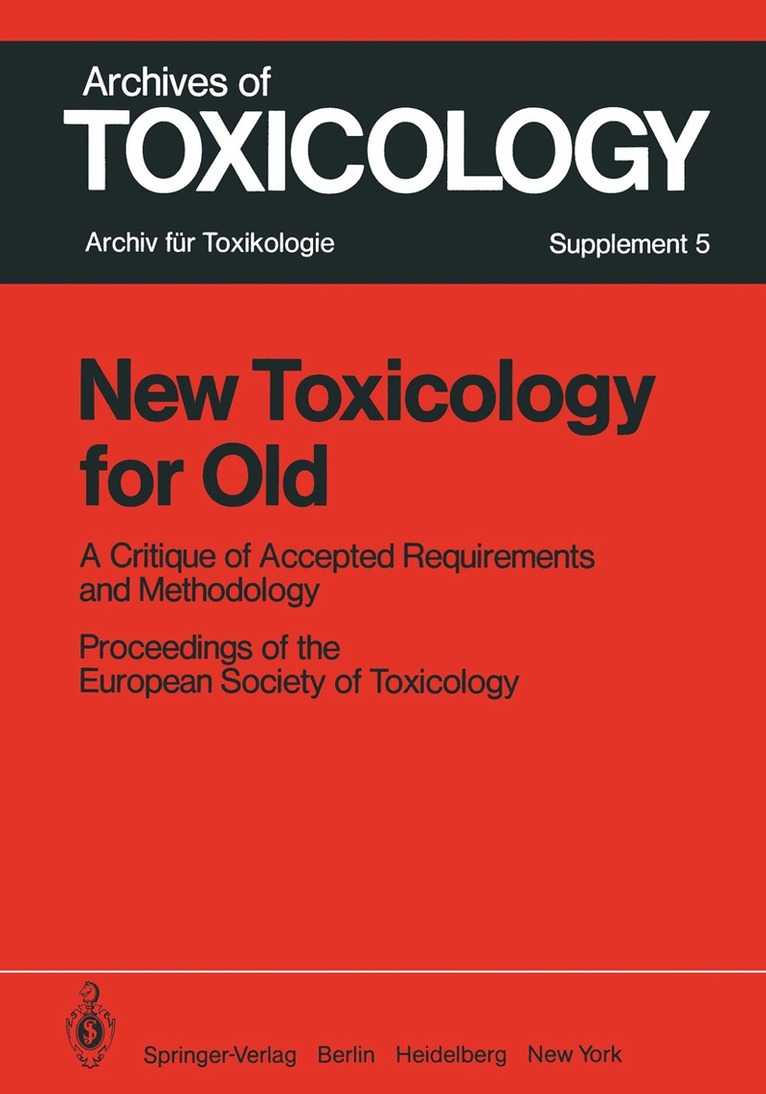
New Toxicology for Old
A Critique of Accepted Requirements and Methodology
Av P.L. Chambers, C.M. Chambers
Häftad, 1982
1130 kr
Lägg i varukorg
Nervous system is in the most cases a likely target for the untoward effects of chemicals. The harmful consequences affect primarily the individual but may also considerably strain the whole society. The consumption of ethanol is a glaring example (National Institute on Alcohol Abuse and Alcoholism …
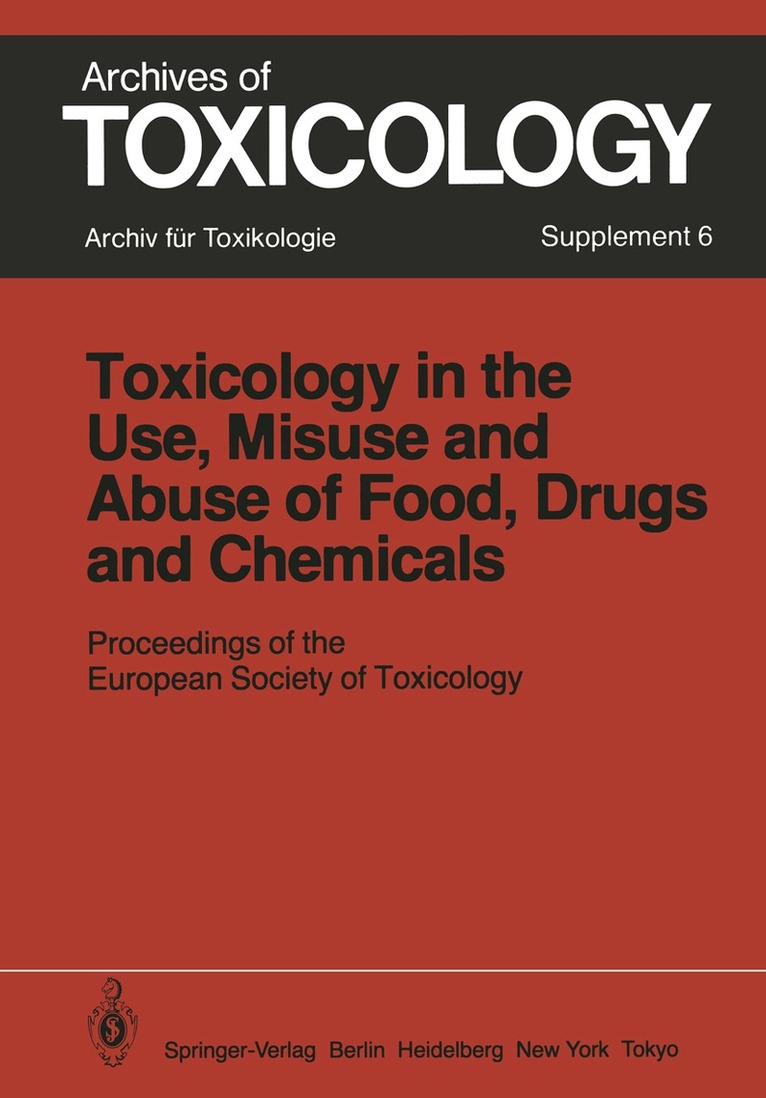
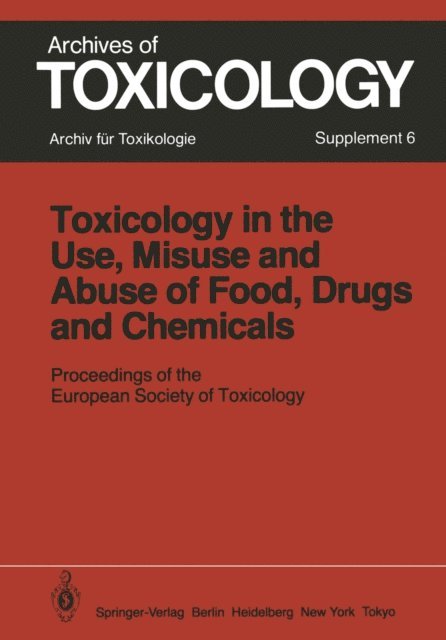
Toxicology in the Use, Misuse, and Abuse of Food, Drugs, and Chemicals
Proceedings of the European Society of Toxicology Meeting, held in Tel Aviv, March 21–24, 1982
Av P.L. Chambers, S. Gitter m. fl.
Häftad, 1983
1130 kr
Lägg i varukorg
Many chemotherapeutic agents introduced for use in humans are carcinogenic in laboratory animals (Conklin et al. 1965; Shimkin et al. 1966; Griswold et al. 1968; Harris 1976). However, initially their beneficial effect in disseminated cancer was of such short duration that the inevitable death of …
Receptors and Other Targets for Toxic Substances
Proceedings of the European Society of Toxicology, Meeting Held in Budapest, June 11–14, 1984
Av P.L. Chambers, E. Cholnoky m. fl.
Häftad, 1985
1130 kr
Lägg i varukorg
Trichloroethylene (TRI), administered orally at high doses for 18 months has been shown to increase the incidence of hepatocellular carcinoma in B6C3F 1 mice but not Osborne-Mendel rats (NCI, 1976). The interpretation of these studies has been confounded due to the presence of epoxide stabilizers …
Mechanism of Toxic Action on Some Target Organs
Drugs and Other Substances
E-bok, 2013
1502 kr
Lägg i varukorg
The first oral contraceptive became available in 1960 and since then these sub stances, which have been used by millions of women, have probably been the most widely studied group of drugs in medical history (Drill, 1966, 1977). Part of the evaluation oCoral contraceptives has involved their …
New Toxicology for Old
A Critique of Accepted Requirements and Methodology
Av C.M. Chambers, P.L. Chambers
E-bok, 2012
1502 kr
Lägg i varukorg
Nervous system is in the most cases a likely target for the untoward effects of chemicals. The harmful consequences affect primarily the individual but may also considerably strain the whole society. The consumption of ethanol is a glaring example (National Institute on Alcohol Abuse and Alcoholism …
Toxicology in the Use, Misuse, and Abuse of Food, Drugs, and Chemicals
Proceedings of the European Society of Toxicology Meeting, held in Tel Aviv, March 21–24, 1982
Av C.M. Chambers, S. Gitter m. fl.
E-bok, 2012
1502 kr
Lägg i varukorg
Many chemotherapeutic agents introduced for use in humans are carcinogenic in laboratory animals (Conklin et al. 1965; Shimkin et al. 1966; Griswold et al. 1968; Harris 1976). However, initially their beneficial effect in disseminated cancer was of such short duration that the inevitable death of …
Receptors and Other Targets for Toxic Substances
Proceedings of the European Society of Toxicology, Meeting Held in Budapest, June 11–14, 1984
Av C. Chambers, E. Cholnoky m. fl.
E-bok, 2012
1502 kr
Lägg i varukorg