Plato Plato – författare
Visar alla böcker från författaren Plato Plato. Handla med fri frakt och snabb leverans.
14 produkter
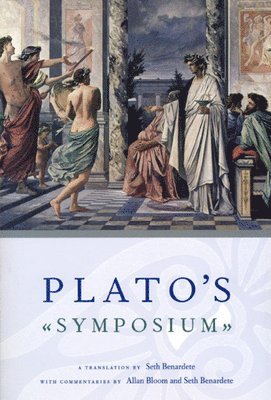
Plato`s Symposium – A Translation by Seth Benardete with Commentaries by Allan Bloom and Seth Benardete
Av Plato Plato, Seth Benardete
Häftad, 2001
183 kr
Lägg i varukorg
Plato, Allan Bloom wrote, is "the most erotic of philosophers," and his Symposium is one of the greatest works on the nature of love ever written. This new edition brings together the English translation of the renowned Plato scholar and translator, Seth Benardete, with two illuminating …
Dialogues of Plato, Volume 4
Plato?s Parmenides, Revised Edition
Av Plato Plato
E-bok, 2008
656 kr
Lägg i varukorg
Among Plato's later dialogues, the Parmenides is one of the most significant. Not only a document of profound philosophical importance in its own right, it also contributes to the understanding of Platonic dialogues that followed it, and it exhibits the foundations of the physics and ontology that …
Dialogues of Plato, Volume 3
Ion, Hippias Minor, Laches, Protagoras
Av Plato Plato
E-bok, 2008
489 kr
Lägg i varukorg
R.E. Allen's superb new translations of four Socratic dialogues—Ion, Hippias Minor, Laches, and Protagoras—bring these classic texts to life for modern readers. Allen introduces and comments on the dialogues in an accessible way, inviting the reader to reexamine the issues continually raised in …
Six Great Dialogues
Av Plato Plato
Häftad, 2007
5,0 utav 5 stjärnor. Totalt antal röster: (1)
143 kr
Lägg i varukorg
World Classics Library: Plato
The Republic, Charmides, Meno, Gorgias, Parmenides, Symposium, Euthyphro, Apology, Crito, Phaedo
Av Plato Plato
E-bok, 2020
50 kr
Lägg i varukorg
"The European philosophical tradition ... consists of a series of footnotes to Plato." - Alfred North Whitehead Plato''s ideas on morality, reason, justice, and religion have laid the foundations of Western philosophy. This beautiful jacketed hardback collects some of his most celebrated writings, …
Republic
Av Plato Plato
Häftad, 2025
103 kr
Lägg i varukorg
Presented in the form of a dialogue between Socrates and three different interlocutors, this classic text is an enquiry into the notion of a perfect community and the ideal individual within it. During the conversation, other questions are raised: what is goodness? What is reality? And what is …
Republic
Av Plato Plato
E-bok, 2017
15 kr
Lägg i varukorg
The Republic is one of the earliest political treatises ever written and Plato''s most remarkable work. Through a fictional dialogue with Socrates, Plato examines the nature of justice, the character of the city-state, and what it means to be a just man. Plato argued that power corrupts and the …
Symposium
(Illustrated)
Av Plato Plato
E-bok, 2026
54 kr
Lägg i varukorg
The Symposium is a philosophical text by Plato dated c. 385-370 BC. It depicts a friendly contest of extemporaneous speeches given by a group of notable men attending a banquet. The men include the philosopher Socrates, the general and political figure Alcibiades, and the comic playwright …
Complete Plato
Av Plato Plato
E-bok, 2026
111 kr
Lägg i varukorg
Plato (428/427-348/347 BCE) was a Greek philosopher and mathematician of the Classic Age who founded the Academy of Athens. Noted as a student of Socrates, Plato has distinguished himself as one of the founders of Western philosophy by recording the teachings of his master and his own philosophies …
Euthyphro
(Illustrated)
Av Plato Plato
E-bok, 2026
56 kr
Lägg i varukorg
Euthyphro (right-minded or sincere) is one of Plato's early dialogues, dated to after 399 BC. Taking place during the weeks leading up to Socrates' trial, the dialogue features Socrates and Euthyphro, a religious expert also mentioned at Cratylus 396a and 396d, attempting to define piety or …
Republic
(Illustrated)
Av Plato Plato
E-bok, 2026
80 kr
Lägg i varukorg
The Republic is a Socratic dialogue written by Plato around 380 BC concerning the definition of justice and the order and character of the just city-state and the just man. The dramatic date of the dialogue has been much debated and though it must take place some time during the Peloponnesian War, …
Timaeus
(Illustrated)
Av Plato Plato
E-bok, 2026
55 kr
Lägg i varukorg
Of all the writings of Plato the Timaeus is the most obscure and repulsive to the modern reader, and has nevertheless had the greatest influence over the ancient and mediaeval world. The obscurity arises in the infancy of physical science, out of the confusion of theological, mathematical, and …
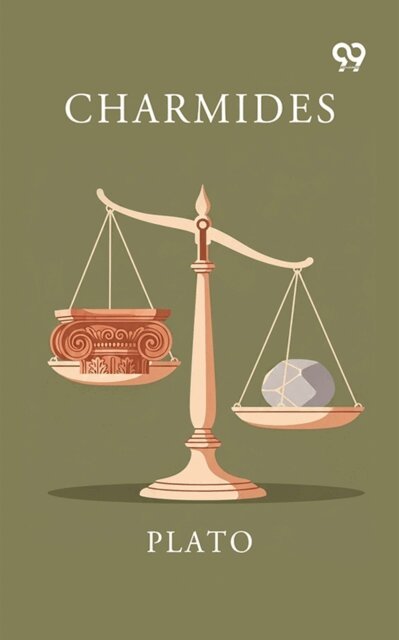
Charmides
Av Plato, Plato Plato
E-bok, 2025
15 kr
Lägg i varukorg
Charmides examines the pursuit of temperance through an extended conversation that takes place during a casual gathering. Instead of focusing on individuals, the work studies the difficulty of defining self-control and inner discipline. The opening scene introduces a return home after time spent in …
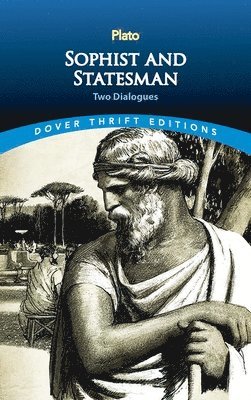
Statesman & Sophist: Two Dialogues
Av Plato Plato
Häftad, 2018
52 kr
Tillfälligt slut
These two dialogues explore a vital concern of a democratic society: how to define the special abilities and qualities that make a genuine statesman. They further examine the distinction between an authentic statesman and the sophist, an individual who pretends to be a statesman but lacks the …