Policy World Bank - Böcker
Visar alla böcker från författaren Policy World Bank. Handla med fri frakt och snabb leverans.
6 produkter
6 produkter
557 kr
Skickas inom 10-15 vardagar
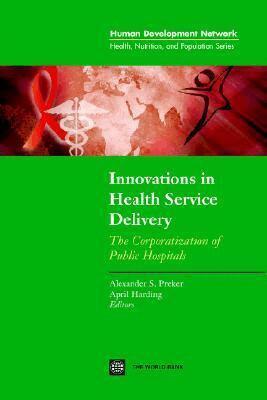
Hospitals remain an important source of critical health care services in most countries, providing both basic and advanced care to their populations. They are often the provider ""of last resort"" for the critically ill and poor. Yet hospitals also make up the largest expenditure category of the health system both in developed and developing countries. Innovations in Health Service Delivery offers insights into recent trends in the reform of public hospitals, with a focus on organizational changes such as increased management autonomy, corporatization, and privatization. This book also provides an opportunity to further understand the objectives, design, implementation, and evaluation of such reforms.
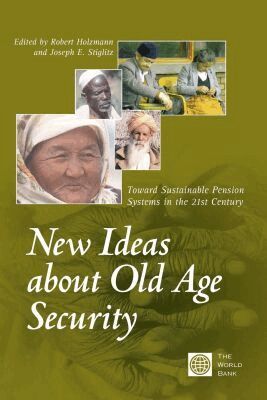
New Ideas About Old Age Security
Toward Sustainable Pension Systems in the 21st Century
Häftad, Engelska, 2001
447 kr
Skickas inom 10-15 vardagar
Policymakers worldwide are struggling to adapt their pension systems to the reality of aging populations, globalization, and tightening budgets. The World Bank actively supports these policymakers by helping them to identify the economic and demographic challenges facing them to highlighting potential policy responses and providing implementation support. New Ideas about Old Age Security is a selection of papers presented at a conference in September 1999 convened by the World Bank and attended by leading academics and policymakers from around the world. These papers, which have subsequently been revised, contain a sample of the most recent thinking in the global debate over pension reform. The papers in this volume explore a wide variety of pension reform issues. Some of the topics covered in this book include new approaches to multi-pillar pension reform, the relevance of index funds for pension investment in equities, and managing public pension reserves.
From Early Child Development to Human Development
Investing in Our Children's Future
Häftad, Engelska, 2002
434 kr
Skickas inom 10-15 vardagar
It is never too early to become involved but it can easily be too late. Armed with such alarming statistics as 125 million primary-school age children are not in school; another 150 million children drop out of primary school before they complete four years of education; and almost one-half of the children in the least developed countries of the world do not have access to primary education; the World Bank convened a global conference in April 2000, to address the benefits and challenges of investing in early childhood development. Scientific studies now show how critical the first few years of a child's life are in terms of later physical and mental health, behavior, and capacity to learn. The Millennium Development Goals endorsed by 189 member countries of the United Nations and the World Bank are targets for reducing global poverty. The goals specifically address the need for universal primary education as a means for breaking the cycle of poverty in individual families and in countries. With the publication of this volume, which contains the conference proceedings, the World Bank hopes to encourage a broader investment by countries, companies, organizations and private sector institutions in early child development.
327 kr
Skickas inom 10-15 vardagar
The world of religion has been unacknowledged and often unseen by many development practitioners. The areas of common concern and activity, though, are numerous and have great importance in the global effort to fight poverty. Mind, Heart and Soul in the Fight Against Poverty explores the diversity of collaboration between faith institutions and development agencies. ranging from community level interventions in support of excluded populations, work on education, health, and HIV/AIDS, restoring communities after conflicts, and global efforts to bring greater clarity and meaning to challenges such as poor country debt, labor and the struggle against poverty. What is emerging is a set of new partnerships which are founded on common concerns for the welfare of poor communities and the global cause of social justice. The need for broader and clearer insight, and for creative efforts to see and understand the whole, emerge as fundamental lessons of recent decades of development experience. Mind, Heart and Soul in the Fight Against Poverty seeks to delve more deeply into these lessons, stressing the centrality of faith in the human experience.
392 kr
Skickas inom 10-15 vardagar
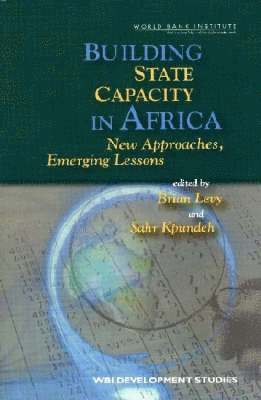
The World Bank and other donors are fully committed to modalities of development support that put countries in the driver's seat, with the poverty reduction strategy process-prepared by national governments, on the basis of close consultation with civil society-providing the framework for that support. An effective poverty reduction strategy process and a productive partnership can be built only on a platform of strong public capacity: capacity to formulate policies; capacity to build consensus; capacity to implement reform; and capacity to monitor results, learn lessons, and adapt accordingly. Building the requisite capacities turns out to be a formidable challenge. For these reasons, enhancing the capacity of African states has risen to the top of the continent's development agenda. In recent years, a number of African governments have moved forward with new-style programs to build public sector capacity. Building State Capacity in Africa aims to share some of the lessons for the design and implementation of public sector capacity building that are emerging from this new generation of operational practice. It also exemplifies an increasingly collaborative way of working within the World Bank Group. This book draws on in-depth Bank research and research projects were done in collaboration with African development partners and scholars. The editors contend that this model of working together constitutes the most effective way for the World Bank Group to contribute, in its role as a knowledge Bank, to the challenge of building state capacity in Africa.
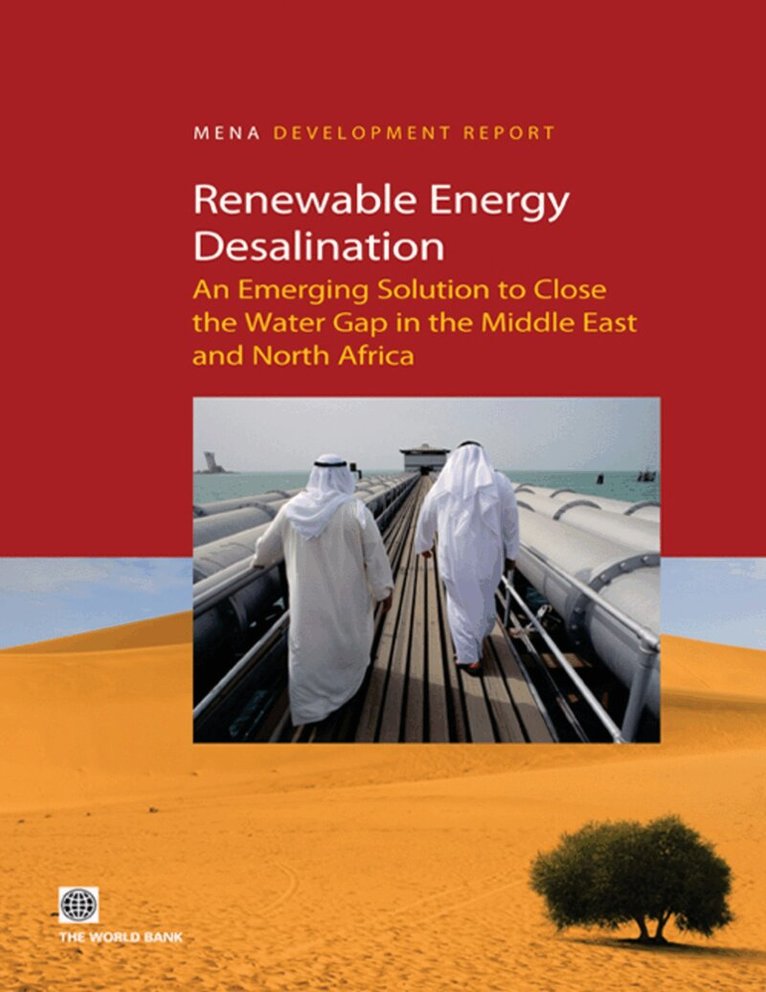
Renewable Energy Desalination
An Emerging Solution to Close the Water Gap in the Middle East and North Africa
Häftad, Engelska, 2012
274 kr
Skickas inom 10-15 vardagar
The Middle East and North Africa (MENA) region can be considered as the most water-scarce region of the world. Large-scale water management problems are already apparent in the region. Aquifers are over-pumped, water quality is deteriorating, and water supply and irrigation services are often rationed - wiith consequences for human health, agricultural productivity, and the environment. As the MENA region’s population doubles over the next 40 years, per capita water availability will fall by more than 50 percent by 2050. Moreover, climate change will affect weather and precipitation patterns with the consequence that the MENA region may see more frequent and severe droughts. Nevertheless, this very scarce water is managed poorly. Inefficiencies are common in the agriculture sector: irrigation consumes the lion’s share of water extracted and yet agricultural water use efficiencies in some countries are abnormally low. Municipal and industrial water systems have abnormally high unaccounted-for water, and utilities are financially unsustainable. As a result, most countries overexploit their fossil aquifers to meet the water demand gap. Many countries in the Region are using desalinated water as an alternative mix in their water supply portfolio. However, desalinated water is expensive, and the desalination process is energy intensive. For example, Saudi Arabia is desalinating more than 1 million cubic meters of water every day for its municipal and industrial water supply needs, burning approximately 10 percent of its daily oil production. If the status quo continues, the projection is that, by 2050, Saudi Arabia and many other countries in the Region will consume for desalination most of the oil that they produce. Overexploitation of fossil aquifers is not sustainable, nor is the use of fossil fuel for desalination to meet the water gap. The World Bank has undertaken this initiative to generate an improved understanding of water issues in the region and an overview of available options under different scenarios of water supply and demand management. This study applies state-of-the-art approaches to assess the current and future water demand, supply, and shortage in the 22 MENA countries. The analyses are based on results of nine global climate change models. It explores options, and associated costs, to overcome water shortage. To overcome current and future water shortage countries have a range of options at their disposal to respond and adapt. These options fall in three broad categories: increasing productivity, expanding supply, and reducing demand. For each of these three categories, typical options are explored. The study indicates that a mix of country-specific approaches is required. It presents a methodology to prioritize options to bridge the water gap, using the marginal cost of water approach. A paradigm shift is required to make better use of desert land, desert sun and salty water”all of which are abundant in the Region”to ensure sustainable growth. While aspiring to bring new water and new energy into the water and energy mix for the Region, the paradigm shift also should focus on managing better the water that is already available.