Prabhakar Sharma - Böcker
Visar alla böcker från författaren Prabhakar Sharma. Handla med fri frakt och snabb leverans.
3 produkter
3 produkter
1 946 kr
Skickas inom 7-10 vardagar
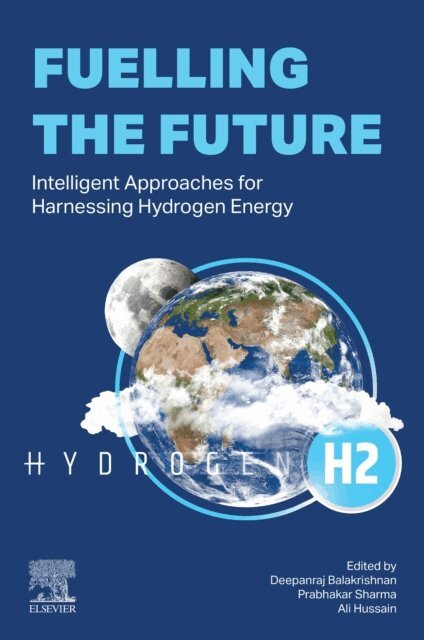
Fuelling the Future: Intelligent Approaches for Harnessing Hydrogen Energy explores the transformative potential of hydrogen as a clean, renewable energy source. The opening chapter delves into the global need to shift towards sustainable energy solutions, emphasizing hydrogen’s role in reducing carbon emissions and supporting the transition to a greener economy. It introduces machine learning as a cutting-edge tool for solving complex challenges associated with hydrogen production and utilization, offering a glimpse into a smarter, data-driven approach to energy management. It also navigates key issues such as scalability, cost-efficiency, and environmental impacts, ensuring a holistic understanding of hydrogen’s future in energy systems.Beyond optimization, the book addresses practical applications of hydrogen energy in transportation, industry, and storage.Provides insights into the latest advancements in hydrogen production, storage, and utilization, fostering a deep understanding of the pivotal role hydrogen plays in a sustainable energy ecosystemExplores practical applications of machine learning, including predictive maintenance, energy consumption forecasting, and adaptive control systems, empowering industries to maximize efficiency and minimize environmental impactPresents real-world case studies that showcase the successful implementation of hydrogen energy and machine learning strategies across diverse industries, providing valuable lessons and benchmarks
1 934 kr
Kommande
Energy Storage Technologies: Pathways to a Sustainable Future addresses the urgent need for a unified scientific resource in the rapidly evolving energy storage sector. As global energy systems transition toward decarbonization, the demand for reliable, scalable, and intelligent storage solutions has intensified. This reference responds to the fragmented landscape of existing literature, offering researchers, engineers, and educators an authoritative guide that bridges scientific fundamentals with emerging interdisciplinary advances, including artificial intelligence, optimization, and system integration. The contents span the full spectrum of energy storage mechanisms, from electrochemical batteries and hydrogen storage to thermal, mechanical, and hybrid systems. Dedicated chapters cover AI-driven management, mathematical and data-driven optimization, smart grid integration, materials innovation, cybersecurity, and policy frameworks. Each chapter is designed for modular use, with clear definitions, methods, case studies, and future outlooks, supporting both academic instruction and professional development. The reference equips its audience with the latest technical knowledge, practical applications, and strategic insights. It empowers users to innovate, deploy, and manage energy storage systems that advance sustainability, resilience, and affordability in global energy infrastructures.Explores advanced energy storage methods including solid-state batteries and hydrogen to thermal, hybrid, and next-gen materials, offering a complete spectrum of established and emerging solutionsIntegrates artificial intelligence by exploring machine learning for predictive maintenance, charging strategies, system design, and performance breakthroughsPresents system-level analysis of storage integration with smart grids and renewable energyAddresses sustainability, safety, and material innovation for next-generation storage solutions
1 996 kr
Skickas inom 7-10 vardagar
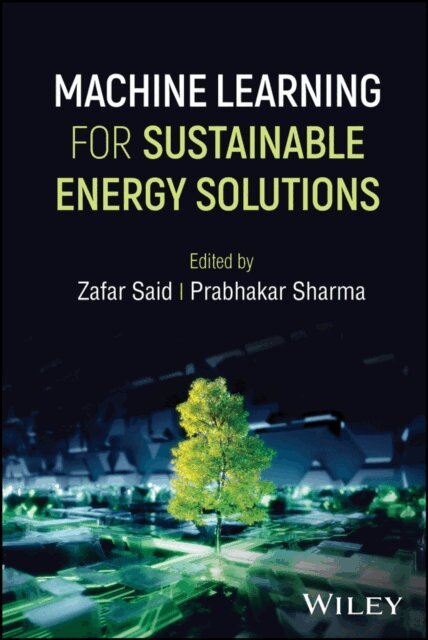
Comprehensive insights into integrating modern engineering techniques with machine learning and renewable energy to create a more sustainable world Through an interdisciplinary approach, Machine Learning for Sustainable Energy Solutions provides comprehensive insights into integrating modern engineering techniques such as machine learning (ML), artificial intelligence (AI), nanotechnology, digital twins, and the Internet of Things (IoT) with renewable energy. Each chapter is based on modern research and enhanced by experimental or simulated data. The book offers a thorough review of several energy storage techniques, helping readers fully grasp the larger background in which chemical, thermal, electrical, mechanical, and machine learning technologies may be used to evaluate, categorize, and maximize different storage systems. The book also reviews the confluence of the Internet of Things (IoT) and machine learning for real-time digestive parameter control and monitoring, along with the cooperative importance of mathematical modeling and artificial intelligence in maximizing reactor performance, gas output, and operational stability. Machine Learning for Sustainable Energy Solutions includes information on: Bio-based energy generation from biomass gasification and biohydrogenUsage of hybrid approaches, support vector machines, and neural networks to anticipate and maximize bioenergy production from challenging organic feedstocksHydrogen-powered dual-fuel engines, covering response surface methodology (RSM) for multi-attribute optimizationScalable, experimentally confirmed ML-based solutions for long-standing problems like sedimentation, pumping losses, and stability of nanofluidsThe growing and important use of nanotechnology in energy systems, particularly in engine emissions management, energy storage, and heat transfer improvementsMachine Learning for Sustainable Energy Solutions is an essential reference for professionals, researchers, educators, and students working in the fields of energy, environmental science, and machine learning. The book also helps decision-makers in various fields by providing them the required knowledge to make informed choices on sustainable practices and policies.