Prabhat Patnaik - Böcker
Visar alla böcker från författaren Prabhat Patnaik. Handla med fri frakt och snabb leverans.
18 produkter
18 produkter
2 079 kr
Skickas inom 5-8 vardagar
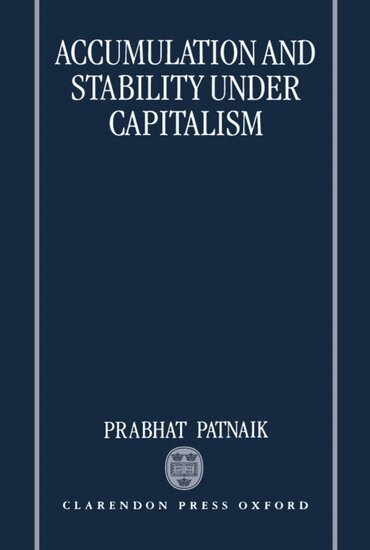
Prabhat Patnaik's starting point is the fundamental question of how we can explain the resilience and durability of capitalist economies - after all, the writings of most of the giants among economists have been permeated by a sense of the transitoriness of capitalism. His argument is that the existence of a periphery of less developed countries provides a buffer that allows (relatively) crisis-free and non-inflationary growth in the capitalist core. The analysis unifies two fields that are normally separate: models of growth and stabilization policy in advanced economies and the economics of open developing economies. Consequently, Patnaik embraces both a thorough analysis of modern fiscal, monetary, and inflation policy in advanced capitalist economies and the constraints that systematically hinder development in less developed countries.Accumulation and Stability under Capitalism uses macroeconomic principles to solve problems currently addressed with microeconomic tools, establishing macroeconomics as a framework for analysing phenomena as wide-ranging as migration, imperialist systems, technological change, and labour markets. In the tradition of Keynes, Harrod and Domar, Marx, and Kalecki, it offers an alternative path to the choice-theoretic models that have appeared to be the only modern analytical path.
698 kr
Skickas inom 11-20 vardagar
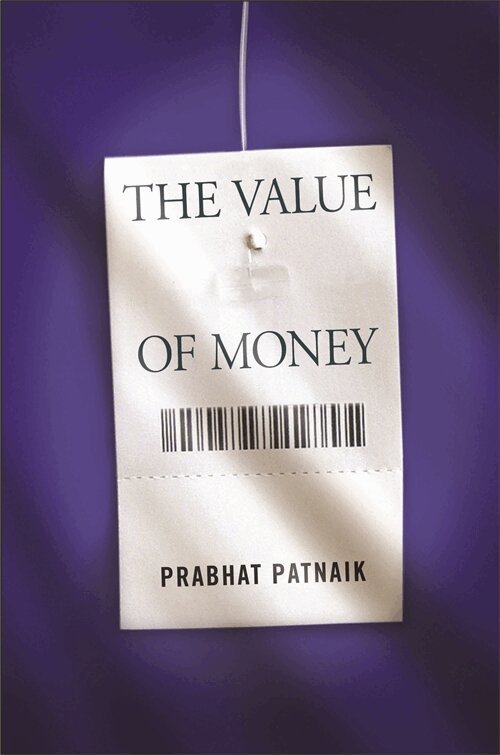
Why is money more valuable than the paper on which it is printed? Monetarists link the value of money to its supply and demand, believing the latter depends on the total value of the commodities it circulates. According to Prabhat Patnaik, this logic is flawed. In his view, in any nonbarter economy, the value we assign to money is determined independently of its supply and demand. Through an original and provocative critique of monetarism, Patnaik advances a revolutionary understanding of macroeconomics that highlights the "propertyist" position of Karl Marx and John Maynard Keynes. Unlike the usual division between "classical" economists (e.g., David Ricardo and Marx) and the "marginalists" (e.g., Carl Menger, William Stanley Jevons, and Leon Walras), Patnaik places "monetarists," including Ricardo, on one side, while grouping propertyist writers like Marx, Keynes, and Rosa Luxemburg on the other. This second group subscribes to the idea that the value of money is given from outside the realm of supply and demand, therefore making money a form in which wealth is held.The fact that money is held as wealth in turn gives rise to the possibility of deficiency of aggregate demand under capitalism. It is no accident that this possibility was highlighted by Marx and Keynes while going largely unrecognized by Ricardo and contemporary monetarists. At the same time, Patnaik points to a weakness in the Marx-Keynes tradition--namely, its lack of any satisfactory explanation of why the value of money, determined from outside the realm of supply and demand, remains relatively stable over long stretches of time. The answer to this question lies in the fact that capitalism is not a self-contained system but is born from a precapitalist setting with which it interacts and where it creates massive labor reserves that, in turn, impart stability to the value of money. Patnaik's theory of money, then, is also a theory of imperialism, and he concludes with a discussion of the contemporary international monetary system, which he terms the "oil-dollar" standard.
849 kr
Tillfälligt slut
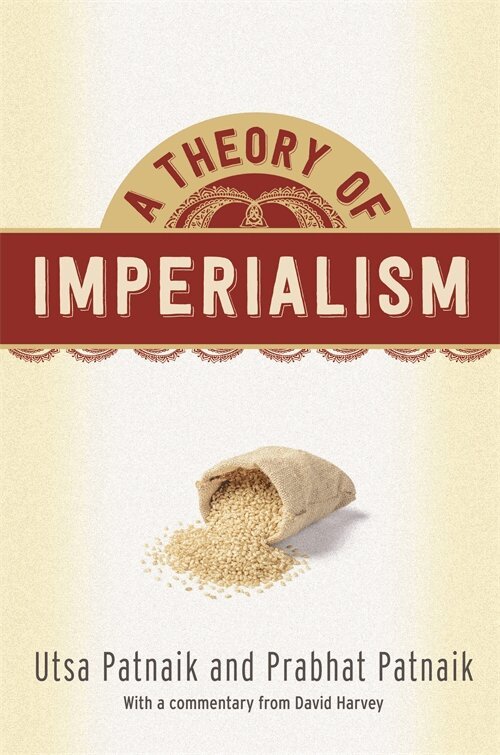
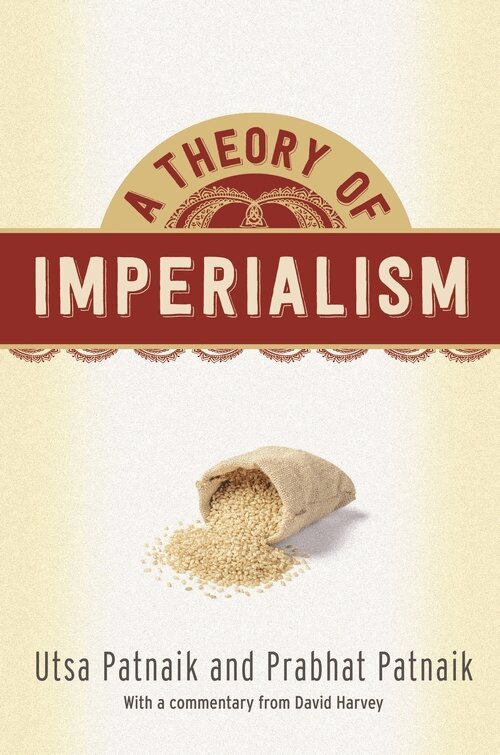
In A Theory of Imperialism, economists Utsa Patnaik and Prabhat Patnaik present a new theory of the origins and mechanics of capitalism that sounds an alarm about its ongoing viability. Their theory centers on trade between the core economies of the global North and the tropical and subtropical countries of the global South and considers how the Northern demand for commodities (such as agricultural products and oil) from the South has perpetuated and solidified an imperialist relationship. The Patnaiks explore the dynamics of this process and discuss innovations that could allow the economies of the South to achieve greater prosperity without damaging the economies of the North. The result is an original theory of imperialism that brings to light the crippling limitations of neoliberal capitalism. A Theory of Imperialism also includes a response by David Harvey, who interprets the agrarian system differently and sees other factors affecting trade between the North and the South. Their debate is one of the most provocative exchanges yet over the future of the global economy as resources grow thin, populations explode, and universal prosperity becomes ever more elusive.
261 kr
Skickas inom 7-10 vardagar
In A Theory of Imperialism, economists Utsa Patnaik and Prabhat Patnaik present a new theory of the origins and mechanics of capitalism that sounds an alarm about its ongoing viability. Their theory centers on trade between the core economies of the global North and the tropical and subtropical countries of the global South and considers how the Northern demand for commodities (such as agricultural products and oil) from the South has perpetuated and solidified an imperialist relationship. The Patnaiks explore the dynamics of this process and discuss innovations that could allow the economies of the South to achieve greater prosperity without damaging the economies of the North. The result is an original theory of imperialism that brings to light the crippling limitations of neoliberal capitalism. A Theory of Imperialism also includes a response by David Harvey, who interprets the agrarian system differently and sees other factors affecting trade between the North and the South. Their debate is one of the most provocative exchanges yet over the future of the global economy as resources grow thin, populations explode, and universal prosperity becomes ever more elusive.
1 118 kr
Skickas inom 7-10 vardagar
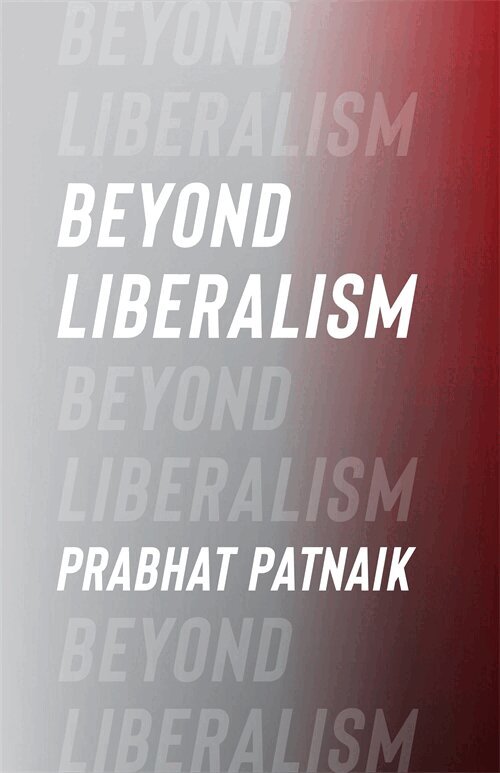
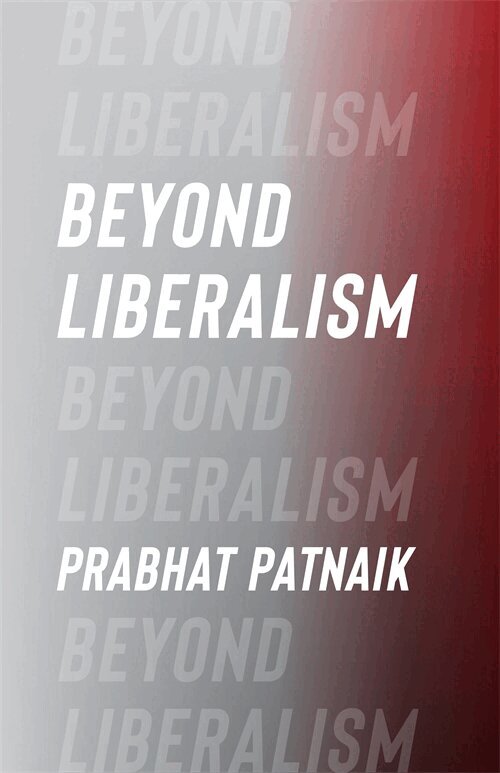
Liberalism holds that individual freedom can be realized under capitalism. “Classical liberalism” tends to focus on excessive state interference as the primary threat to freedom. More recent theorists, however, recognize that capitalism, left to itself, would be characterized by mass social ills and argue that state intervention is necessary to guarantee individual freedom.This book is a Marxist critique of liberalism. Prabhat Patnaik demonstrates that liberalism and Marxism provide vastly differing accounts of individual freedom and the forces that restrict it. In the Marxist view, people, contrary to appearances, lack real agency under capitalism. Competition coerces individuals to act according to the impersonal logic of capitalism, making them mere instruments of the system. In this way, capitalism creates universal alienation, and true individual freedom is possible only through overcoming it.Patnaik argues that socialism can secure individual agency in both economic and political spheres, though actually existing socialism has failed in this respect. He also considers what a socialist society should look like: not a planned economy but a highly decentralized system in which citizens are directly involved in taking decisions affecting their lives and enjoy fundamental economic rights as well as political ones. Readable yet rigorous, Beyond Liberalism brings together political philosophy and political economy to offer a renewed vision of socialism.
285 kr
Skickas inom 7-10 vardagar
Liberalism holds that individual freedom can be realized under capitalism. “Classical liberalism” tends to focus on excessive state interference as the primary threat to freedom. More recent theorists, however, recognize that capitalism, left to itself, would be characterized by mass social ills and argue that state intervention is necessary to guarantee individual freedom.This book is a Marxist critique of liberalism. Prabhat Patnaik demonstrates that liberalism and Marxism provide vastly differing accounts of individual freedom and the forces that restrict it. In the Marxist view, people, contrary to appearances, lack real agency under capitalism. Competition coerces individuals to act according to the impersonal logic of capitalism, making them mere instruments of the system. In this way, capitalism creates universal alienation, and true individual freedom is possible only through overcoming it.Patnaik argues that socialism can secure individual agency in both economic and political spheres, though actually existing socialism has failed in this respect. He also considers what a socialist society should look like: not a planned economy but a highly decentralized system in which citizens are directly involved in taking decisions affecting their lives and enjoy fundamental economic rights as well as political ones. Readable yet rigorous, Beyond Liberalism brings together political philosophy and political economy to offer a renewed vision of socialism.
346 kr
Skickas inom 10-15 vardagar
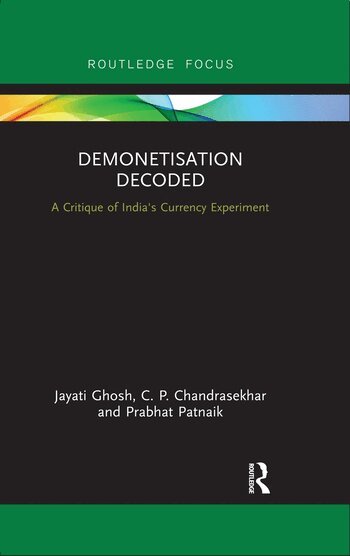
On the night of 8 November 2016, at 8:15 pm, India’s Prime Minister, Narendra Modi, announced in a televised broadcast to the nation that with effect from midnight, currency notes of denominations Rs 500 and Rs 1,000 would no longer be legal tender. In one stroke, this involved the de-recognition of over 86 per cent of the value of Indian currency in circulation with only four hours’ notice.This important book provides a quick and concise explanation of the goals, implications, initial effects and the political economy of this major demonetisation move by the Government of India. It clarifies key concepts and offers astute economic analysis to guide the reader through the various claims, arguments and critiques that have been made; highlights the complexities of the processes that have been unleashed; and examines the likely outcomes in the long term as well as those that are immediately evident.Timely and lucid, this book will interest students and researchers in the fields of economics, finance, management, law, politics and governance as well as policy makers, legislators, civil society activists and the media.
1 019 kr
Skickas inom 10-15 vardagar
On the night of 8 November 2016, at 8:15 pm, India’s Prime Minister, Narendra Modi, announced in a televised broadcast to the nation that with effect from midnight, currency notes of denominations Rs 500 and Rs 1,000 would no longer be legal tender. In one stroke, this involved the de-recognition of over 86 per cent of the value of Indian currency in circulation with only four hours’ notice.This important book provides a quick and concise explanation of the goals, implications, initial effects and the political economy of this major demonetisation move by the Government of India. It clarifies key concepts and offers astute economic analysis to guide the reader through the various claims, arguments and critiques that have been made; highlights the complexities of the processes that have been unleashed; and examines the likely outcomes in the long term as well as those that are immediately evident.Timely and lucid, this book will interest students and researchers in the fields of economics, finance, management, law, politics and governance as well as policy makers, legislators, civil society activists and the media.
309 kr
Skickas inom 5-8 vardagar
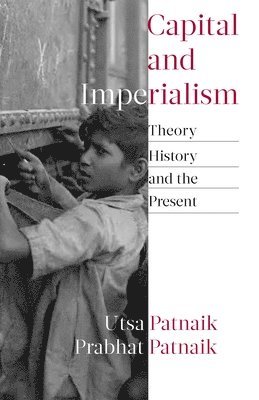
Those who control the world’s commanding economic heights, buttressed by the theories of mainstream economists, presume that capitalism is a self-contained and self-generating system. Nothing could be further from the truth. In this pathbreaking book—winner of the Paul A. Baran-Paul M. Sweezy Memorial Award—radical political economists Utsa Patnaik and Prabhat Patnaik argue that the accumulation of capital has always required the taking of land, raw materials, and bodies from noncapitalist modes of production. They begin with a thorough debunking of mainstream economics. Then, looking at the history of capitalism, from the beginnings of colonialism half a millennium ago to today’s neoliberal regimes, they discover that, over the long haul, capitalism, in order to exist, must metastasize itself in the practice of imperialism and the immiseration of countless people. A few hundred years ago, write the Patnaiks, colonialism began to ensure vast, virtually free, markets for new products in burgeoning cities in the West. But even after slavery was generally abolished, millions of people in the Global South still fell prey to the continuing lethal exigencies of the marketplace. Even after the Second World War, when decolonization led to the end of the so-called “Golden Age of Capitalism,” neoliberal economies stepped in to reclaim the Global South, imposing drastic “austerity” measures on working people. But, say the Patnaiks, this neoliberal economy, which lives from bubble to bubble, is doomed to a protracted crisis. In its demise, we are beginning to see – finally – the transcendence of the capitalist system.
1 212 kr
Skickas inom 5-8 vardagar
Those who control the world’s commanding economic heights, buttressed by the theories of mainstream economists, presume that capitalism is a self-contained and self-generating system. Nothing could be further from the truth. In this pathbreaking book—winner of the Paul A. Baran-Paul M. Sweezy Memorial Award—radical political economists Utsa Patnaik and Prabhat Patnaik argue that the accumulation of capital has always required the taking of land, raw materials, and bodies from noncapitalist modes of production. They begin with a thorough debunking of mainstream economics. Then, looking at the history of capitalism, from the beginnings of colonialism half a millennium ago to today’s neoliberal regimes, they discover that, over the long haul, capitalism, in order to exist, must metastasize itself in the practice of imperialism and the immiseration of countless people. A few hundred years ago, write the Patnaiks, colonialism began to ensure vast, virtually free, markets for new products in burgeoning cities in the West. But even after slavery was generally abolished, millions of people in the Global South still fell prey to the continuing lethal exigencies of the marketplace. Even after the Second World War, when decolonization led to the end of the so-called “Golden Age of Capitalism,” neoliberal economies stepped in to reclaim the Global South, imposing drastic “austerity” measures on working people. But, say the Patnaiks, this neoliberal economy, which lives from bubble to bubble, is doomed to a protracted crisis. In its demise, we are beginning to see – finally – the transcendence of the capitalist system.
310 kr
Skickas inom 3-6 vardagar
191 kr
Skickas inom 5-8 vardagar
236 kr
Skickas inom 7-10 vardagar
215 kr
Tillfälligt slut
182 kr
Skickas inom 7-10 vardagar
343 kr
Skickas inom 7-10 vardagar
224 kr
Skickas inom 5-8 vardagar
224 kr
Skickas inom 5-8 vardagar