• Fri frakt över 249 kr
  • •
  • Snabba leveranser
  • •
  • Billiga böcker
Kundservice

Du är på sajten för privatpersoner.

Företag, bibliotek eller offentlig verksamhet?

Du handlar på classic.bokus.com, där alla dina funktioner finns intakta.
Till classic.bokus.com
Bokus logotyp. Gå till startsidan.
  • Erbjudanden
  • Nyheter
  • Student
  • Topplistor
  • Barn & ungdom
  • Bokus Play
  • E-böcker
  • Pocketböcker
  • Spel & pussel

10% rabatt på allt med kod: NYSTART10 →

Sidfot

Mina sidor

    Hjälp

    • Kundservice
    • Vanliga frågor och svar
    • Frakt och leverans
    • Retur vid ångerrätt
    • Reklamera vara
    • Betalning
    • Köpvillkor
    • Allmänna villkor
    • Information om webbplatsens tillgänglighet

    Om Bokus

    • Om oss
    • Pressrum
    • För studenter
    • För företag
    • För bibliotek och offentlig verksamhet
    • För leverantörer
    • Hållbarhet

    Populärt

    • Aktuella erbjudanden
    • Presentkort
    • Studentlitteratur
    • Nya böcker
    • Topplistor
    • Signerade böcker
    • Engelska böcker

    Inspiration

    • Boktips
    • BookTok
    • Populära bokserier
    • Barnbokskaraktärer
    • Populära författare
    Logotyp för Bokus
    Följ oss på Facebook (extern länk)Följ oss på Instagram (extern länk)Följ oss på YouTube (extern länk)Följ oss på TikTok (extern länk)
    bokus @ CookiesAnpassa cookiesIntegritetspolicyKöpvillkor
    Till Citymail hemsida (extern länk)Till Budbee hemsida (extern länk)Till Postnord hemsida (extern länk)Till Schenker hemsida (extern länk)Till Early Bird hemsida (extern länk)Till Walleys hemsida (extern länk)
    1. Ekonomi och Ledarskap
    2. Nationalekonomi

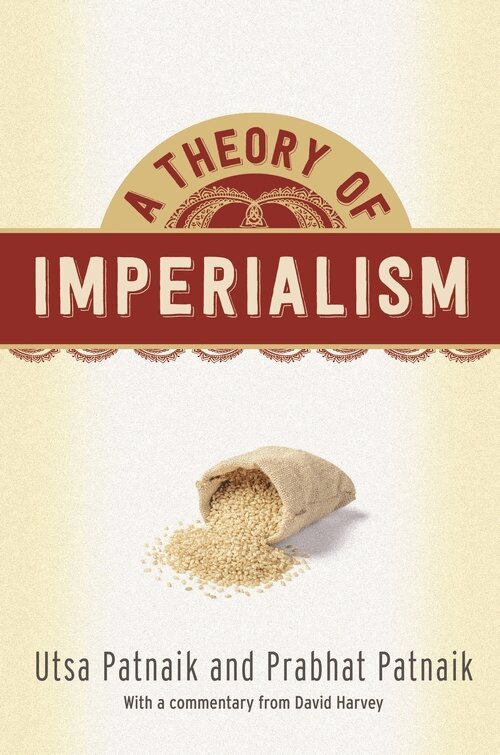
    Theory of Imperialism

    AvUtsa Patnaik,Prabhat Patnaik

    Inbunden, Engelska, 2016

    849 kr

    Tillfälligt slut

    Fler format och utgåvor

    Häftad

    268 kr

    Beskrivning

    In A Theory of Imperialism, economists Utsa Patnaik and Prabhat Patnaik present a new theory of the origins and mechanics of capitalism that sounds an alarm about its ongoing viability. Their theory centers on trade between the core economies of the global North and the tropical and subtropical countries of the global South and considers how the Northern demand for commodities (such as agricultural products and oil) from the South has perpetuated and solidified an imperialist relationship. The Patnaiks explore the dynamics of this process and discuss innovations that could allow the economies of the South to achieve greater prosperity without damaging the economies of the North. The result is an original theory of imperialism that brings to light the crippling limitations of neoliberal capitalism. A Theory of Imperialism also includes a response by David Harvey, who interprets the agrarian system differently and sees other factors affecting trade between the North and the South. Their debate is one of the most provocative exchanges yet over the future of the global economy as resources grow thin, populations explode, and universal prosperity becomes ever more elusive.

    Produktinformation

    • Utgivningsdatum:2016-11-01
    • Mått:152 x 229 x undefined mm
    • Format:Inbunden
    • Språk:Engelska
    • Antal sidor:256
    • Förlag:Columbia University Press
    • ISBN:9780231179782

    Utforska kategorier

    • Nationalekonomi inom Ekonomi och Ledarskap
    • Internationell ekonomi inom Ekonomi och Ledarskap
    • Ekonomiska system inom Ekonomi och Ledarskap

    Mer om författaren

    Utsa Patnaik is professor emerita and Prabhat Patnaik is professor emeritus at the Centre for Economic Studies and Planning, School of Social Sciences at Jawaharlal Nehru University. Utsa's books include The Agrarian Question in the Neoliberal Era (2011) and The Republic of Hunger and Other Essays (2007). Prabhat is the author most recently of The Value of Money (Columbia, 2009) and Re-envisioning Socialism (2011). David Harvey is a distinguished professor in the anthropology, history, and Earth and environmental sciences programs at CUNY's Graduate Center. His books include Seventeen Contradictions and the End of Capitalism (2014) and Cosmopolitanism and the Geographies of Freedom (Columbia, 2009).

    Recensioner i media

    A highly original, powerfully presented, and extremely thought-provoking new theory of imperialism that will force anyone concerned with the question of imperialism to rethink their own presuppositions. -- Robert Pollin, codirector and professor of economics, Political Economy Research Institute, University of Massachusetts, Amherst Utsa and Prabhat Patnaik provide us with an important and incisive contribution to the theory of imperialism. Through a rigorous analysis of the policies pursued in India, they demonstrate how the contemporary pattern of imperialism is a continuation of its previous colonial pattern, in which peasant agriculture is systematically undermined, thus generating a gigantic and growing reserve of surplus labour. The ideas outlined in A Theory of Imperialism are central to understanding the construction of the unequal global system in the past and in the present. -- Samir Amin, author of The Implosion of Capitalism This is the best book-length treatment on the economic aspects of imperialism to have been published in the past several decades. It is theoretically powerful and empirically scrupulous, and its historical range covers the entire span of imperialism from the colonial period down to the present day -- Irfan Habib, author of The Agrarian System of Mughal India 1556-1707 Compelling, convincing, and a corrective that is urgent. Jadaliyya

    Innehållsförteckning

    • Foreword, by Akeel Bilgrami Preface 1. Introduction 2. The Threat of Increasing Supply Price 3. Coping with the Threat 4. The Reserve Army of Labour in the Periphery 5. Capitalism, Poverty, and Inequality 6. Further Elaborations and Clarifications 7. Metropolitan Demand on Tropical Landmass: The Empirical Picture 8. The International Monetary System: Some Issues in Political Economy 9. Some Concluding Remarks A Commentary on A Theory of Imperialism, by David Harvey A Response to David Harvey's Comments Notes References Index