Projit Bihari Mukharji - Böcker
Visar alla böcker från författaren Projit Bihari Mukharji. Handla med fri frakt och snabb leverans.
6 produkter
6 produkter
1 146 kr
Skickas inom 7-10 vardagar
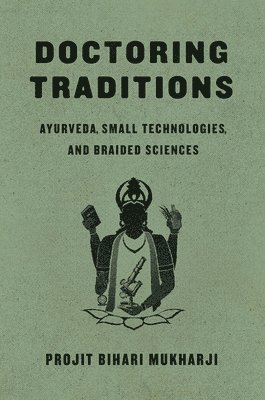
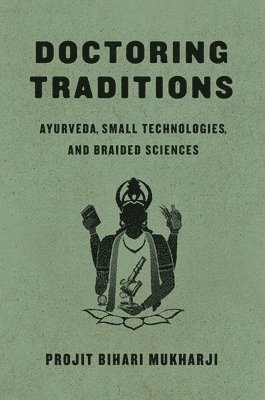
Like many of the traditional medicines of South Asia, Ayurvedic practice changed dramatically in the later nineteenth and early twentieth centuries. With Doctoring Tradition, Projit Bihari Mukharji offers a close look at that transformation, upending the widely held yet little-examined belief that it was the result of the introduction of Western anatomical knowledge and cadaveric dissection. Rather, Mukharji reveals, what instigated those changes were a number of small technologies that were introduced in the period by Ayurvedic physicians, men who were simultaneously Victorian gentlemen and members of a particular Bengali caste. The introduction of these devices, including thermometers, watches, and microscopes, Mukharji shows, ultimately led to a dramatic reimagining of the body. The new Ayurvedic body that thus emerged by the 1930s, while different from the biomedical body, was nonetheless largely compatible with it. The more incompatible elements of the old Ayurvedic body were then rendered therapeutically indefensible and impossible to imagine in practice.The new Ayurvedic medicine, therefore, was the product not of an embrace of Western approaches, but of a creative attempt to develop a viable alternative to the Western tradition by braiding together elements drawn from both the West and the East.
384 kr
Skickas inom 7-10 vardagar
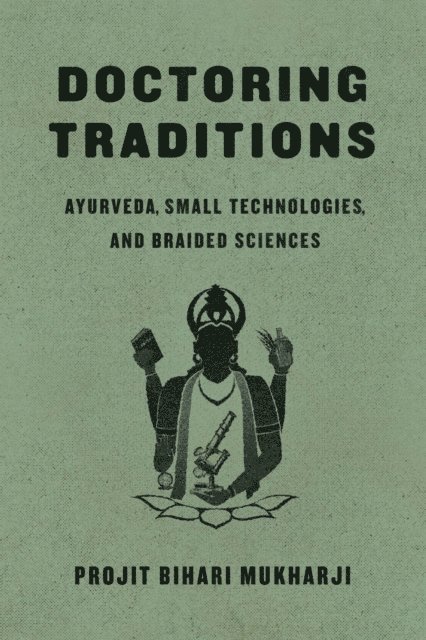
Like many of the traditional medicines of South Asia, Ayurvedic practice changed dramatically in the later nineteenth and early twentieth centuries. With Doctoring Tradition, Projit Bihari Mukharji offers a close look at that transformation, upending the widely held yet little-examined belief that it was the result of the introduction of Western anatomical knowledge and cadaveric dissection. Rather, Mukharji reveals, what instigated those changes were a number of small technologies that were introduced in the period by Ayurvedic physicians, men who were simultaneously Victorian gentlemen and members of a particular Bengali caste. The introduction of these devices, including thermometers, watches, and microscopes, Mukharji shows, ultimately led to a dramatic reimagining of the body. The new Ayurvedic body that thus emerged by the 1930s, while different from the biomedical body, was nonetheless largely compatible with it. The more incompatible elements of the old Ayurvedic body were then rendered therapeutically indefensible and impossible to imagine in practice.The new Ayurvedic medicine, therefore, was the product not of an embrace of Western approaches, but of a creative attempt to develop a viable alternative to the Western tradition by braiding together elements drawn from both the West and the East.
1 965 kr
Skickas inom 3-6 vardagar
A unique narrative structure brings the history of race science in mid-twentieth-century India to vivid life.There has been a recent explosion in studies of race science in the twentieth and twenty-first centuries, but most have focused either on Europe or on North America and Australia. In this stirring history, Projit Bihari Mukharji illustrates how India appropriated and repurposed race science to its own ends and argues that these appropriations need to be understood within the national and regional contexts of postcolonial nation-making—not merely as footnotes to a Western history of “normal science.” The book comprises seven factual chapters operating at distinct levels—conceptual, practical, and cosmological—and eight fictive interchapters, a series of epistolary exchanges between the Bengali author Hemendrakumar Ray (1888–1963) and the protagonist of his dystopian science fiction novel about race, race science, racial improvement, and dehumanization. In this way, Mukharji fills out the historical moment in which the factual narrative unfolded, vividly revealing its moral, affective, political, and intellectual fissures.
290 kr
Skickas inom 7-10 vardagar
A unique narrative structure brings the history of race science in mid-twentieth-century India to vivid life.There has been a recent explosion in studies of race science in the twentieth and twenty-first centuries, but most have focused either on Europe or on North America and Australia. In this stirring history, Projit Bihari Mukharji illustrates how India appropriated and repurposed race science to its own ends and argues that these appropriations need to be understood within the national and regional contexts of postcolonial nation-making—not merely as footnotes to a Western history of “normal science.” The book comprises seven factual chapters operating at distinct levels—conceptual, practical, and cosmological—and eight fictive interchapters, a series of epistolary exchanges between the Bengali author Hemendrakumar Ray (1888–1963) and the protagonist of his dystopian science fiction novel about race, race science, racial improvement, and dehumanization. In this way, Mukharji fills out the historical moment in which the factual narrative unfolded, vividly revealing its moral, affective, political, and intellectual fissures.
Del 1 - Key Issues in Modern Sociology
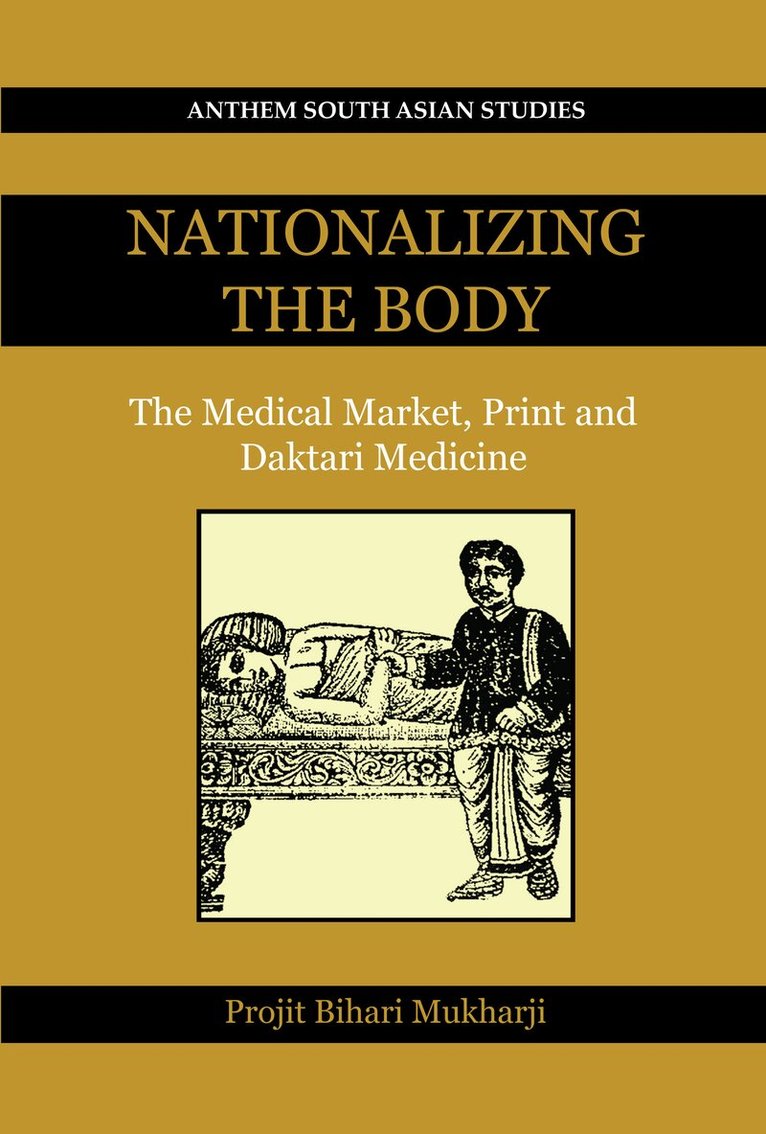
Nationalizing the Body
The Medical Market, Print and Daktari Medicine
Häftad, Engelska, 2011
414 kr
Skickas inom 5-8 vardagar
This book seeks to move emphasis away from the over-riding importance given to the state in existing studies of ‘western’ medicine in India, and locates medical practice within its cultural, social and professional milieus. Based on Bengali doctors writings this book examines how various medical problems, challenges and debates were understood and interpreted within overlapping contexts of social identities and politics on the one hand, and their function within a largely unregulated medical market on the other.
Del 1 - Key Issues in Modern Sociology
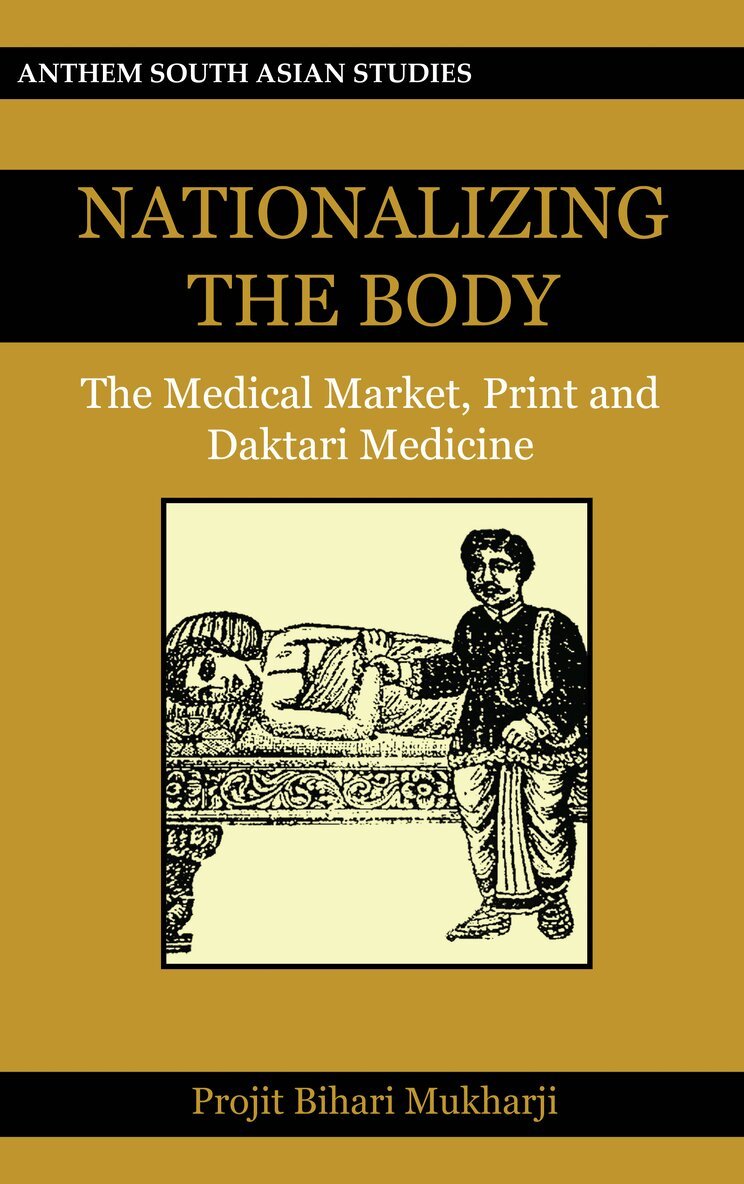
Nationalizing the Body
The Medical Market, Print and Daktari Medicine
Inbunden, Engelska, 2009
1 132 kr
Skickas inom 5-8 vardagar
This book seeks to move emphasis away from the over-riding importance given to the state in existing studies of ‘western’ medicine in India, and locates medical practice within its cultural, social and professional milieus. Based on Bengali doctors writings this book examines how various medical problems, challenges and debates were understood and interpreted within overlapping contexts of social identities and politics on the one hand, and their function within a largely unregulated medical market on the other.